
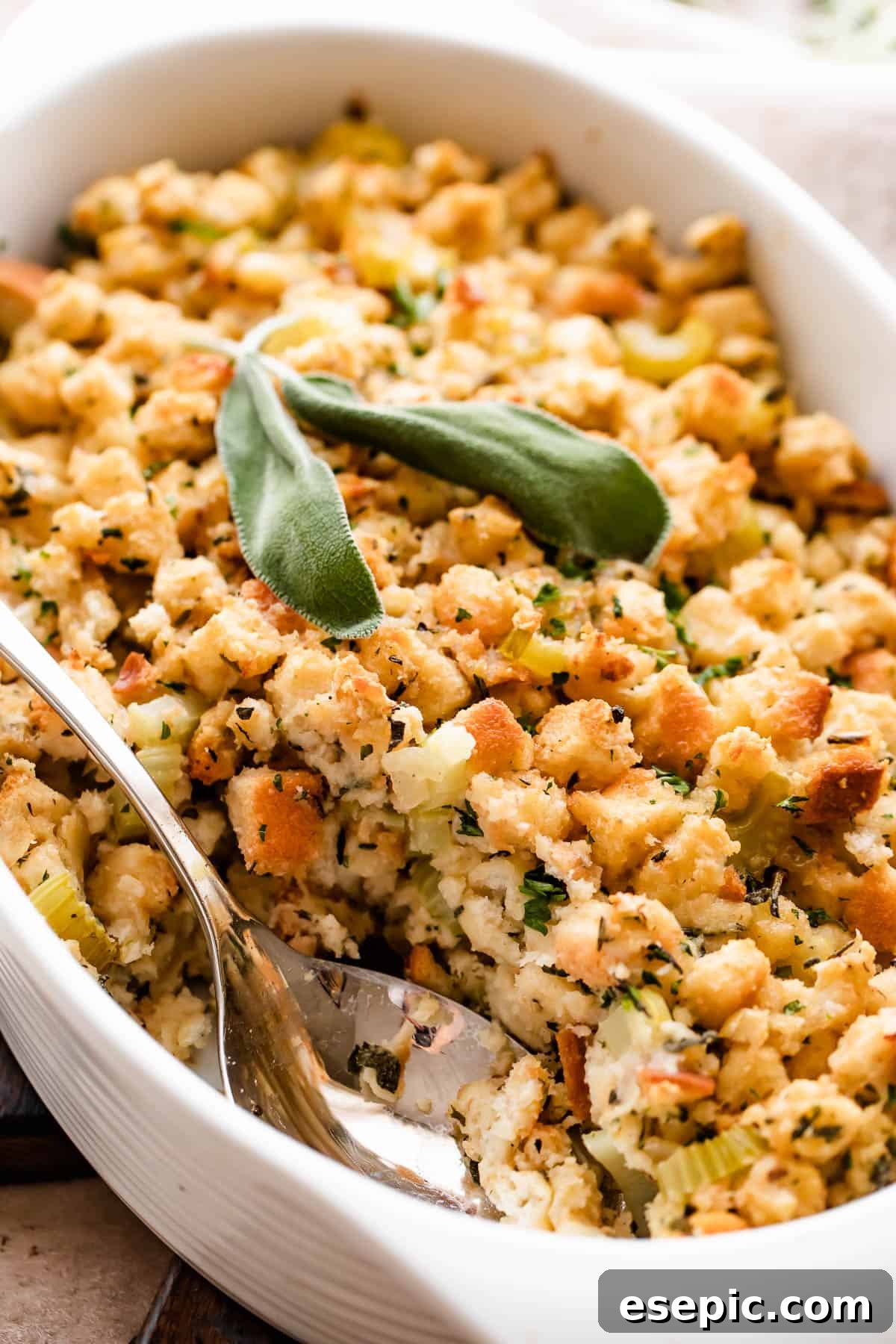
Welcome to the ultimate guide for creating the most flavorful and comforting holiday side dish: **Easy Herb Stuffing**. Crafted with real butter, an aromatic blend of fresh herbs, tender vegetables, and a subtle hint of white wine, this homemade bread stuffing promises to be a showstopper at any festive gathering. It’s a remarkably easy recipe that consistently delivers mouthwatering results, ensuring your whole family will eagerly devour every last bite. Forget bland, dry stuffing – this recipe elevates a classic to new heights of deliciousness.
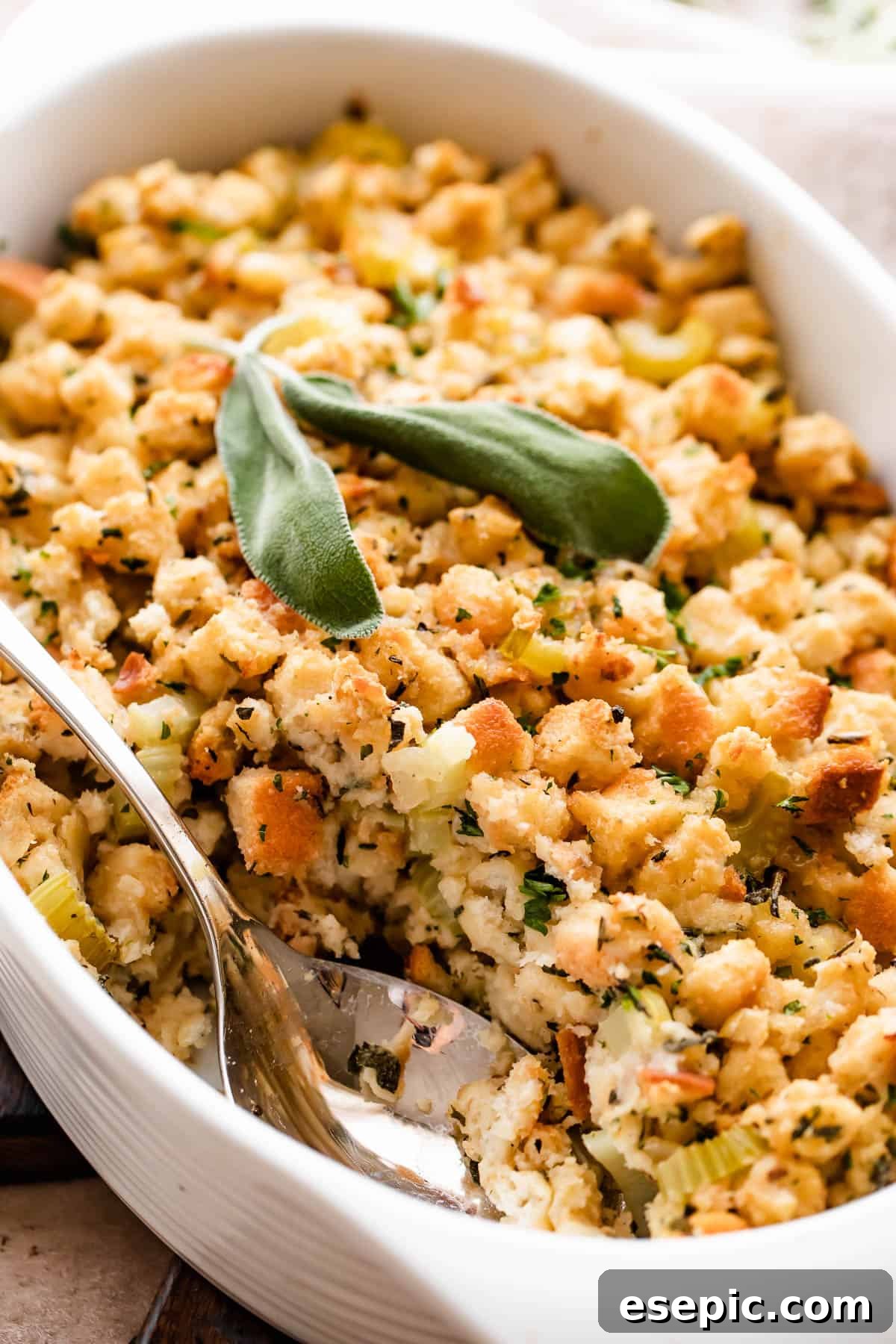
Crafting the Perfect Classic Herb Stuffing from Scratch
Are you a side dish connoisseur? Do you appreciate the art of a perfectly executed casserole? If you’re an aficionado of all things savory, starchy, and herbaceous, then you are in for a treat with this incredibly easy recipe for baked stuffing. Our classic holiday stuffing is made from scratch, featuring robust French bread, vibrant fresh herbs, sweet onions, crisp celery, and rich chicken broth. This isn’t just a side; it’s a centerpiece of flavor, designed to complement any holiday feast.
Unlike traditional methods, this buttery, aromatic dish is baked to perfection in a casserole dish, rather than inside your turkey or goose. This approach offers several distinct advantages. Primarily, it eliminates the risk of undercooked stuffing (and the food safety concerns that come with it) or, conversely, overdone poultry that can dry out as it gives up its precious juices to the stuffing. Baking it separately ensures both your stuffing and your main roast are cooked to their optimal temperatures and textures.
What truly elevates this homemade stuffing to gourmet status are the nuanced additions of minced garlic and a splash of dry white wine. These ingredients infuse the dish with a sophisticated depth, lending a delightful, almost Julia Child-esque French flair to an beloved American classic. To bind all these wonderful flavors together and add a pleasant, moist richness, a couple of whole eggs are whisked into the mixture, ensuring a cohesive and incredibly satisfying texture in every spoonful. The result is a truly unforgettable holiday stuffing that will have everyone asking for seconds.
Stuffing vs. Dressing: A Culinary Clarification
The great debate: is it stuffing or is it dressing? Depending on your geographical location or family traditions, you might call this timeless dish by either name, or perhaps something entirely different. But is there a real culinary distinction? In essence, not really, especially in modern kitchens.
The combination of savory bread (whether French bread, cornbread, or even rice), flavorful broth, and tender vegetables serves to “dress” or complement the main entrée, which is typically a roasted turkey or goose. Historically, the term “stuffing” was used when the mixture was literally stuffed inside the cavity of the bird, while “dressing” referred to the same preparation cooked in a separate baking dish. However, these days, many home cooks and professional chefs use the terms interchangeably. You’ll find that countless people, including myself, prepare this delightful casserole separately but still lovingly refer to it as “stuffing.” The crucial takeaway is the incredible taste and texture, not the name! Rest assured, whether you call it stuffing or dressing, this recipe delivers maximum flavor and comfort.
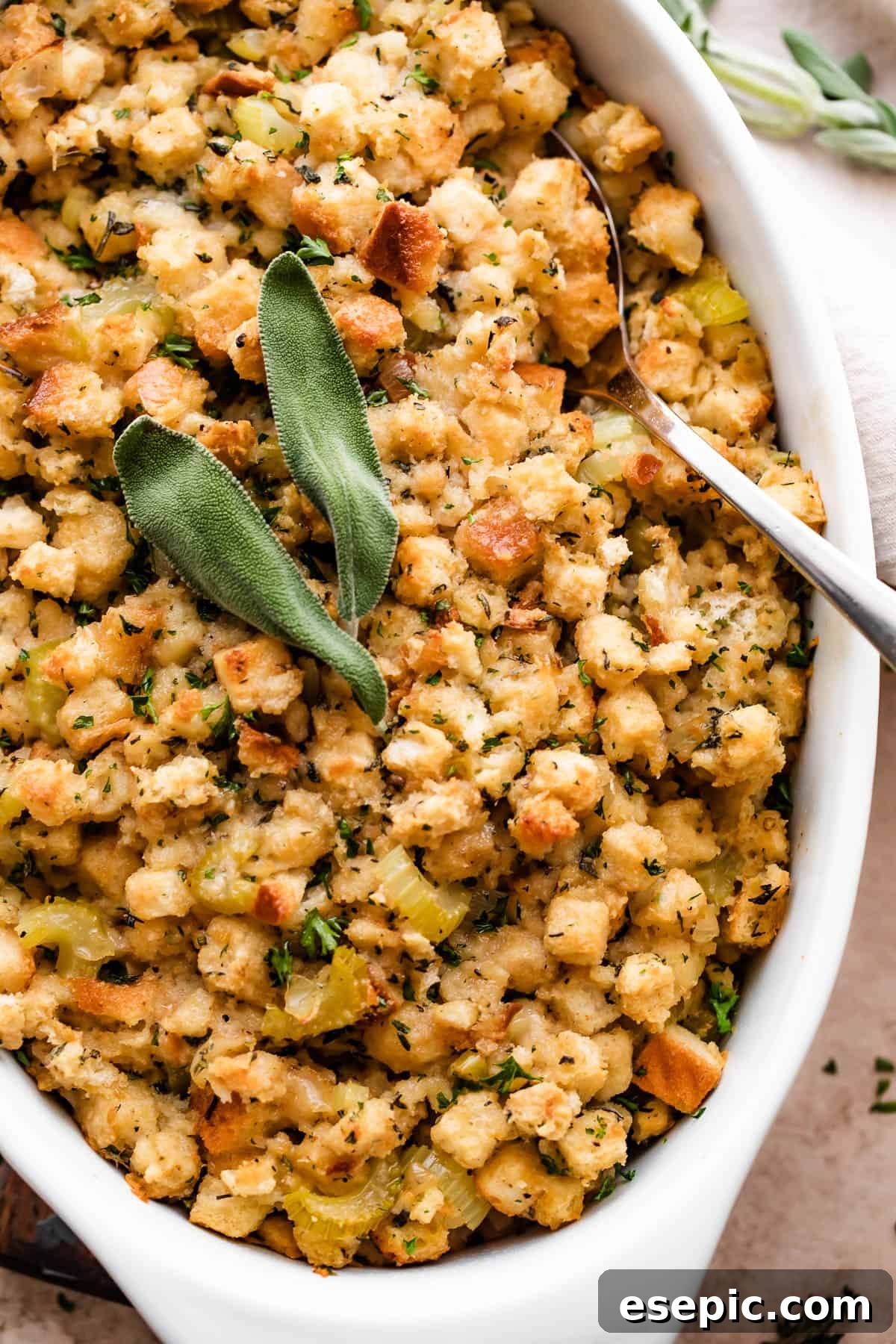
The Heart of the Flavor: Essential Ingredients for Herb Stuffing
The secret to an extraordinary homemade stuffing lies in the quality and balance of its ingredients. While countless variations exist, our foundational recipe focuses on fresh, readily available components that deliver maximum impact. We’ve even included some customization ideas in our “Tips for Perfect Stuffing” section to inspire your culinary creativity. Here’s a detailed look at the simple yet powerful ingredients you’ll need to create this holiday classic:
- Bread: The foundation of any great stuffing. We highly recommend using a fresh white French bread loaf. Its crusty exterior and tender interior, once diced and toasted, create the perfect texture for absorbing all the savory liquids without becoming overly soggy. Aim for bite-sized cubes for even cooking and distribution.
- Butter: For unparalleled richness and flavor, real unsalted butter is key. Using unsalted butter gives you precise control over the seasoning of your dish, allowing the natural flavors of the other ingredients to shine.
- Onion: Diced onion is a non-negotiable aromatic building block for any classic stuffing. Yellow onions are perfectly suitable, but feel free to experiment with white or sweeter varieties like Vidalia for a slightly different flavor profile.
- Celery: Another essential aromatic, chopped celery adds a crucial layer of texture and a subtle peppery note. For best results, cut each rib lengthwise before chopping into small, consistent pieces to ensure even cooking and distribution throughout the stuffing.
- Garlic: While not every stuffing recipe features it, fresh minced garlic is a game-changer in our recipe. It introduces a wonderfully pungent and mouthwatering depth of flavor that truly elevates the dish. Mince or press four cloves, or adjust to your preference – it can be omitted if you prefer a milder taste.
- Salt and Pepper: These fundamental seasonings are vital for balancing and enhancing all the other flavors. Season to taste, ensuring a perfectly seasoned final product.
- Wine: A touch of dry white wine, such as Sauvignon Blanc or Pinot Grigio, works wonders. It adds a beautiful acidity that cuts through the richness of the butter and broth, introducing a complex layer of flavor that makes the stuffing truly special.
- Fresh Herbs: This is where the “herb” in “Easy Herb Stuffing” truly shines! A harmonious blend of flat leaf parsley, sage, rosemary, and thyme creates an incredibly fragrant and flavorful stuffing. Whenever possible, opt for fresh herbs over dried; their vibrant aromas and tastes are incomparable. Remember to mince the leaves only for the best texture and distribution.
- Broth: Whether chicken or turkey broth, this liquid gold is crucial for moistening the toasted bread cubes and infusing the entire dish with a rich, savory essence before baking. Ensure the bread is thoroughly, but not excessively, moistened.
- Eggs: Two large, whole eggs act as a natural binder, holding the stuffing mixture together beautifully. They also contribute to the overall richness and ensure the stuffing has a delightfully tender, yet structured, consistency when baked.
Effortless Elegance: How to Make Homemade Stuffing from Scratch
If the idea of making your own stuffing from scratch seems daunting, worry not! This recipe is incredibly straightforward and forgiving, essentially a simple mix-and-bake casserole that yields spectacular results every time. Follow these easy steps to create a homemade holiday stuffing that will impress everyone at your table.
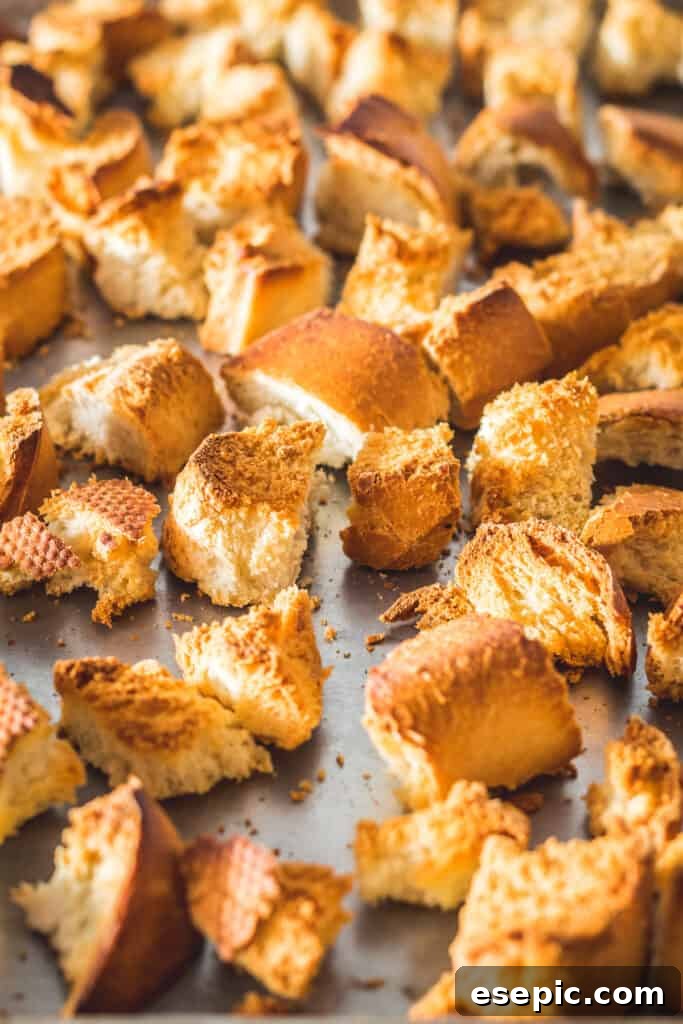
- Prepare and Toast the Bread Cubes: Begin by preheating your oven to 350°F (175°C). While the oven heats, spread your diced French bread cubes in a single, even layer across a large sheet pan. Once the oven reaches temperature, bake the bread for about 10 minutes. The goal is for the cubes to be dry and lightly toasted, but not heavily browned, as this prevents them from becoming soggy in the final dish. Transfer the toasted bread cubes to a very large mixing bowl and set aside. Keep the oven on, as you’ll need it shortly for baking the stuffing.
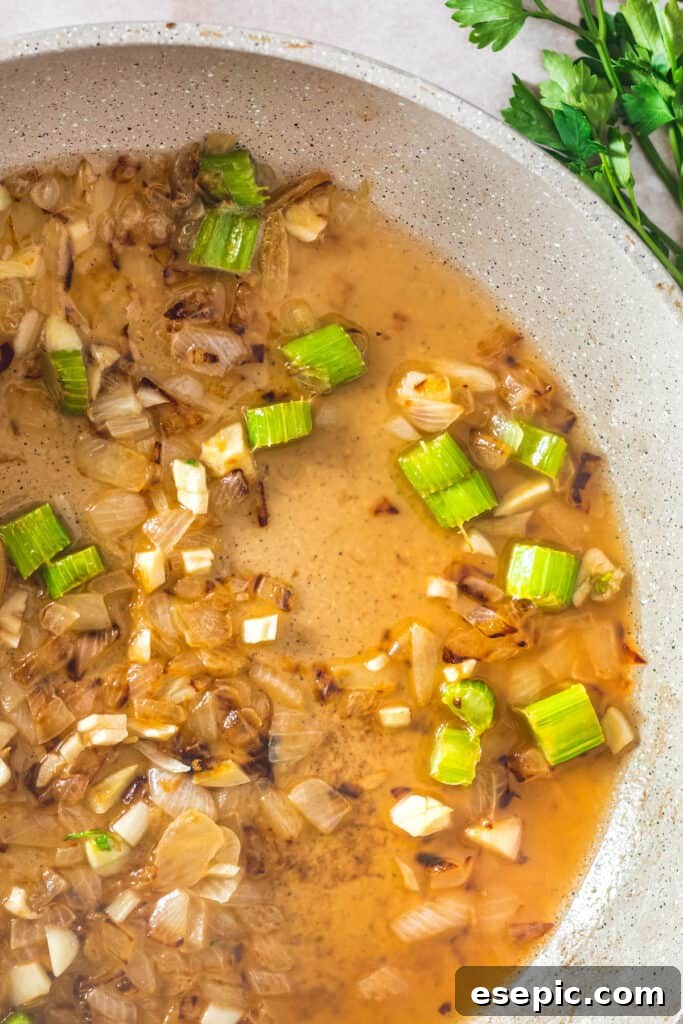
- Sauté the Aromatic Vegetables: In a large, heavy-bottomed pan or skillet, melt 2 tablespoons of unsalted butter over medium-high heat until it shimmers. Add the diced onion and chopped celery to the pan. Cook, stirring occasionally, for 7 to 8 minutes, or until the vegetables have softened and are just beginning to turn a delicate golden brown. This step is crucial for building the flavor base. Next, stir in the minced garlic, salt, and black pepper, and continue to cook for another 4 minutes, allowing the flavors to meld beautifully. Finally, pour in the dry white wine and let it simmer, cooking the mixture until the liquid has reduced by half, which usually takes about 5 more minutes. This reduction concentrates the wine’s flavor and adds a wonderful complexity.
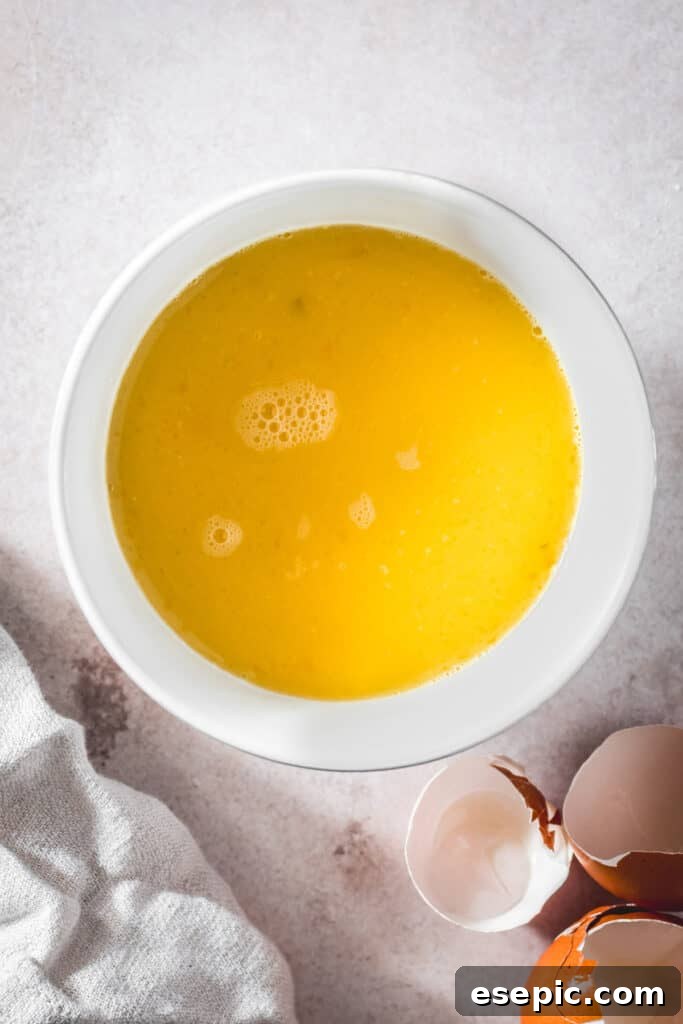
- Assemble the Flavorful Stuffing Mixture: Carefully pour the hot, sautéed vegetable mixture into the large bowl with your toasted bread cubes. Sprinkle in all the minced fresh parsley, sage, rosemary, and thyme. Then, pour in 1 cup of the chicken broth. Gently toss the ingredients together to combine everything evenly, ensuring the bread begins to absorb the savory liquids and aromatics. In a separate, small bowl, whisk together the two large eggs with the remaining 1 cup of chicken broth until well combined. Pour this egg-and-broth mixture over the bread and vegetable mixture. Toss everything one more time until all the bread cubes are thoroughly moistened and coated. Be careful not to overmix, which can compress the bread.
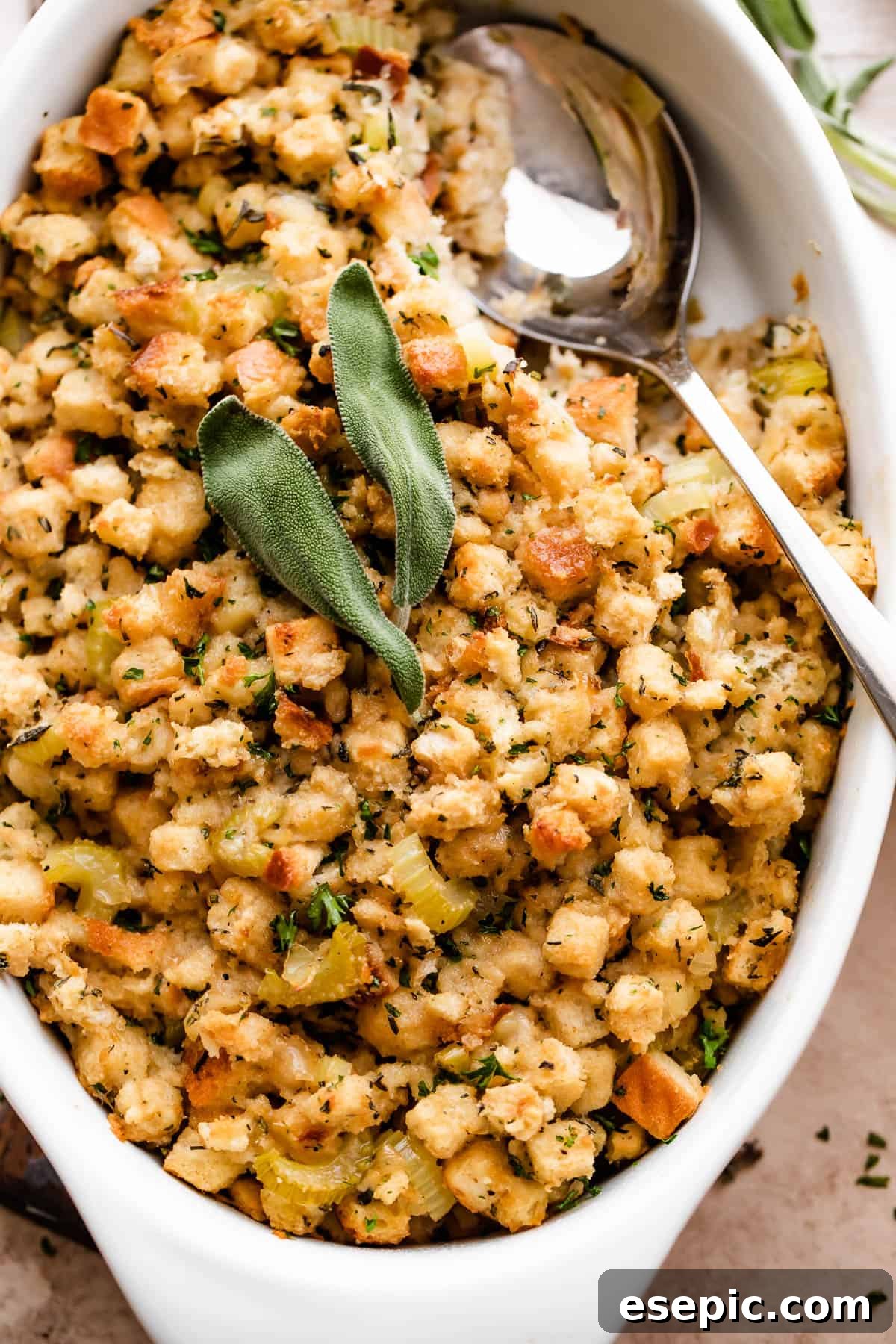
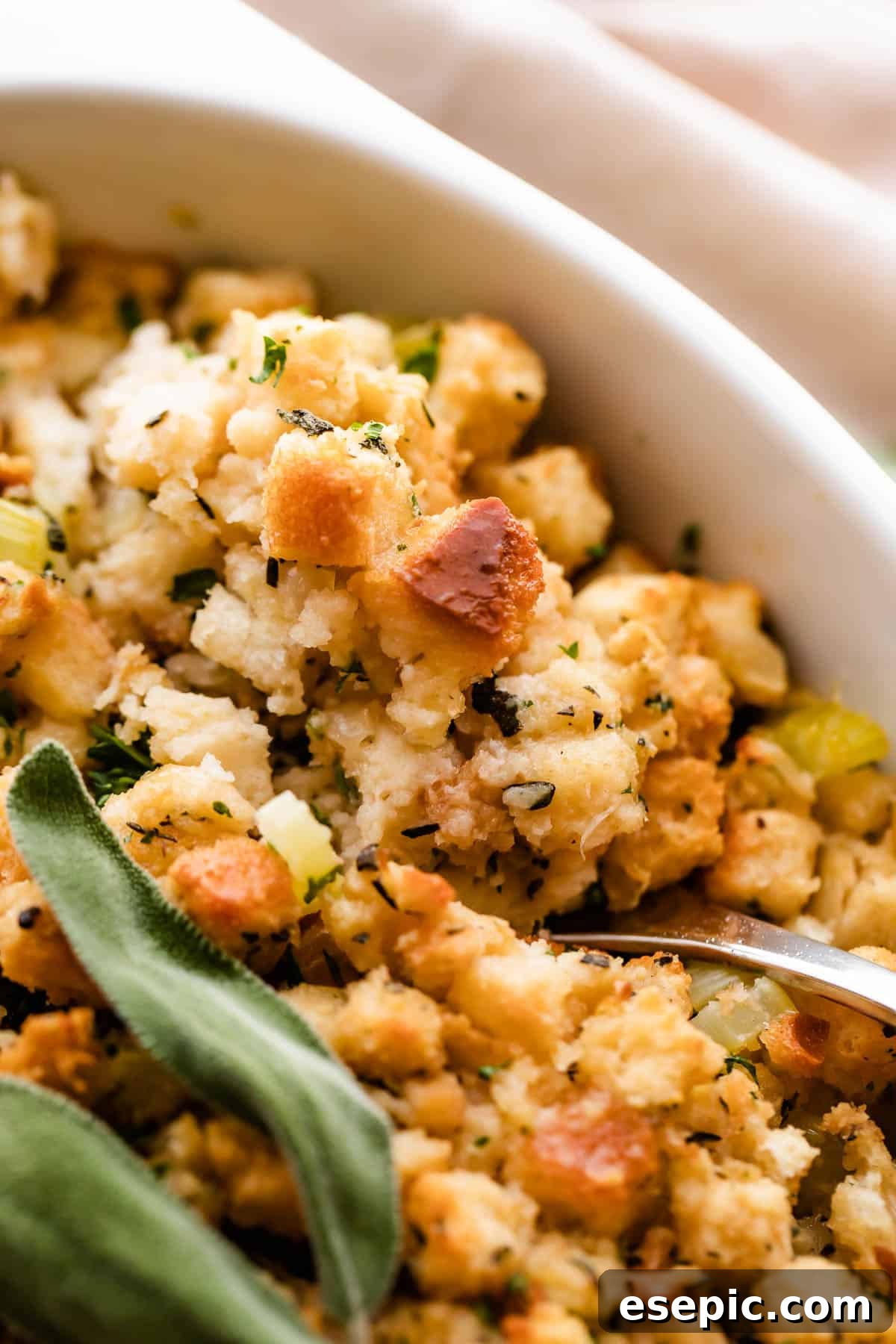
- Bake to Golden Perfection: Generously grease a 9×13 inch baking dish. Pour the prepared stuffing mixture into the dish, spreading it out evenly. Take the remaining ¼ cup of unsalted butter, dice it into small pieces, and scatter these butter dots over the top of the stuffing. This trick helps create a beautifully golden and crispy crust. Bake the stuffing in your preheated 350°F (175°C) oven for 35 to 40 minutes, or until the top is golden brown and the stuffing is heated through and bubbling around the edges. Serve immediately while warm and fragrant, ready to be devoured!
Expert Tips for Perfect Homemade Stuffing, Every Time
You now have the best easy herb stuffing recipe at your fingertips, made with basic yet exceptional pantry ingredients. But before you dive in, take a moment to review these helpful tips and tricks. They’ll ensure your stuffing is always a triumph, whether you’re a seasoned chef or a first-time holiday cook, and help you customize it to your heart’s content!
- Versatile Bread Substitutions: While French bread is our top choice, this recipe is highly adaptable. You can use almost any type of bread, provided it’s dried and toasted to prevent sogginess. Consider sourdough, challah, or even a good quality whole wheat bread. For an interesting twist, try a combination of half regular bread and half cornbread for a delightful texture and flavor contrast. Stale bread works exceptionally well here, as it absorbs moisture beautifully.
- Broth Variations: Feel free to substitute chicken broth with turkey broth, especially if you’re serving this alongside a roasted turkey for an even more cohesive flavor profile. For a richer taste, you can also use homemade broths.
- Boost with Protein: Elevate your stuffing’s flavor and heartiness with delicious protein additions. Crisply cooked and crumbled bacon or savory sausage (sage or fennel sausage is particularly good for a classic holiday taste) are excellent choices. Cook them separately, drain excess fat, and then stir into the stuffing mixture before baking.
- Make It Dietary-Friendly: This recipe can easily be adapted for various dietary needs. To make it vegetarian, simply use high-quality vegetable broth instead of chicken broth. To go a step further and create a vegan stuffing, substitute the butter with your favorite plant-based butter and replace the eggs with an egg substitute (like flax eggs or commercial vegan egg replacers).
- Beautiful Presentation Ideas: For individual servings that look elegant, try baking your stuffing in muffin tins. Simply fill greased muffin cups and bake until golden. Another clever trick for a classic “stuffed turkey” presentation without the food safety risks is to cook your stuffing separately, then gently “stuff” it into the cooked turkey cavity just before serving.
- Add More Depth with Nuts and Fruits: For an extra layer of texture and flavor, consider adding chopped toasted pecans, walnuts, or chestnuts to your stuffing mixture. Dried cranberries, apricots, or even sautéed mushrooms can also introduce wonderful sweet, tangy, or umami notes.
- Moisture Control is Key: Before transferring your stuffing to the baking dish, do a quick test. Squeeze a handful of the mixture; it should feel moist and hold together without being dripping wet. If it feels too dry, add a little more broth, a tablespoon at a time, until the desired consistency is reached. This ensures a perfectly tender interior.
Make-Ahead Magic: Preparing Your Stuffing for Stress-Free Holidays
One of the greatest advantages of this easy herb stuffing recipe is its flexibility for advance preparation, making your holiday cooking significantly less stressful. Here’s how you can get ahead and ensure a fresh, delicious stuffing experience:
- You can fully assemble the stuffing mixture, combining all ingredients and placing it into your greased baking dish, up to one day in advance.
- Once assembled, cover the baking dish tightly with plastic wrap or aluminum foil to prevent it from drying out.
- Refrigerate the covered stuffing for up to 24 hours.
- About 30 minutes before you plan to bake, remove the stuffing from the refrigerator. This allows it to come closer to room temperature, ensuring more even cooking.
- Bake according to the recipe’s instructions, adding a few extra minutes to the baking time if it still feels quite cold.
Creative Ways to Reinvent Your Leftover Stuffing
While the initial batch of stuffing is undeniably delicious, leftover stuffing holds its own special charm. I confess, there’s nothing quite like a simple bowl of reheated stuffing with a side of turkey and cranberry sauce – or a midnight snack straight from the microwave! But if you’re looking to transform your leftovers into exciting new dishes, here are some fantastic ideas to spark your culinary creativity:
- Stuffing Waffles: Break out that waffle maker! This is a brilliantly savory breakfast or brunch option. For every two cups of stuffing, whisk one large egg with a splash of milk or extra broth. Stir this binder into the stuffing mixture, then spread it in a thin, even layer on a preheated, greased waffle iron. Cook until golden brown and heated through, resulting in a crispy exterior and a tender, flavorful interior. Serve with gravy, a fried egg, or more cranberry sauce.
- Gourmet Leftover Sandwiches: Elevate your classic turkey sandwich by adding a few generous spoonfuls of stuffing. The moist, herbaceous stuffing adds incredible flavor and texture. For bonus points, layer it with leftover cranberry sauce and a drizzle of gravy for the ultimate post-holiday sandwich experience.
- Stuffing Meatballs or Meatloaf: Get innovative by substituting some or all of the breadcrumbs in your favorite meatloaf or meatball recipe with leftover stuffing. The stuffing not only acts as a binder but also infuses the meat with a rich, savory, and herbaceous flavor that’s simply irresistible.
- Hearty Stuffing Hash: This skillet hash is perfect for breakfast, lunch, or dinner. Start by sautéing a diced potato or two in a pan over medium heat until they’re tender and slightly browned. Add your leftover stuffing, along with some diced leftover turkey and a knob of butter. Sauté until everything is heated through and slightly crispy. Season as needed, and for a truly satisfying meal, top each serving with a perfectly fried egg.
- Stuffing Fritters/Patties: Form leftover stuffing into small patties. Pan-fry them in a little oil or butter until golden brown and crispy on both sides. Serve as a snack, side, or even an appetizer with a dipping sauce.
Storing and Reheating Your Delicious Leftovers
To ensure your homemade herb stuffing remains as delightful as possible, proper storage and reheating are key. Here’s how to keep your leftovers fresh and ready for enjoyment:
- Refrigerate: Allow the stuffing to cool completely before transferring it to airtight containers or sturdy zip-top bags. Stored properly in the refrigerator, leftover stuffing will remain fresh and delicious for up to two days.
- Freeze: For longer storage, leftover stuffing freezes beautifully. Pack it into freezer bags or airtight, freezer-safe containers. It can be stored in the freezer for up to two months. When you’re ready to enjoy it, thaw the frozen stuffing overnight in the refrigerator before reheating.
- Reheat:
- Microwave: For a quick reheat, place individual portions in a microwave-safe dish and microwave for about a minute at a time, stirring occasionally, until thoroughly heated through. You might want to add a tiny splash of broth to prevent it from drying out.
- Oven: To regain some of that lovely crispy texture, you can bake leftover stuffing at 350°F (175°C) in a covered dish until heated through (about 20-30 minutes for a medium batch). For a crispier top, uncover for the last 5-10 minutes.
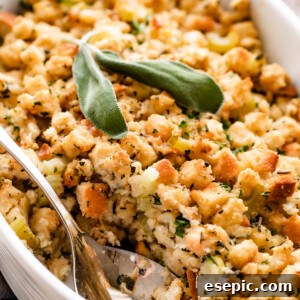
Easy Herb Stuffing
by Katerina | Easy Weeknight Recipes
Toasted French bread forms the base of this Easy Herb Stuffing, made with real butter, fresh herbs, tender veggies, and wine.
Cook Time: 25 minutes
Baking Time: 40 minutes
Total Time: 1 hour 15 minutes
Servings: 8
Ingredients
- 1 whole loaf (1 pound) white French bread, diced
- ¼ cup unsalted butter plus 2 tablespoons
- 1 large yellow onion, diced
- ½ cup celery, chopped
- 4 cloves garlic, minced
- 1 teaspoon salt
- 1 teaspoon black pepper
- ½ cup dry white wine
- ½ cup flat leaf parsley, minced
- 2 tablespoons fresh sage leaves, minced
- 2 tablespoons fresh rosemary, leaves only, minced
- 2 tablespoons fresh thyme, leaves only, minced
- 2 cups chicken broth
- 2 large eggs
Instructions
- Preheat the oven to 350°F (175°C).
- Place the bread cubes in a single layer on a sheet pan and bake for 10 minutes, or until dry and toasted. Transfer the bread cubes to a large bowl, and set aside.
- In a large sauté pan, heat 2 tablespoons butter over medium-high heat until melted. Add the onion and celery, and cook until the vegetables have softened and begun to lightly brown, about 7 to 8 minutes.
- Add the garlic, salt, and pepper to the vegetables. Sauté for 4 more minutes.
- Add the wine, and allow it to cook until reduced by half, about 5 more minutes.
- Remove the vegetable mixture from the heat. Transfer it to the bowl with the bread cubes. Add the parsley, sage, rosemary, and thyme, along with 1 cup of the chicken broth. Toss well to combine, and set aside.
- In a small bowl, whisk together the eggs with the remaining 1 cup of chicken broth. Pour this over the bread mixture, and toss well to combine.
- Transfer the mixture to a greased baking dish. Dice the ¼ cup of butter into small pieces, and sprinkle the pieces over the top of the bread mixture.
- Bake for 40 minutes, or until browned on top and hot in the middle. Serve warm.
Nutrition
Calories: 277kcal | Carbohydrates: 36g | Protein: 9g | Fat: 10g | Saturated Fat: 6g | Polyunsaturated Fat: 1g | Monounsaturated Fat: 3g | Trans Fat: 1g | Cholesterol: 61mg | Sodium: 888mg | Potassium: 235mg | Fiber: 2g | Sugar: 2g | Vitamin A: 738IU | Vitamin C: 14mg | Calcium: 72mg | Iron: 3mg
Nutritional info is an estimate and provided as courtesy. Values may vary according to the ingredients and tools used. Please use your preferred nutritional calculator for more detailed info.
Did you make this delicious recipe? We’d love to hear from you! Please leave a rating and a comment below to share your experience.
More Essential Holiday Side Dishes to Complete Your Feast
- Easy Roasted Vegetables
- Perfect Homemade Cranberry Sauce
- The Best Sweet Potato Casserole