
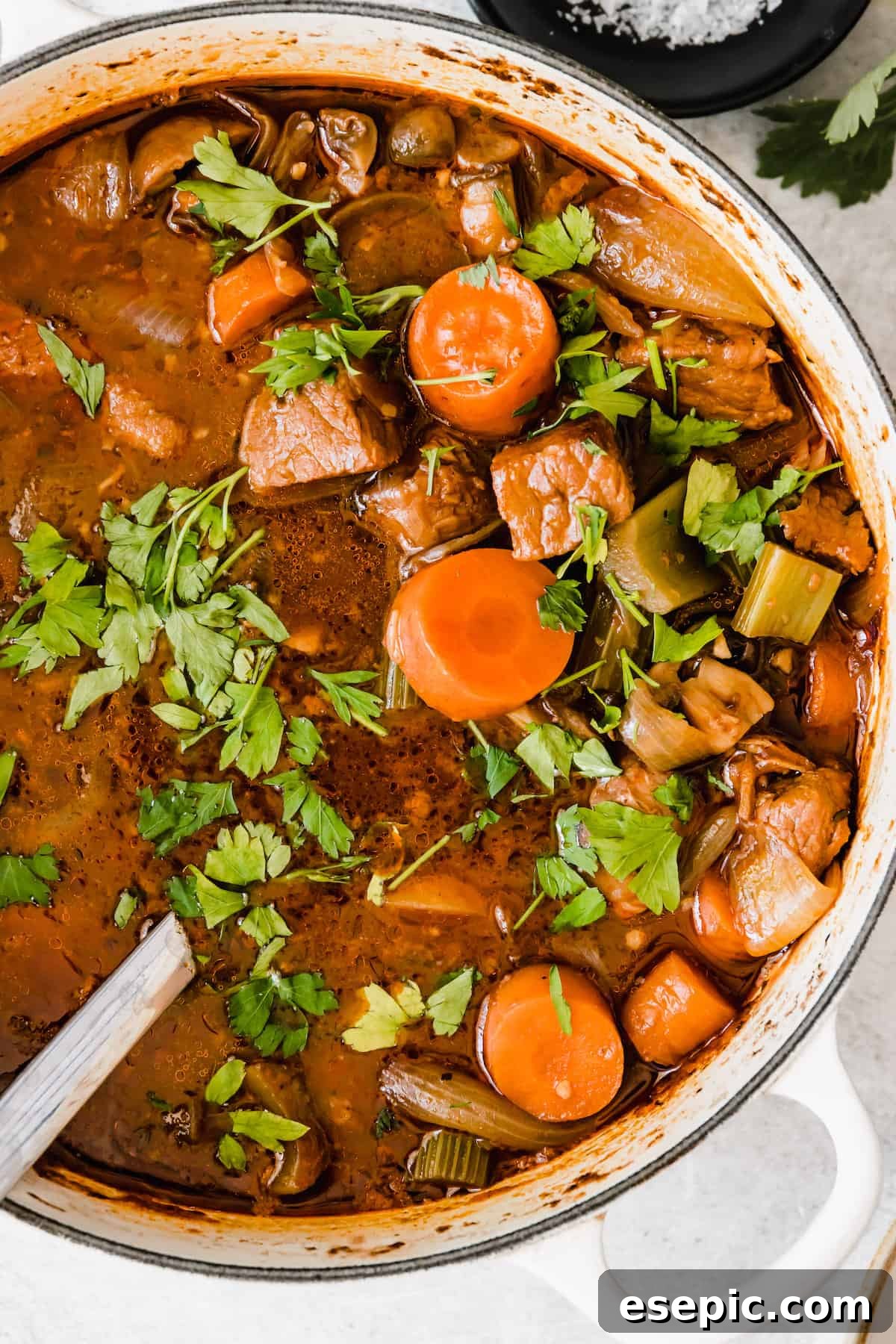
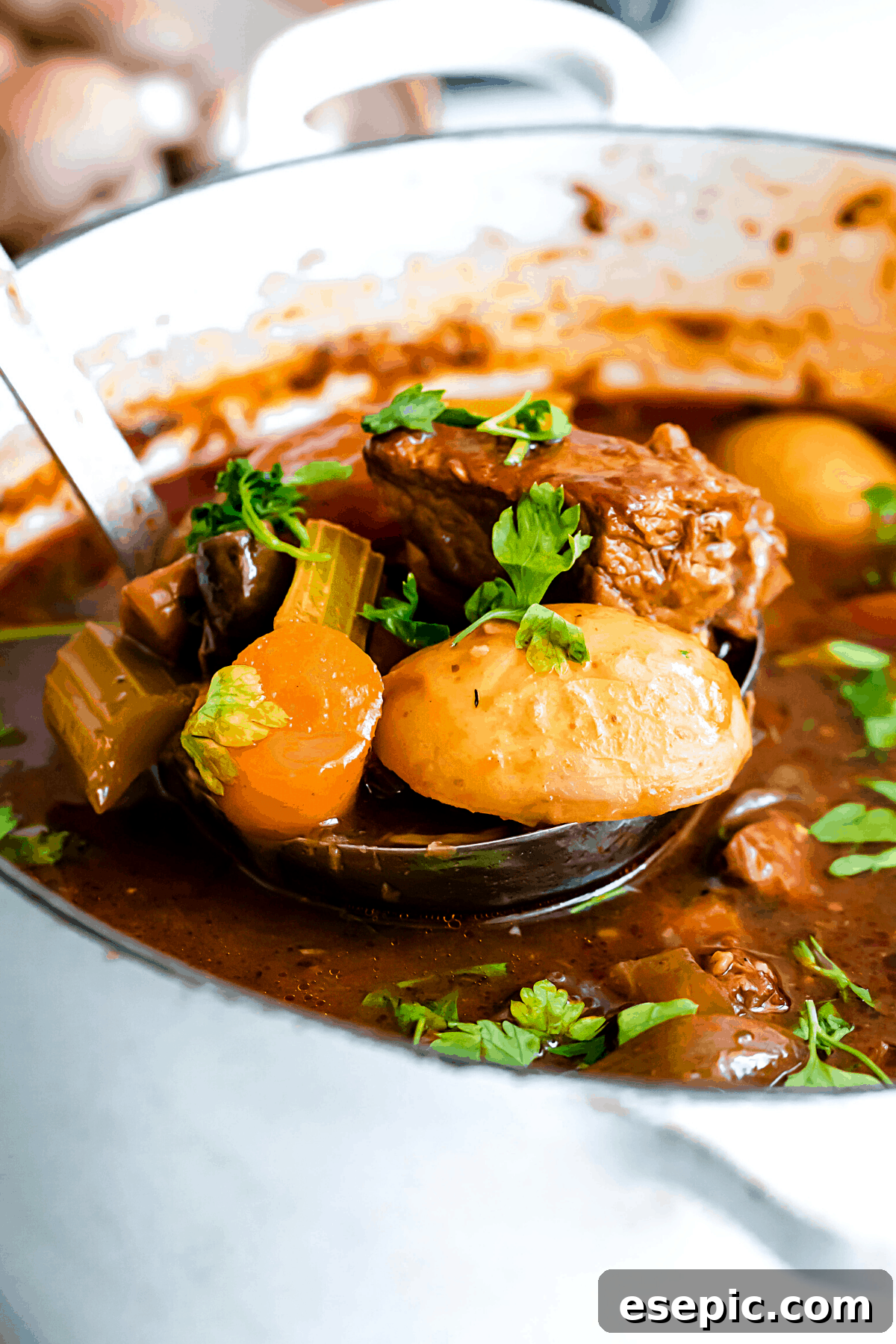
Hearty Guinness Beef Stew is a quintessential comfort food, renowned for its rich, complex flavors and deeply satisfying nature. Crafted with succulent chunks of beef, tender baby potatoes, and a medley of wholesome vegetables, all simmered in a robust broth infused with a full bottle of authentic Guinness stout, this stew is more than just a meal—it’s an experience. Each spoonful delivers a warm embrace, perfect for chilly evenings and festive celebrations alike. Prepare to warm your heart and soul with this Irish classic! Erin go bragh! 🍀
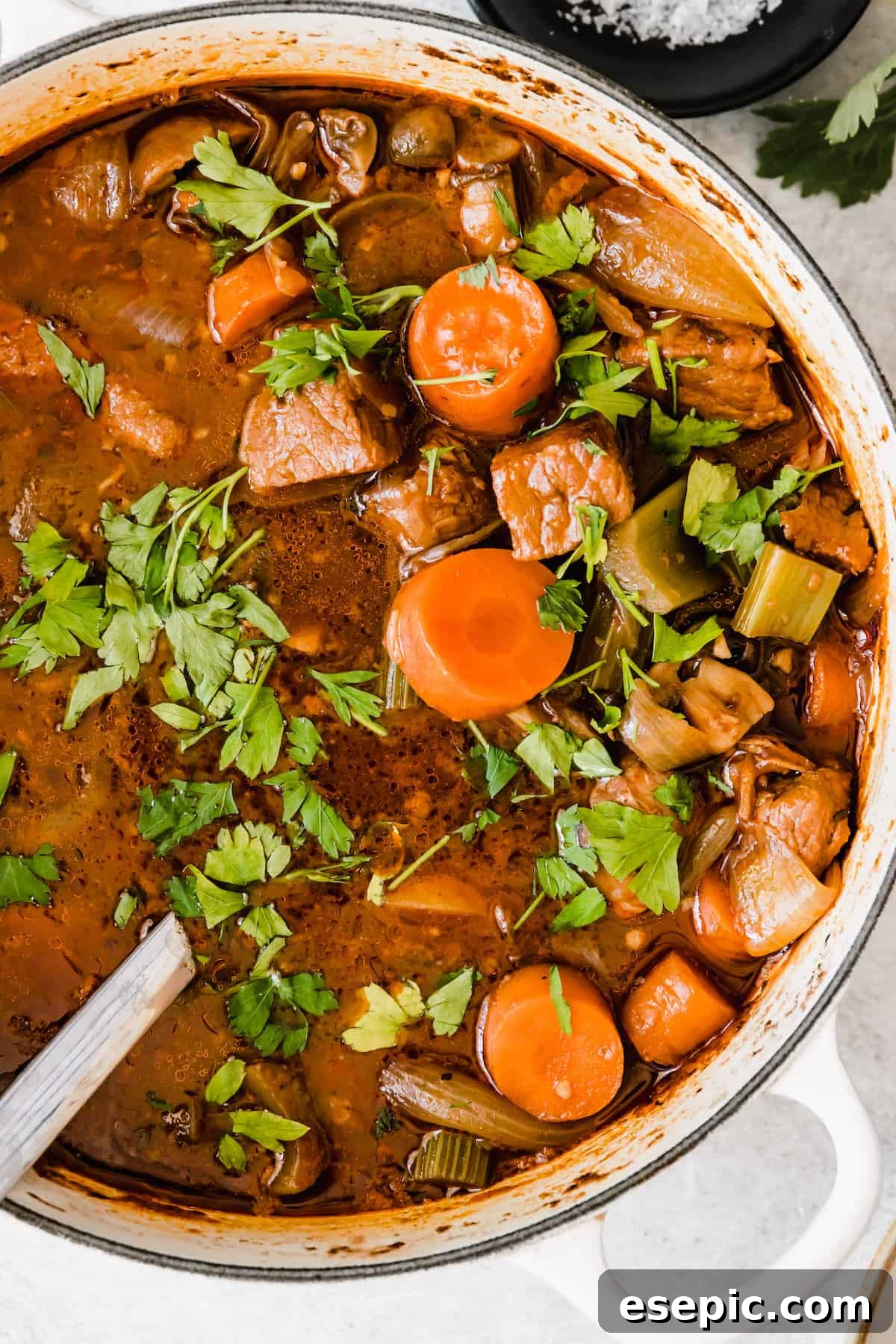
Mastering the Art of Easy Homemade Guinness Beef Stew
As the brisk winds of late winter and early spring sweep through, a craving for truly comforting and warming food often arises. In many parts of the world, like the Chicagoland area where temperatures can plummet well below freezing, a hearty meal becomes less of a desire and more of a necessity. Few dishes satisfy this primal need for warmth and nourishment quite like a generously portioned bowl of beef stew. It’s a cherished classic in countless households, a culinary hug that brings families together around the dinner table.
This particular beef stew recipe elevates the traditional concept, infusing it with an extraordinary ingredient that sets it apart: Guinness stout. The addition of a whole bottle of this iconic Irish beer transforms a simple stew into a deeply flavored, mellow, and unforgettable culinary masterpiece. Its characteristic bitterness and roasted notes add an unparalleled depth that complements the savory beef and sweet vegetables beautifully. Far from merely being a liquid, Guinness acts as a crucial flavor enhancer, creating a rich, dark gravy that clings to every ingredient, promising a taste sensation with every bite.
And let’s be honest, there’s an added bonus to cooking with Guinness. If you pick up a six-pack, you’ll only need one bottle for this magnificent stew, leaving you with five more to enjoy responsibly. Having a few bottles of Guinness chilling in the fridge is always a pleasant thought, especially when a celebration is near. Consider it a proactive toast to good times and, of course, to St. Patrick’s Day!
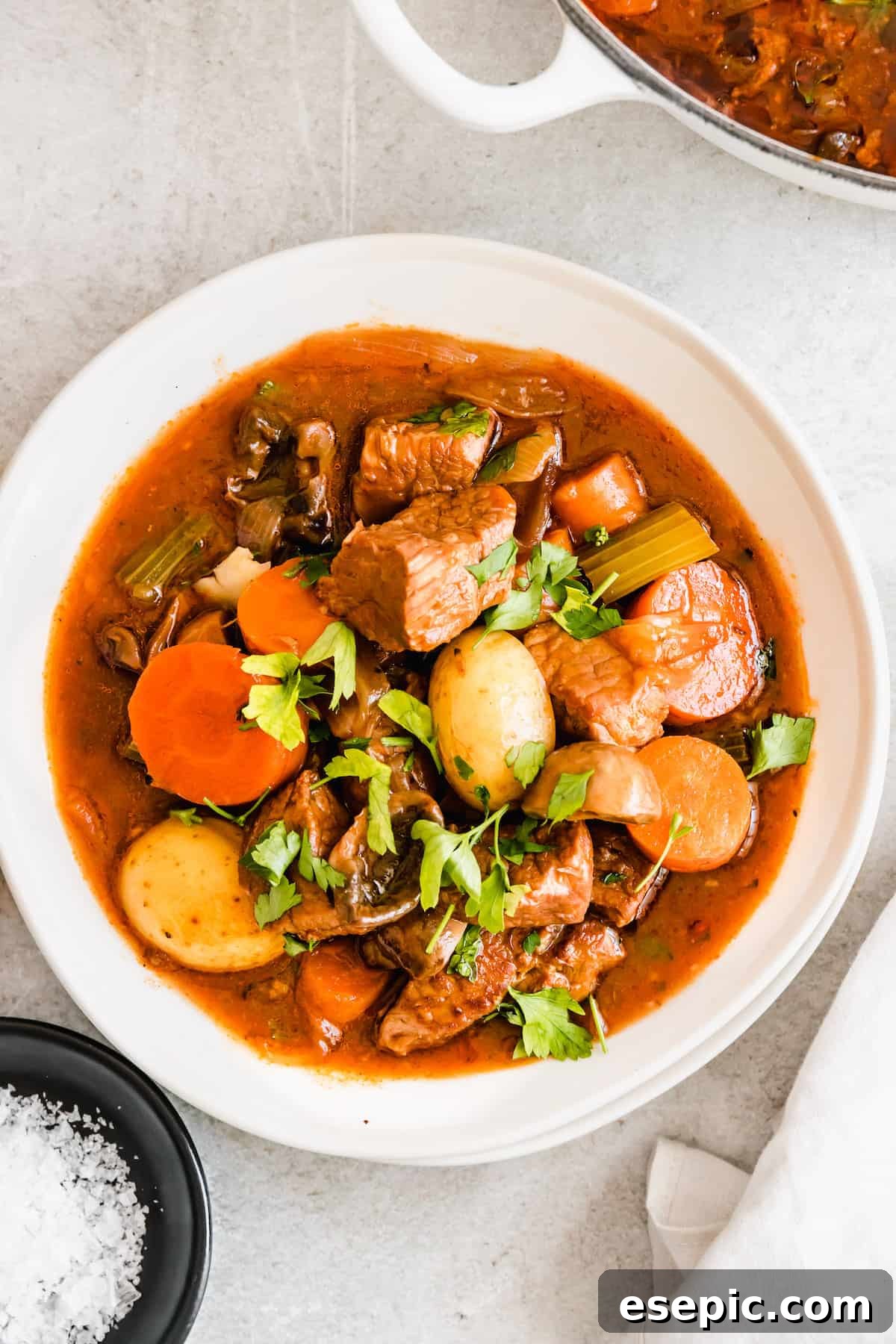
Celebrate St. Patrick’s Day with Authentic Irish Stew
For those seeking the perfect dish to honor St. Patrick’s Day, look no further. While corned beef and cabbage remain a popular choice, this rich, thick, and incredibly flavorful beef stew offers an equally festive and deeply satisfying alternative. It embodies the spirit of Irish cuisine with its robust flavors and hearty ingredients, making it an absolute winner for any gathering.
This stew is packed with an abundance of wholesome ingredients that contribute to its incredible depth and texture. We start with tender chunks of premium beef, carefully selected for its ability to become wonderfully succulent through slow simmering. Complementing the meat are baby potatoes, which soften to a creamy texture, alongside earthy button mushrooms, sweet carrots, pungent onions, and crisp celery. These vegetables not only add vibrant color but also contribute essential nutrients and layers of flavor.
The magic truly happens in the broth, which transforms into a luxurious, gravy-like consistency. This rich liquid is a harmonious blend of the aforementioned Guinness stout, robust beef broth, savory tomato paste, and aromatic dried thyme. Each ingredient plays a vital role in creating a balanced and deeply satisfying flavor profile that is both comforting and complex. The slight sweetness from the carrots and the earthiness of the mushrooms are perfectly balanced by the malty, slightly bitter notes of the Guinness, creating a symphony of tastes that will have everyone reaching for a second helping. It’s a dish that celebrates tradition, flavor, and the simple joy of a truly great meal.
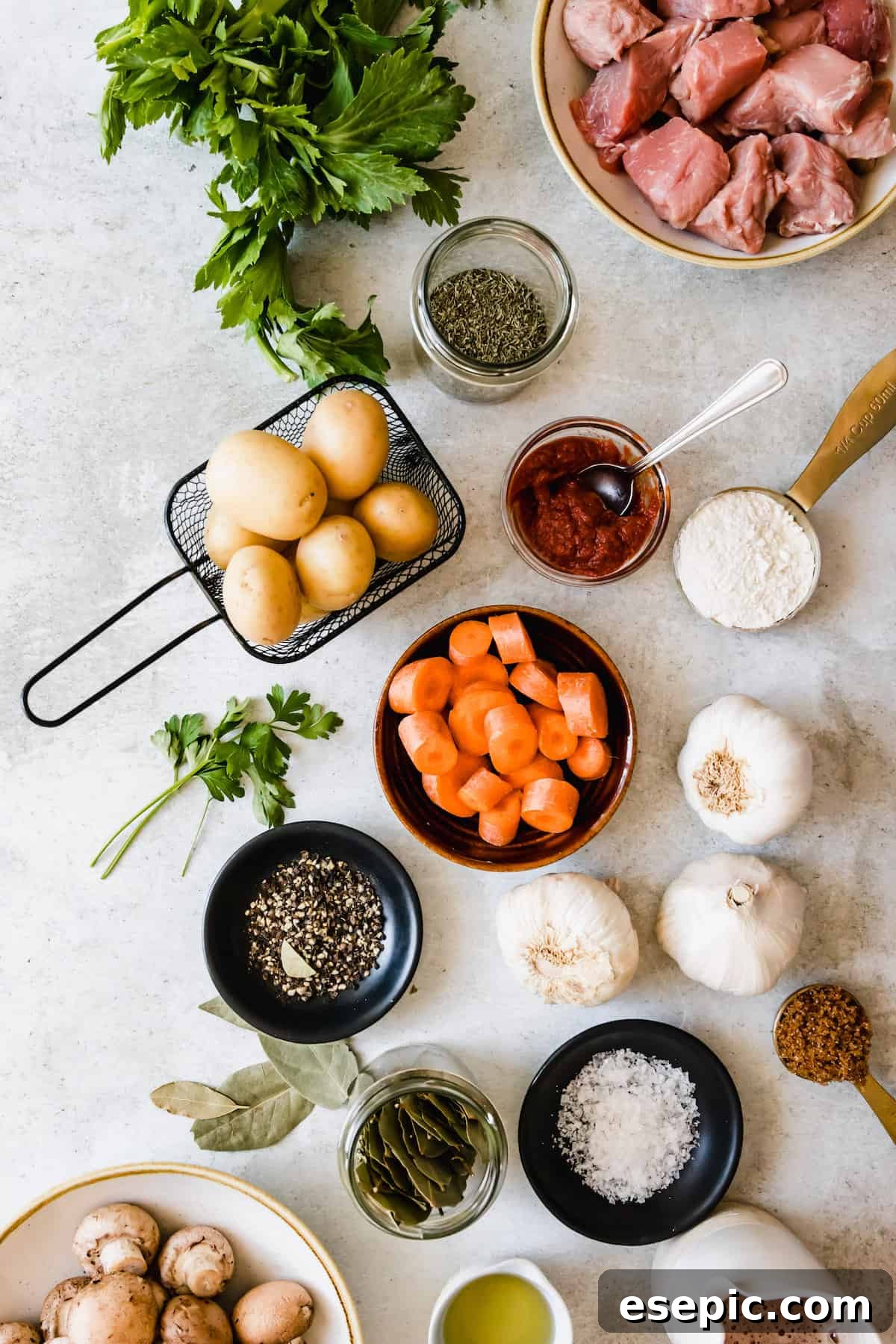
Essential Ingredients for Your Ultimate Guinness Beef Stew
While the ingredient list for this stew may appear extensive at first glance, don’t be deterred. Many of these items are likely already in your pantry, forming the foundation of countless delicious meals. We focus on fresh, high-quality components to ensure the most flavorful and satisfying stew.
- Beef Stew Meat: The star of our stew! For optimal tenderness and flavor, we highly recommend using boneless beef chuck. You can often find this pre-cubed at your local butcher or grocery store, or you can purchase a chuck roast and cut it into 1.5 to 2-inch cubes yourself. Beef chuck is ideal for stewing as it breaks down beautifully during slow cooking, becoming incredibly tender and juicy.
- Salt and Pepper: Fundamental seasonings. For a more pronounced and aromatic peppery kick, opt for freshly cracked black pepper. Its larger granules release a more intense flavor compared to finely ground pepper. Seasoning in layers is key to a flavorful stew.
- Olive Oil: Essential for browning the beef and sautéing the vegetables. A good quality extra virgin olive oil adds a subtle fruity note to the base of the stew.
- Garlic: Aromatic and indispensable. Three cloves, minced or pressed, will infuse the stew with a warm, savory depth. Garlic is a foundational flavor in almost any savory dish.
- Onions: The backbone of many stews. Two small yellow onions, chopped, will caramelize slightly as they cook, adding a touch of sweetness and robust flavor. White, sweet, or red onions can also be used, each offering a slightly different nuance.
- Carrots and Celery: The classic mirepoix. Three large carrots, thickly sliced (about 1-inch chunks), and two celery stalks, thickly sliced, provide sweetness, earthiness, and essential texture. They soften beautifully without disappearing into the stew.
- Potatoes: For that comforting, starchy goodness. About eight baby potatoes, halved, are perfect, as their skin adds rustic appeal and they hold their shape well. Alternatively, you can use regular potatoes (like Russet or Yukon Gold) cut into 1-inch chunks. Remember to scrub and rinse them thoroughly before cutting.
- Mushrooms: Adding an umami punch. Sixteen ounces of Cremini (baby bella) or button mushrooms, halved or sliced, will absorb the rich flavors of the stew and add a delightful texture. Their earthiness pairs wonderfully with the stout.
- Flour: Our initial thickening agent. Approximately 1/4 cup of all-purpose flour helps create a rich roux-like base when combined with the sautéed vegetables, contributing to the stew’s luscious texture. For a gluten-free option, cornstarch or a gluten-free flour blend can be used.
- Guinness: The signature ingredient! One 12-ounce bottle (roughly 1 ½ cups) of Guinness stout is crucial for imparting that unique, deep, malty flavor and signature color. Its roasty notes are irreplaceable.
- Tomato Paste: The “secret ingredient” for profound depth. Four tablespoons of tomato paste add a concentrated umami richness and a subtle tangy sweetness that balances the stew’s flavors. Don’t skip this; it’s a flavor powerhouse.
- Beef Broth: The liquid foundation. Four cups of quality beef broth, whether homemade or store-bought, will ensure a savory base. Opt for low-sodium versions if using store-bought to better control the seasoning.
- Bay Leaf: An aromatic essential. Just one bay leaf subtly perfumes the stew with a herbaceous, slightly floral note that enhances the overall aroma. Remember to remove it before serving.
- Thyme: Classic herb pairing. One teaspoon of dried thyme, or a tablespoon of finely chopped fresh thyme, adds an earthy, savory aroma that complements the beef and other vegetables.
- Brown Sugar: A touch of balance. Just one teaspoon of brown sugar helps to round out the flavors, subtly enhancing the sweetness of the vegetables and balancing the bitterness of the Guinness without making the stew overtly sweet.
- Fresh Chopped Parsley: For a vibrant finish. A sprinkle of fresh parsley not only adds a pop of color but also a fresh, herbaceous counterpoint that brightens the rich flavors of the stew.
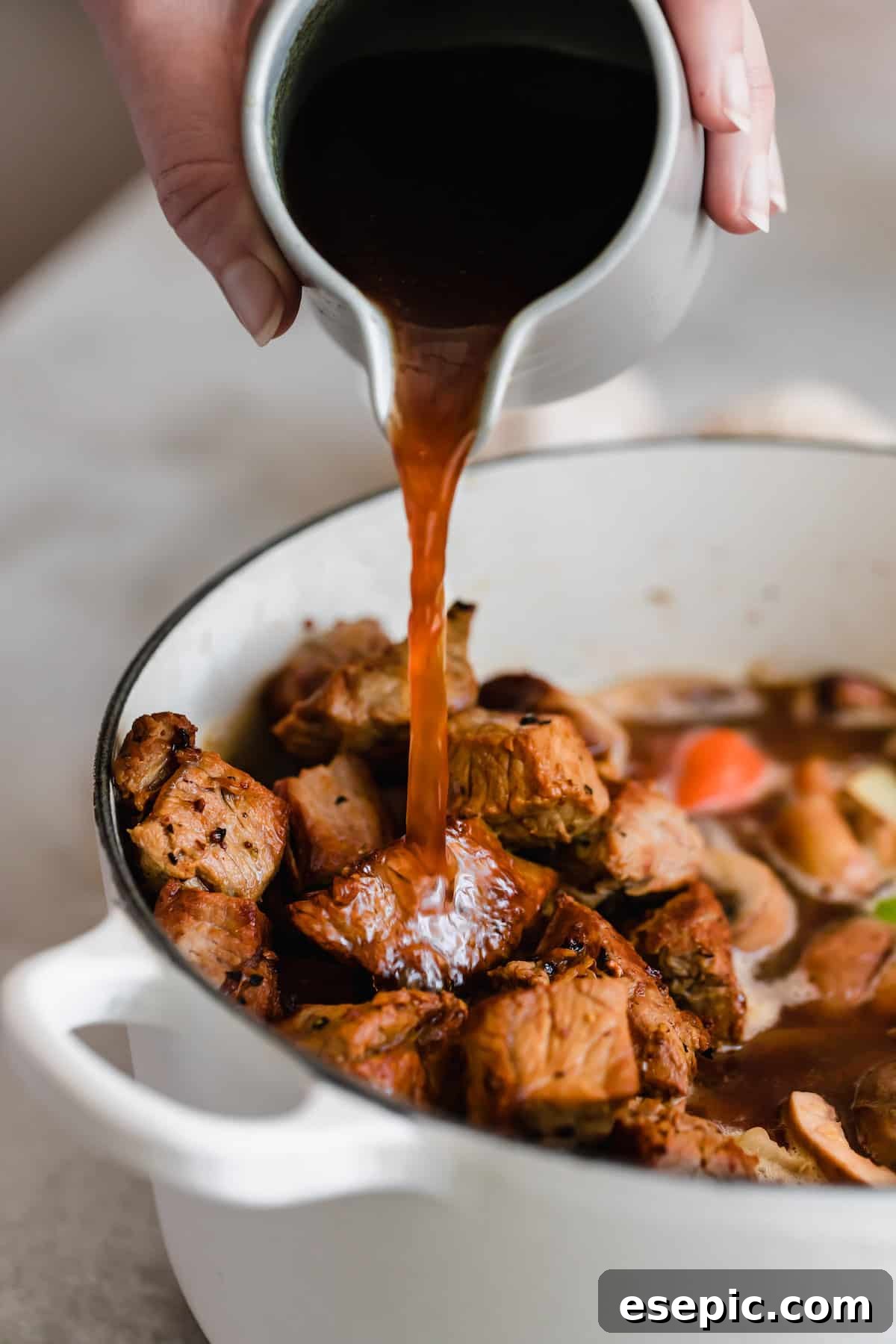
The Magic of Guinness: Why Stout in Beef Stew?
The choice of Guinness in this stew is not merely a nod to tradition, but a deliberate culinary decision that profoundly impacts the flavor profile. While you could technically experiment with other dark beers or stouts, Guinness stout is celebrated for its distinctive characteristics: a bold, roasted bitterness, hints of coffee and chocolate, and a wonderfully creamy mouthfeel. When slow-cooked, these complex flavors mellow and integrate beautifully with the savory beef and sweet vegetables, creating a rich, deep, and subtly malty base that is truly unmatched. It adds an authentic Irish touch and a depth that transforms a simple beef stew into an extraordinary dining experience. The tradition of using Guinness in Irish stews dates back centuries, reflecting the integral role of stout in Irish culture and cuisine.
Can I Substitute Lamb for Beef in this Irish Stew?
Absolutely! Substituting lamb for beef is an excellent variation that yields a equally delicious and perhaps even more traditional Irish stew for some palates. Lamb, with its stronger, slightly gamey, and distinctly savory flavor, pairs exceptionally well with the robust notes of Guinness. The stout’s richness beautifully complements the lamb, creating a more intense and earthy profile. If you choose to use lamb, simply follow the recipe instructions precisely, swapping out the beef chuck for an equivalent amount of boneless lamb shoulder or leg, cut into stewing cubes. The cooking times and method remain the same, ensuring your lamb stew will be just as tender, flavorful, and soul-satisfying.
Crafting Your Guinness Beef Stew: A Step-by-Step Guide
Preparing this Guinness Beef Stew is surprisingly straightforward, despite its impressive flavor. The key to a smooth cooking process is preparation. A vital piece of advice: ensure all your ingredients are prepped, measured, and ready to go before you even turn on the stove. This technique, known as “mise en place,” makes the cooking enjoyable and stress-free. Once everything is organized, it’s a simple sequence of browning the beef, sautéing the aromatics and vegetables, and then allowing it all to simmer gently until the meat reaches peak tenderness. Easy peasy!
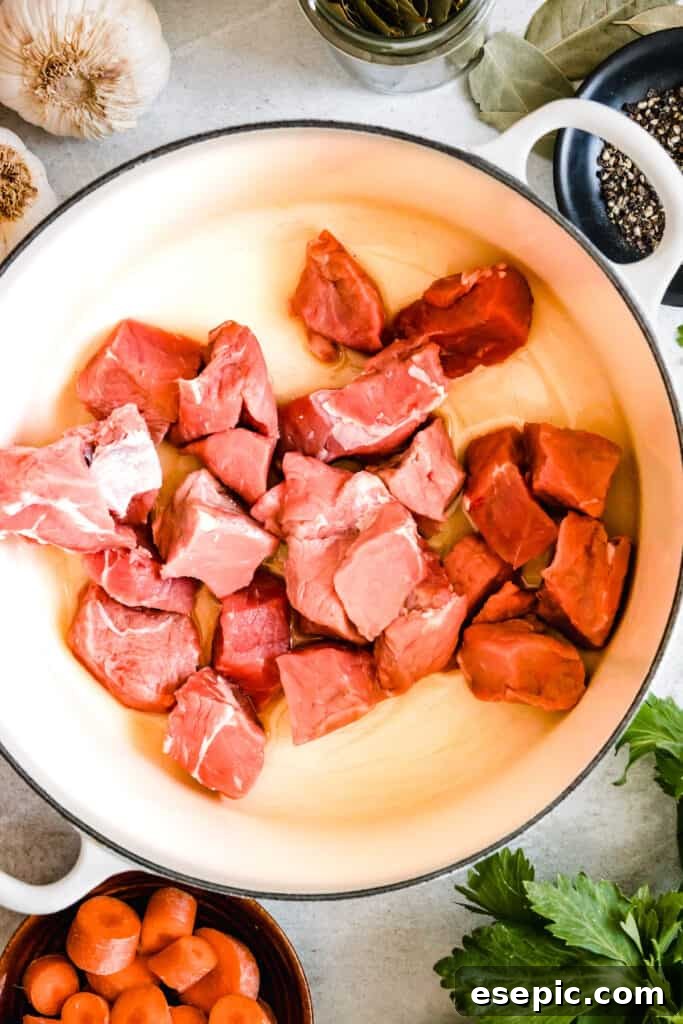

- Brown the Beef to Perfection. Begin by generously seasoning your cubed beef with salt and freshly cracked black pepper. This initial seasoning is crucial for building flavor. Next, heat two tablespoons of olive oil in a large, heavy-bottomed Dutch oven over high heat. Once the oil is shimmering and hot, add the beef in batches, ensuring not to overcrowd the pot. Overcrowding will steam the meat instead of browning it. Sear the beef on all sides until a beautiful, deep brown crust forms. This crust is packed with flavor (the Maillard reaction!) that will enrich your stew. Once browned, remove the beef from the Dutch oven and set it aside on a plate.
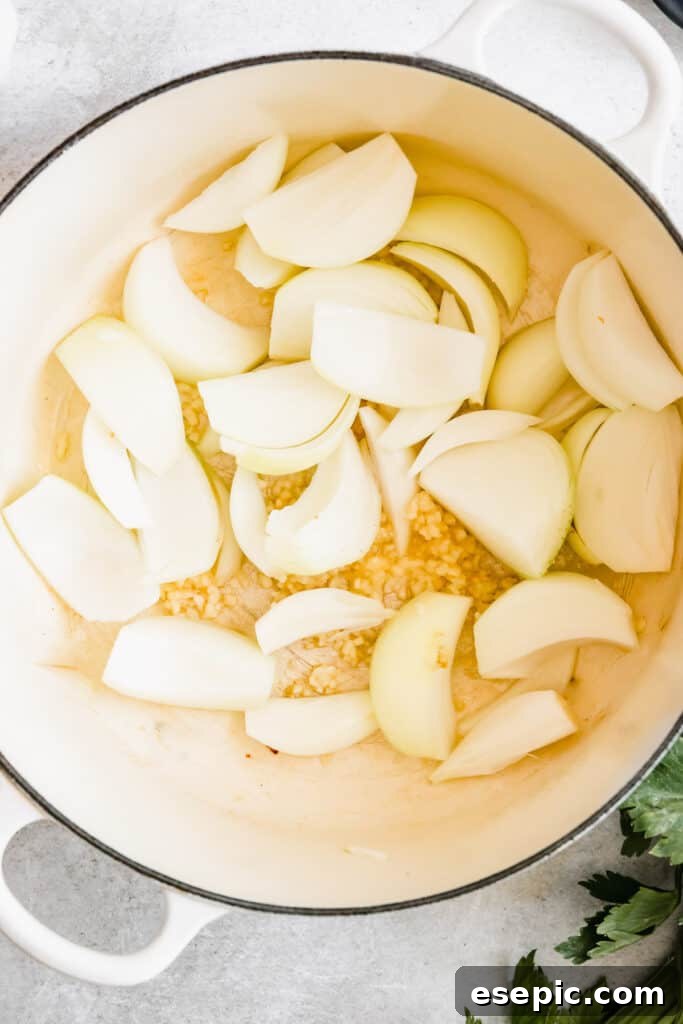
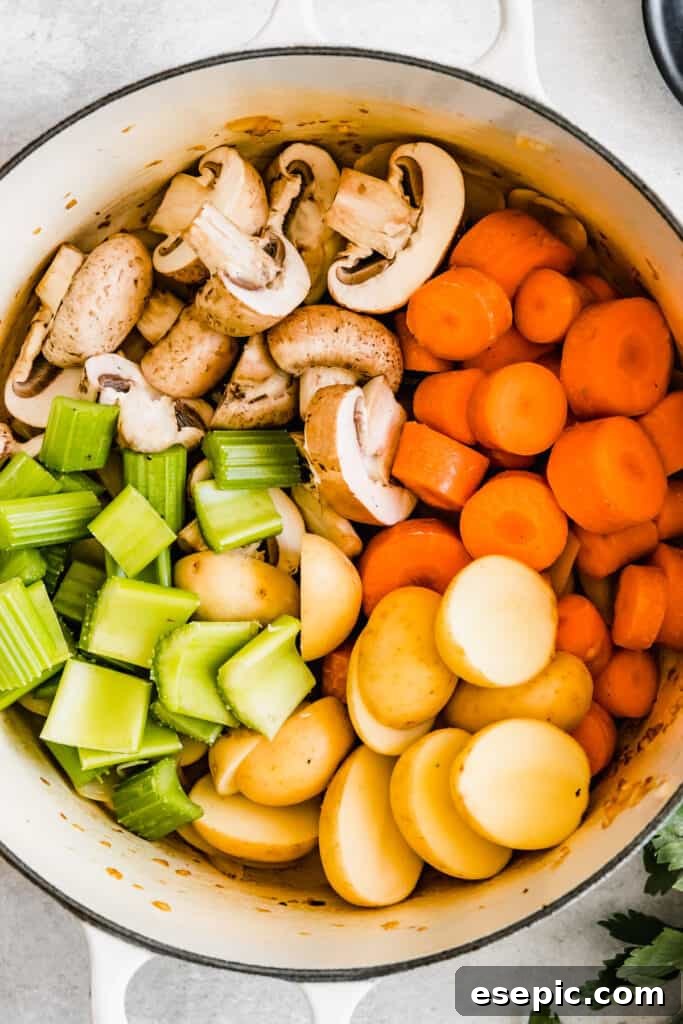
- Sauté the Aromatics and Vegetables. Add the remaining olive oil to the same pot, reducing the heat slightly if necessary. Stir in the minced garlic and chopped onions, cooking them for about 2 to 3 minutes until they become fragrant and translucent, but not browned. Then, introduce the heartier vegetables: the thickly sliced carrots, celery, baby potatoes, and mushrooms. Continue to cook for another 3 minutes, stirring occasionally, allowing the vegetables to soften slightly and begin releasing their natural flavors.
- Build the Roux with Flour. Sprinkle the all-purpose flour evenly over the sautéed vegetables. Stir diligently to ensure all the vegetables are well-coated. Cook for an additional 2 minutes, stirring continuously. This step is crucial, as it lightly toasts the flour, removing any raw taste and forming the base of our thick, rich gravy.
- Deglaze the Pan with Guinness. Pour the entire bottle of Guinness beer over the vegetables. Immediately use a wooden spoon or a sturdy spatula to scrape up any browned bits that have stuck to the bottom of the pot. These bits, known as “fond,” are intensely flavorful and will dissolve into the liquid, adding immense depth to your stew. Allow the Guinness to simmer for a minute or two, letting some of the alcohol evaporate.
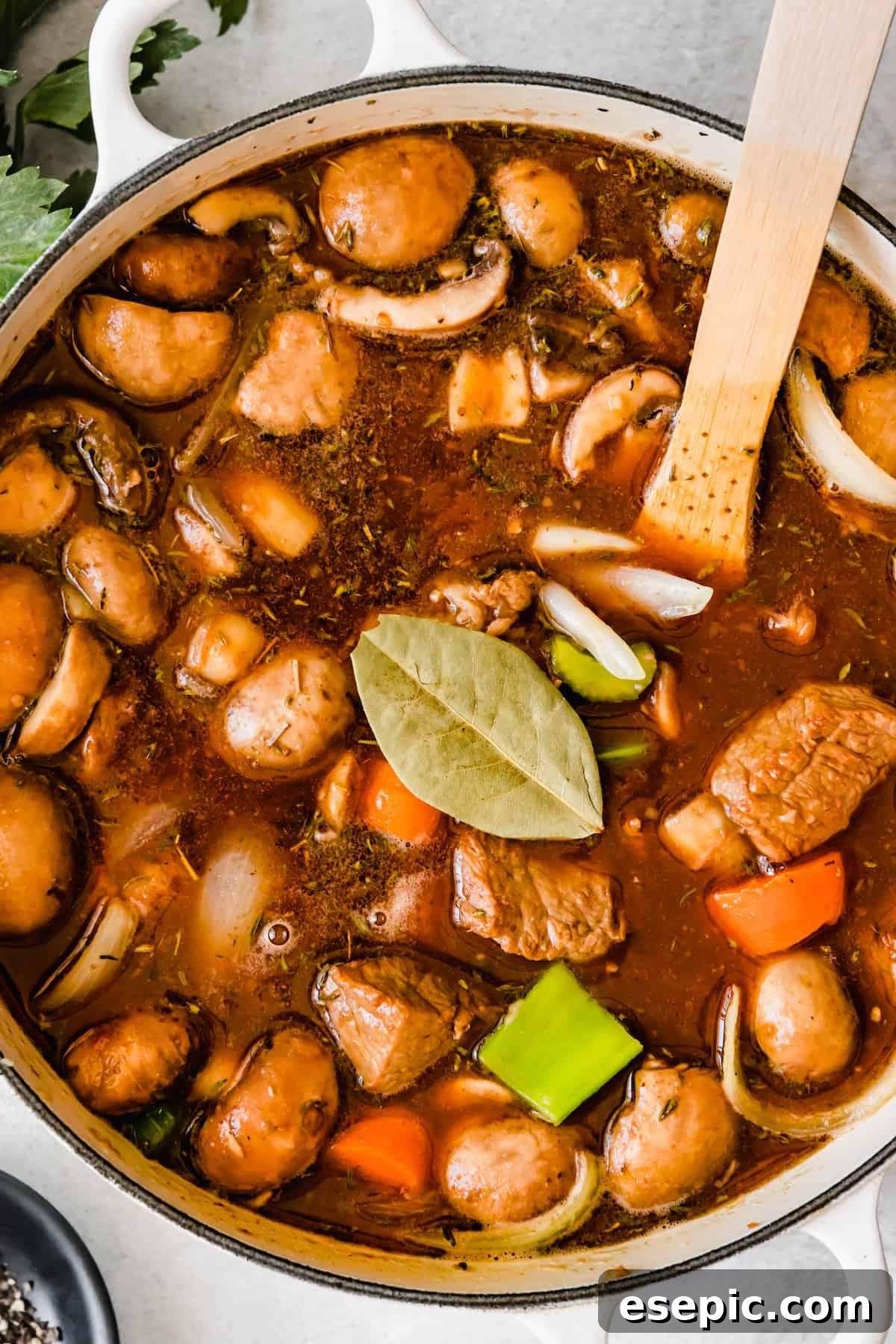
- Combine and Simmer. Return the browned beef cubes to the pot. Stir in the tomato paste, beef broth, bay leaf, dried thyme, and brown sugar. Mix everything thoroughly to ensure all ingredients are well combined and distributed. Bring the mixture to a gentle boil, then immediately reduce the heat to low. The goal is a steady, gentle simmer, not a rapid boil.
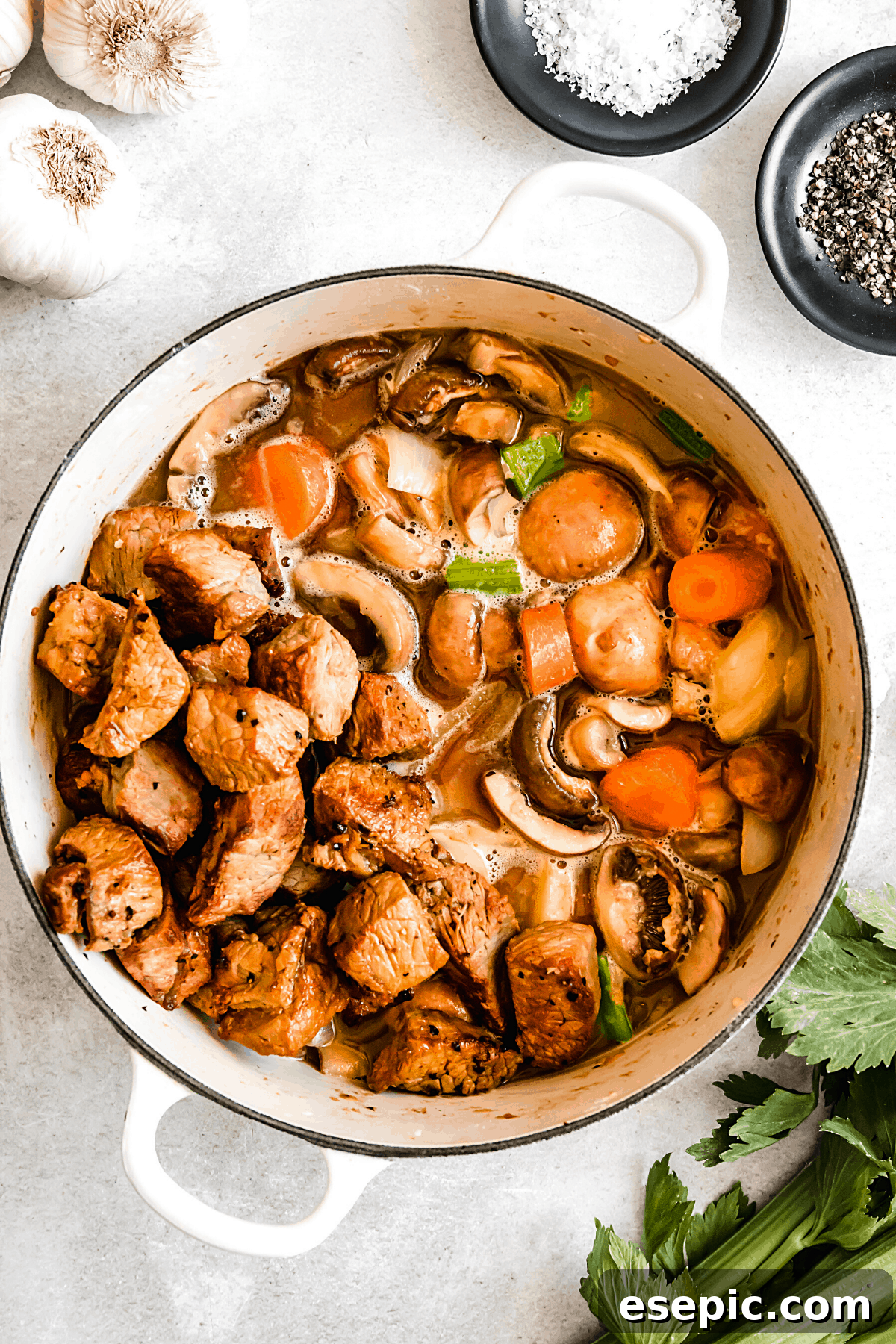
- Slow Simmer to Perfection. Cover the Dutch oven tightly with its lid and allow the stew to simmer gently for approximately 1 ½ hours. During this time, the beef will begin to tenderize, and the flavors will meld beautifully. After 1 ½ hours, uncover the stew and continue to cook for an additional 30 minutes. This final uncovered simmering period allows the stew to thicken naturally as the liquid reduces, achieving that perfect, rich, gravy-like consistency.
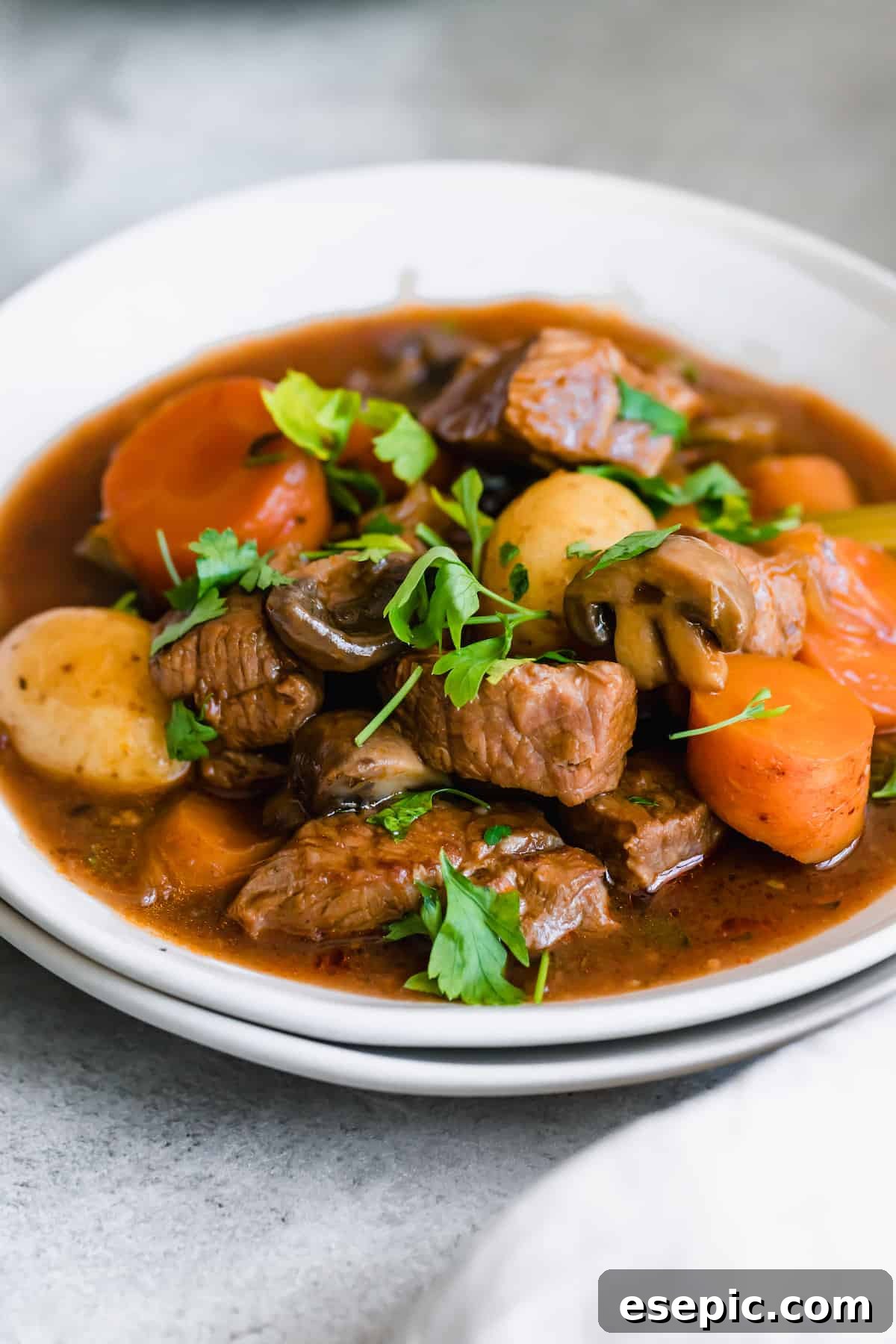
- Final Adjustments and Serving. Once thickened, taste the stew and adjust the seasonings as needed. This is your chance to add a pinch more salt or pepper if desired. Carefully remove and discard the bay leaf. Ladle the hot stew into bowls and garnish generously with fresh, chopped parsley for a burst of color and fresh herbaceousness. Serve immediately and enjoy the fruits of your labor!
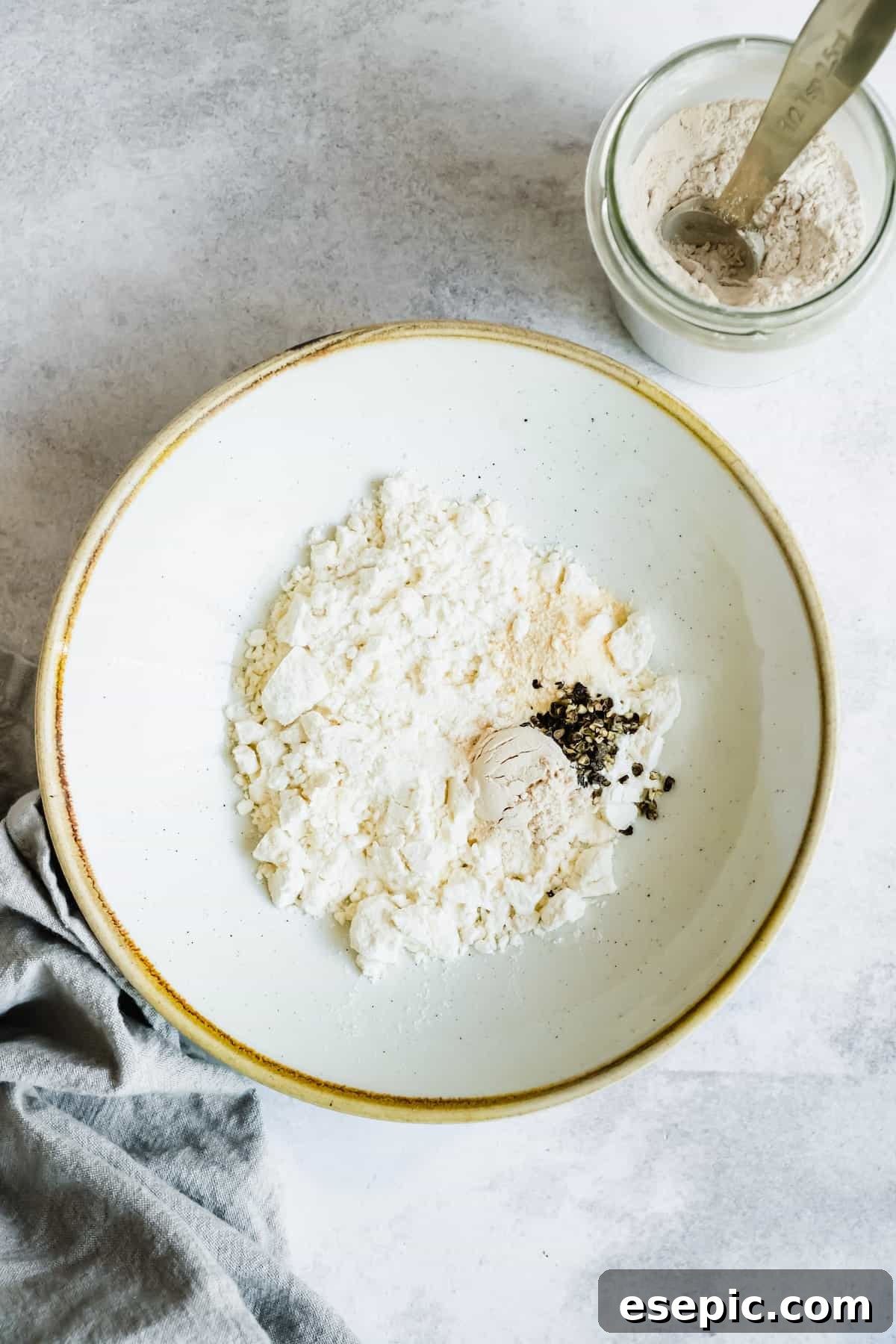
Achieving the Perfect Consistency: How to Thicken Your Stew
Sometimes, even after extended simmering, a stew might not reach your desired thickness. Fret not, there are simple and effective ways to achieve that luscious, gravy-like consistency. Here are a couple of tried-and-true methods:
- The Cornstarch Slurry Method: This is arguably the quickest and easiest way to thicken a stew. In a small bowl or measuring cup, combine one tablespoon of cornstarch with two tablespoons of cold water. Whisk these two ingredients together thoroughly until a smooth, lump-free slurry forms. This ensures the cornstarch integrates evenly without clumping. Once smooth, slowly whisk the slurry into your simmering stew. Continue to stir gently for a couple of minutes; you’ll notice the stew begin to thicken as it heats. Cornstarch provides a clear, glossy finish to your sauce.
- The Rice Absorption Method: For a more subtle and integrated thickening, consider adding a small handful of rice about thirty minutes before your stew is scheduled to finish cooking. Typically, rice is steamed for about fifteen minutes, maintaining its individual grain integrity. However, when added to a stew and cooked for double that time (or even longer, depending on the rice type), it begins to break down. The rice starches will absorb a significant amount of the liquid and then slowly dissolve, naturally thickening the stew and adding a creamy body without altering the flavor profile significantly. This method is particularly good if you want to avoid a separate slurry step and prefer an “all-in-one” approach.
Tips and Variations for the Best Guinness Beef Stew
Achieving a truly outstanding Guinness Beef Stew involves a few key insights and opportunities for personalization. These tips will help you master the dish and even explore exciting variations.
- Understanding Tender Beef: The journey of stewing meat is a delicate balance. Initially, when cooking starts, the meat can be quite tough and rubbery as collagen begins to break down. With continued slow simmering, it transforms into wonderfully tender and moist perfection. However, beware of overcooking, which can lead to dry, stringy, and less enjoyable meat. If you taste your stew and the beef feels springy or difficult to chew, it likely just needs more time on the stove to become beautifully tender. If, on the other hand, it starts to feel dry and shreds too easily, it’s a sign that it’s ready to come off the heat. Trust your taste and texture test!
- Exploring Beer or Wine Alternatives: While Guinness is central to this recipe’s identity, you can certainly experiment with other liquids to achieve a different character. A rich, dry red wine, such as a Cabernet Sauvignon or Merlot, can be used instead of Guinness. This substitution will transform your dish into something akin to a classic French beef bourguignon, offering a different but equally sophisticated flavor profile. The wine will add tannic depth and fruit notes, creating a luxurious stew perfect for a more elegant meal.
- Mashed Potatoes – A Delicious Twist: For those who prefer a creamier accompaniment, you can omit the potatoes from the stew itself. Instead, prepare a batch of fluffy, buttery mashed potatoes to serve as a base, then ladle the rich Guinness beef stew over the top. This creates a delightful contrast in textures and allows the stew’s gravy to soak into the mashed potatoes. Removing the potatoes from the stew also opens up opportunities to incorporate other delicious vegetables directly into the pot, such as parsnips for a touch of sweetness, cauliflower florets, or even rutabaga, for added variety and nutrition.
Perfect Pairings: What to Serve with Guinness Beef Stew
This hearty Guinness Beef Stew is a complete meal in itself, brimming with protein, vegetables, and rich flavors. However, a few complementary side dishes can elevate the dining experience even further. Here are some ideal companions that beautifully enhance the robust flavors of this Irish classic:
- Warm Dinner Rolls: There’s nothing quite like a soft, crusty dinner roll to soak up every last drop of that savory Guinness gravy. A freshly baked batch of homemade No-Knead Dinner Rolls is exceptionally simple to make and provides the perfect vehicle for savoring the delicious broth. Their tender texture and slightly sweet notes complement the rich stew beautifully.
- Crisp Roasted Snap Peas: To add a refreshing textural contrast to the slow-simmered, rich stew, consider serving a vibrant green vegetable. Roasted sugar snap peas, with their delightful crunch and sweet flavor, offer a bright counterpoint. Try my recipe for Roasted Sugar Snap Peas for a simple yet elegant side that will balance the heartiness of the stew.
- Zesty Zucchini Fries: For another enjoyable contrast in both texture and flavor, crispy zucchini fries are an excellent choice. These Crispy Air Fryer Parmesan Zucchini Fries offer a zesty, savory crunch that provides a delightful textural break from the tender stew. Their appealing flavor and ease of preparation make them a crowd-pleasing addition to this meal.
Storing and Reheating Your Delicious Leftovers
One of the best things about a hearty stew is how well it keeps, often tasting even better the next day as the flavors continue to meld. Proper storage ensures you can enjoy this comforting meal for days to come.
- Refrigeration: To store leftover beef stew, allow it to cool completely before transferring it into airtight food storage containers or sturdy, sealable bags. Properly stored in the refrigerator, the stew will remain fresh and delicious for up to three days.
- Reheating: When you’re ready to enjoy your leftovers, spoon the desired portion into a covered saucepan. Heat gently over low to medium heat, stirring occasionally, until the stew is piping hot all the way through, ensuring both the meat and vegetables are thoroughly warmed. You may need to add a splash of beef broth or water if the stew has thickened too much during storage.
Freezing Your Guinness Beef Stew for Future Enjoyment
Beef stew is an excellent candidate for freezing, making it perfect for meal prepping or having a comforting dinner ready on busy weeknights.
- Freezing Instructions: Once your stew has cooled completely, ladle it into durable, freezer-safe airtight containers or heavy-duty freezer bags. When using containers, be sure to leave a small amount of headspace at the top, as liquids expand when frozen. If using bags, squeeze out as much air as possible before sealing and lay them flat in your freezer for efficient storage. For the best flavor and texture, aim to consume the frozen stew within three months. Thaw overnight in the refrigerator before reheating gently on the stovetop.

Hearty Guinness Beef Stew
by Katerina | Easy Weeknight Recipes
A thick and hearty stew made with tender chunks of beef, baby potatoes, carrots, onions, and a bottle of Guinness.
Prep Time: 30 minutes
Cook Time: 1 hour 30 minutes
Total Time: 2 hours
Servings: 8
Ingredients
- 2½ pounds boneless beef chuck, cubed
- 1/2 teaspoon salt
- 1/4 teaspoon cracked black pepper
- 3 tablespoons olive oil
- 3 cloves garlic, minced
- 2 small yellow onions, chopped
- 3 large carrots, cut into 1-inch chunks
- 2 celery stalks, thickly sliced
- 1 pound potatoes, peeled and quartered
- 1 pound brown button mushrooms, halved or sliced
- 1/4 cup all-purpose flour
- 12 ounces (1 bottle) Guinness beer
- 4 tablespoons tomato paste
- 4 cups beef broth
- 1 bay leaf
- 1 teaspoon dried thyme
- 1 tablespoon brown sugar
- ¼ cup water or beef broth (for slurry)
- 1 tablespoon cornstarch (for slurry)
- Fresh chopped parsley for garnish
Instructions
- Season the cubed beef with salt and pepper.
- Add 2 tablespoons olive oil to a large 7-quart Dutch oven and set it over high heat.
- Once oil is hot, add the beef in a couple of batches and sear on all sides until well browned.
- Remove browned beef from the Dutch oven and set aside.
- Add remaining olive oil to the pot. Stir in the garlic and onions and cook for 2 to 3 minutes, or until softened and fragrant.
- Add the carrots, celery, potatoes, and mushrooms. Cook for a further 3 minutes, stirring occasionally. Add more oil, if needed.
- Sprinkle the flour over the vegetables and mix well to coat. Cook for 2 minutes, stirring continuously.
- Add the Guinness beer and, using a wooden spoon, scrape up any browned bits from the bottom of the pot to deglaze.
- Return the beef to the pot; stir in the tomato paste, beef broth, bay leaf, thyme, and brown sugar. Mix thoroughly.
- Bring the mixture to a boil and then reduce heat to LOW; cover the Dutch oven with its lid and allow to simmer for 1 1/2 hours.
- Remove lid and cook for 30 more minutes to allow the stew to thicken.
- In a small cup or bowl, combine ¼ cup water or beef broth with 1 tablespoon cornstarch; whisk to combine into a smooth slurry.
- Add the cornstarch slurry to the stew and stir to incorporate.
- Cook for 3 more minutes, or until the stew has reached your desired thickness.
- Remove stew from heat; taste and adjust salt and seasonings, if required.
- Remove bay leaf and garnish stew generously with fresh chopped parsley.
- Serve immediately and enjoy!
Nutrition (Estimate per serving)
Calories: 434kcal | Carbohydrates: 25g | Protein: 33g | Fat: 22g | Saturated Fat: 8g | Trans Fat: 1g | Cholesterol: 98mg | Sodium: 795mg | Potassium: 1164mg | Fiber: 3g | Sugar: 6g | Vitamin A: 3974IU | Vitamin C: 18mg | Calcium: 64mg | Iron: 5mg
Nutritional information is an estimate and provided as a courtesy. Values may vary according to the specific ingredients, brands, and cooking methods used. Please consult your preferred nutritional calculator for more detailed and accurate information based on your exact preparation.
More Delightful St. Patrick’s Day Recipe Ideas
If you’re planning a full St. Patrick’s Day feast or simply looking for more Irish-inspired culinary adventures, here are a few other fantastic recipes that capture the spirit of the Emerald Isle:
- Dublin Coddle: A traditional and incredibly comforting Irish sausage and potato stew, perfect for a hearty family meal.
- Crock Pot Corned Beef: Effortlessly tender corned beef cooked to perfection in a slow cooker, a classic for any Irish celebration.
- Fudge Brownies with Bailey’s Buttercream Frosting: Indulge your sweet tooth with decadent fudge brownies topped with a rich, Irish cream-infused buttercream—a grown-up treat!