
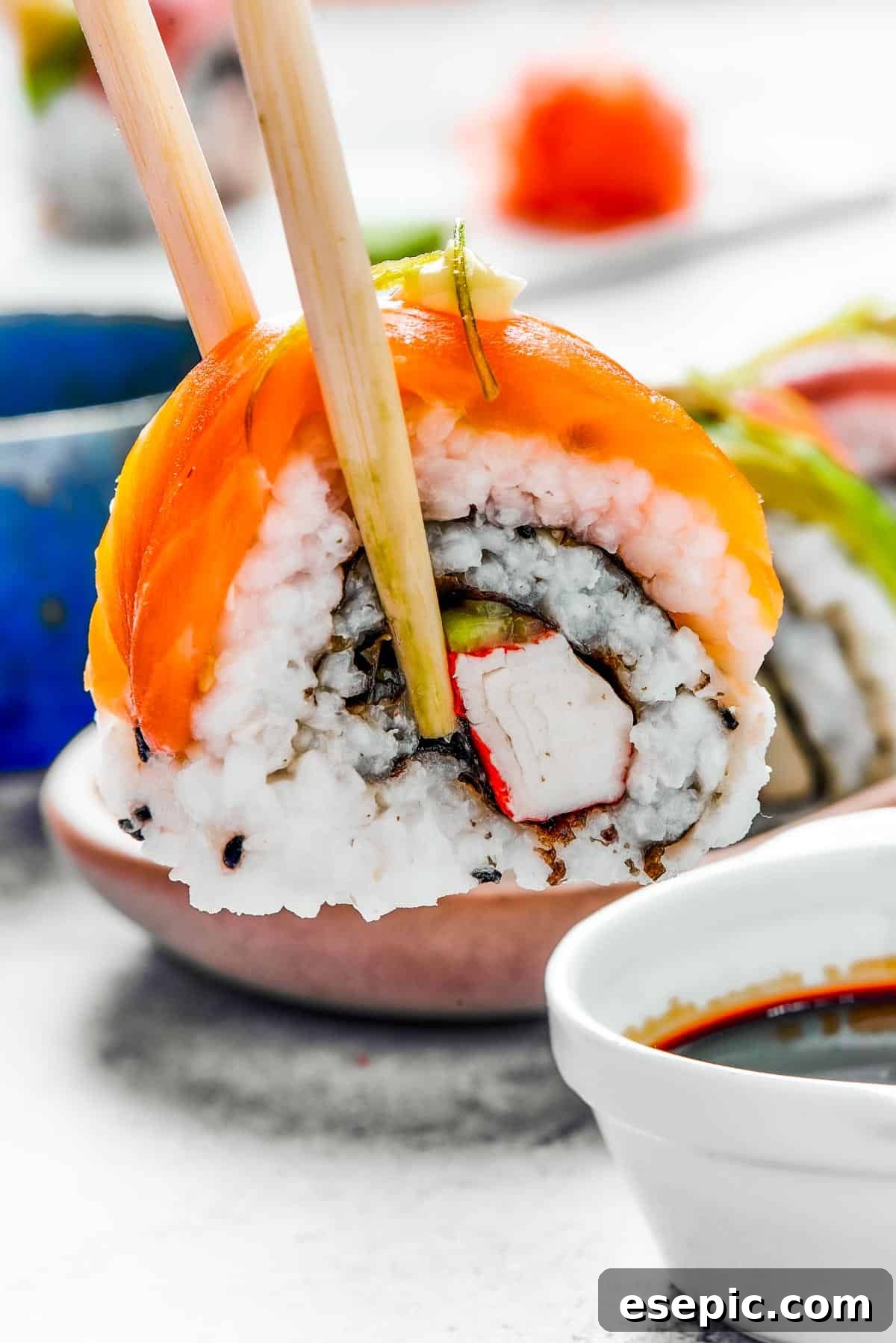
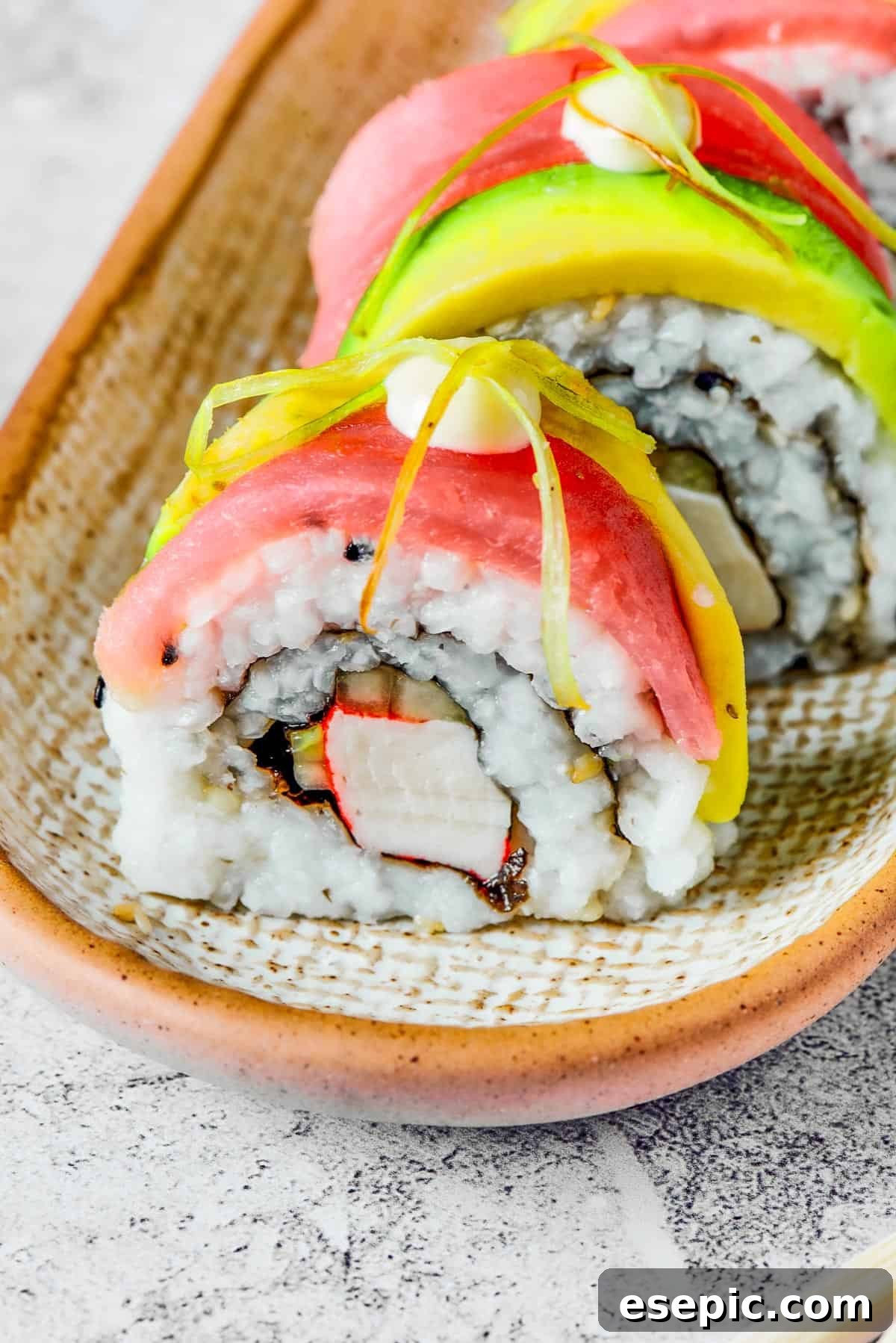
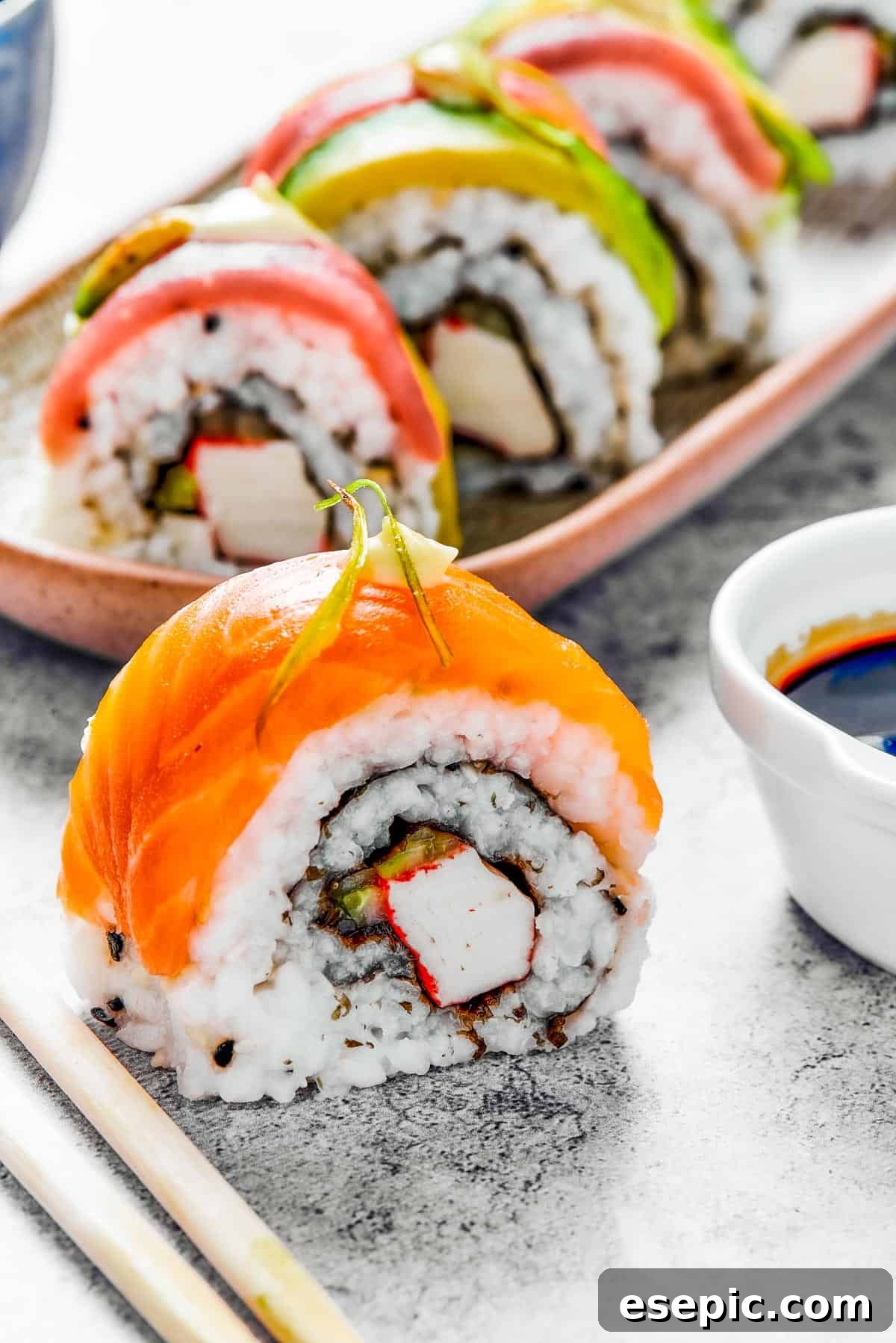
Unlock the secrets to crafting an absolutely stunning and incredibly delicious Rainbow Roll right in your own kitchen! This vibrant sushi masterpiece, renowned for its colorful array of fresh ingredients, is surprisingly simple to assemble. Featuring succulent slices of salmon and tuna, creamy avocado, and crisp cucumber, it’s a mouthwatering experience that rivals your favorite sushi restaurant, yet is completely approachable for the home cook.
For those eager to infuse even more culinary creativity, consider elevating your Rainbow Roll experience. A delightful twist could involve adding strips of teriyaki salmon, lending a sweet and savory depth that beautifully complements the fresh flavors. To complete a truly authentic Japanese-inspired feast, pair your homemade Rainbow Roll with crispy, golden shrimp tempura. Imagine the satisfaction of presenting such an exquisite meal, entirely prepared by your own hands!
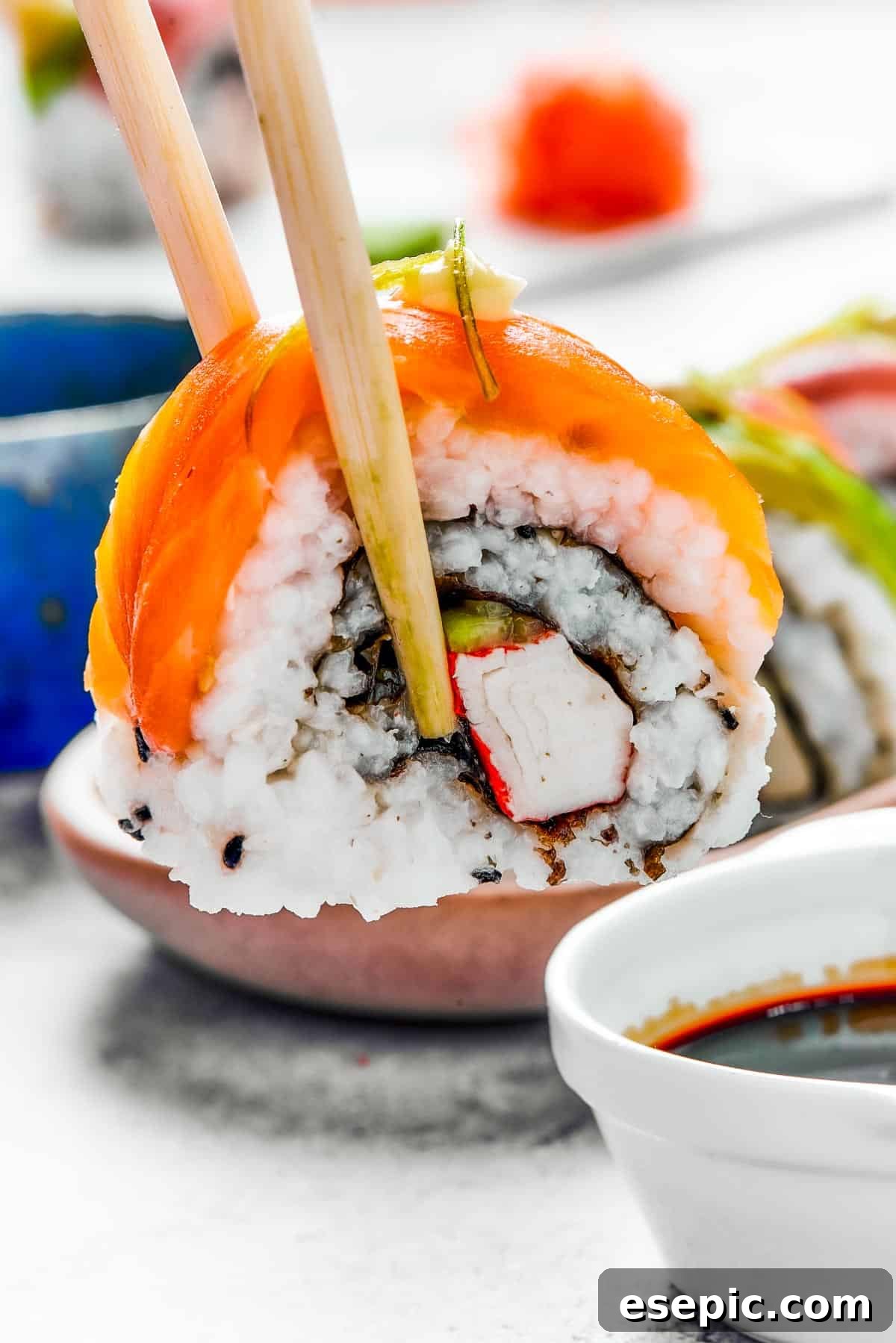
Restaurant-Quality Sushi, Effortlessly Crafted at Home!
Sushi holds a special place in my heart as one of the most exciting and fresh meals to enjoy when dining out. The sheer variety available, from intricate nigiri to imaginative maki rolls, ensures there’s always something new and delicious to explore. Its inherent freshness and unique flavors make it a consistently fun choice. However, the good news for fellow sushi enthusiasts is that indulging in your favorite roll doesn’t always necessitate an outing or a delivery order. With a little dedicated time, a few essential ingredients, and some simple techniques, you can easily replicate fantastic sushi in the comfort of your own home.
Now, let’s be realistic – I’m not suggesting you can master every complex, gourmet sushi roll in under an hour. Some creations genuinely demand advanced chef skills and meticulous preparation. But what if I told you that a beloved classic, the captivating Rainbow Roll, is remarkably straightforward to recreate in your kitchen? This vibrant and appealing roll, with its beautiful topping of colorful fish and avocado, is an ideal starting point for anyone looking to dive into the rewarding world of homemade sushi. It offers all the visual appeal and delicious taste of a restaurant experience without the intimidation often associated with sushi making.
Understanding Rainbow Roll Sushi: Raw or Cooked?
The traditional Rainbow Roll is indeed celebrated for its exquisite use of raw, sushi-grade tuna and salmon. These pristine ingredients are what give the roll its signature vibrant appearance and delicate, fresh flavor profile. While creative variations featuring cooked ingredients do exist – and can be equally delicious – this particular recipe adheres to the classic preparation, embracing the authentic taste of raw fish. For newcomers to sushi making, the idea of working with raw fish might seem daunting, conjuring images of highly skilled sushi chefs. But rest assured, creating a beautiful and safe Rainbow Roll at home is far more accessible than you might think. With the right ingredients and a clear understanding of food safety, you’ll be rolling like a pro in no time.
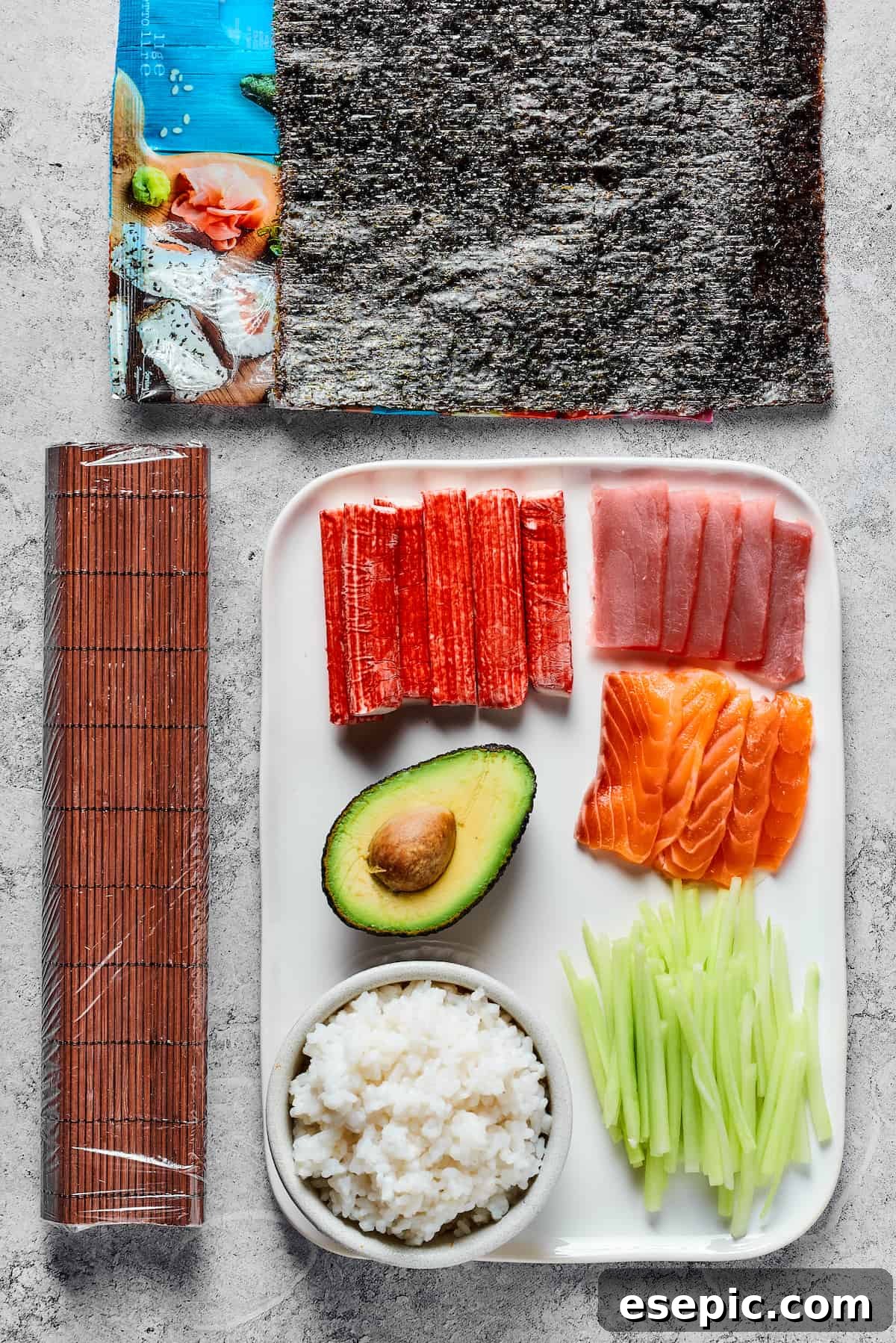
Essential Ingredients for Your Homemade Rainbow Roll
Despite its visually complex and alluring appearance, the Rainbow Roll requires a surprisingly modest list of ingredients. The magic lies in the freshness and quality of each component, which together create a symphony of flavors and textures. Let’s explore the full list of what you’ll need to bring this culinary masterpiece to life:
- Sushi Rice: This is the foundation of any great sushi roll. You’ll need about 4.5 ounces of prepared sushi rice. The preparation is key: short-grain Japanese rice cooked and then seasoned with a mixture of rice vinegar, sugar, and salt. You can certainly make it from scratch for the best flavor and texture, or for convenience, use high-quality packaged sushi rice available at most Asian markets or specialty grocery stores. Ensure it’s cooled to room temperature before use, as hot rice will make your nori soggy and difficult to work with.
- Sushi-Grade Salmon and Tuna: The stars of the Rainbow Roll! You’ll need 2 to 4 thin slices of each, ensuring they are raw and incredibly fresh. The term “sushi-grade” is crucial here, indicating fish that has been handled and processed specifically for safe raw consumption. We will delve deeper into selecting sushi-grade fish shortly, but always prioritize quality and safety.
- Avocado: One perfectly ripe avocado, sliced thinly. The ideal avocado for sushi should yield slightly to gentle pressure but not be mushy. Avoid overly hard avocados, which lack flavor and creamy texture, as well as those that are too soft, which can be difficult to slice neatly and will not hold their shape. Thin, uniform slices are essential for both aesthetics and texture.
- Nori: One standard sheet of dried seaweed, which forms the outer wrapper (or inner, depending on your roll style) of your sushi. Good quality nori should be crisp, dark green, and have a subtle oceanic aroma. It provides an essential umami note and structural integrity to your roll.
- Imitation Crabmeat (Surimi): Two pieces of imitation crabmeat, also known as surimi. This ingredient offers a delightful, slightly sweet, and savory flavor with a tender, flaky texture that is perfect for the interior of the roll. It’s a popular and accessible choice for many sushi rolls.
- Cucumber: One cucumber, peeled and sliced lengthwise into thin sticks. There’s nothing quite like the fresh, cool crispness of cucumber to provide a refreshing contrast to the richness of the fish and avocado. Its vibrant green color also adds to the “rainbow” effect.
- Toasted Sesame Seeds: Approximately one tablespoon of toasted sesame seeds. These tiny seeds are not just for garnish; they add a crucial roasted nuttiness and a pleasant textural crunch that enhances the overall flavor profile of the roll. They are often sprinkled on the rice before rolling.
Navigating Raw Fish: What You Need to Know About Sushi-Grade Ingredients
When it comes to preparing sushi with raw fish at home, food safety is paramount. The term “sushi-grade” or “sashimi-grade” is not a legally regulated term but rather a designation used by reputable fishmongers to indicate fish that is safe for raw consumption. This typically means the fish has been caught, handled, and processed under extremely stringent sanitary conditions, and most importantly, it has been flash-frozen to specific temperatures for a set duration to eliminate potential parasites. This freezing process is **critically important** for safety, as it effectively kills most common parasites that could be present in raw fish.
Therefore, it’s generally not considered a good food-safety practice to consume just any raw fish from a standard grocery store unless it is explicitly labeled as “sushi-grade,” “sashimi-grade,” or otherwise marked as safe for raw consumption. When purchasing fish for sushi:
- Seek Reputable Sources: Always buy your fish from a trusted fishmonger or a high-end grocery store with a dedicated seafood counter known for its quality and expertise. Don’t hesitate to ask questions about the fish’s origin, how it was handled, and if it’s suitable for raw consumption.
- Look for Specific Labels: Ensure the fish is clearly labeled as “sushi-grade” or “sashimi-grade.” This indicates it has undergone the necessary freezing protocol.
- Inspect the Fish: Even with proper labeling, fresh fish should look vibrant and firm, not dull or discolored. It should have a clean, oceanic smell, not a strong, “fishy” odor.
- Understand Freezing: Commercial freezers reach much lower temperatures than home freezers. If you’re buying fish that hasn’t been pre-frozen to sushi-grade standards, a home freezer may not be sufficient to kill all parasites. This is why buying from a specialized source is so important.
Prioritizing the purchase of properly handled, sushi-grade fish is the most vital step in ensuring a safe and enjoyable homemade sushi experience.
Crafting Your Rainbow Roll: A Step-by-Step Guide
Assembling a beautiful Rainbow Roll is a rewarding process that doesn’t require perfection to achieve a truly mouthwatering result. Even if your first roll isn’t flawless, it will still taste incredible! Here’s a detailed guide to help you create your own:
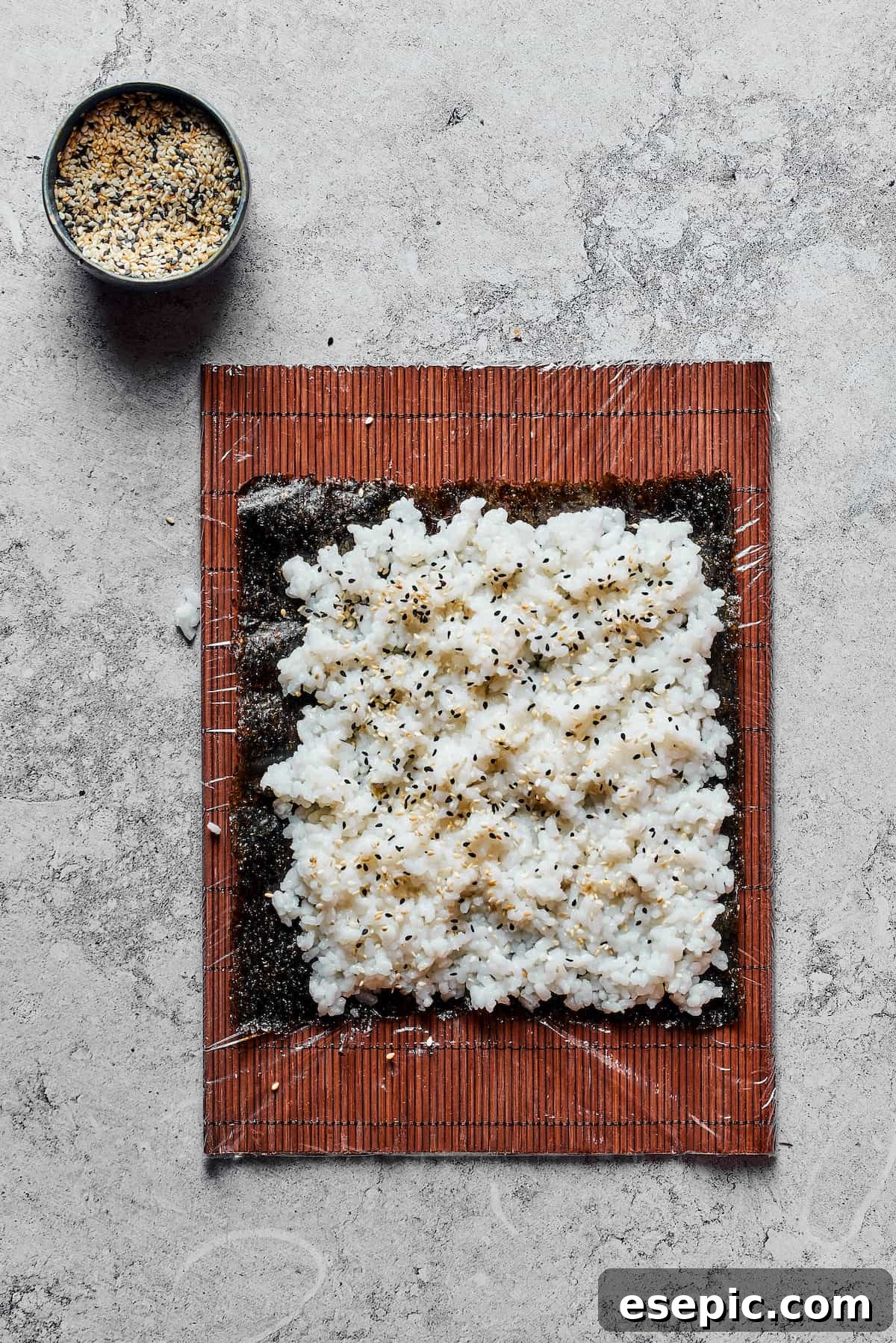
- Prepare Your Rolling Station and Base: Begin by laying a bamboo sushi mat on a clean, dry food preparation surface. If you like, you can cover the mat with plastic wrap to prevent sticking and make cleanup easier. Next, place one sheet of nori seaweed, shiny side up, directly onto the bamboo mat. With lightly wet hands (this prevents the rice from sticking to you), spread your prepared sushi rice evenly over the entire surface of the nori. Aim for a thin, consistent layer. Sprinkle the surface of the rice with toasted sesame seeds. Carefully flip the nori sheet over so that the rice (and sesame seeds) are now facing down onto the bamboo mat. This is known as an “inside-out” roll.
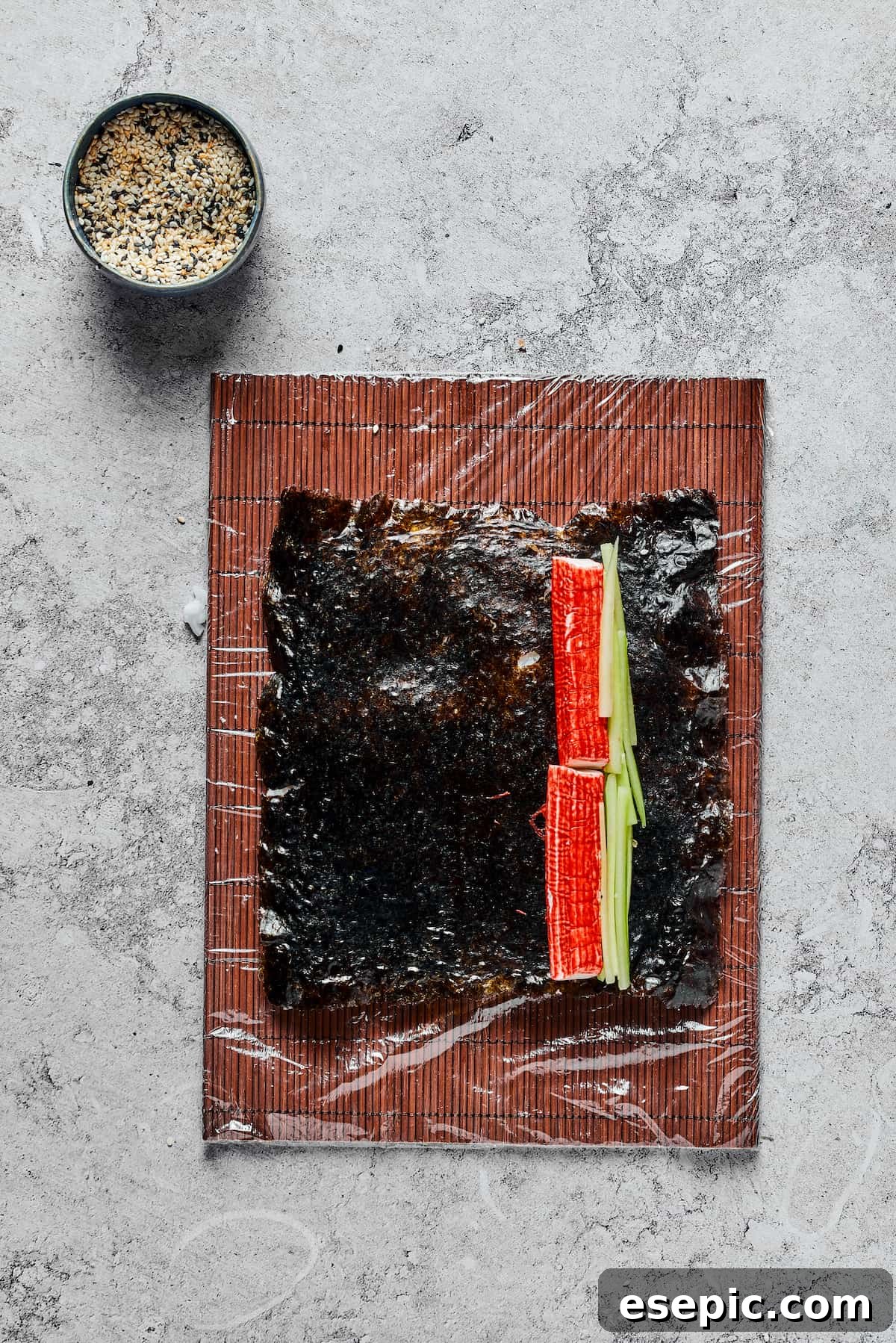
- Fill the Interior of the Roll: Along the bottom third of the rice-covered nori, closest to you, arrange your filling ingredients. Lay the pieces of imitation crabmeat lengthwise, side-by-side. Alongside the crab, place the thin cucumber slices. Ensure the fillings are neatly aligned and extend almost to the ends of the nori, but leave a small border to allow for clean rolling.
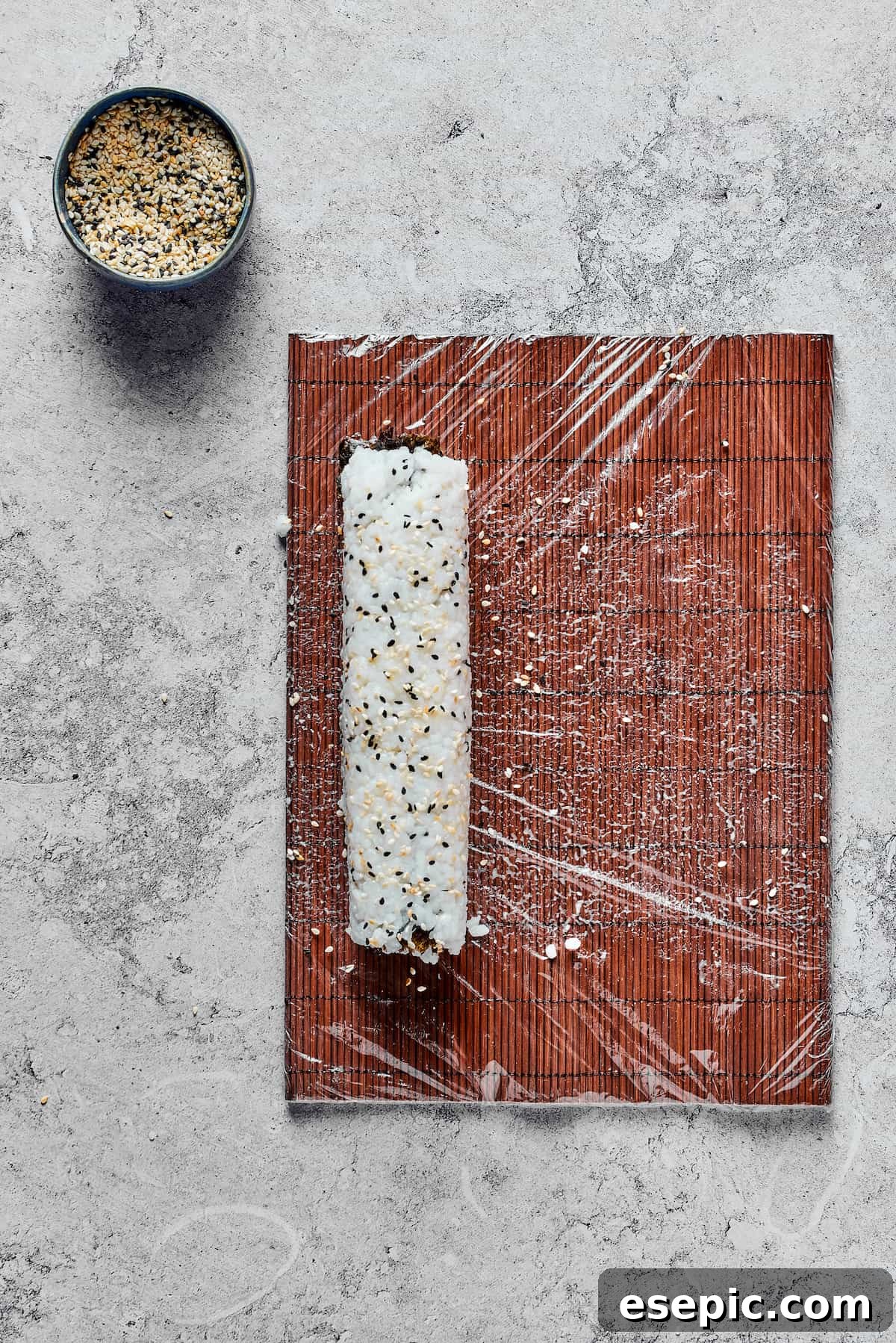
- Roll the Sushi: This step requires a gentle but firm touch. Place your thumbs underneath the edge of the bamboo mat closest to you. Using your fingers, hold the crab and cucumber fillings firmly in place to prevent them from shifting. Begin to roll the bamboo mat forward, tucking the edge of the nori over the fillings. As you roll, apply gentle, even pressure to create a tight cylinder. Lift the mat slightly with each turn to avoid rolling it into the sushi. Continue rolling until you have a firm, compact sushi roll.
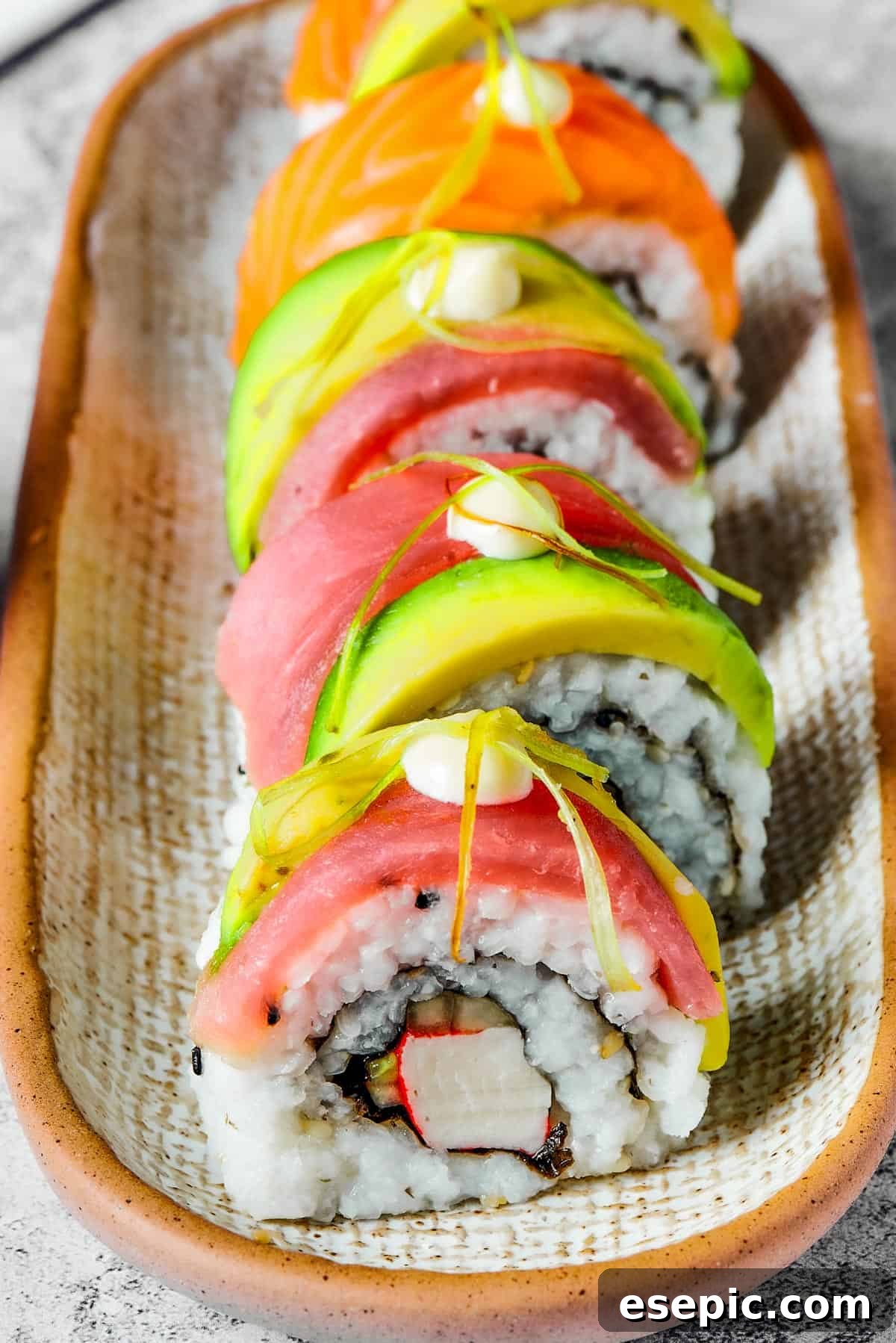
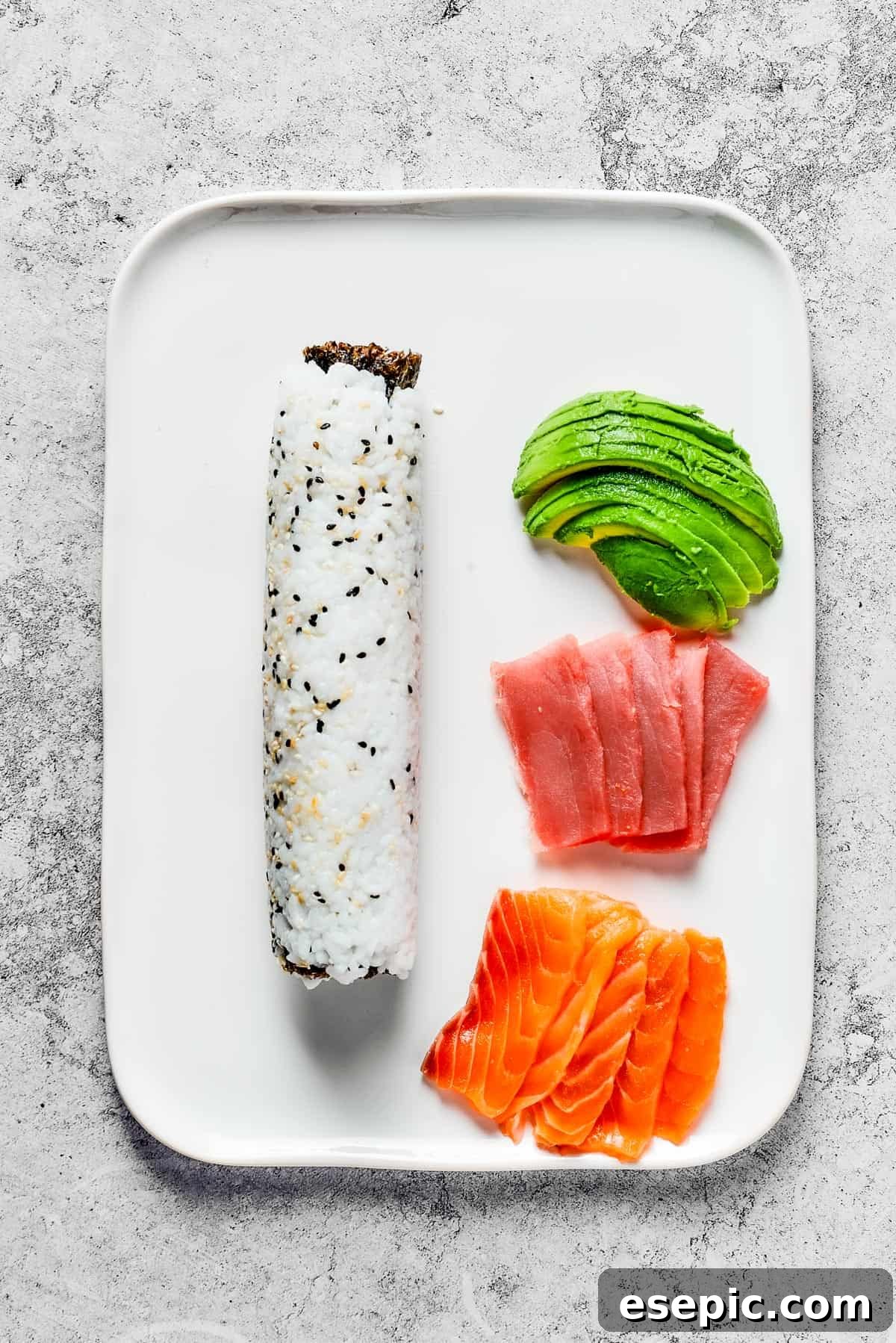
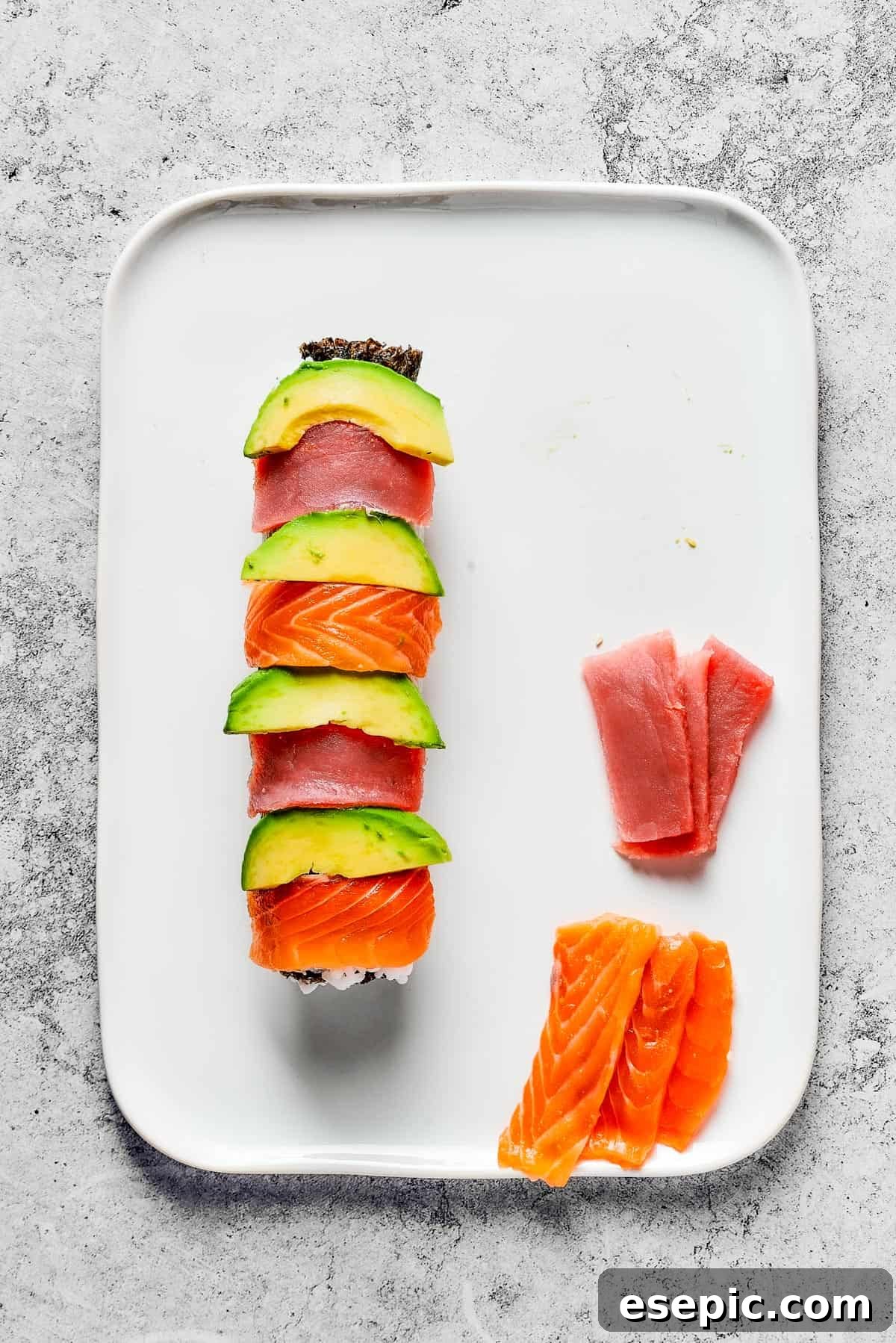
- Prepare and Apply the “Rainbow” Toppings: Now for the vibrant exterior! Take your sushi-grade tuna, salmon, and avocado and slice them very thinly – ideally, about 0.1 inches thick. Lay these delicate slices decoratively on top of your rolled sushi cylinder, alternating colors to create the iconic “rainbow” effect. Arrange them carefully to cover the entire top surface of the roll.
- Secure the Toppings and Slice the Roll: Place the bamboo mat back over the sushi roll with its newly applied toppings. Gently but firmly roll and squeeze the mat around the roll once more. This light pressure will help to adhere the delicate fish and avocado slices to the sticky rice, ensuring they stay in place when you cut. Remove the mat. Before slicing, ensure you have a very sharp knife. Dull knives will smush and tear the roll, ruining its beautiful presentation. Lightly wet the blade of your sharp knife to prevent sticking. Slice the sushi roll into 6 equal pieces with a clean, decisive cutting motion.
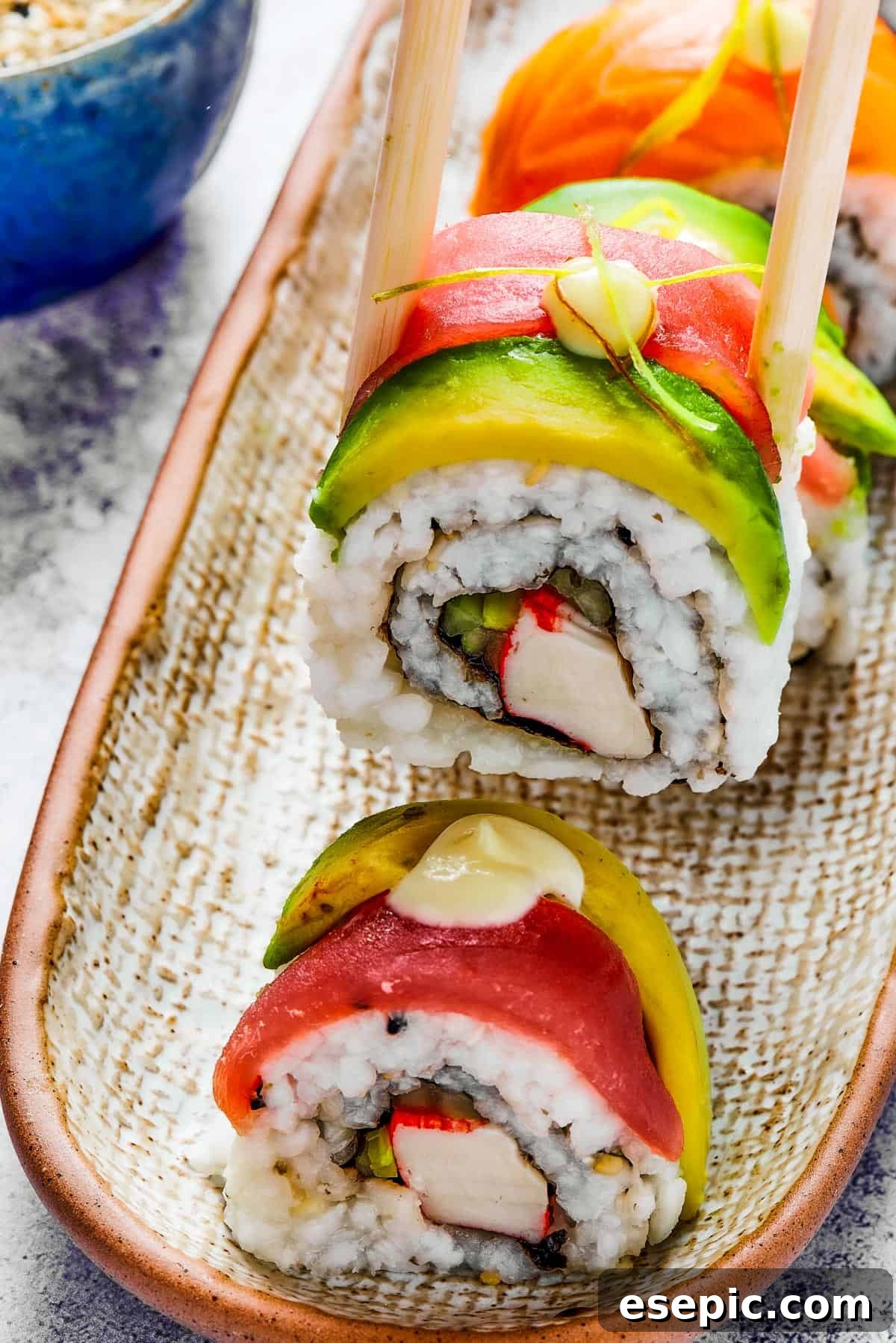
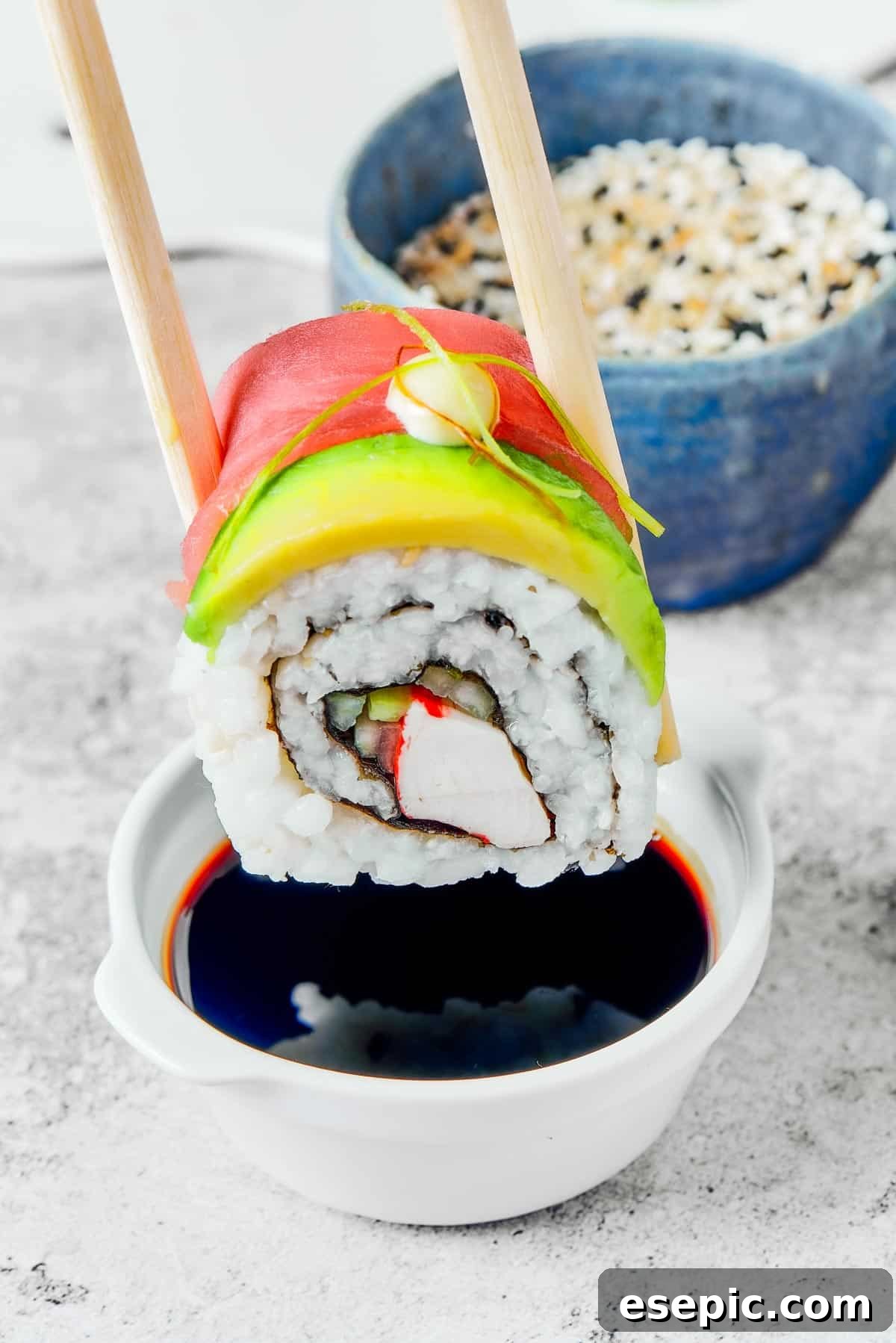
- Serve and Savor: Arrange your freshly cut Rainbow Roll pieces elegantly on a serving plate. For an extra touch, you can add a very small dollop or drizzle of Japanese mayonnaise on each piece. Serve immediately with traditional accompaniments such as savory soy sauce, fiery wasabi, and refreshing pickled ginger. Enjoy the explosion of flavors and textures you’ve created!
Mastering Your Rainbow Roll: Expert Tips for Success
If this is your first foray into sushi making, remember that practice makes perfect! Don’t let initial attempts intimidate you. These simple tips will help you maximize your success and ensure a delightful homemade sushi experience. Happy rolling!
- Keep Your Hands Wet (But Not Soaking): Sushi rice is notoriously sticky. Lightly wetting your hands with water (or a mixture of water and a tiny bit of rice vinegar) before handling the rice will prevent it from adhering to your fingers. Re-wet them as needed throughout the spreading and rolling process. This small step makes a huge difference in ease of handling.
- Uniformity is Key for Aesthetics: When slicing your fish and avocado for the topping, aim for uniform thickness. This not only creates a more beautiful “rainbow” but also ensures a consistent texture in every bite. A sharp knife is indispensable for this.
- Don’t Overfill: While it might be tempting to pile in the fillings, an overstuffed roll is much harder to close and can easily fall apart. Stick to the recommended quantities for a manageable and structurally sound roll.
- Add a Splash of Color with Mango: For an extra layer of sweetness and a beautiful tropical hue, try incorporating thin slices of fresh, ripe mango onto your roll alongside the fish and avocado. Its vibrant yellow-orange color will truly enhance the “rainbow” effect. 🥭
- Introduce Some Spice: For those who enjoy a little kick, elevate your Rainbow Roll with a scrumptious spicy drizzle. Simply mix sriracha hot sauce with Japanese mayonnaise (or regular mayonnaise) to your desired level of heat. Drizzle it artfully over the finished roll just before serving for a burst of flavor.
- Invest in a Good Knife: As mentioned in the instructions, a very sharp knife is crucial for slicing sushi. A sharp blade will cut cleanly through the rice, nori, and fillings, preventing the roll from being squashed or torn. Keep a honing steel or sharpener handy to maintain its edge.
Complementary Serving Suggestions to Elevate Your Meal
Sushi is a versatile dish that pairs wonderfully with a variety of sides, creating a truly balanced and flavorful meal. These easy-to-prepare recipes draw from popular Pan-Asian flavors and are perfect companions to your homemade Rainbow Roll, allowing you to create a restaurant-quality feast right at home.
- Crispy Shrimp Tempura: Lightly battered and perfectly fried shrimp tempura is an absolute staple at Japanese restaurants, and for good reason! Its delicate crunch and savory flavor provide an excellent textural contrast to the soft sushi. Making your own Shrimp Tempura is easier than you might think – but be warned, they are so delicious they can be totally addictive!
- Golden Veggie Spring Rolls: For a light, crispy, and nutritious accompaniment, these Golden Veggie Spring Rolls are a fantastic choice. Packed with fresh vegetables and fried to a golden perfection, they are a family-pleasing side dish that adds freshness and crunch without being too heavy.
- Comforting Egg Drop Soup: Perfect as a warm starter or a comforting light side dish, Egg Drop Soup is both incredibly simple to make and wonderfully satisfying. Its delicate broth and silky egg ribbons offer a soothing contrast to the fresh, cool sushi. Prepare this classic soup and discover its heartwarming appeal for yourself!
- Sweet and Savory Teriyaki Salmon: If you’re looking for another protein option or simply love the flavors of teriyaki, a perfectly cooked Teriyaki Salmon can beautifully complement your sushi spread. Its rich, glazed texture and umami notes add another dimension to your Japanese-inspired meal.
Storing Leftover Rainbow Roll Sushi Safely
While sushi is truly best enjoyed fresh, if you happen to have any leftover Rainbow Roll pieces, proper storage is crucial for both safety and maintaining quality. Here’s how to handle them:
- Immediate Refrigeration: For food safety, it is imperative to wrap and refrigerate any leftover sushi as quickly as possible, ideally no more than one hour after preparation. The delicate nature of raw fish and seasoned rice means they are prone to spoilage if left at room temperature.
- Airtight Packaging: To prevent the rice from drying out and to minimize exposure to air, wrap the individual sushi pieces or the entire roll tightly in plastic wrap. Then, place the wrapped sushi in an airtight container before refrigerating.
- Consumption Window: Stored correctly, leftover Rainbow Roll sushi can be kept in the refrigerator for up to 24 hours. Beyond this timeframe, the quality of the raw fish begins to degrade significantly, and food safety risks increase. It’s always best to err on the side of caution.
- Texture Changes: Be aware that the texture of the rice can become slightly harder and drier, and the nori may soften, even with proper refrigeration. While still safe to eat within the 24-hour window, it won’t be quite the same as freshly made.
Can You Freeze Rainbow Roll Sushi?
- While some food items fare well in the freezer, sushi, especially a Rainbow Roll with raw fish and seasoned rice, is generally not recommended for freezing. The primary reason is the significant degradation in quality upon thawing. The delicate sushi rice tends to become dry, hard, and lose its ideal texture, often becoming crumbly or mushy. Furthermore, the fresh, tender quality of the raw salmon and tuna can also be compromised, potentially altering their flavor and texture. The nori seaweed can also become chewy. For these reasons, this dish is truly at its best when enjoyed freshly made, allowing you to savor its vibrant flavors and perfect textures.
Rainbow Roll Sushi
by Katerina | Easy Weeknight Recipes
Prepared with salmon, tuna, avocado, and cucumber, this delicious Rainbow Roll is simple, scrumptious, and easy to create in your own kitchen!
Ingredients
For the Rainbow Rolls:
- 4 ½ ounces prepared sushi rice
- 2 to 4 thin slices sushi grade salmon, raw and fresh
- 2 to 4 thin slices sushi grade tuna, raw and fresh
- 1 avocado, sliced thinly (the same thickness as the fish)
- 1 piece nori seaweed sheet
- 2 pieces imitation crabmeat
- 1 cucumber, peeled and sliced lengthwise
- 1 tablespoon sesame seeds, toasted
For Serving:
- Soy sauce
- Wasabi
- Pickled ginger
- Japanese mayonnaise
Instructions
-
On your work surface, lay a sheet of nori seaweed smooth side up, on a bamboo sushi mat.
-
Spread the rice evenly over the nori, sprinkle with sesame seeds, and then turn over the nori sheet so that the rice is now on the bottom.
-
Place the imitation crab meat lengthwise, along with the cucumber slices, toward the bottom third of the roll.
-
Place your thumbs on the sides of the bamboo mat closest to you, and your fingers on the toppings to hold them in place. Roll it up.
-
Prep your tuna, salmon, and avocado by slicing them thinly (0.1 inches). Arrange them on top of the sushi roll.
-
Using the bamboo mat, gently roll the toppings onto the sushi roll.
-
Using a very sharp knife, cut the sushi roll into 6 pieces.
-
Arrange the sushi pieces on a serving plate with a very small amount of Japanese mayonnaise.
-
Serve with soy sauce, wasabi, and pickled ginger.
Nutrition
Nutritional info is an estimate and provided as courtesy. Values may vary according to the ingredients and tools used. Please use your preferred nutritional calculator for more detailed info.
Explore More Fabulous Seafood Recipes
If you enjoyed crafting this delightful Rainbow Roll, you’ll love exploring these other incredible seafood recipes. Each offers a unique and satisfying way to bring the best of the ocean to your dinner table, perfect for any weeknight or special occasion.
- Blackened Balsamic Tuna Steaks: A robust and flavorful dish featuring perfectly seared tuna steaks with a rich balsamic glaze.
- Salmon Florentine: Elegant and wholesome, this recipe combines flaky salmon with a creamy spinach sauce for a truly luxurious meal.
- Crab Cake Sliders: Bite-sized delights that are perfect for appetizers or a fun main course, packed with tender crabmeat.