

Prepare to be enchanted by a sandwich unlike any you’ve encountered before! The Japanese Fruit Sando, or Japanese Fruit Sandwich, is a culinary marvel – a symphony of light, sweet, and exquisitely fresh fruit, nestled within fluffy bread and clouds of creamy delight. It’s more than just a snack; it’s a piece of edible art, perfect for a delightful lunchtime indulgence, an elegant tea party, or a beautiful picnic treat. The beauty lies in its versatility; you can use any combination of your favorite seasonal fruits to create your own masterpiece.

Discover the Delight of Japanese Fruit Sando: An Effortlessly Elegant Recipe!
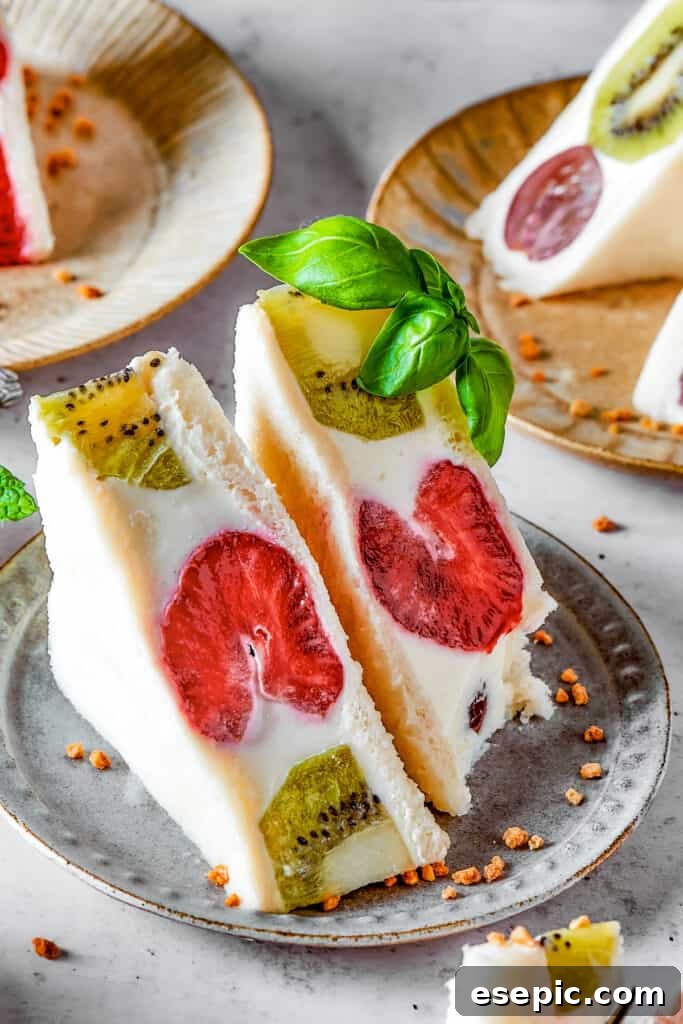
Have you ever encountered the mesmerizing Japanese fruit sando? These eye-catching sandwiches have captivated food lovers worldwide with their simple yet sophisticated charm. At their heart, they feature billowy mounds of freshly whipped cream, encased by impossibly soft, snow-white sandwich bread, and generously studded with vibrant, bite-sized pieces of fresh fruit. The true magic unfolds when you slice them open: the meticulously arranged fruit creates a stunning, mosaic-like pattern against the pristine backdrop of the sweetened whipped cream, transforming each piece into a visual feast before it even touches your palate.
A fruit sando transcends the ordinary, offering a sweet and surprisingly unique addition to any meal or gathering. Imagine the delight of finding one in a lunchbox, or the impressive display it makes at a picnic, baby shower, bridal shower, or an elegant afternoon tea. From casual get-togethers to special celebrations, you’ll discover countless opportunities to whip up these charming treats. And the best part? Creating them is astonishingly straightforward. If you can master a classic PB&J, you possess all the skills needed to craft these Japanese delicacies!
Why This Fruit Sando Recipe Will Become Your Favorite
Our Japanese Fruit Sando recipe isn’t just a guide; it’s an invitation to experience culinary joy. Here’s why this particular recipe stands out and why you’ll adore making it:
- Exquisitely Light & Refreshing: While undeniably sweet and satisfying, the fruit sando remains remarkably airy and light. The fresh, juicy fruit takes center stage, balancing the richness of the whipped cream to create a treat that refreshes rather than overpowers. It’s the perfect sweet escape without feeling heavy.
- Deceptively Simple Elegance: Don’t let the showstopping, cafe-worthy appearance of these sandwiches intimidate you. This recipe breaks down the process into incredibly easy steps, proving that beautiful food doesn’t have to be complicated. With minimal effort, you can create something truly impressive.
- Infinitely Customizable & Visually Appealing: This recipe encourages creativity! Arrange your chosen fruits in any pattern you desire, experimenting with colors and shapes for a truly personalized and lovely presentation. Each sando can be a unique work of art, reflecting your taste and style.
- Conveniently Make-Ahead Friendly: Planning ahead just got sweeter! As long as you select fruits that are firm and not overly juicy or prone to quick sogginess, you can prepare these delightful sandwiches up to a day in advance. Simply wrap them snugly in plastic wrap and store them in your refrigerator, ready to be unveiled and enjoyed when the moment is right.
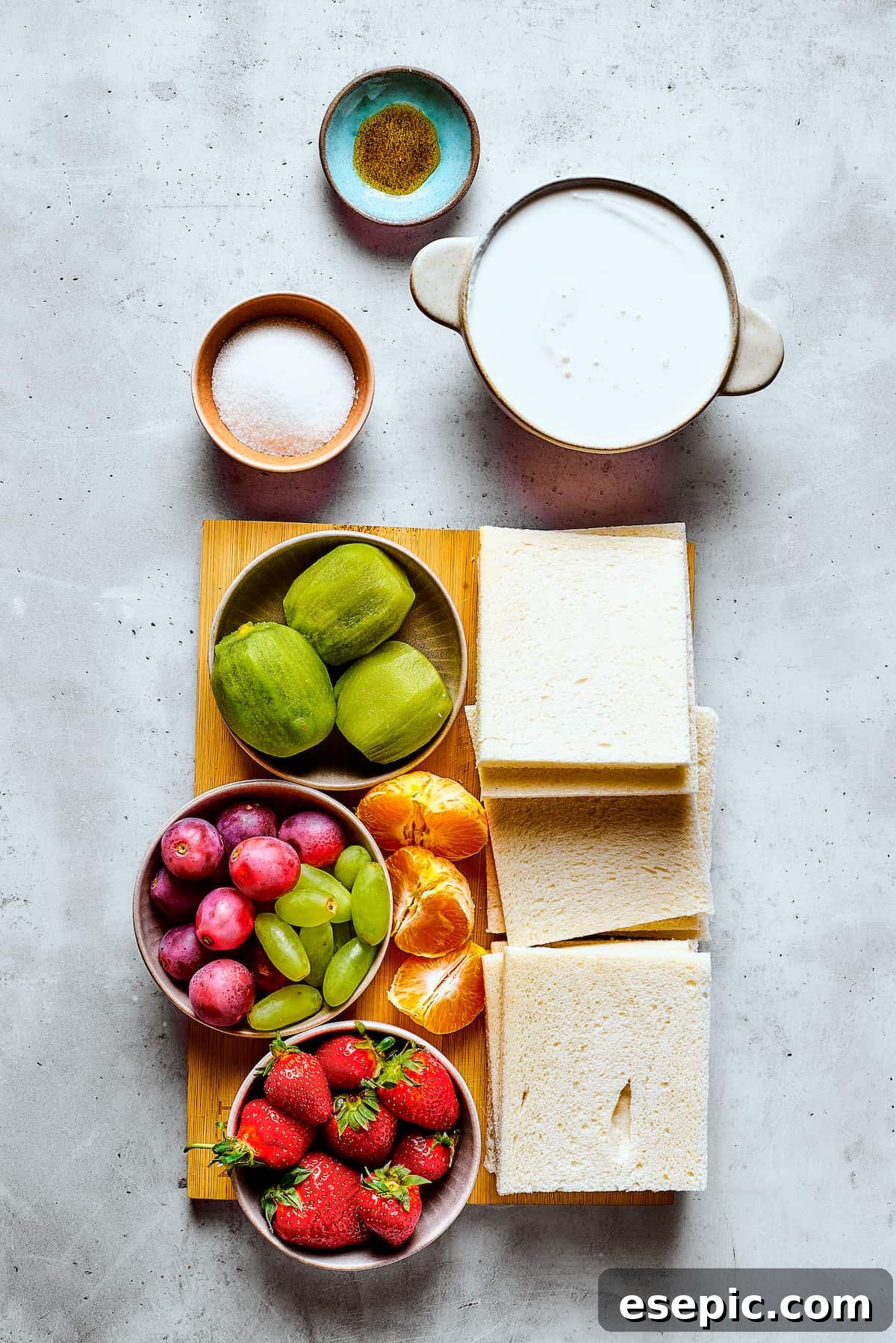
The Essential Ingredients for a Perfect Fruit Sando
The beauty of a fruit sando lies in its simplicity, relying on a few high-quality ingredients to achieve its signature taste and texture. Here’s a closer look at what you’ll need:
- Soft White Sandwich Bread: The foundation of any great fruit sando. The ideal choice is Japanese milk bread (Shokupan), known for its incredible softness, slight sweetness, and fluffy texture. If Shokupan isn’t readily available, a very soft, high-quality white sandwich bread will also work beautifully. Crucially, the crusts must be trimmed off to ensure that melt-in-your-mouth texture and elegant appearance.
- Heavy Whipping Cream: This is the heart of your creamy filling. Ensure your cream is very cold before whipping – this is key to achieving stiff, stable peaks. Look for heavy cream with a fat content of 36% or higher for the best results, as it will whip up beautifully and hold its shape.
- Granulated or Caster Sugar: Used to sweeten the whipped cream to perfection. Granulated sugar works well, but caster sugar (superfine sugar) dissolves even more easily, ensuring a smooth, grit-free cream. Adjust the amount to your personal sweetness preference.
- Pure Vanilla Extract: A hint of vanilla extract elevates the flavor of the whipped cream, adding a warm, aromatic depth that complements the fresh fruit. While optional, it’s highly recommended for that extra touch of deliciousness.
- Assorted Fresh Fruits: The vibrant stars of your sando! The best fruits are those that are ripe, firm, and offer a beautiful contrast in color and texture. Excellent choices include juicy strawberries, bright green kiwis, sweet red grapes, segmented mandarin oranges, ripe mango, or soft peaches. Aim for a variety to create visually appealing cross-sections and a balanced flavor profile.
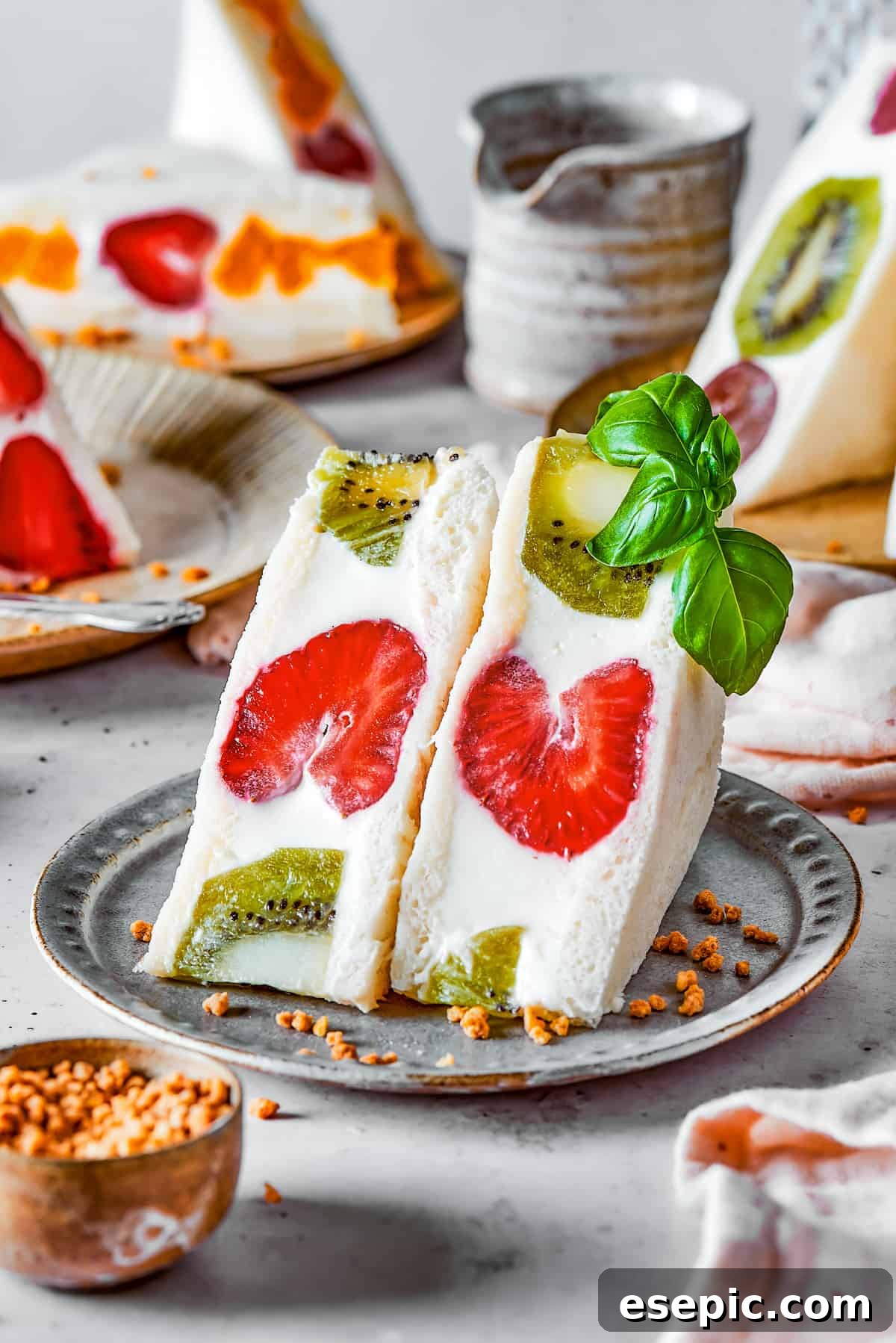
How to Master the Art of Making a Fruit Sando
Crafting a Japanese fruit sando is a wonderfully simple process that yields incredibly impressive results. The key steps involve preparing your ingredients, carefully layering them, wrapping for stability, and chilling to perfection. The chilling and pressing step is crucial, ensuring that your sandwiches are perfectly even and hold their gorgeous shape when sliced.
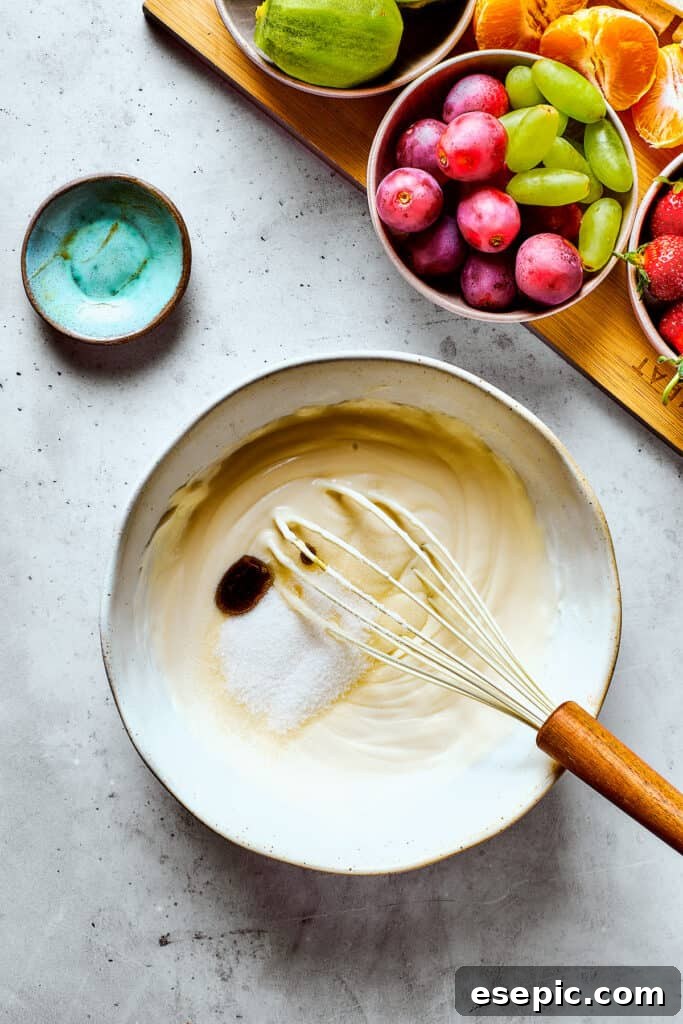
- Prepare Your Bread and Whip the Cream: Begin by trimming the crusts off your soft white sandwich bread using a sharp knife, such as a bread knife, to achieve clean, straight edges. This step is essential for the sando’s characteristic soft texture. In a separate, chilled mixing bowl, combine the very cold heavy cream, granulated sugar, and vanilla extract. Whip the mixture with an electric mixer on medium speed until it becomes light, fluffy, and forms stiff peaks. The cream should hold its shape firmly when the beaters are lifted.
- Spread the Cream Base: Lay out your trimmed bread slices on a clean work surface. Gently spread a thin, even layer of the freshly whipped cream onto each slice. This initial layer acts as a protective barrier for the bread and provides a soft bed for the fruit.
- Strategically Arrange the Fruit: This is where the artistry comes in! Carefully arrange your prepared fruits on the cream-covered bread slices. As you place the fruit, envision the diagonal cut you’ll make later. Position the fruit so that when the sandwich is sliced, you cut directly through the center of a prominent piece of fruit (like a strawberry or kiwi slice), revealing its beautiful cross-section. This planning is vital for the iconic fruit sando presentation.
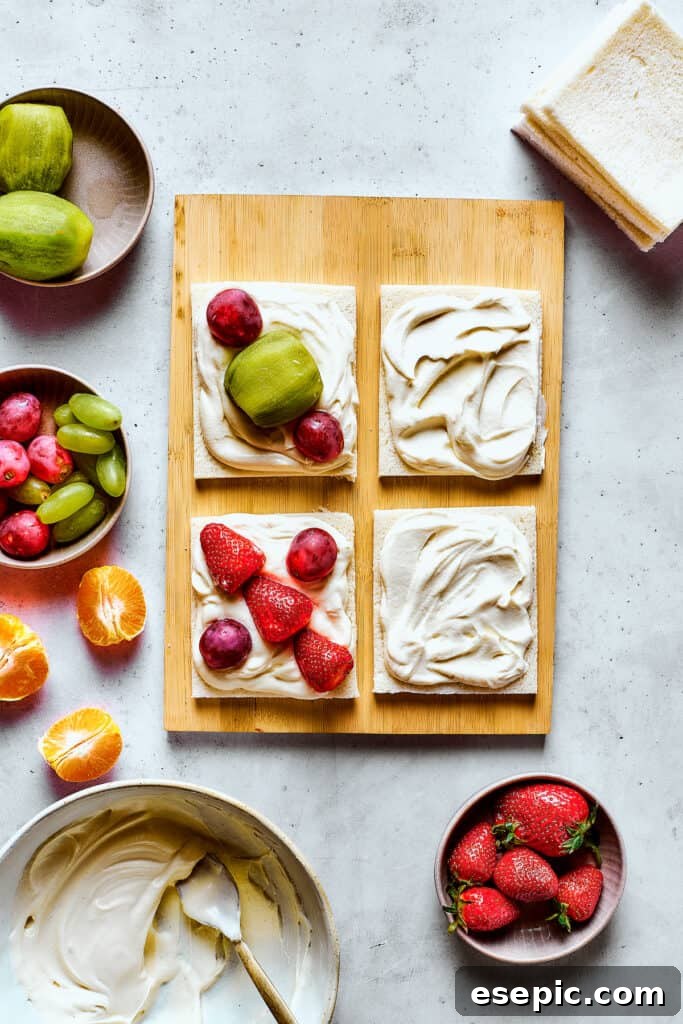
- Generously Top with More Whipped Cream: Once your fruit pattern is set, spoon a generous amount of the remaining whipped cream over the fruit layer. Gently spread and press the cream down, ensuring it completely surrounds and covers all the fruit pieces. This helps to fill any gaps and securely hold the fruit in place.
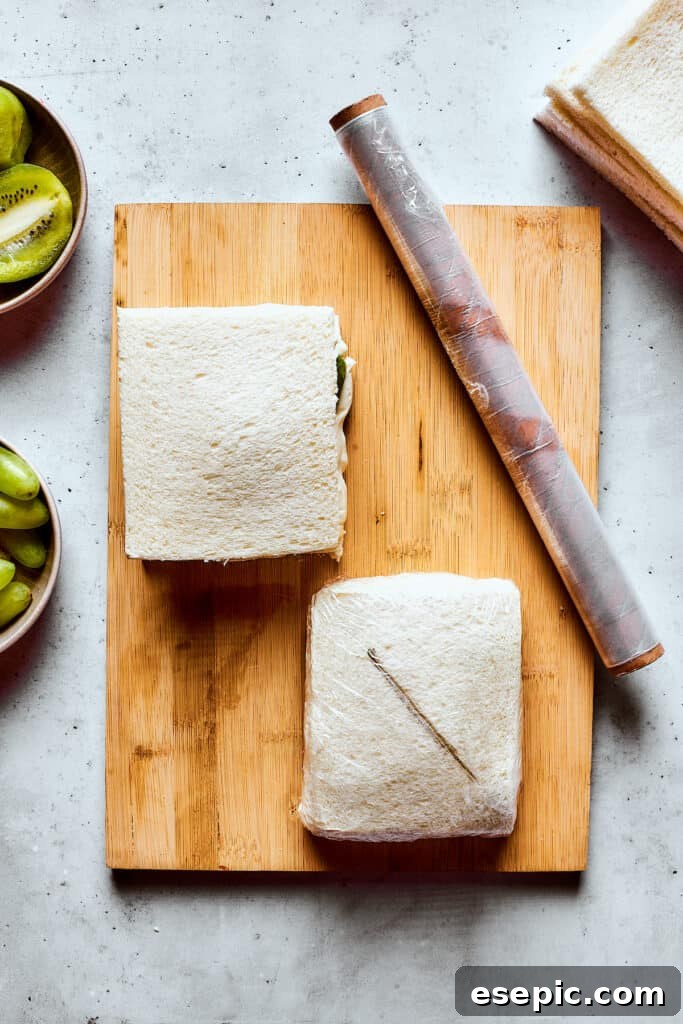
- Seal and Mark: Place the remaining bread slices on top of the cream-covered fruit. Carefully wrap each assembled sandwich tightly in plastic wrap. The tight wrap is important for holding the sandwich together. As a helpful tip, use a food-safe marker to draw a line on the plastic wrap where you intend to cut the sandwich later, especially if you planned a diagonal fruit arrangement. This prevents forgetting your perfectly planned cross-section.
- Press and Chill for Perfection: Arrange the wrapped sandwiches on a flat tray or baking sheet. Place another plate or a lighter cookie sheet directly on top of the sandwiches. Then, add a gentle weight on top of that (such as a couple of unopened soup cans, bags of beans, or even heavy coffee mugs). This gentle pressing helps to evenly compress the sandwiches, firm up the cream, and ensure a cohesive structure. Chill the pressed sandwiches in the refrigerator for a minimum of one hour, or ideally longer.
- The Grand Finale – Cut and Serve: When you’re ready to enjoy, carefully unwrap each chilled sandwich. Using a very sharp, clean knife (a warm knife can help for extra clean cuts), slice the sandwiches precisely where you marked or planned your cut. Arrange the beautifully revealed fruit sandos on a platter and serve immediately. Enjoy the delightful combination of textures and flavors!
Expert Tips for Fruit Sando Success
Making these delightful Japanese fruit sandwiches is quite simple, but keeping a few key tips in mind will ensure your fruit sandos turn out perfect every single time:
- Mind Your Timing: While assembly is quick, remember to factor in enough time for each crucial step. This includes whipping the cream to perfection, meticulously preparing and arranging your fruits, and most importantly, allowing sufficient chilling and pressing time for the sandwiches to firm up. Rushing any of these steps can compromise the final result. Budget a little extra time than you think you’ll need to enjoy the process without stress.
- Mastering the Whipped Cream: The quality of your whipped cream is paramount. It’s essential to whip the heavy cream to firm, stiff peaks. This means that when you lift the beaters from the cream, the peaks should stand upright and hold their shape without collapsing. If the cream is under-whipped, your sandwiches will be soggy and lack structure. Conversely, be careful not to over-whip, as you’ll end up with granular butter instead of smooth, airy cream. A cold bowl and cold cream are your best friends here!
- Strategic Make-Ahead Planning: Fruit sandos are fantastic for preparing in advance. You must chill the sandwiches for at least an hour to allow the cream to firm and the flavors to meld. For even greater convenience, you can actually prepare them up to two days ahead! When planning for longer storage, choose firm, non-mushy fruits that won’t release excessive water or discolor easily. Berries, especially whole and uncut, tend to hold up very well.
- The Art of the Cut: While a diagonal cut is classic and visually stunning, showing off the fruit’s cross-section, you have complete freedom to cut your fruit sandos however you prefer. You can halve them straight across, divide them into elegant squares, or create small triangles. For a more rustic presentation, you can even serve the sandwiches whole. A very sharp knife and a gentle hand are crucial for clean edges.
- Choosing Your Fruits Wisely: Beyond ripeness, consider the water content of your fruits. Fruits like watermelon or very ripe melon can make the bread soggy quickly. Opt for fruits with less water and pat them thoroughly dry before arranging to prevent any excess moisture from seeping into the bread.
Creative Serving Suggestions for Your Fruit Sando
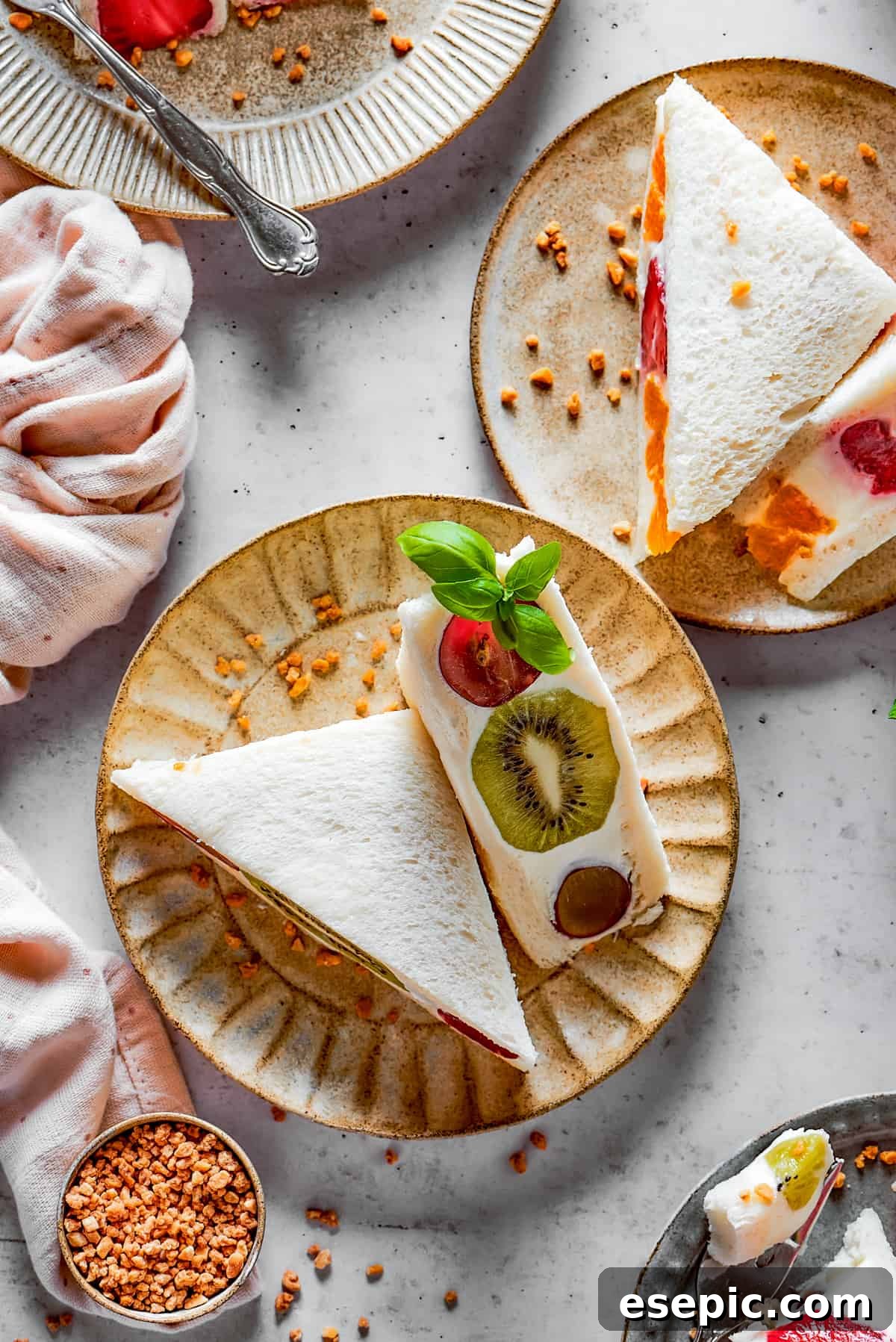
While fruit sandos undoubtedly shine in the dessert category, their light, creamy, and sweet profile also makes them an excellent companion or side dish for lunch or brunch. If you’re looking to balance the sweetness, consider pairing your fruit sando with one of these delightful savory mains or sides:
- Elevate Your Brunch Spread: Alongside classic brunch items, fruit sandos add a touch of unexpected elegance. They pair wonderfully with eggs prepared any way you like – from fluffy scrambled eggs to a rich frittata. For a crowd-pleasing option, whip up a batch of Classic Deviled Eggs; their savory, tangy profile provides a fantastic contrast to the sweet sando.
- A Perfect Picnic Partner: These sandwiches are incredibly portable and refreshing for an outdoor meal. Pair them with a hearty Creamy Shrimp Pasta Salad – its summery lightness and satisfying flavors complement the fruit sando beautifully, creating a well-rounded and delightful picnic spread.
- Complement to Crispy Bacon: The salty crunch of perfectly cooked bacon offers an irresistible counterpoint to the soft sweetness of a fruit sando. If you’re hosting brunch, don’t miss out on adding this staple to your menu. Our Crispy Oven Baked Bacon method ensures hassle-free, perfectly crisp results every time.
- Light Lunch with a Twist: For a simple yet satisfying lunch, serve your fruit sando alongside a fresh green salad with a light vinaigrette, or a comforting bowl of miso soup. The contrasting flavors and textures make for an interesting and delicious meal.
- Tea Party Centerpiece: Fruit sandos are a natural fit for an elegant afternoon tea. Serve them alongside traditional scones, mini quiches, or delicate macarons to create a diverse and visually appealing spread that will impress your guests.
Storing and Enjoying Your Fruit Sando Later
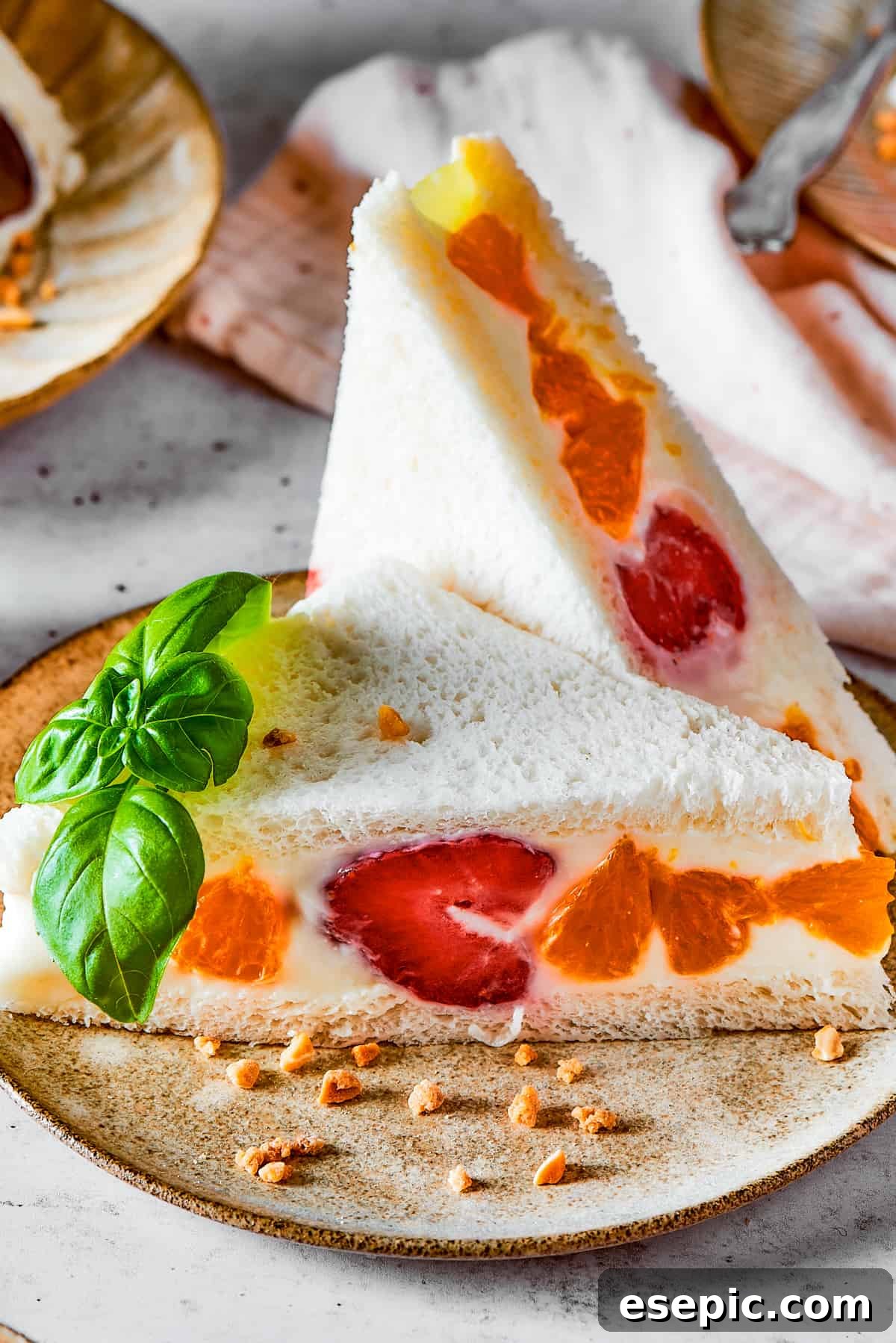
- As previously highlighted, the beauty of fruit sandos is their make-ahead potential. Once assembled and tightly wrapped in plastic wrap, they can be stored in your refrigerator for anywhere from one hour (for firming up) to two full days. For optimal freshness and to prevent sogginess when storing for a longer period, it is crucial to select firm, ripe, non-watery fruits. Berries, especially whole and un-cut, and fruits like mango or kiwi tend to fare very well. Avoid fruits that oxidize quickly (like apples without lemon juice) or become overly soft and juicy. It’s important to note that fruit sandos do not freeze well; the freezing and thawing process will cause the bread to become damp and watery, and the cream to separate, ruining the texture. Always enjoy them chilled, directly from the refrigerator, for the best experience.
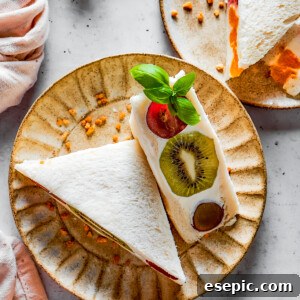
Fruit Sando (Japanese Fruit Sandwich)
Katerina | Easy Weeknight Recipes
A Japanese Fruit Sando is so light, sweet, and fruity that it’s the perfect lunchtime treat or tea party indulgence.
15 minutes
1 hour
1 hour 15 minutes
4
Ingredients
- 8 slices white bread, crusts trimmed off
- 1½ cups heavy cream
- 2 tablespoons granulated sugar
- 1 teaspoon pure vanilla extract
- Assorted fruits, for serving, such as strawberries, kiwi, grapes, and mandarins
Instructions
- Use a sharp knife to trim off the crusts of the bread, creating clean edges.
- In a mixing bowl, whip the heavy cream using an electric mixer on medium speed until it thickens. Add the sugar and vanilla extract, then continue whipping until stiff peaks form. Set aside.
- Lay out the 8 slices of bread on a clean work surface and spread a thin layer of heavy cream on each one.
- Arrange a layer of fruits on top, covering them evenly. You can mix and match different fruits according to your preference, keeping in mind the visual cross-section.
- Take the whipped cream mixture and spoon it over the fruit layer, spreading it evenly to cover the entire surface and fill any gaps.
- Place the remaining four slices of bread on top of the cream layer, pressing down gently.
- Wrap each sandwich firmly with plastic wrap. If desired, mark the direction of the diagonal fruit line on the plastic, as this will guide you when cutting.
- Place the wrapped fruit sandwiches on a plate or sheet pan. Then, place another plate or sheet pan on top, followed by a gentle weight (like soup cans or bags of beans) to press them evenly. Allow the sandwiches to rest in the refrigerator for at least one hour.
- Once chilled, unwrap the sandwiches and cut them into desired shapes, such as triangles (following your marked line) or rectangles. You can also leave them as whole sandwiches if you prefer.
- Serve the Fruit Sando immediately, or refrigerate for a few more hours to allow the flavors to meld together even further.
Notes
- Timing: Remember to allocate sufficient time for whipping the cream, preparing the fruit, arranging the patterns, and allowing the sandwiches to chill. An unhurried approach ensures the best results.
- Whipping the Cream: Achieving stiff, fluffy peaks is crucial. Under-whipped cream leads to soggy sandwiches, while over-whipping can result in a grainy, buttery texture.
- Make-Ahead: These sandwiches require at least one hour of chilling. They can be made up to two days in advance; just ensure you use firm, non-watery fruits that won’t get mushy or discolored.
- Cutting: The diagonal cut is classic for showcasing the fruit, but feel free to cut them in halves, squares, or small triangles, or even serve them whole.
Nutrition facts are estimates only.
Nutrition
Calories: 566kcal | Carbohydrates: 59g | Protein: 8g | Fat: 34g | Saturated Fat: 21g | Polyunsaturated Fat: 2g | Monounsaturated Fat: 8g | Trans Fat: 0.01g | Cholesterol: 101mg | Sodium: 272mg | Potassium: 303mg | Fiber: 4g | Sugar: 31g | Vitamin A: 1849IU | Vitamin C: 4mg | Calcium: 173mg | Iron: 2mg
Nutritional info is an estimate and provided as courtesy. Values may vary according to the ingredients and tools used. Please use your preferred nutritional calculator for more detailed info.