
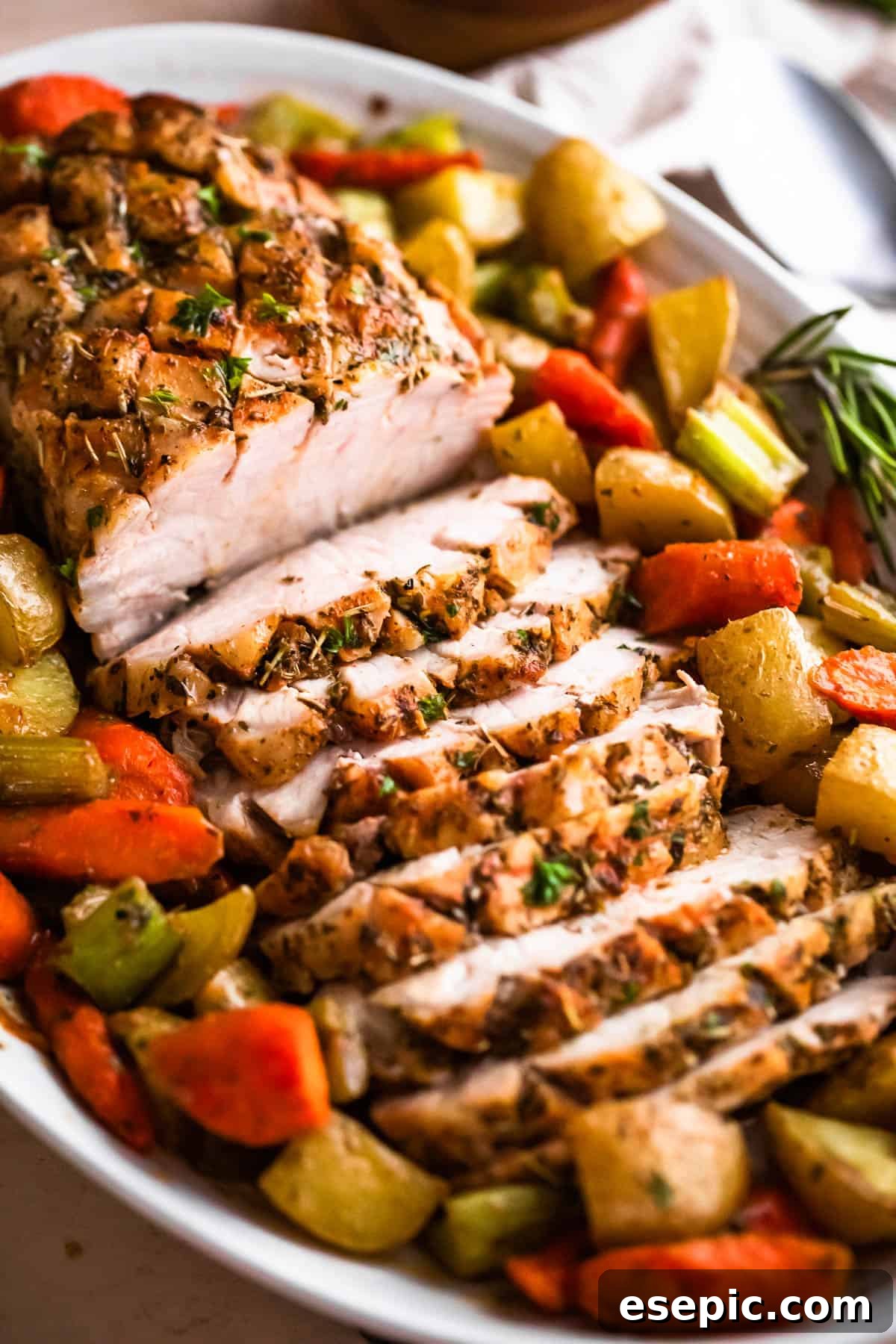
This easy recipe for Pork Loin Roast with Vegetables offers a complete and unforgettable dinner that’s sure to impress your guests, whether it’s a casual weeknight meal or a special gathering. Infused with fragrant olive oil, fresh garlic, and a medley of classic herbs like rosemary, thyme, and oregano, this pork roast is a delicious keeper that promises juicy tenderness and rich flavor every time.
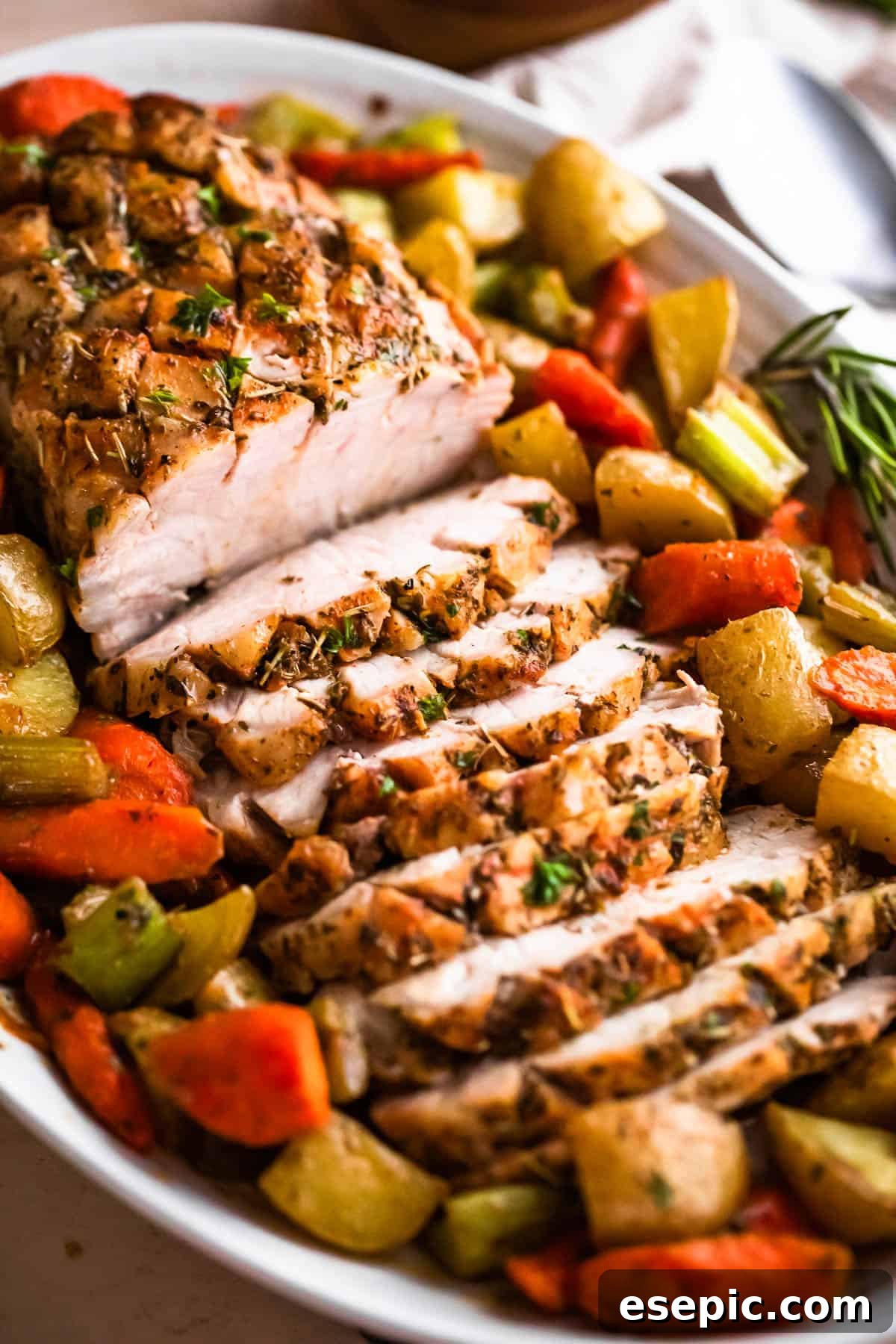
An Easy, Juicy Pork Roast Dinner: Your Guide to Perfection
Pork roast often gets an undeserved reputation for being dry or difficult to cook, leading many to overlook this fantastic cut of meat. The fear of undercooked pork sometimes results in overcooking, which, unfortunately, leads to a less-than-ideal dry texture. However, I’m here to assure you that a perfectly cooked, succulent pork loin is surprisingly simple to achieve!
The secret weapon? A simple, inexpensive instant-read meat thermometer. This indispensable kitchen tool takes all the guesswork out of cooking, guaranteeing a perfectly juicy, tender, and flavorful roast every single time. Imagine carving into a succulent pork loin that’s cooked to absolute perfection, surrounded by beautifully roasted, caramelized root vegetables. It’s a culinary triumph that’s much easier to master than you might think.
This recipe is designed to be a complete, elegant, and incredibly satisfying dinner all prepared in one pan. By roasting the pork loin directly alongside a colorful array of seasonal vegetables, you not only minimize cleanup but also allow the flavors to meld beautifully, creating a harmonious and deeply savory meal. It’s the kind of dish that makes your entire home smell inviting and comforting, evoking memories of holiday feasts, regardless of the time of year. This versatile method makes pork loin an ideal choice for both busy weeknights and special occasions when you want to truly impress with minimal fuss.
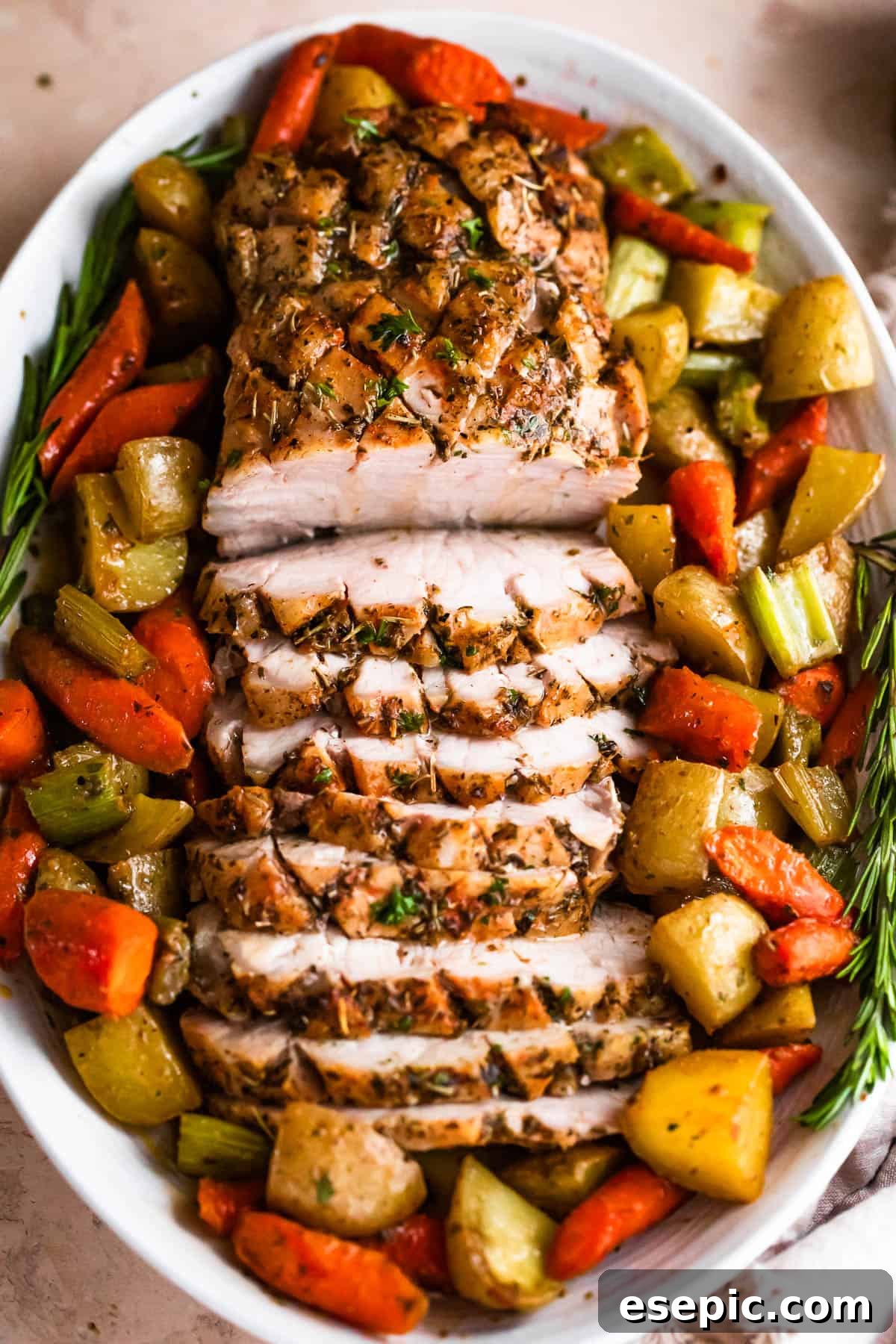
Why Pork Loin is Your Best Bet for Roasting
Pork loin is an exceptional cut for roasting, especially for those seeking a lean yet incredibly flavorful and tender meal. It’s a versatile, widely available, and relatively inexpensive cut of meat that transforms beautifully in the oven. Unlike tougher cuts like pork shoulder, which thrive on long, slow braising to tenderize, pork loin is naturally tender and excels with a quicker roasting method that retains its moisture and delicate texture. Its mild flavor profile also makes it an ideal canvas for a wide variety of seasonings, from the robust savory herbs and garlic featured in this recipe to more complex spice rubs and marinades.
Opting for a boneless pork loin roast further simplifies the entire process, making carving and serving effortless – a definite bonus when entertaining or managing a busy weeknight dinner. When cooked precisely to the correct internal temperature, pork loin remains astonishingly juicy and tender, offering a delightful contrast, especially if it has a crispy, seasoned fat cap. Beyond its culinary appeal, pork loin is also a fantastic source of high-quality protein and essential B vitamins, including thiamine, niacin, and B6, making it a wholesome and nutritious addition to your regular meal rotation. It’s truly a cut that delivers on both taste and health benefits.
Essential Ingredients for Your Perfect Pork Roast
Crafting this simple yet spectacular dish requires only a handful of fresh, high-quality ingredients. Choosing the best produce and pork will truly elevate the flavors and ensure a memorable meal that tastes gourmet with minimal effort.
- Pork Loin Roast: A 3-pound boneless pork loin roast is the ideal size for this recipe, comfortably serving approximately 6 people. When selecting your roast, look for one with a decent fat cap on top; this fat will render during cooking, basting the meat and keeping it incredibly moist while adding significant depth of flavor.
- Olive Oil: You’ll need about 3 tablespoons of good quality extra virgin olive oil. It serves as a crucial binder for the herb rub, helps to create a beautiful sear on the pork, and aids in crisping the roasted vegetables.
- Garlic: Freshly minced garlic (approximately 3-4 cloves) is absolutely key to the aromatic foundation of this dish. Its pungent, savory notes infuse both the pork and vegetables.
- Dried Herbs: A classic and aromatic blend of dried thyme, rosemary, and oregano creates a wonderfully fragrant and savory seasoning. For the best flavor, ensure your dried herbs are relatively fresh (not stale). If you have fresh herbs on hand, feel free to substitute them for an even more vibrant, robust aroma and taste.
- Paprika: A subtle addition of ½ teaspoon of paprika not only imparts a mild, sweet warmth but also contributes to the beautiful, golden-brown crust of the roast.
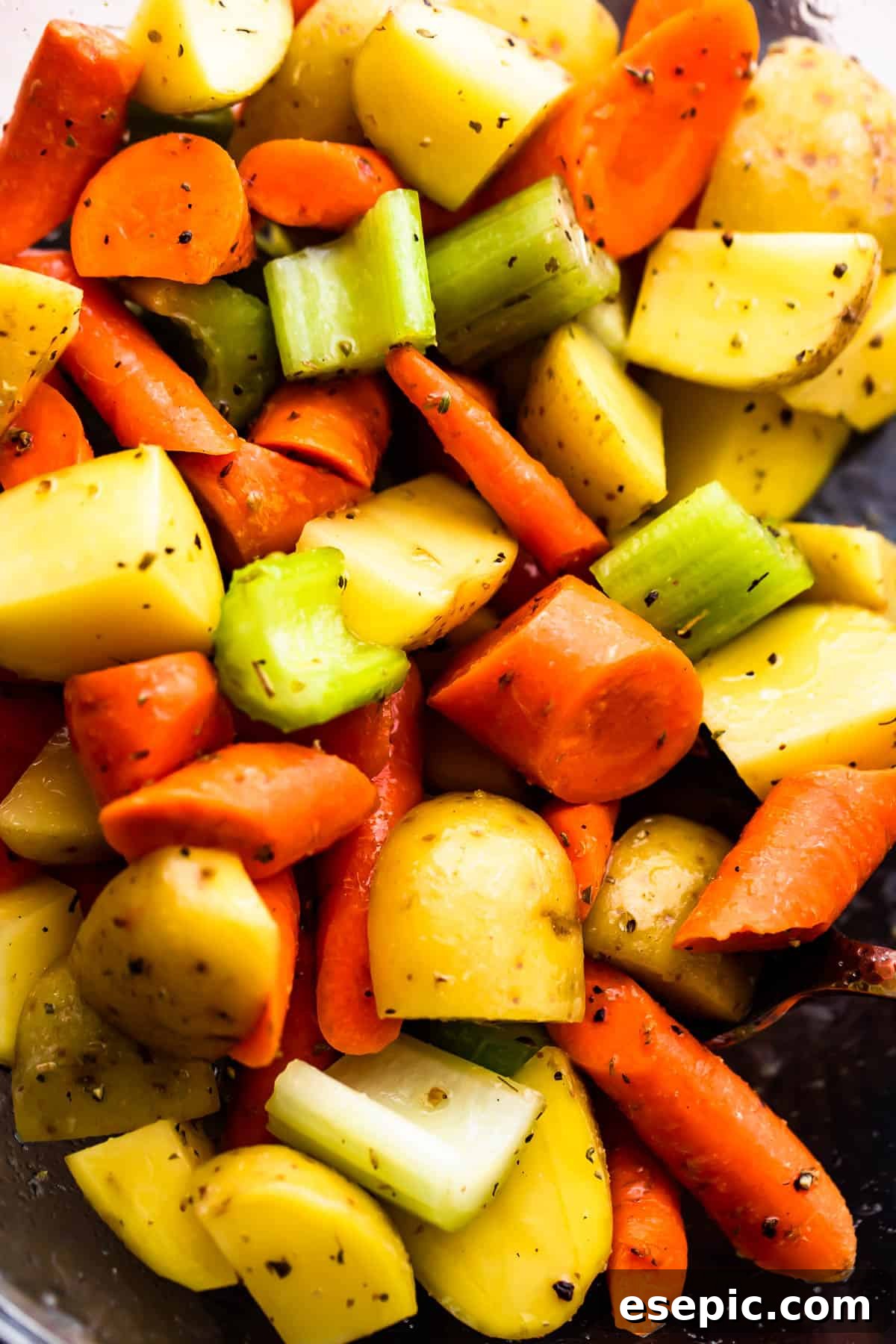
- Carrots: Approximately 4-5 large carrots, peeled and cut into uniform 1-inch pieces, will add a delightful sweetness and earthy depth to the roasted vegetable medley.
- Celery: 3 to 4 stalks of celery, also cut into 1-inch pieces, provide a refreshing, slightly bitter counterpoint to the richness of the pork and a pleasant textural crunch once roasted.
- Potatoes: 1 pound of baby Yukon Gold potatoes, quartered, are perfect for roasting alongside the pork. Their creamy texture and thin, edible skin make them ideal for absorbing the delicious flavors of the roast and herbs. If using larger potatoes, simply ensure they are cut into uniform, bite-sized pieces for even cooking.
- Salt & Pepper: Generous amounts of sea salt and freshly ground black pepper are essential for seasoning both the pork and the vegetables to perfection, bringing out all their natural flavors.
Step-by-Step Guide to Making Pork Loin Roast with Vegetables
Roasting a pork loin is a surprisingly simple process, and the irresistible, mouth-watering aroma that will fill your kitchen is an added bonus! Follow these detailed steps for a perfectly cooked, incredibly juicy roast and tender, caramelized vegetables that will impress without the stress.
- Prepare the Roast and Preheat Oven: Remove your boneless pork loin roast from the refrigerator. Place it, fatty side up, on a platter or a work surface lined with parchment paper. Allow the roast to come to room temperature for at least 30 to 60 minutes. This crucial step promotes more even cooking and helps prevent a dry exterior. While the roast is resting, preheat your oven to a high temperature of 450°F (230°C).
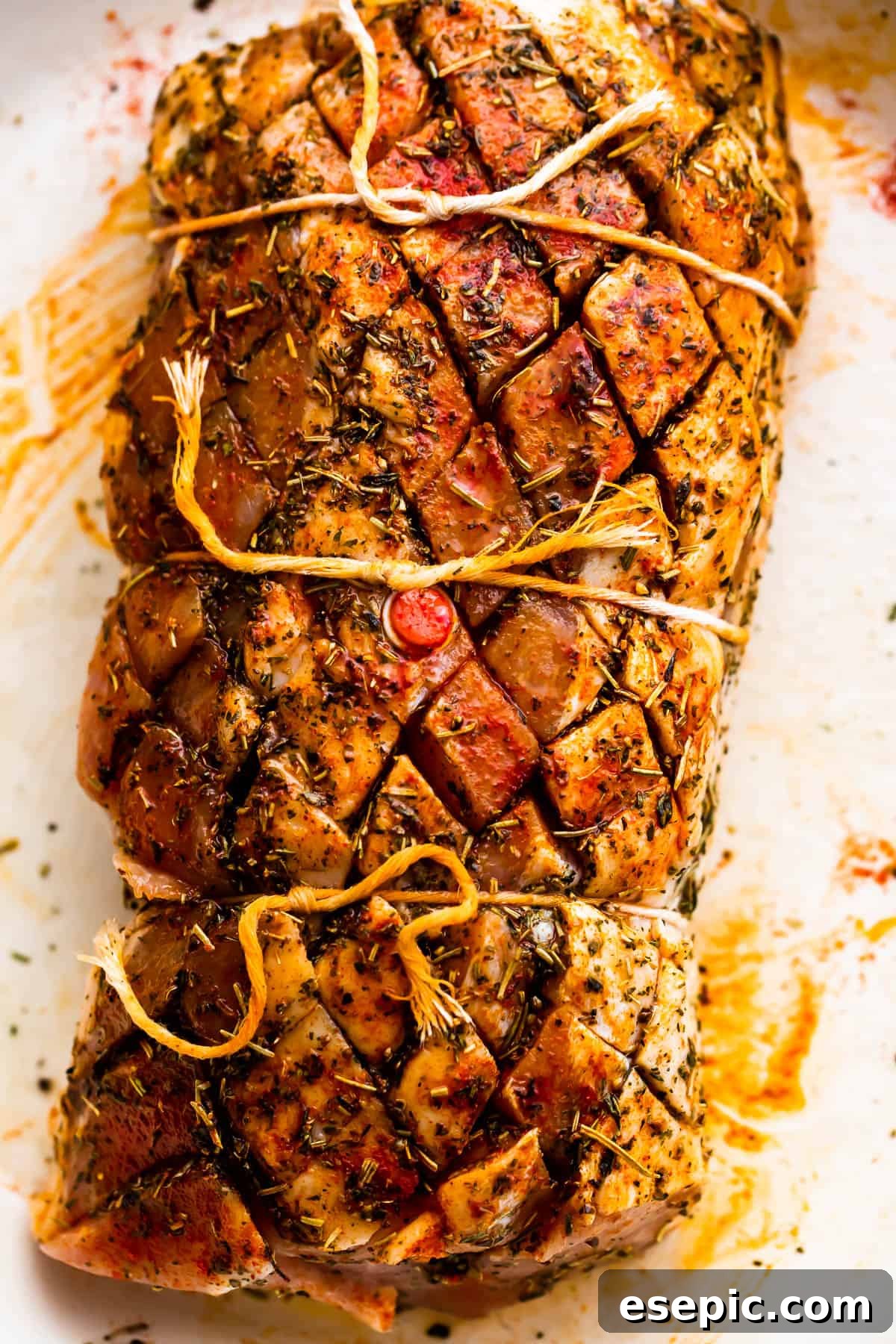
- Craft the Aromatic Herb Rub & Score the Pork: In a small bowl, combine 1 tablespoon of olive oil, all of your minced garlic, dried rosemary, dried thyme, dried oregano, and paprika. Mix these ingredients thoroughly until you have a fragrant, well-combined herb paste. Once the pork roast has reached room temperature, take a sharp knife and gently score the fat cap on top of the roast. Create a criss-cross or cross-hatch pattern, making cuts about ¼-inch deep at roughly 1-inch intervals. Be careful not to cut too deeply into the meat itself. Scoring the fat allows the herb mixture to penetrate deeper, infusing the pork with flavor, and also helps the fat render beautifully, leading to a crispy, golden crust during roasting.
- Season and Initiate Roasting: Generously season the entire pork roast with sea salt and freshly ground black pepper on all sides. Then, gently rub the prepared herb mixture all over the scored pork loin, ensuring it gets into all the cuts and crevices. Place the seasoned roast into a sturdy 5-quart or larger baking dish. Cover the dish tightly with a sheet of aluminum foil. Transfer the covered dish to your preheated 450°F (230°C) oven and roast for an initial 20 minutes. This high-heat blast helps to create a fantastic, flavorful crust on the pork.
- Prepare and Add the Vegetables: While the pork is undergoing its initial high-heat roast, take this time to prepare your vegetables. Peel and cut the carrots into uniform 1-inch pieces, slice the celery into similar 1-inch pieces, and quarter your baby Yukon Gold potatoes. Place all the cut vegetables into a large mixing bowl. Drizzle them with 1 tablespoon of olive oil and season generously with salt and pepper. Toss everything well to ensure all the vegetables are evenly coated with the oil and seasonings.
- Continue Roasting with Vegetables: After the initial 20 minutes of roasting, carefully remove the pork from the oven. Immediately reduce the oven temperature to 350°F (175°C). Uncover the pork roast and meticulously arrange the seasoned vegetables around the pork in the baking dish, spreading them in a single layer if possible. If desired, you can drizzle an additional 1 tablespoon of olive oil over the vegetables and pork to enhance browning and flavor. Return the uncovered dish to the oven and continue to roast for another 35 to 45 minutes.
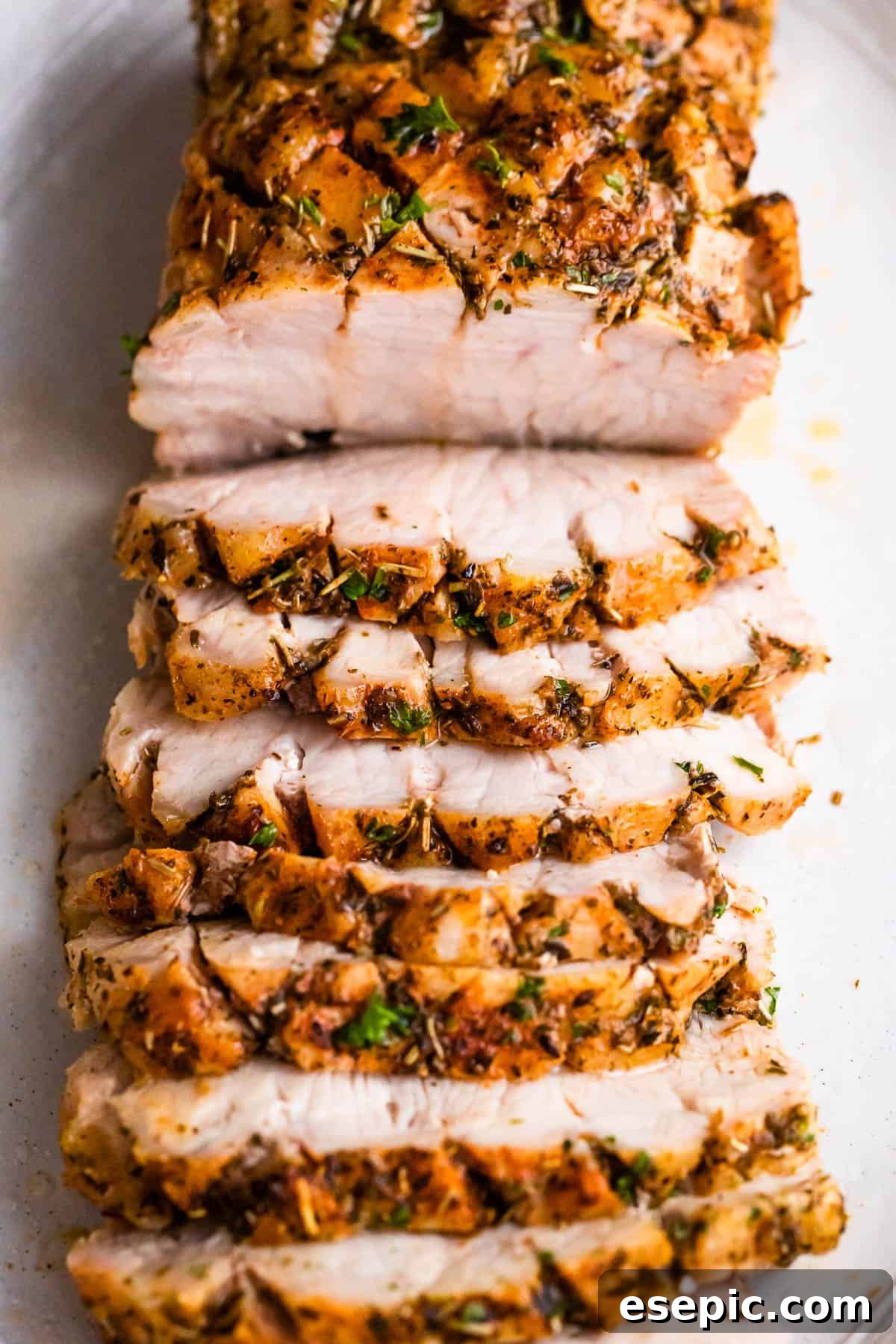
- Check for Doneness and Crucial Resting Period: The pork roast is done when its internal temperature, measured with an instant-read meat thermometer inserted into the thickest part of the meat (making sure not to touch any bone), reaches 145°F (63°C). The vegetables should be fork-tender and beautifully caramelized with slightly browned edges. Once these conditions are met, promptly remove the baking dish from the oven and immediately re-cover it loosely with the aluminum foil. This resting period is crucial: allow the roast to rest for a full 10 minutes before slicing. Resting allows the muscle fibers to relax and the juices to redistribute throughout the meat, ensuring a much more tender, moist, and flavorful pork loin.
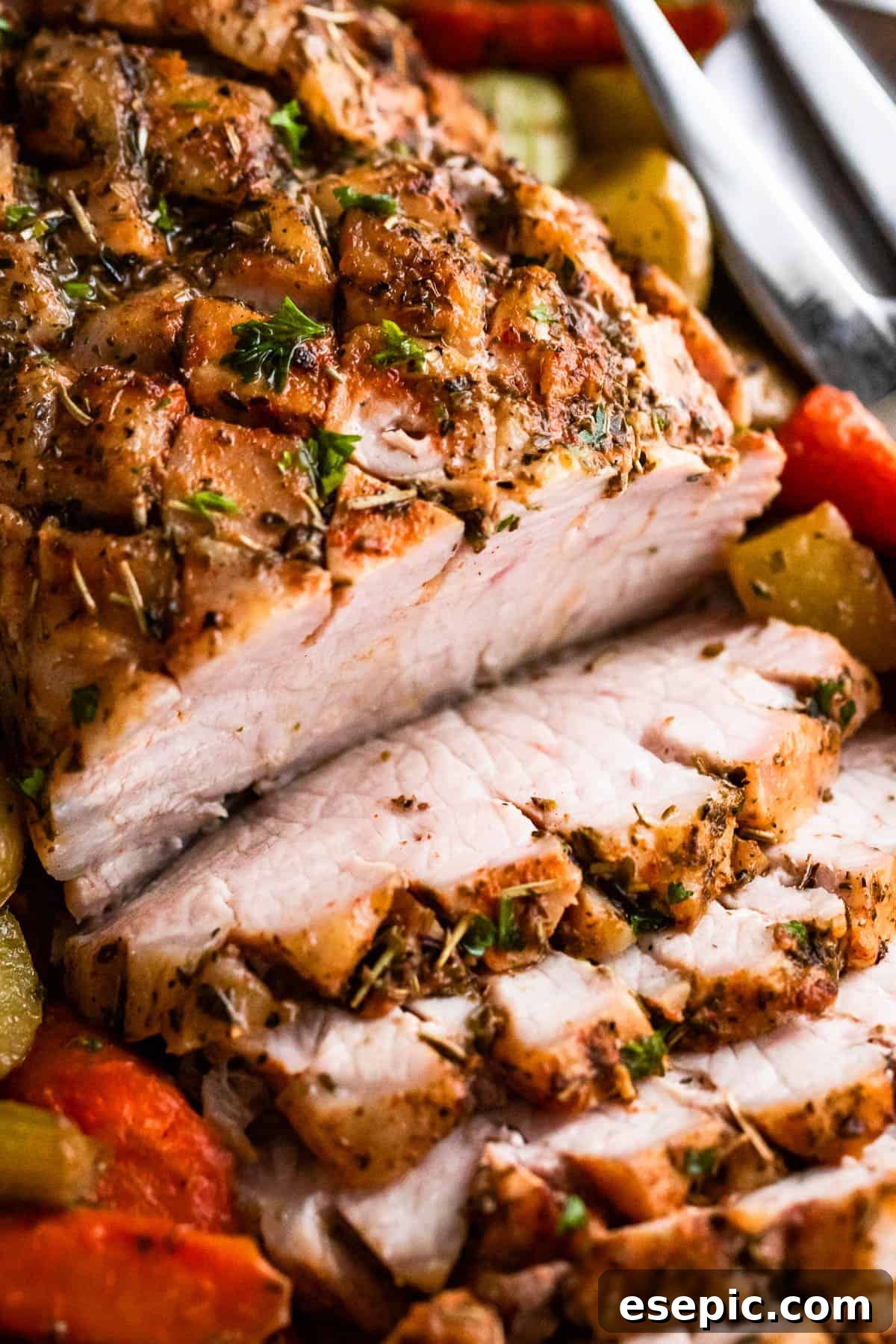
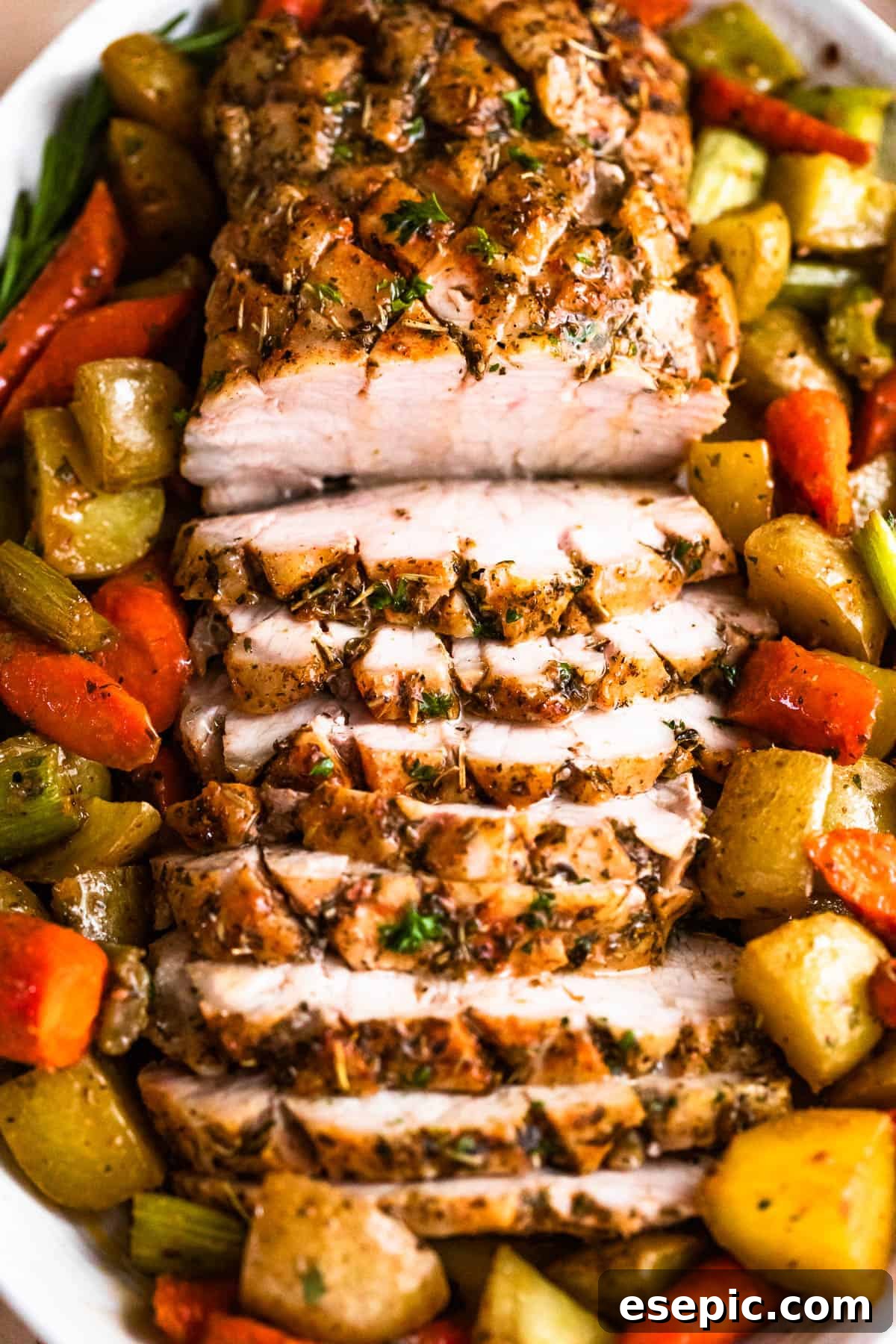
- Slice and Serve: After the resting period, transfer the pork roast from the baking dish to a clean cutting board. Slice it against the grain into your desired thickness (typically ½ to ¾ inch slices). Arrange the succulent pork slices alongside the perfectly roasted vegetables on plates. Serve immediately and savor your impressive, homemade meal!
Expert Tips for a Flawless Pork Loin Roast
Achieving a perfect pork loin roast is simpler than you might think, but incorporating a few expert tips can make all the difference, transforming a good meal into an extraordinary one. Mastering these techniques will elevate your cooking and ensure consistently delicious, show-stopping results every time.
- Dry Thoroughly: Before you apply any seasoning or oil, it is absolutely crucial to thoroughly pat your pork roast dry with paper towels. For an even crispier fat cap, consider letting the pork come to room temperature uncovered on a rack. A dry surface is essential for promoting better browning and crisping of the fat and skin, preventing a steamy exterior that would hinder the development of that desirable golden crust.
- Always Let It Rest: This is arguably the most important, yet often overlooked, step for any lean roasted meat. After removing the pork from the oven, cover it loosely with foil and allow it to rest for a minimum of 8 to 15 minutes, with 10 minutes often being the perfect sweet spot for a roast of this size. Resting allows the muscle fibers to relax and, more importantly, gives the juices that have migrated to the center during cooking a chance to redistribute evenly throughout the meat. Skipping this vital step will result in a rush of juices spilling out onto your cutting board when you slice, leaving you with noticeably drier meat.
- Doneness: Trust Your Thermometer, Not Just Color: Many home cooks were taught to judge pork doneness solely by its color – a common misconception being that any trace of pink means it’s undercooked. However, modern food safety guidelines (and culinary best practices) state that pork is perfectly safe and achieves its optimal juiciness at an internal temperature of 145°F (63°C). At this temperature, the pork will often have a slight rosy hue in the center, which is completely normal and indicates a perfectly juicy, tender roast. Always rely on an instant-read meat thermometer rather than visual cues alone to ensure both food safety and optimal texture.
- Don’t Overcrowd the Pan: When it’s time to add your vegetables, ensure they are spread in a single layer around the pork roast, avoiding overcrowding the baking dish. If your dish is too small to accommodate everything without piling, consider using two separate baking dishes. Overcrowding traps steam, which will lead to steamed rather than beautifully roasted (and crispy!) vegetables. Adequate space allows for proper air circulation and direct heat contact, which is essential for caramelization.
- Uniform Vegetable Size: For even cooking and consistent tenderness, make sure to cut your carrots, celery, and potatoes into roughly the same 1-inch size. This ensures they all become tender at a similar rate as the pork finishes roasting, preventing some vegetables from being mushy while others are still hard.
Delightful Serving Suggestions to Complement Your Roast
While this Pork Loin Roast with Vegetables is undoubtedly a complete and satisfying meal on its own, adding a few thoughtful side dishes can elevate your dining experience even further. Here are some of my favorite accompaniments that perfectly complement the rich, savory flavors of the roast and add textural variety:
- Asparagus Fries: Surprise and delight your palate with these unique Parmesan Asparagus Fries! They offer a delightful crunch, a fresh, vibrant green contrast to the hearty roast, and the crispy Parmesan breading is absolutely addictive. They feel special and festive.
- Warm, Crusty Bread: There’s nothing quite like warm, crusty bread to soak up any delicious pan juices or natural gravy from the roast. Serve some simple dinner rolls or a homemade loaf of No-Knead Dutch Oven Bread alongside with a pat of butter for a truly comforting and cozy meal that satisfies.
- Fresh, Vibrant Salad: A bright and tangy salad, such as an Avocado Tomato Salad, provides a wonderful fresh contrast to the savory roasted meat and vegetables. Its vibrant flavors, crisp textures, and light dressing cleanse the palate beautifully, offering a refreshing counterpoint.
- Creamy Mashed Potatoes: For an extra touch of indulgence and classic comfort, a generous side of creamy mashed potatoes would be a fantastic addition. They absorb the flavors of the roast wonderfully and provide a smooth, rich texture that pairs perfectly with the tender pork.
- Green Bean Almondine: For another elegant vegetable side that adds a touch of sophistication, try green bean almondine. The tender-crisp green beans, sautéed with toasted almonds and a hint of lemon, provide a delicate and complementary flavor profile that brightens the meal.
Storage, Reheating, and Freezing Your Leftovers
This delicious pork loin roast is often just as good, if not better, the next day, making it an excellent candidate for meal prepping or enjoying easy lunches throughout the week. Properly handling and storing leftovers ensures they remain safe and delicious. Here’s how to best store, reheat, and even freeze any remaining portions:
- Storage: After your meal, allow any leftover pork roast and vegetables to cool completely to room temperature (within two hours of cooking) before storing. Promptly transfer them to airtight containers and place them in the refrigerator. When stored correctly, they will maintain their quality and flavor for up to 3 days.
- Reheating: To reheat, the best method is usually in the oven to preserve texture. Place the leftovers in a baking dish. If you have any remaining pan juices from the initial roast, add them to the dish; this will help keep the pork moist during reheating. Cover the dish loosely with aluminum foil and warm it in a 325°F (160°C) oven until the pork reaches an internal temperature of 145°F (63°C). Be vigilant not to overcook, as this is the most common reason for reheated pork to become dry and tough. Alternatively, individual portions can be gently reheated in the microwave with a splash of broth or water added to the container to create steam and prevent drying.
- Freezing: Yes, you can absolutely freeze cooked pork loin roast! For optimal results and to maintain texture, it’s best to slice the cooled pork and separate it from the vegetables before freezing. Wrap the pork slices tightly in two layers of plastic wrap, then place them in freezer bags, pressing out as much air as possible before sealing. Label the bags with the date. Vegetables can be frozen separately if desired. The pork can be frozen for up to 3 months. When you’re ready to enjoy, thaw the frozen pork overnight in the refrigerator before reheating as described above. For food safety reasons and to maintain quality, remember not to save or re-freeze leftovers after they have been reheated.
Recipe Card: Pork Loin Roast with Vegetables
Discover the detailed instructions and ingredient list for creating this sensational Pork Loin Roast with Vegetables, a recipe that promises flavor and ease.

Pork Loin Roast with Vegetables
by Katerina | Easy Weeknight Recipes
This easy recipe for Pork Loin Roast with Vegetables is a complete dinner that’ll wow your guests! Fragrant with olive oil, garlic, and herbs, this pork roast is a delicious keeper.
Prep Time: 10 minutes
Cook Time: 1 hour
Resting Time: 10 minutes
Total Time: 1 hour 30 minutes
Servings: 6
Ingredients
- 3 pounds boneless pork loin roast
- 3 tablespoons olive oil
- 4 cloves garlic, minced
- ½ tablespoon dried crushed rosemary
- 1 teaspoon dried thyme
- 1 teaspoon dried oregano
- ½ teaspoon paprika
- 4 to 5 large carrots, peeled and cut into 1-inch pieces
- 4 stalks celery, cut into 1-inch pieces
- 1 pound baby yukon gold potatoes, quartered
- Sea salt, to taste
- Freshly ground black pepper, to taste
Instructions
- Take the roast out of the fridge and place the fat side up on a platter or parchment-lined work surface to come to room temperature.
- While the roast is coming to temperature, preheat the oven to 450°F (230°C).
- In a small bowl, add 1 tablespoon olive oil, minced garlic, rosemary, thyme, oregano, and paprika; mix to combine and set aside.
- When the roast has reached room temperature, score the skin and fat ¼-inch deep in a cross-hatch pattern at 1-inch intervals. This will allow the seasoning flavor to soak in while roasting.
- Generously season the pork with salt and pepper.
- Place your roast into a 5-quart or larger baking dish. Gently rub the herb mixture all over your pork loin. Cover the roast with a sheet of aluminum foil. Roast for an initial 20 minutes.
- In the meantime, prep and slice your carrots, celery, and potatoes, and place them in a bowl; toss with 1 tablespoon olive oil, salt, and pepper.
- After the initial 20 minutes of roasting, lower the oven temperature to 350°F (175°C) and remove the pork from the oven.
- Uncover and add the vegetables in the dish around the pork roast. Add an additional 1 tablespoon of olive oil sprinkled on top of the vegetables and pork.
- Continue to roast uncovered at 350°F (175°C) for 35 to 45 minutes, or until the pork roast registers an internal temp of 145°F (63°C) and vegetables are tender. Use an instant-read meat thermometer to check for doneness.
- Remove from the oven and re-cover with a piece of foil. Let it rest for 10 minutes.
- Remove pork roast from the baking dish and transfer to a cutting board; slice and serve with the vegetables.
Equipment
- Oven
- 5-quart or larger baking dish
- Instant-read meat thermometer
Nutrition
Calories: 449kcal | Carbohydrates: 20g | Protein: 53g | Fat: 17g | Saturated Fat: 4g | Polyunsaturated Fat: 2g | Monounsaturated Fat: 9g | Cholesterol: 143mg | Sodium: 171mg | Potassium: 1408mg | Fiber: 4g | Sugar: 3g | Vitamin A: 8240IU | Vitamin C: 19mg | Calcium: 62mg | Iron: 2mg
Nutritional info is an estimate and provided as courtesy. Values may vary according to the ingredients and tools used. Please use your preferred nutritional calculator for more detailed info.
Frequently Asked Questions (FAQs) About Pork Loin Roast
Got questions about perfecting your pork loin roast? Here are answers to some common queries to ensure your culinary success.
- What’s the difference between pork loin and pork tenderloin?
- While both are lean cuts from the pig’s back, they are quite different and not interchangeable. Pork loin is a larger, wider, and typically thicker cut, often sold as a roast. It can be cooked whole or sliced into chops. Pork tenderloin, on the other hand, is a long, thin, cylindrical cut. It cooks much faster than a loin roast and is best suited for quick searing, grilling, or slicing into medallions. This recipe specifically calls for a pork loin roast due to its size and the longer roasting method required to cook it alongside the vegetables.
- How do I prevent my pork loin from drying out?
- The absolute key to a consistently juicy pork loin is to avoid overcooking it. Always use an instant-read meat thermometer and remove the roast from the oven once it reaches an internal temperature of 145°F (63°C). Another critical step is letting the pork rest for 10-15 minutes after cooking, covered loosely with foil. This allows the juices to redistribute throughout the meat, keeping it moist. Scoring the fat cap and roasting fat-side up also helps the fat render, essentially basting the meat as it cooks.
- Can I use different vegetables in this roast?
- Absolutely! This recipe is incredibly versatile and adaptable to your preferences or what you have on hand. Feel free to substitute or add other sturdy root vegetables that roast well, such as parsnips, sweet potatoes (cut smaller as they tend to cook faster), butternut squash, turnips, or even Brussels sprouts. Just ensure that whatever vegetables you choose, they are cut to a similar size to allow for even cooking. More delicate vegetables like asparagus or bell peppers are best added towards the very end of the roasting time or cooked separately, as they can become mushy if cooked for the full duration.
- Should I sear the pork loin before roasting?
- While this recipe achieves a lovely, flavorful crust with an initial high-heat roast, some cooks do prefer to sear the pork loin in a hot, oven-safe pan on the stovetop before transferring it to the oven. Searing creates a deeper, richer brown crust (Maillard reaction) and can potentially lock in more flavor. If you choose to sear, do so on all sides for a few minutes each until golden brown, then place it in your baking dish and proceed with step 3 of the instructions, adjusting the initial high-heat roasting time slightly if necessary.
More Easy Pork Recipes to Explore
If you loved this delightful pork loin roast, you’ll be thrilled to discover other fantastic pork recipes that are just as easy to prepare and bursting with flavor. Expand your culinary repertoire and enjoy the versatility of pork with these highly recommended dishes:
- Instant Pot Pork Chops: Achieve perfectly tender and incredibly flavorful pork chops effortlessly in your pressure cooker – ideal for a quick and satisfying meal.
- Pork Parmesan (Pork Parmigiana): A delicious Italian-American classic that features breaded pork cutlets, smothered in marinara sauce and topped with melted cheese, baked to golden perfection.
- Pesto Stuffed Pork Chops: Indulge in juicy pork chops generously filled with savory pesto, offering a vibrant burst of Mediterranean flavor in every succulent bite.
- Honey Garlic Pork Tenderloin: A quick and simple recipe for a glazed, tender pork tenderloin that’s bursting with an irresistible combination of sweet and savory notes, perfect for any occasion.