

Mastering the Art of Herb-Crusted Rack of Lamb: Your Definitive Guide to a Special Occasion Meal
Transform your next gathering into an unforgettable culinary experience with this exquisite recipe for a juicy, herb-crusted Rack of Lamb. This elegant main course, featuring tender lamb coated in a tangy Dijon mustard and a rich, aromatic breadcrumb crust, promises to impress even the most discerning palates. Whether you’re celebrating a holiday, hosting a dinner party, or simply treating yourself to something special, this dish is designed for both dazzling flavor and surprising ease of preparation.
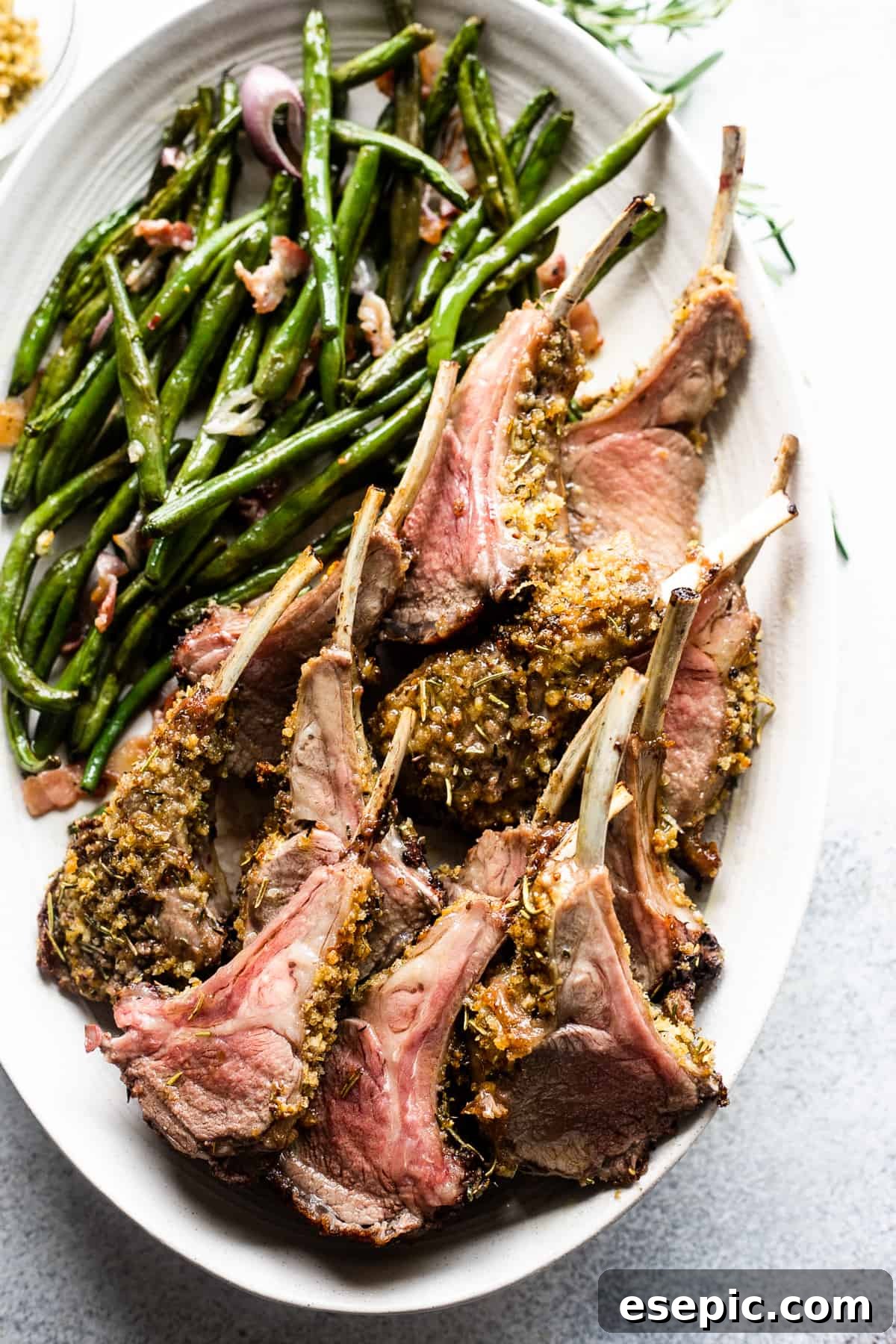
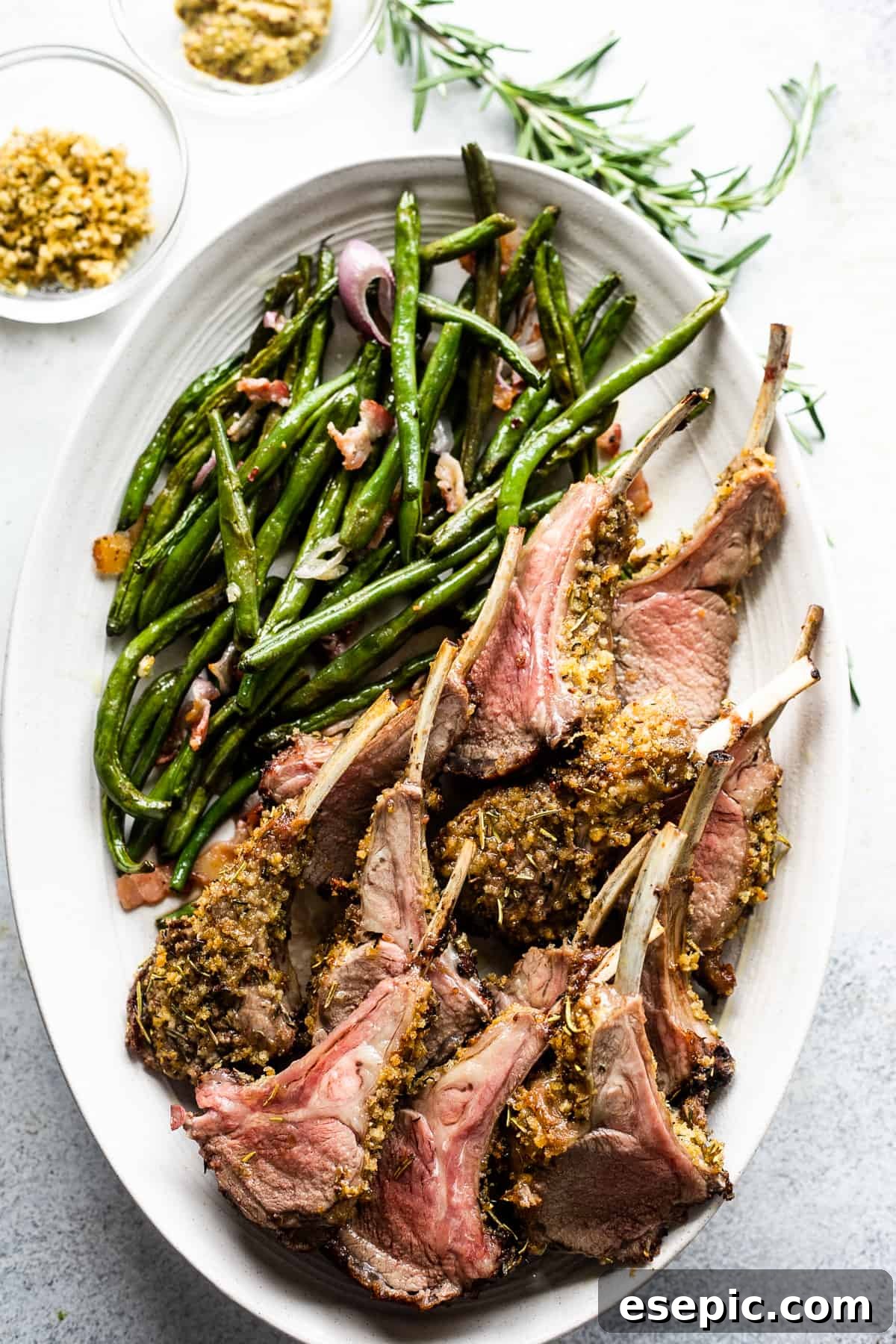
Forget the intimidation often associated with cooking lamb. This roasted rack of lamb recipe simplifies the process, making it accessible even for novice cooks. Cooked quickly in a hot oven to a perfect pink doneness, each bite delivers an explosion of savory herbs and succulent meat. The key to its foolproof success lies in using a meat thermometer, ensuring your lamb reaches optimal temperature without overcooking. The result is a robust, gourmet taste that truly stands out, making it an ideal centerpiece for any special occasion dinner.
What Exactly is a Rack of Lamb?
A rack of lamb refers to a section of ribs, typically 7-8 or sometimes up to 10, cut from the loin of a lamb. It’s essentially a row of lamb rib chops still connected, much like a beef rib roast, but from a younger animal. This cut is highly prized for its exceptional tenderness and fine texture. Due to its delicate nature, it is best served rare or medium-rare to maintain its moisture and flavor. Considered a luxurious and elegant choice, the rack of lamb is also remarkably straightforward to cook, offering a gourmet experience without excessive effort.
Often, a rack of lamb is “frenched,” meaning the meat and fat are trimmed from the ends of the rib bones, exposing the bone and creating a clean, impressive presentation. This not only enhances its visual appeal, providing a “handle” for each chop, but also concentrates the rich meat flavor in the main portion of the chop. Whether frenched or unfrenched, the rack of lamb promises a truly memorable meal.
Why Choose Rack of Lamb for Your Next Special Occasion?
Beyond its reputation for elegance, the rack of lamb offers several compelling reasons to be the star of your next celebratory meal. Firstly, its dramatic presentation, especially when frenched and beautifully crusted, instantly elevates any dinner table. It signals care, sophistication, and a touch of gourmet flair that guests will certainly appreciate.
Secondly, despite its impressive appearance, cooking a rack of lamb is surprisingly less complicated than many assume. With a few key techniques—searing for a flavorful crust, applying a delicious coating, and precise temperature monitoring—you can achieve restaurant-quality results in your own kitchen. This makes it an ideal choice for hosts who want to create a grand meal without being overwhelmed in the kitchen.
Lastly, the unique flavor profile of lamb, often described as rich and slightly gamey but incredibly tender, pairs beautifully with a wide array of herbs and seasonings. This versatility allows for creative culinary expression, while the inherent tenderness of the rack guarantees a delightful eating experience that will leave a lasting impression on your guests.

Essential Ingredients for a Flavorful Herb-Crusted Lamb Rack
Crafting this classic herb-crusted rack of lamb requires just a handful of high-quality ingredients. Each component plays a vital role in building the complex and incredibly satisfying flavors that define this dish. Here’s a detailed look at what you’ll need, along with tips for selection:
- Breadcrumbs: The foundation of our flavorful crust. You can use traditional plain breadcrumbs for a classic texture, Panko crumbs for an extra-crispy result, or even pork rind crumbs for a low-carb alternative. The choice can subtly alter the crust’s final texture, so pick your favorite.
- Dried Herbs: A fragrant blend of crushed dried rosemary and thyme forms the aromatic heart of the crust. These herbs are classic companions to lamb, offering earthy and slightly floral notes. If you prefer using fresh herbs, ensure they are very finely chopped to adhere well to the lamb.
- Garlic Powder: Provides a more intense, evenly distributed garlic flavor throughout the crust compared to fresh garlic. It contributes to the savory depth without adding moisture that could make the crust soggy.
- Olive Oil (for the crust): A small amount of olive oil mixed with the breadcrumbs helps bind the crust ingredients together and ensures it browns beautifully, turning golden and crisp during roasting. You can substitute with another neutral-flavored oil if preferred.
- Lamb Rack: The star of the show! This recipe is typically designed for one 8-to-10 bone rack of lamb, weighing approximately 1.5 to 2 pounds. It should ideally be trimmed and frenched for the classic presentation. For best results, allow the lamb to come to room temperature for about 30-60 minutes before you begin preparation, as this promotes more even cooking.
- Salt and Freshly Ground Black Pepper: Essential seasonings to enhance the lamb’s natural flavors. Season generously on all sides before searing.
- Fresh Garlic (for searing): Four cloves, crushed (no need to mince). Searing the lamb briefly with fresh garlic infuses it with a deeper, more aromatic garlic essence that complements the herbs in the crust.
- Dijon Mustard: Acts as an excellent adhesive for the breadcrumb crust while also contributing a subtle, tangy, and slightly piquant flavor that cuts through the richness of the lamb. Any good quality Dijon mustard will work beautifully here.
Step-by-Step Guide: How to Achieve the Perfect Roasted Rack of Lamb
Cooking a rack of lamb is a straightforward process when you follow these steps. Due to its quick cooking time, it’s advisable to have your side dishes prepped or started before you begin preparing the lamb itself.
Preparing Your Lamb for Roasting
- Preheat Oven and Prepare Crust: Begin by preheating your oven to a hot 450˚F (232˚C) and positioning the oven rack in the center. In a shallow baking dish (a square or rectangular one works best for coating), combine the breadcrumbs, crushed dried rosemary, dried thyme, and garlic powder. Add 2 tablespoons of olive oil and stir thoroughly until all ingredients are well combined. Set this mixture aside.
- Season the Lamb: Using paper towels, thoroughly pat the rack of lamb dry. This step is crucial for achieving a good sear. Generously season the entire rack with salt and freshly ground black pepper on all sides.
Searing for Flavor and Texture
- Heat Skillet and Garlic: Place a large, oven-safe skillet (cast iron or heavy-bottomed stainless steel works well) over high heat. Add 2 tablespoons of olive oil or a neutral vegetable oil. Once the oil is shimmering and hot, add the crushed garlic cloves to the pan.
- Sear the Lamb: Carefully place the seasoned rack of lamb into the hot skillet. Sear it for about 1 to 2 minutes per side, turning with tongs, until a beautiful golden-brown crust forms. This searing step locks in the juices and develops deep, complex flavors.
Crusting and Roasting to Perfection
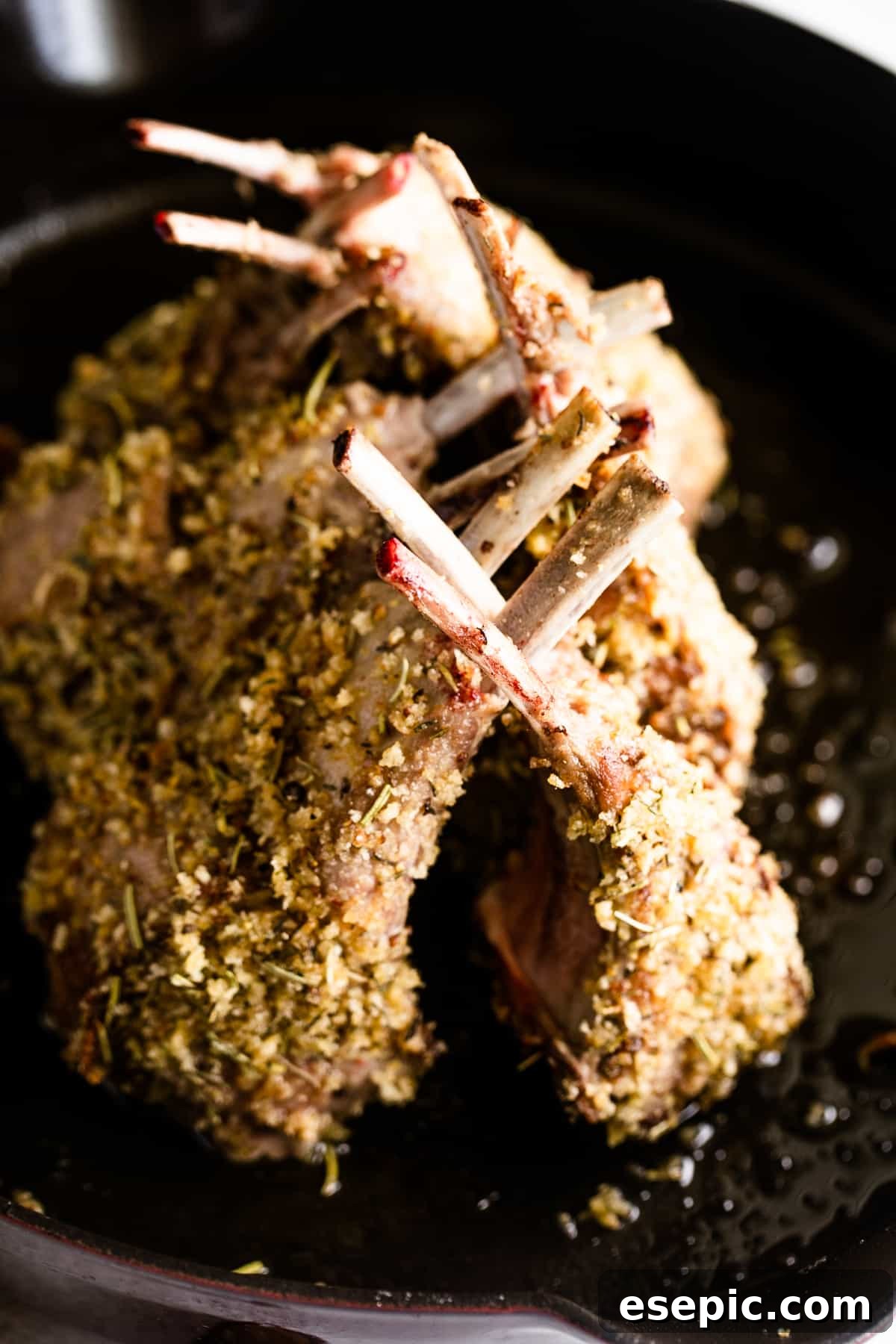
- Apply Mustard and Crust: Remove the skillet from the heat and carefully transfer the seared lamb rack to a plate or cutting board. Brush the entire seared surface of the lamb generously with Dijon mustard. Then, roll the lamb rack in your prepared breadcrumb mixture, pressing gently to ensure an even and thorough coating on all sides.
- Roast the Lamb: Return the crusted lamb rack to the same oven-safe skillet. To prevent the exposed rib bones from burning during roasting, loosely cover them with aluminum foil. Transfer the skillet to the preheated oven. Roast for 15 to 22 minutes. The cooking time will vary depending on the thickness of your lamb and your desired doneness.
- Monitor Internal Temperature: This is the most critical step for perfect lamb! Always use an instant-read meat thermometer for accurate results. Insert the thermometer into the thickest part of the meat, avoiding the bone.
- For **rare** lamb, aim for an internal temperature of 125˚F (52˚C).
- For **medium-rare**, target 135˚F (57˚C).
- For **medium**, cook to 140˚F (60˚C).
Start checking the temperature around the 15-minute mark.
The Crucial Resting Phase
- Rest the Lamb: Once your lamb reaches the desired internal temperature, remove it from the oven and transfer it to a clean cutting board. Loosely tent it with aluminum foil. Allow the lamb to rest for a full 10 minutes. This resting period is crucial as it allows the juices to redistribute throughout the meat, ensuring every bite is tender and succulent.
- Carve and Serve: After resting, remove the foil. Carve the rack of lamb into individual chops by slicing between the ribs. Garnish with fresh parsley for a touch of color and freshness, and serve immediately. Enjoy this magnificent dish!
Should I Cut the Rack of Lamb Before Cooking?
Generally, it’s recommended to cook the rack of lamb whole rather than portioning it into individual chops beforehand. Cooking it as a whole rack helps maintain moisture and ensures more even cooking. Before cooking, however, there are a couple of preparation steps you might consider:
- Frenching: If your lamb rack is not already frenched, you can do this yourself by trimming the meat and fat from the top of the rib bones, or simply leave it as-is for a more rustic presentation.
- Trimming: It’s advisable to trim away any excessive white fat cap from the top of the rack and remove any visible silver skin. Silver skin is a tough membrane that won’t render during cooking and can make the meat chewy. Removing it ensures a more tender bite.
After cooking and resting, carving the rack into chops is much easier and results in perfectly cooked individual portions.
Expert Tips for Rack of Lamb Success
Achieving a perfectly cooked rack of lamb is within reach with these helpful tips:
- Choosing a Good Lamb Rack: The quality of your lamb significantly impacts the final dish. Look for a lamb rack that is rosy-red or light pink in color, indicating freshness. Avoid lamb that is dark red or appears grayish, as it may not be as fresh and could result in tougher meat with a less desirable flavor. The fat cap should be pure white and fine-grained, without any discoloration or a coarse, grainy texture.
- The Art of Frenching: As mentioned, frenching involves trimming the fat and meat from the rib bones, leaving the bone clean. While it creates a beautiful, classic presentation and convenient “handles” for diners, it’s not strictly necessary for taste. Some people prefer to leave the flavorful, chewy rib meat and fat intact. The choice is yours, based on aesthetics and personal preference.
- Accurate Temperature Control is Key: Overcooking lamb is a common mistake that leads to dry, tough meat. An instant-read meat thermometer is your best friend here. For rare, aim for 125˚F (52˚C); for medium-rare, 135˚F (57˚C); and for medium, 140˚F (60˚C). Remember, the internal temperature will rise a few degrees during the resting period.
- Understanding Serving Sizes: Lamb chops and rack of lamb portions can appear smaller compared to beef or pork cuts. Plan on 2 to 3 chops per person for a generous serving. If you’re hosting more than three or four guests, you will likely need two racks to ensure everyone gets a satisfying portion.
- Don’t Skip the Rest: The resting period after roasting is non-negotiable. Allowing the lamb to rest for 10 minutes, loosely tented with foil, enables the muscle fibers to relax and the juices to redistribute throughout the meat. This results in incredibly tender and moist chops. Cutting too soon will cause the juices to run out, leaving you with drier lamb.
Elevating Your Meal: Perfect Side Dishes for Rack of Lamb
While the herb-crusted rack of lamb is undoubtedly the star, pairing it with thoughtfully chosen side dishes can truly complete the gourmet experience. You don’t need anything overly complex; simple, flavorful accompaniments that complement the lamb’s richness are ideal. Here are some tried-and-true favorites:
- Roasted Carrots: Sweet and earthy roasted carrots are a natural partner for lamb. Their vibrant color and caramelized sweetness provide a wonderful contrast. Consider making Honey Balsamic Roasted Carrots for an extra layer of glaze and flavor.
- Potatoes in Any Form: Potatoes are wonderfully versatile and always a crowd-pleaser.
- Classic Creamy Mashed Potatoes: A comforting and luxurious choice that soaks up the lamb’s juices beautifully.
- Crispy Roasted Potatoes: Cubed and roasted with herbs, they add a satisfying textural crunch.
- Scalloped Potatoes or Potatoes Au Gratin: For an even richer, more elaborate side, layers of thinly sliced potatoes baked in a creamy sauce are superb.
- Fresh Green Vegetables: Bright, crisp green vegetables cut through the richness of the lamb, adding freshness and essential nutrients.
- Grilled or Steamed Asparagus: A simple drizzle of olive oil and a squeeze of lemon is all they need.
- Green Beans with Almonds: Blanched green beans quickly sautéed with butter and toasted slivered almonds offer a delightful crunch.
- Broccolini with Garlic: Roasted or sautéed broccolini provides a slightly bitter contrast that works well.
- Consider Grilled Vegetables with Lemon Dressing for a refreshing medley.
- Elegant Sauces (Optional): While the lamb is flavorful enough on its own, a light sauce can elevate it further. A classic mint sauce, a red wine reduction, or a fresh chimichurri can add another dimension to the dish.
Storing and Reheating Leftover Rack of Lamb
If you’re fortunate enough to have leftovers from your delicious rack of lamb, here’s how to store and reheat them to maintain their quality:
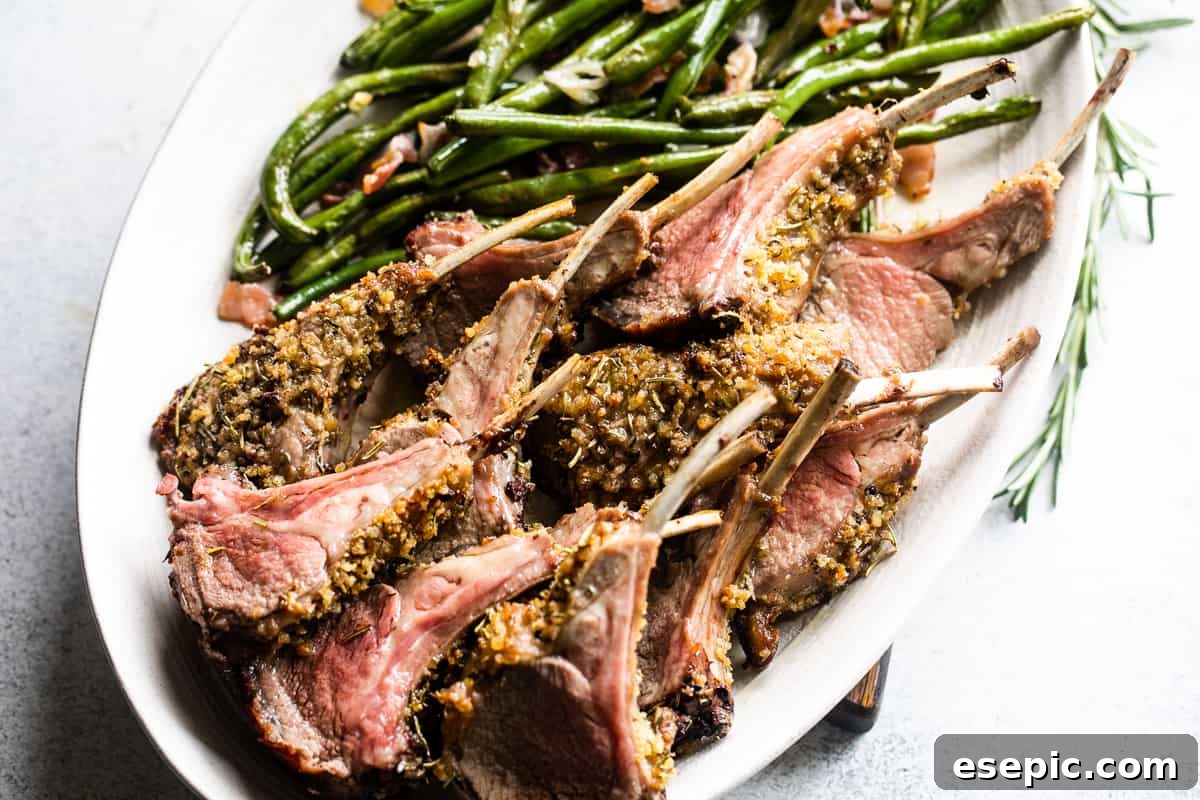
- Storage: Allow the cooked lamb to cool completely before storing. Wrap it tightly in plastic wrap or place it in an airtight container. Stored properly, it will keep fresh in the refrigerator for up to 3 days. For longer storage, you can freeze leftover lamb for up to 2 months. Thaw it overnight in the refrigerator before reheating.
- Reheating: The key to reheating lamb is to do so gently to avoid overcooking and drying it out. You can serve the lamb at room temperature if preferred. To reheat, place the lamb in a covered skillet over medium-low heat, adding a tablespoon or two of water or broth to create steam and prevent it from drying. Warm gently until heated through, but be very careful not to let it cook further. Alternatively, you can reheat it briefly in a low oven (around 250°F / 120°C) until warm.
Nutrition Information
Nutrition
The following nutritional information is an estimate provided as a courtesy. Values may vary significantly based on the specific ingredients used, preparation methods, and serving sizes. For detailed and precise nutritional data, please use your preferred nutritional calculator.
- Calories: 652 kcal
- Carbohydrates: 12g
- Protein: 21g
- Fat: 58g
- Saturated Fat: 21g
- Polyunsaturated Fat: 5g
- Monounsaturated Fat: 28g
- Cholesterol: 94mg
- Sodium: 688mg
- Potassium: 300mg
- Fiber: 1g
- Sugar: 1g
- Vitamin A: 17 IU
- Vitamin C: 1mg
- Calcium: 61mg
- Iron: 3mg
Nutritional info is an estimate and provided as courtesy. Values may vary according to the ingredients and tools used. Please use your preferred nutritional calculator for more detailed info.
More Culinary Inspirations: Classic Main Courses
If you enjoyed this elegant lamb recipe, explore more classic main courses designed to delight your taste buds and impress your guests:
- Salmon Florentine: A Rich and Creamy Seafood Delight
- Perfect Roast Pork Tenderloin with Crispy Potatoes
- Creamy Chicken Marsala: An Italian-American Favorite