
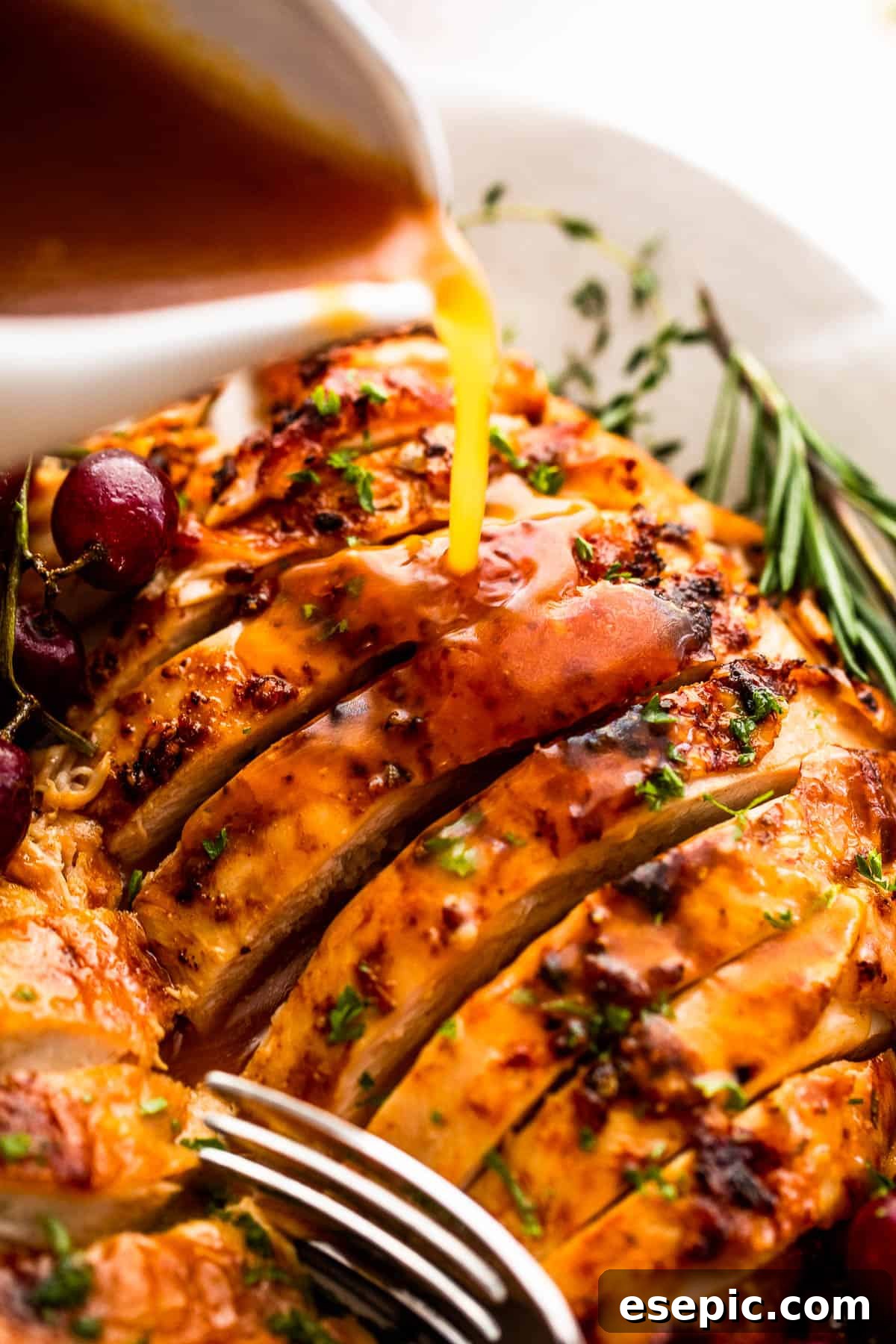
Are you searching for a reliable, straightforward method to prepare a succulent and incredibly juicy turkey breast? Look no further! This comprehensive guide on How to Roast Turkey Breast is designed for home cooks of all skill levels, promising a dish that’s rich in buttery, aromatic herb flavor – a true classic for any festive occasion or a delicious weeknight meal.
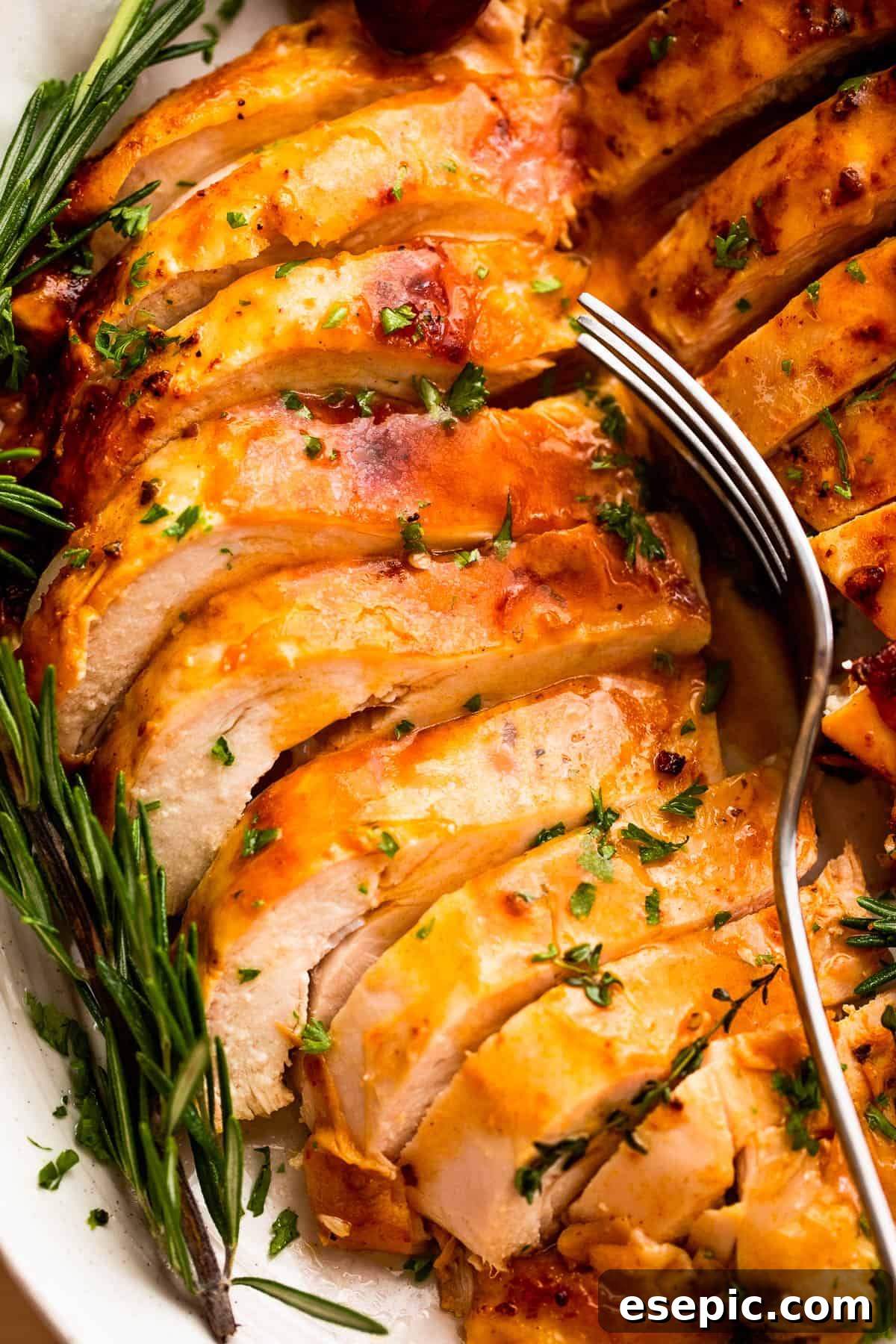
How to Roast a Perfectly Juicy Turkey Breast: Your Essential Guide
The anticipation of holiday feasts fills the air, and for many, that means the star of the show: turkey! While a majestic whole turkey often takes center stage at large gatherings, roasting a turkey breast offers a brilliant alternative for smaller celebrations, weeknight dinners, or simply when you prefer white meat. This method delivers all the rich, comforting flavors you associate with Thanksgiving and other special occasions, but with significantly less fuss and a shorter cooking time.
Imagine the delightful aromas of sage, rosemary, and thyme filling your kitchen as your turkey breast roasts to a beautiful golden brown. Classic comfort food reaches its peak during the holidays, from creamy mashed potatoes and vibrant cranberry sauce to savory stuffing and delectable pumpkin pie. While the traditional spread can be extensive, a perfectly roasted turkey breast stands proudly alongside these beloved dishes, offering a versatile and delicious main course.
Choosing to roast a turkey breast instead of an entire bird comes with several advantages. It’s an excellent option if you have a preference for white meat, want to save oven space for other side dishes like green bean casserole or soft yeast rolls, or if you’re serving fewer people. Plus, it cooks more uniformly and slices beautifully, ensuring every serving is tender and flavorful. Say goodbye to dry turkey and hello to consistently juicy results!
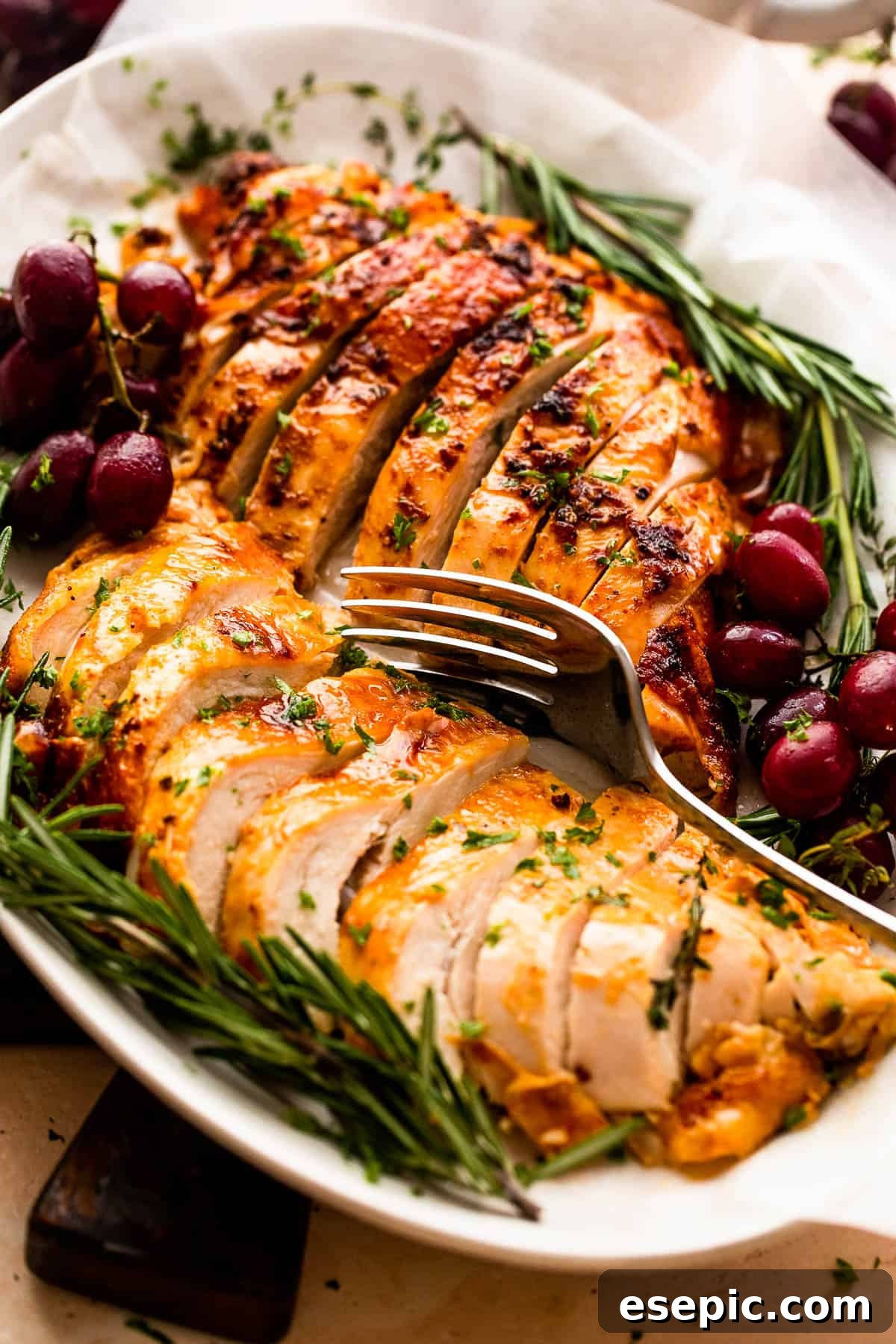
Essential Ingredients for the Perfect Roasted Turkey Breast
Crafting a truly delicious roasted turkey breast doesn’t require an extensive list of ingredients. The secret lies in using simple, high-quality components that enhance the natural flavors of the turkey. Focus on fresh herbs and a good cut of meat, and you’ll achieve a spectacular meal that tastes both elegant and homemade.
- Turkey Breast: For this recipe, we recommend a 4-to-5-pound bone-in, skin-on turkey breast. Bone-in breasts tend to stay moister during roasting and offer a deeper flavor. If you purchase a frozen turkey breast, ensure it is completely thawed in the refrigerator before you begin cooking. Proper thawing is crucial for even cooking and food safety.
- Unsalted Butter: Melted or softened butter is key to both flavor and moisture. It penetrates the skin and bastes the meat from the inside out, resulting in a rich, golden crust and tender, juicy meat. Using unsalted butter allows you to control the overall saltiness of the dish.
- Fresh Herbs: Herbs are the soul of a classic roasted turkey. Our go-to combination includes fresh rosemary and thyme leaves, which impart a wonderfully fragrant and earthy aroma. However, feel free to experiment with your favorites! Sage and parsley are classic choices for Thanksgiving, while oregano, basil, marjoram, or even a blend like Herbes de Provence can add unique depth. If fresh herbs aren’t available, dried herbs can be used – just remember to use about one-third of the amount of fresh herbs, as their flavor is more concentrated.
- Kosher Salt and Freshly Ground Black Pepper: Proper seasoning is fundamental. Don’t underestimate the power of salt and pepper. Kosher salt provides a clean, savory flavor, and a generous amount of freshly ground black pepper adds a subtle kick that truly elevates the dish. Seasoning generously ensures the flavor penetrates beyond the surface.
- Garlic Powder: While fresh minced garlic is always an option, garlic powder offers consistent, intense flavor that disperses evenly and holds up well throughout the long roasting process. It adds a delicious savory depth without the risk of burning that fresh garlic can sometimes present on the surface.
- Paprika: Made from dried, ground peppers, paprika contributes a mild, earthy sweetness and a beautiful, vibrant red hue that develops into a stunning golden-brown crust during baking. It’s a subtle yet impactful ingredient for both color and nuanced flavor.
Mastering the Art of Roasting a Classic Turkey Breast
The primary goals when roasting turkey, especially the breast, are achieving abundant flavor and ensuring the meat remains incredibly moist. Turkey breast is a lean protein that can dry out quickly if not handled correctly. This foolproof roasting method combines high initial heat with a lower sustained temperature, guaranteeing a tender, juicy, and flavorful result every single time.
- Prepare Your Oven and Roasting Pan: Begin by preheating your oven to a robust 450°F (232°C). This high initial heat is crucial for searing the turkey skin, locking in juices and creating that desirable crispy exterior. While the oven heats, prepare your roasting pan. Place a sturdy roasting rack inside the pan. If you don’t have a rack, you can create a natural one by lining the bottom of the pan with washed and scrubbed root vegetables like carrots, celery, and quartered onions. These not only elevate the turkey, allowing for air circulation, but also infuse flavor into any drippings for gravy.
- Prepare the Turkey and Herb Butter Mixture: Carefully place the turkey breast onto the roasting rack. Using paper towels, pat the entire surface of the turkey breast thoroughly dry. This step is vital for achieving crispy skin. In a small bowl, melt the butter. Stir in your finely chopped fresh herbs (rosemary and thyme are fantastic), kosher salt, garlic powder, paprika, and freshly ground black pepper until all ingredients are well combined. This aromatic herb butter will be the key to your turkey’s incredible flavor and moisture.
- Flavor the Turkey Breast Generously: Gently loosen the skin on top of the turkey breast, being careful not to detach it completely. This creates a pocket where flavor can truly penetrate. Rub approximately half of the fragrant butter mixture directly onto the meat, under the skin. This ensures the breast meat itself is seasoned and moisturized. Next, generously rub the remaining butter mixture all over the top of the turkey skin and along the sides of the breast. This layer of butter will help the skin crisp up and turn a beautiful golden color. Finally, sprinkle the entire turkey breast with an additional dash of salt and pepper for a final layer of seasoning.
- The Roasting Process: Once the turkey is prepped, reduce your oven temperature to 325°F (160°C). Immediately place the turkey into the preheated oven. The initial high heat from step 1 will sear the exterior, creating a barrier that helps retain moisture. As the oven gradually cools to 325°F, the turkey will then slowly roast until perfectly done. Allow the turkey to roast for approximately 1 ½ to 2 ½ hours. The exact timing will depend on the size of your turkey breast and your oven’s calibration. The most accurate way to check for doneness is using an instant-read meat thermometer inserted into the thickest part of the breast, avoiding the bone. The turkey is done when the internal temperature reaches 155°F (68°C) to 160°F (71°C). Remember that the temperature will continue to rise slightly as it rests.
- The Crucial Resting Period: Once your turkey breast reaches the target internal temperature, carefully remove it from the oven. Transfer the roasting pan or turkey to a cutting board and loosely tent it with aluminum foil. Allow the turkey to rest for a minimum of 20 minutes (up to 30 minutes for larger breasts). This resting period is absolutely essential. It allows the juices, which have been driven to the center of the meat during cooking, to redistribute throughout the breast. Skipping this step will result in dry, less flavorful meat, even if perfectly cooked.
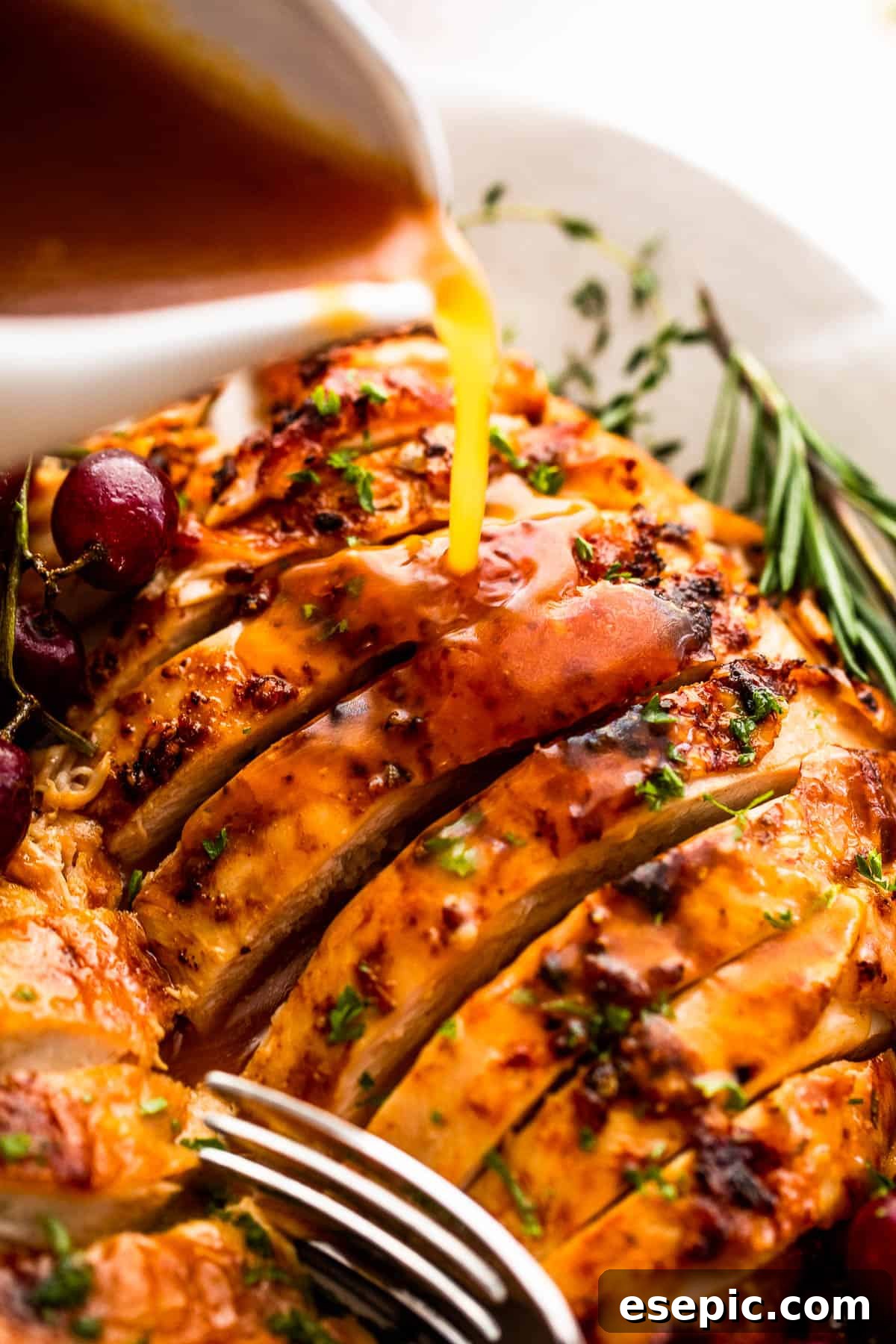
- Carve and Serve: After the turkey has rested, transfer it to a clean cutting board. To carve, locate the breast bone and, using a sharp knife, slice along one side of the bone, keeping your knife as close to the ribs as possible to remove the entire breast half. Repeat on the other side. Then, slice the turkey breast against the grain into desired thicknesses. Arrange the slices beautifully on a platter and serve immediately, perhaps with a drizzle of pan drippings or homemade gravy. Enjoy your perfectly roasted, juicy turkey breast!
Should a turkey breast be roasted covered or uncovered?
For that desirable crispy, golden-brown skin, you should roast your turkey breast uncovered. Keeping it uncovered allows the skin to render fat and crisp up beautifully. If you notice the skin browning too quickly during the later stages of cooking, simply create a loose “tent” with aluminum foil and gently rest it over the turkey. This prevents the skin from burning while allowing the internal meat to continue cooking. Remove the foil for the last 10-15 minutes of roasting to re-crisp the skin if needed.
How long do I cook a turkey breast per pound?
While cooking times can vary based on your specific oven and the precise shape and size of your turkey breast, a good general guideline for a bone-in turkey breast is 18 to 20 minutes per pound when roasting at 325°F (160°C). For instance, a 5-pound turkey breast would typically take between 90 to 100 minutes. Always rely on an instant-read meat thermometer for accuracy. The turkey is done when the internal temperature reaches 155°F (68°C) to 160°F (71°C) in the thickest part of the breast, and the juices run clear when pierced. Remember to factor in the resting time, during which the temperature will continue to rise a few degrees.
Bone-in vs. Boneless Turkey Breast: What’s the Difference?
This recipe calls for a bone-in, skin-on turkey breast, and for good reason! The bone helps insulate the meat, leading to more even cooking and preventing the breast from drying out. It also imparts a richer flavor to the meat and pan drippings. Skin-on is essential for that crispy, flavorful exterior. Boneless turkey breasts cook faster but are more prone to drying out. If you choose a boneless breast, reduce cooking time and monitor the internal temperature closely.
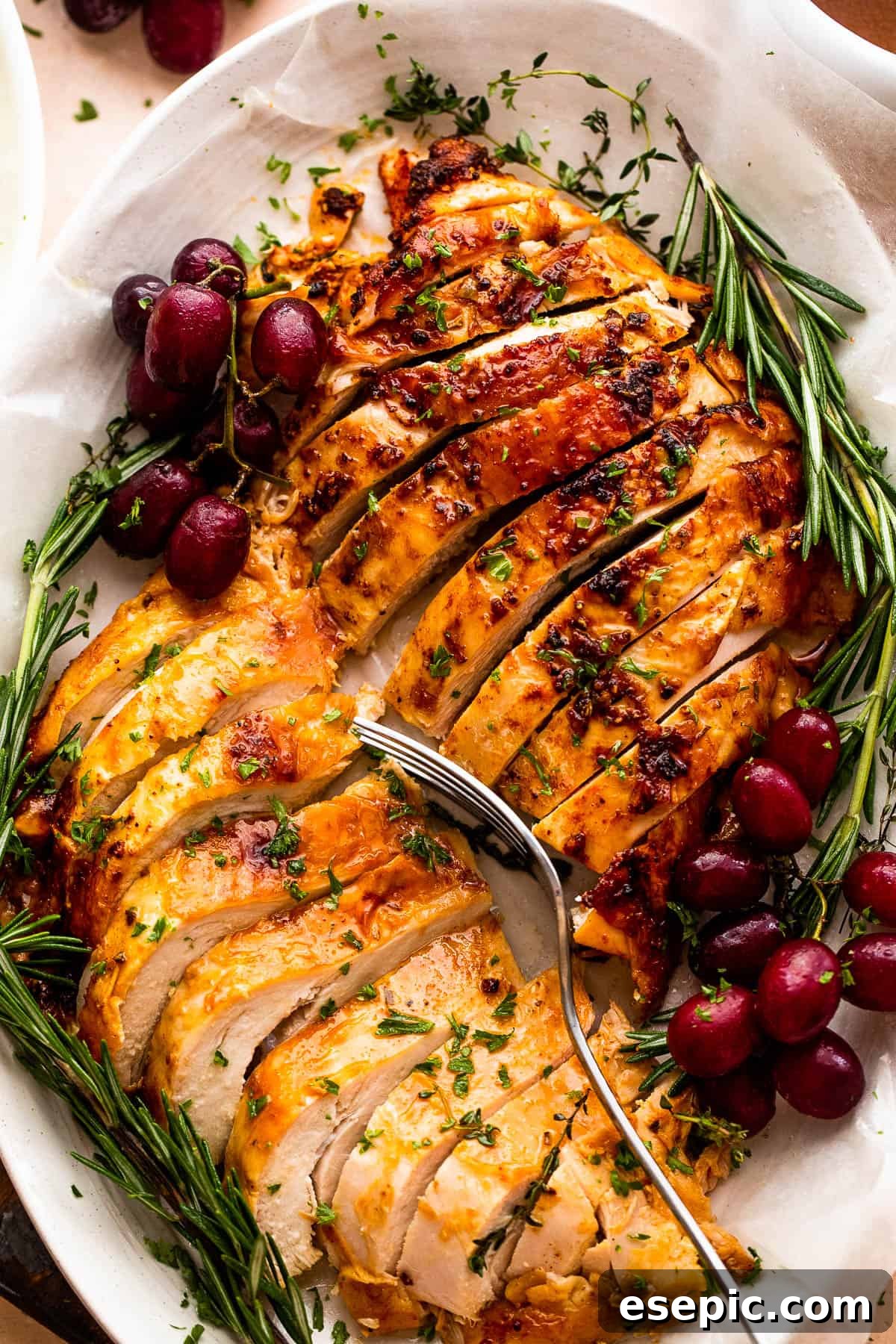
Pro Tips for Roasting a Perfectly Succulent Turkey Breast
Roasting turkey breast is a wonderfully straightforward process, and by adhering to the foundational steps, you’re already set for success. However, a few additional insights can elevate your dish from great to truly unforgettable. Read on for some expert tips that will ensure your turkey breast is perfectly moist and flavorful every time.
- To Brine, or Not to Brine? This popular question depends on two crucial factors: your turkey and your available time. Many turkey breasts sold in supermarkets are “pre-brined” or injected with a saline solution to enhance moisture and flavor. Always check the packaging; if it lists ingredients like “containing up to X% of a solution of water, salt, etc.,” then your turkey is already brined. Brining such a turkey again could result in an overly salty dish. However, if your turkey breast is natural and unenhanced, a brine can work wonders, especially a wet brine. A simple brine of water, salt, sugar, and aromatics can significantly increase the moisture content and tenderness. If time is short, don’t worry! This recipe still yields fantastic results without brining, thanks to the butter and proper cooking technique.
- Bring Turkey to Room Temperature: For optimal results and even cooking, remove the turkey breast from the refrigerator at least 30-60 minutes before you plan to roast it. Allowing it to come closer to room temperature prevents the outside from overcooking before the inside is done, resulting in a more uniformly cooked and tender breast.
- Ensure You Have Enough Turkey: A good rule of thumb is to calculate about 1 to 1.5 pounds of turkey per person, especially if you want leftovers. A 4 to 5-pound turkey breast typically serves 4 to 6 people comfortably. If you’re hosting a larger gathering or dreaming of abundant turkey sandwiches, consider roasting a larger turkey breast, two smaller breasts, or even a whole turkey.
- Skip the Basting: Unlike a whole turkey, which can benefit from occasional basting during longer cooking times, turkey breast cooks relatively quickly and has the butter rub applied both under and over the skin. This recipe is designed to create a self-basting environment, keeping the meat moist without the need to constantly open the oven door. Each time you open the oven, you lose heat, extending the cooking time and potentially drying out the meat. So, relax and trust the process!
- The Importance of a Meat Thermometer: We cannot stress this enough – a reliable instant-read meat thermometer is your best friend when roasting poultry. It’s the only way to accurately determine doneness and prevent overcooking, which is the primary cause of dry turkey. Invest in a good one, and your roasts will be consistently perfect.
Delicious Serving Suggestions for Your Roasted Turkey Breast
Your beautifully roasted turkey breast is a magnificent center-piece, ready to be paired with an array of comforting side dishes. Whether you’re planning a grand holiday feast or a simple family dinner, here are some of our favorite down-home sides that perfectly complement the rich flavors of turkey:
- Homemade Gravy: Don’t let those flavorful pan drippings go to waste! A simple, savory gravy made from the turkey drippings, a little flour or cornstarch, and chicken or turkey broth is an absolute must. It’s the ultimate accompaniment for tender turkey and mashed potatoes.
- Fluffy Mashed Potatoes: Creamy, buttery mashed potatoes are a quintessential pairing. Their smooth texture and rich flavor soak up gravy beautifully and provide a comforting contrast to the turkey.
- Soft Dinner Rolls: Easy No-Knead Dinner Rolls are a game-changer, baking up flavorful and delicious every time with minimal prep. They’re perfect for soaking up gravy or making mini turkey sandwiches.
- Sweet Potatoes with a Twist: Instead of a sugary casserole, try these Honey Garlic Roasted Sweet Potatoes. The sweet and salty bite-sized morsels are utterly irresistible and offer a fresh take on a classic.
- Classic Green Bean Casserole: A holiday staple, green bean casserole with crispy fried onions provides a savory, creamy, and crunchy element that everyone loves.
- Roasted Brussels Sprouts: Even picky eaters will enjoy these “tiny cabbages” when prepared right. Our Slow Cooker Parmesan Brussels Sprouts yield tender-crisp results with minimal effort, making them a fantastic healthy addition.
- Cranberry Sauce: Whether homemade or store-bought, a tart and sweet cranberry sauce cuts through the richness of the turkey and adds a vibrant burst of flavor.
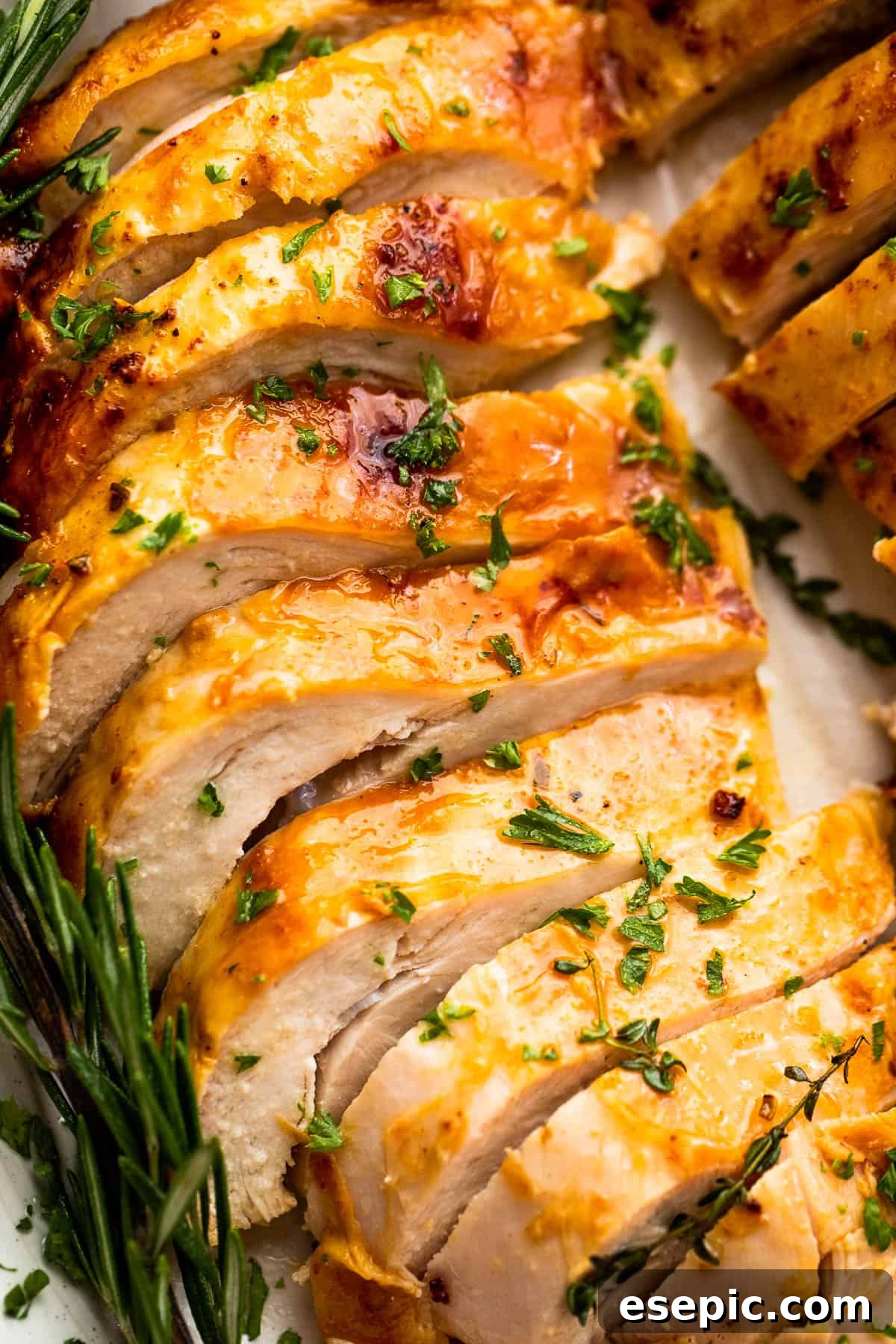
Creative Ways to Utilize Leftover Thanksgiving Turkey
One of the greatest joys of roasting a turkey breast (or a whole turkey) is the promise of delicious leftovers! Far from being boring, leftover turkey can be transformed into a variety of exciting and easy meals. Don’t let any of that delicious meat go to waste – here are some inspiring ideas to get you started:
- Ultimate Turkey Sandwiches: The simplest and often most beloved use for leftover turkey. Pile generous slices onto soft rolls or create gourmet Leftover Turkey Salad Sandwiches on buttery croissants. Add cranberry sauce, stuffing, and a touch of mayonnaise for a truly epic sandwich.
- Hearty Turkey Casserole: Turn your leftovers into a comforting family meal. This easy Turkey and Wild Rice Casserole is a satisfying blend of two kinds of rice, celery, mushrooms, and turkey, all bound together in a creamy, cheesy sauce. It’s perfect for a cozy evening.
- Flavorful Turkey Chili: Give your leftover turkey a new lease on life by making a delicious chili. Adapt your favorite White Chicken Chili recipe by substituting the chicken with shredded turkey for a festive and laid-back dinner that the whole family will adore.
- Turkey Tacos or Enchiladas: Shredded turkey makes an excellent filling for tacos, burritos, or enchiladas. Simply warm the turkey with your favorite taco seasoning, add fresh salsa, cheese, and your preferred toppings.
- Quick Turkey Soup: Simmer turkey bones (if you have them) with leftover vegetables and herbs to create a flavorful stock. Then, add diced leftover turkey, noodles, and more vegetables for a heartwarming soup.
Storing and Reheating Your Roasted Turkey Breast for Best Results
Proper storage and reheating are crucial for enjoying your leftover turkey breast safely and maintaining its delicious flavor and texture. Follow these guidelines to keep your turkey fresh and juicy for days to come:
- To Refrigerate: Once the turkey breast has cooled completely (within two hours of cooking), remove the meat from the bone if it’s still attached. Cut the turkey into slices or shred it, then place it in airtight food storage bags or containers. Store in the refrigerator for 3 to 4 days.
- To Freeze: For longer storage, remove the turkey meat from the bone. Tightly wrap individual portions of turkey in plastic wrap, then place them into freezer bags or airtight freezer-safe containers. Press out as much air as possible from the bags before sealing to prevent freezer burn. Frozen turkey breast can be stored for up to 3 to 6 months. Thaw overnight in the refrigerator before reheating.
- To Reheat: To prevent your turkey from drying out, it’s best to reheat it gently. Place the sliced or shredded turkey in a covered skillet or oven-safe dish with a splash of chicken broth or water. Heat on low on the stovetop or in a 300°F (150°C) oven until the turkey is fully heated through. Avoid microwaving if possible, as it can make turkey rubbery. The key is to heat it slowly and ensure it’s covered to retain moisture. Do not overcook, as this will inevitably lead to dry turkey.
How To Roast Turkey Breast
Ingredients
- 4 to 5 pounds bone-in, skin-on turkey breast,, completely thawed*
- 4 tablespoons butter,, melted
- 1 tablespoon finely chopped fresh herbs,, I use rosemary and thyme
- ½ tablespoon kosher salt
- 1 teaspoon garlic powder
- 1 teaspoon paprika
- ½ teaspoon fresh ground black pepper
Instructions
-
Preheat oven to 450˚F (232°C).
-
Set a roasting rack inside of a roasting pan.
-
Transfer the turkey breast to the roasting rack.
-
Melt the butter and to the melted butter add chopped fresh herbs, salt, garlic powder, paprika, and pepper; whisk until completely incorporated.
-
Using paper towels, pat dry the turkey breast thoroughly.
-
Gently loosen the skin and rub half of the butter mixture onto the meat under the skin. Then, use a pastry brush to brush the remaining butter mixture all over the top of the turkey skin and sides of the breast.
-
Season the turkey breast all over with more salt and pepper.
-
Reduce the oven temperature to 325˚F (160°C).
-
Roast the turkey breast for 1.5 to 2.5 hours, or until internal temperature reaches 155˚F (68°C) to 160˚F (71°C) when checked with an instant-read meat thermometer in the thickest part of the breast, avoiding the bone. As a general guideline, turkey breast needs to cook for about 18 to 20 minutes per pound. We suggest checking the temperature around the 1.5-hour mark to gauge how much longer it may need, then continue checking every 15 minutes thereafter.
-
If the skin begins to brown too quickly, loosely tent a piece of foil over it to prevent burning.
-
Once cooked, pull out the turkey breast and let stand, loosely tented with foil, for 20 minutes. This resting period is crucial for juicy results.
-
Transfer to a cutting board and, starting at the breast bone, carve the turkey off the bone keeping your knife as close to the ribs as possible.
-
Then, cut the turkey breast into slices against the grain and serve immediately.
Notes
- For best results, the turkey breast should be completely thawed AND at room temperature before starting to work with it.
Nutrition
Calories: 375kcal | Carbohydrates: 1g | Protein: 65g | Fat: 13g | Saturated Fat: 6g | Polyunsaturated Fat: 2g | Monounsaturated Fat: 4g | Trans Fat: 1g | Cholesterol: 183mg | Sodium: 1272mg | Potassium: 751mg | Fiber: 1g | Sugar: 1g | Vitamin A: 476IU | Vitamin C: 1mg | Calcium: 47mg | Iron: 2mg
Nutritional info is an estimate and provided as courtesy. Values may vary according to the ingredients and tools used. Please use your preferred nutritional calculator for more detailed info.
More Holiday Favorites and Comfort Food Recipes
If you loved this easy guide to roasting turkey breast, be sure to explore more of our cherished holiday and comfort food recipes. From hearty roasts to delightful sweet treats, we have everything you need to make your next meal memorable:
- Pork Loin Roast with Vegetables: A flavorful and tender roast that’s perfect for Sunday dinner.
- Juicy Whole Roast Turkey: For those occasions when only a full bird will do, this recipe guarantees a showstopper.
- Christmas Ham with Brown Sugar Glaze: A sweet and savory glazed ham that makes an ideal centerpiece for any holiday.
- Creamy Mashed Potatoes: The perfect fluffy side dish for any roast.
- Homemade Cranberry Sauce: Elevate your holiday meal with a fresh, vibrant cranberry sauce.