
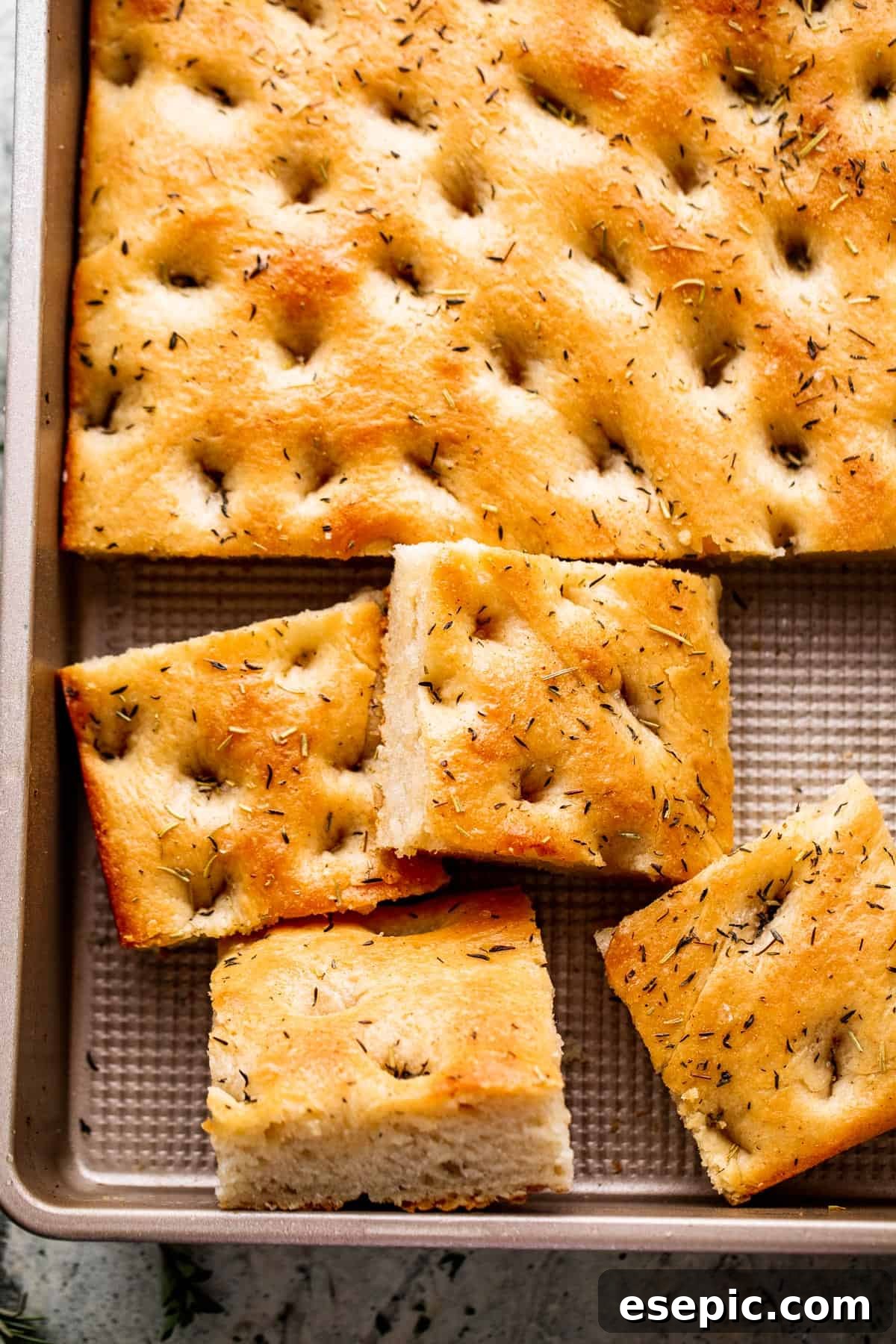
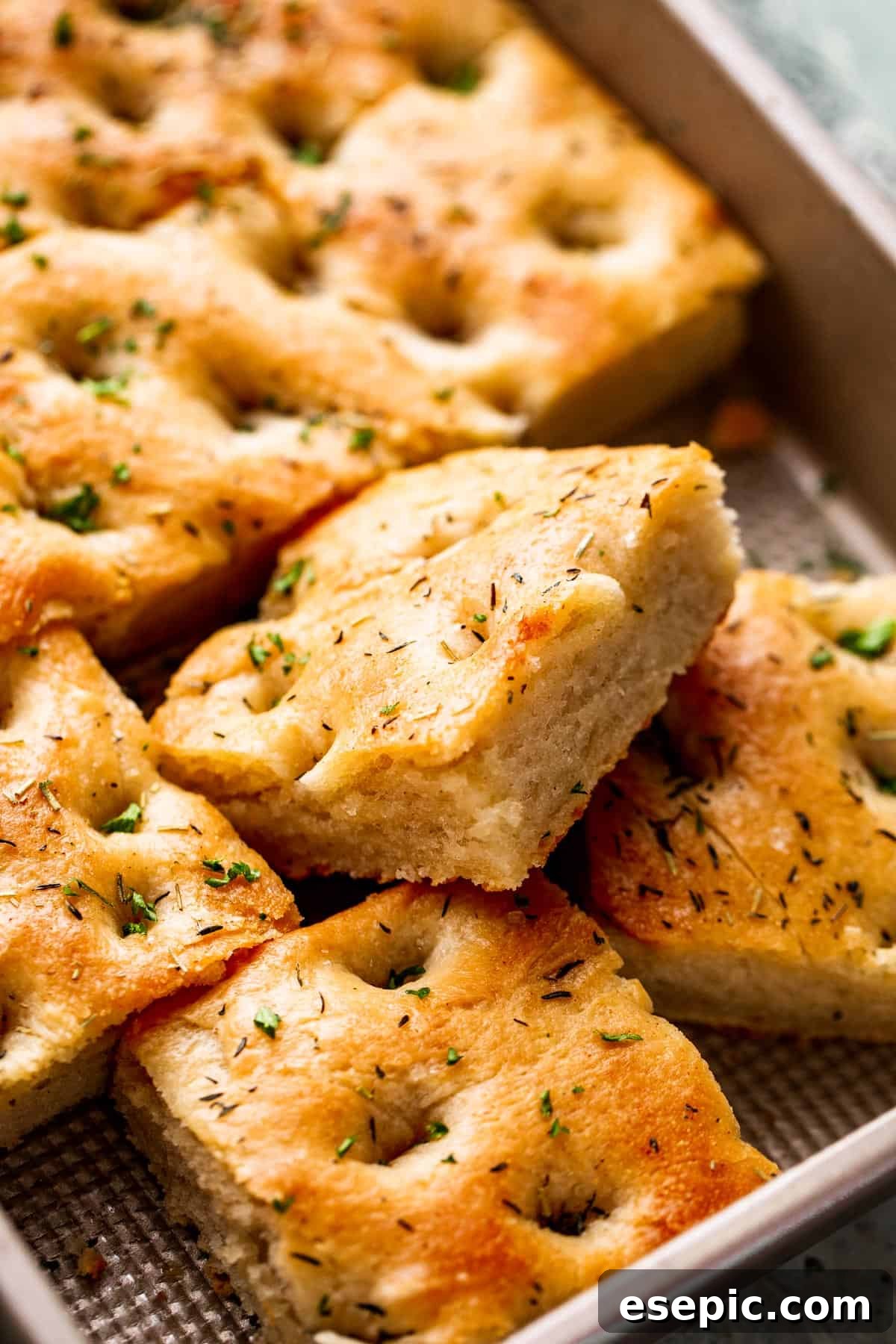
Indulge in the rustic charm of Italy with this magnificent, golden-brown yeast bread. Garlic and Herb Focaccia is a culinary masterpiece that promises an explosion of savory flavors in every bite. Renowned for its irresistibly airy texture and aromatic crust, this bread is surprisingly simple to create in your own kitchen, offering a truly delightful baking experience and an even more delightful eating adventure. Prepare to fall in love with its comforting aroma and delectable taste!
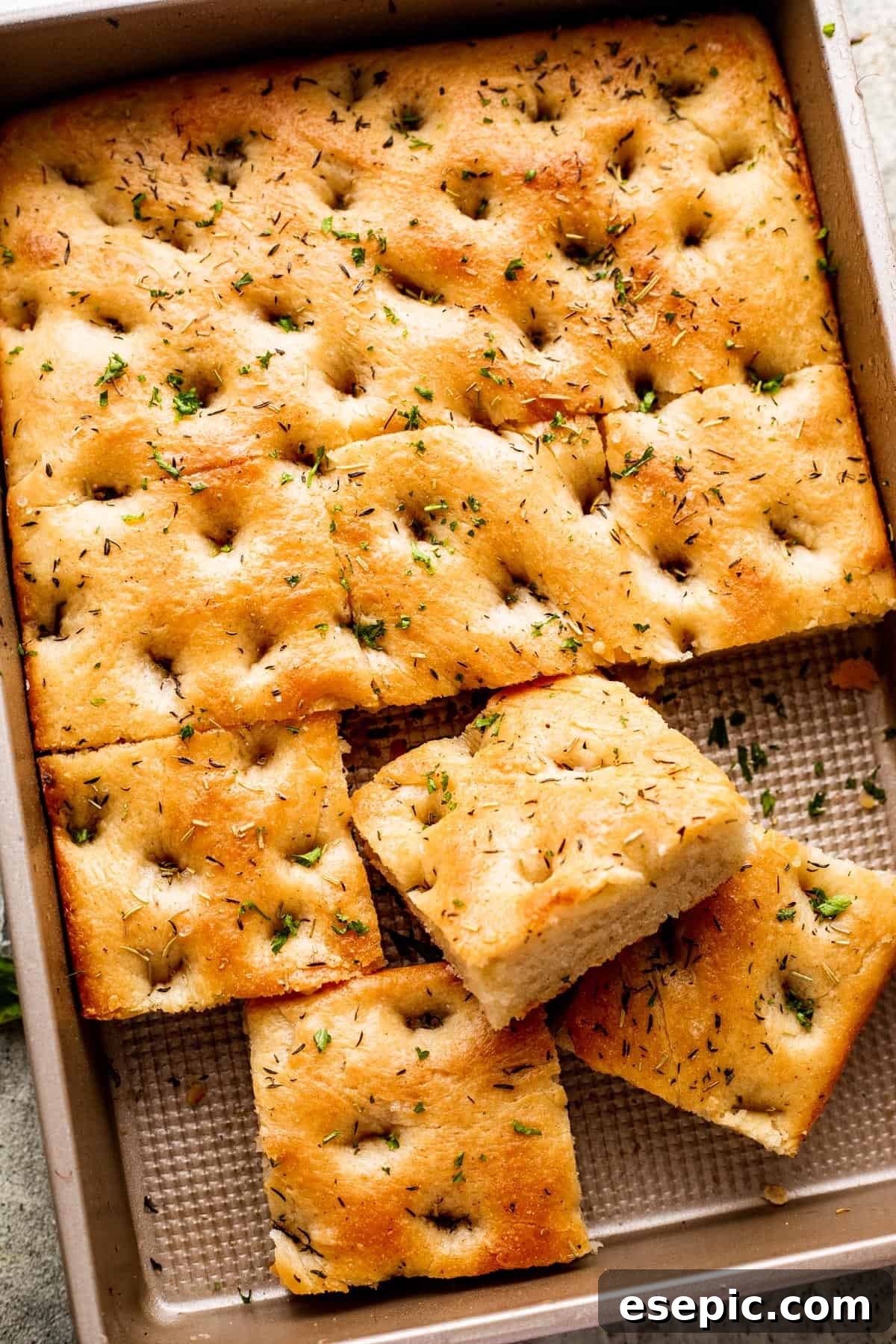
Effortless Homemade Focaccia: A Step-by-Step Guide
Have you ever savored the distinct pleasure of focaccia? This classic Italian flatbread, known for its dimpled surface and rich olive oil flavor, has long been a staple in Mediterranean cuisine. While it boasts a timeless heritage, focaccia experienced a significant resurgence in popularity during the 1990s and early 2000s, appearing on countless restaurant menus and in beloved cookbooks. Its enduring appeal is no mystery; this wholesome, light-yet-rich, herb-infused yeast bread is the kind of comfort food that evokes strong cravings. Furthermore, its incredible versatility makes it a perfect accompaniment to almost any meal, serving as a hearty side dish for your favorite pasta, a flavorful base for a gourmet cafe-style sandwich, or simply enjoyed on its own with a drizzle of balsamic vinegar.
One of the most appealing aspects of focaccia is its remarkable ease of preparation at home. Unlike many other bread recipes that demand intricate shaping or complex folding techniques, focaccia dough requires minimal manipulation. The process involves simply pressing the soft dough into a large baking pan, allowing it to rise, and then baking it to golden perfection. There’s no need for elaborate rolling, delicate braiding, or precise lamination, making it an ideal project for both novice and experienced bakers alike seeking a rewarding yet straightforward bread-making experience.
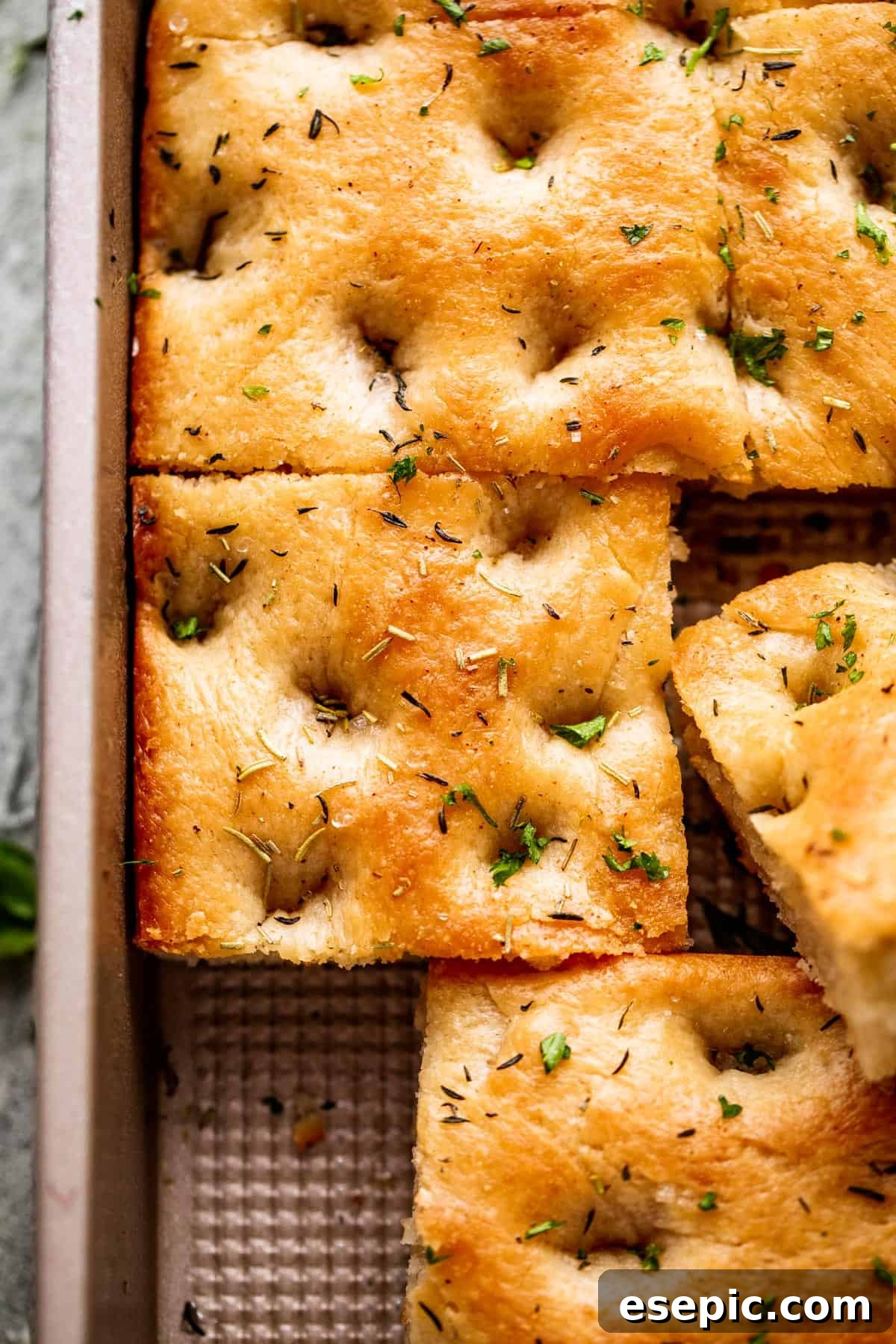
Exploring the Health Benefits of Focaccia
When compared to many commercially produced breads, homemade focaccia stands out as a more wholesome choice, aligning beautifully with a healthy lifestyle. Crafted from simple, natural ingredients, it avoids the processed additives and preservatives often found in store-bought alternatives. A key ingredient, heart-healthy olive oil, is used generously, contributing not only to its signature flavor and texture but also offering beneficial monounsaturated fats. Opting for high-quality flour, ideally organic, can further enhance its nutritional profile and flavor complexity.
It’s important to remember, however, that while focaccia is made with good ingredients, it is inherently a carbohydrate-rich bread. If you are following a low-carb or ketogenic diet, you may want to consume it in moderation or seek out alternative recipes that cater to those specific dietary needs. For most, focaccia can be a delicious and satisfying component of a balanced diet, especially when paired with fresh salads or lean proteins.
Essential Ingredients for Your Focaccia Masterpiece
This foundational focaccia recipe is elevated by the vibrant flavors of fresh garlic and aromatic herbs, transforming it into an unforgettable bread that’s perfect for any occasion. Whether served unadorned with a side of dipping oil or as a pivotal element of a grander meal, the quality of your ingredients truly shines through.
- Active Dry Yeast: The leavening agent that gives focaccia its characteristic airy structure. One packet (2 ¼ teaspoons) is typically sufficient. Ensure your yeast is fresh for optimal rise.
- Warm Water: Crucial for activating the yeast. It should be comfortably warm to the touch, similar to body temperature (around 105-115°F or 40-46°C). Avoid water that is too hot, as it can kill the yeast, or too cold, which will inhibit its activation.
- Sugar: A small amount of granulated sugar acts as food for the yeast, encouraging it to bubble and activate effectively, while also contributing a subtle sweetness to the bread.
- All-Purpose Flour: The primary structural component of your focaccia. Standard all-purpose flour works wonderfully, but for a slightly chewier texture, you can substitute bread flour, which has a higher protein content.
- Kosher Salt: Essential for enhancing the flavor of the dough and controlling the yeast’s activity. You’ll need some for the dough itself and additional coarse salt for sprinkling on top before baking, which adds a delightful textural contrast and savory burst.
- Olive Oil: This is a star ingredient in focaccia, contributing significantly to its rich flavor, tender crumb, and crispy crust. Using a high-quality extra-virgin olive oil is highly recommended for its robust, fruity notes. You’ll need it for the dough, for greasing the pan, and for drizzling over the top before baking.
- Fresh Garlic: Finely minced garlic cloves infuse the bread with a pungent, savory aroma and taste that pairs perfectly with the herbs.
- Fresh Rosemary and Thyme: These classic Mediterranean herbs impart a fragrant, earthy depth to the focaccia. Strip the leaves from their woody stems, discard the stems, and finely chop the leaves to distribute their flavor evenly.
Crafting Your Focaccia: A Step-by-Step Baking Journey
If you’re familiar with baking yeast breads, this process will feel wonderfully familiar. The journey to a perfect golden-brown focaccia involves mixing, kneading, and two crucial rises. Here’s a detailed guide to creating this Italian delicacy:
- Activate the Yeast (Bloom the Yeast): Begin by whisking together the active dry yeast, warm water, and sugar in the bowl of a stand mixer fitted with the whisk attachment. Allow this mixture to rest undisturbed for about 5 minutes. During this time, the yeast will “bloom” – you’ll observe a frothy, foamy layer forming on the surface, indicating that your yeast is alive and active. This step is essential for a well-risen bread.
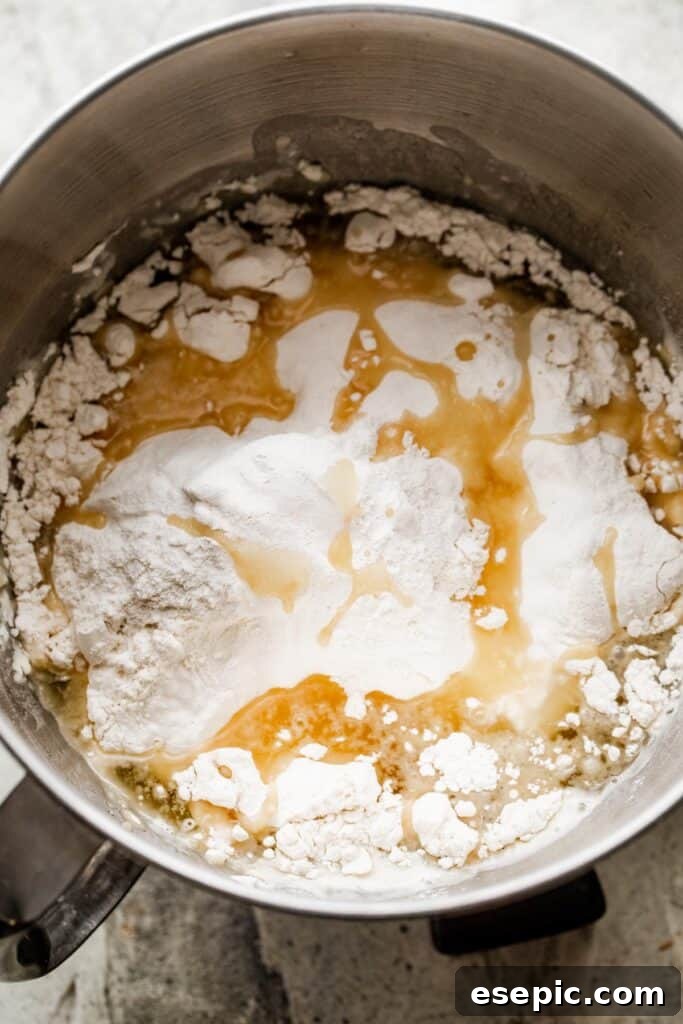
- Combine the Dough Ingredients: Once the yeast is bloomed, switch to the dough hook attachment on your stand mixer. Add the flour, a tablespoon of kosher salt, and ¾ cup of olive oil to the yeast mixture. Start mixing on a low speed for several minutes until all the ingredients are thoroughly combined and a cohesive dough forms. The dough should begin to pull away cleanly from the sides of the bowl. If it remains too sticky, add an additional tablespoon or two of flour, one at a time, and continue mixing until the desired consistency is achieved.
- Knead for Elasticity: Turn the dough out onto a lightly floured surface. Knead the dough by hand for approximately 5 minutes. This develops the gluten, giving the bread its structure and chew. If the dough feels stubbornly sticky, dust your hands and the surface with a small amount of extra flour as needed. You’ll know the dough is adequately kneaded when it feels smooth and elastic. A good test is to gently poke the dough with your finger; the indentation should slowly spring back. If it remains sticky or doesn’t bounce back, continue kneading for a few more minutes, adding minimal flour if necessary.
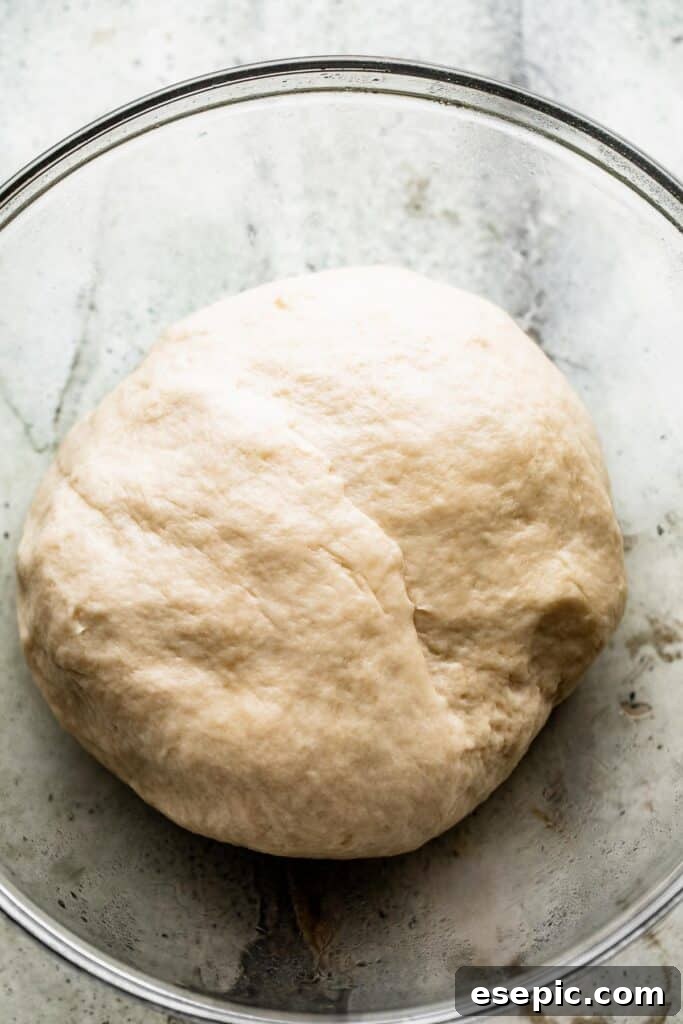
- First Rise: Lightly grease a large bowl with olive oil. Place the kneaded dough into the bowl, turning it over a couple of times to ensure it’s evenly coated in oil. This prevents it from drying out during the rise. Cover the bowl with a clean, damp kitchen towel and place it in a warm, draft-free area. Allow the dough to rise for 1 to 2 hours, or until it has visibly doubled in size. This first rise develops much of the bread’s flavor.
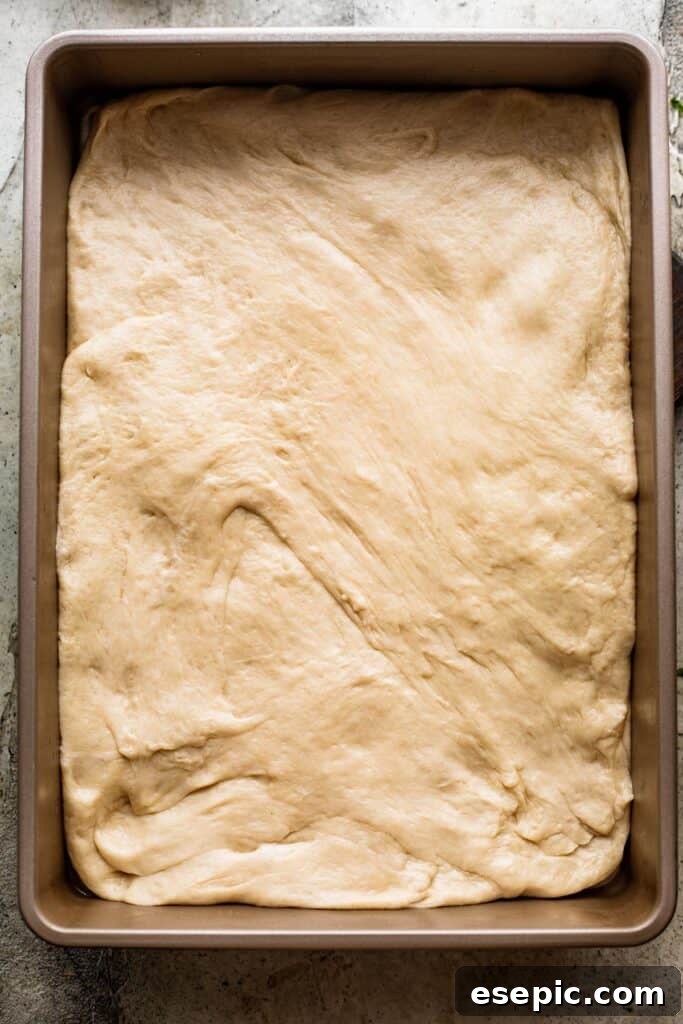
- Prepare for Baking and Second Rise: Choose a 9×13 inch baking pan with sides at least 2 inches tall – this size is perfect for a classic focaccia thickness. Generously grease the entire interior of the pan with olive oil. Gently “punch down” the risen dough to release the accumulated gases. Transfer the dough to the prepared baking pan and, using your fingertips, gently press and stretch it evenly to fill the bottom of the pan.
- Second Rise: Once the dough is shaped in the pan, cover it again with a damp towel. Allow it to rise for a second time in a warm spot for another 30 to 45 minutes. This second rise ensures a light and airy texture in the final product.
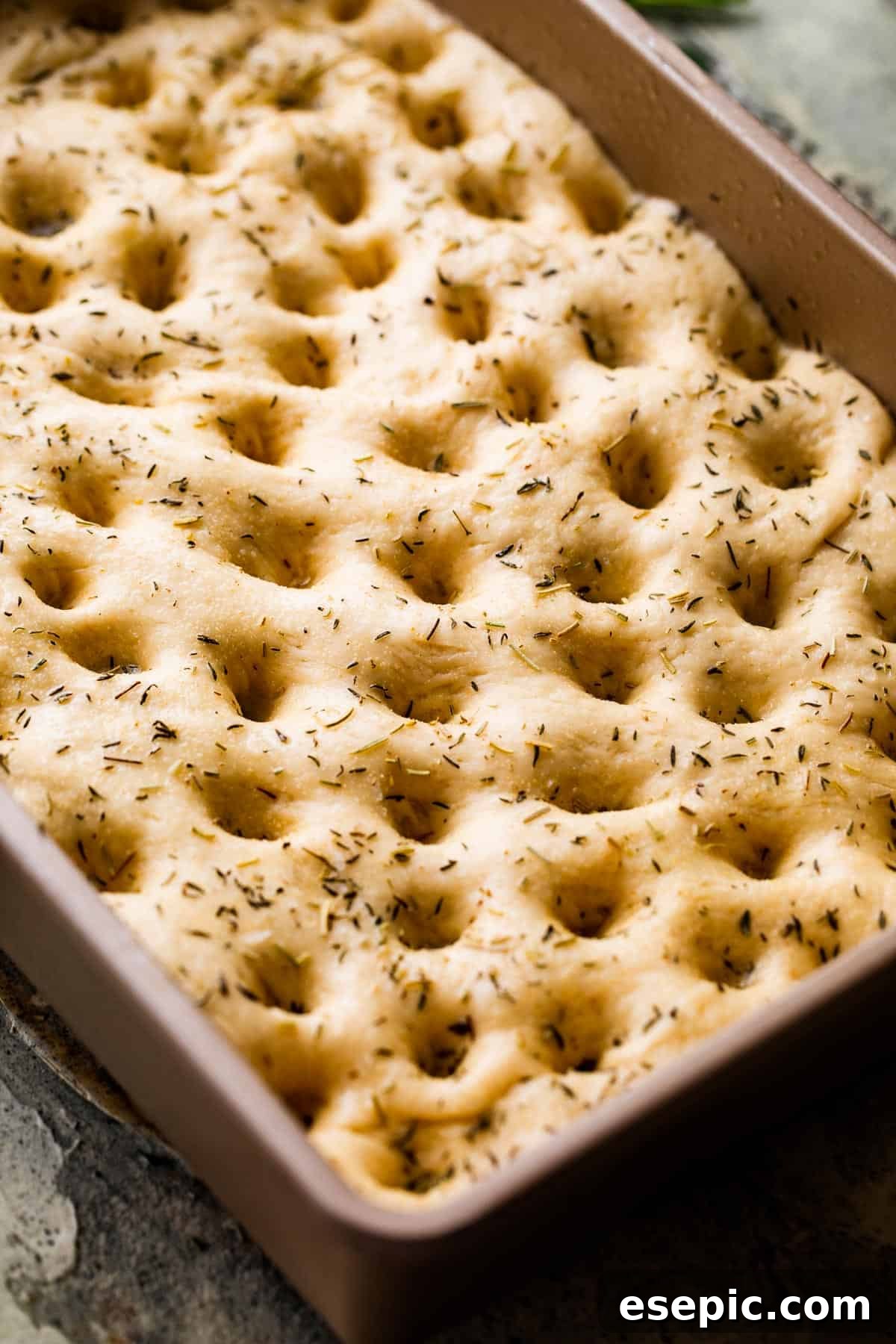
- Preheat Oven and Prepare for Baking: While the dough is completing its second rise, preheat your oven to 400°F (200°C). This ensures the oven is at the correct temperature for immediate baking. Once the dough has sufficiently risen, use your fingers to create deep dimples all over the surface of the focaccia, pressing all the way down to the bottom of the pan. These dimples are characteristic of focaccia and help to hold the olive oil and toppings.
- Top and Bake: Evenly sprinkle the surface of the dimpled focaccia with additional kosher salt, minced garlic, and the chopped fresh rosemary and thyme. Finish with a generous drizzle of 1 to 2 tablespoons of extra olive oil over the top. Bake the focaccia in the preheated oven for approximately 20 to 25 minutes, or until the top is beautifully golden-brown and the edges are slightly crispy but not burnt.
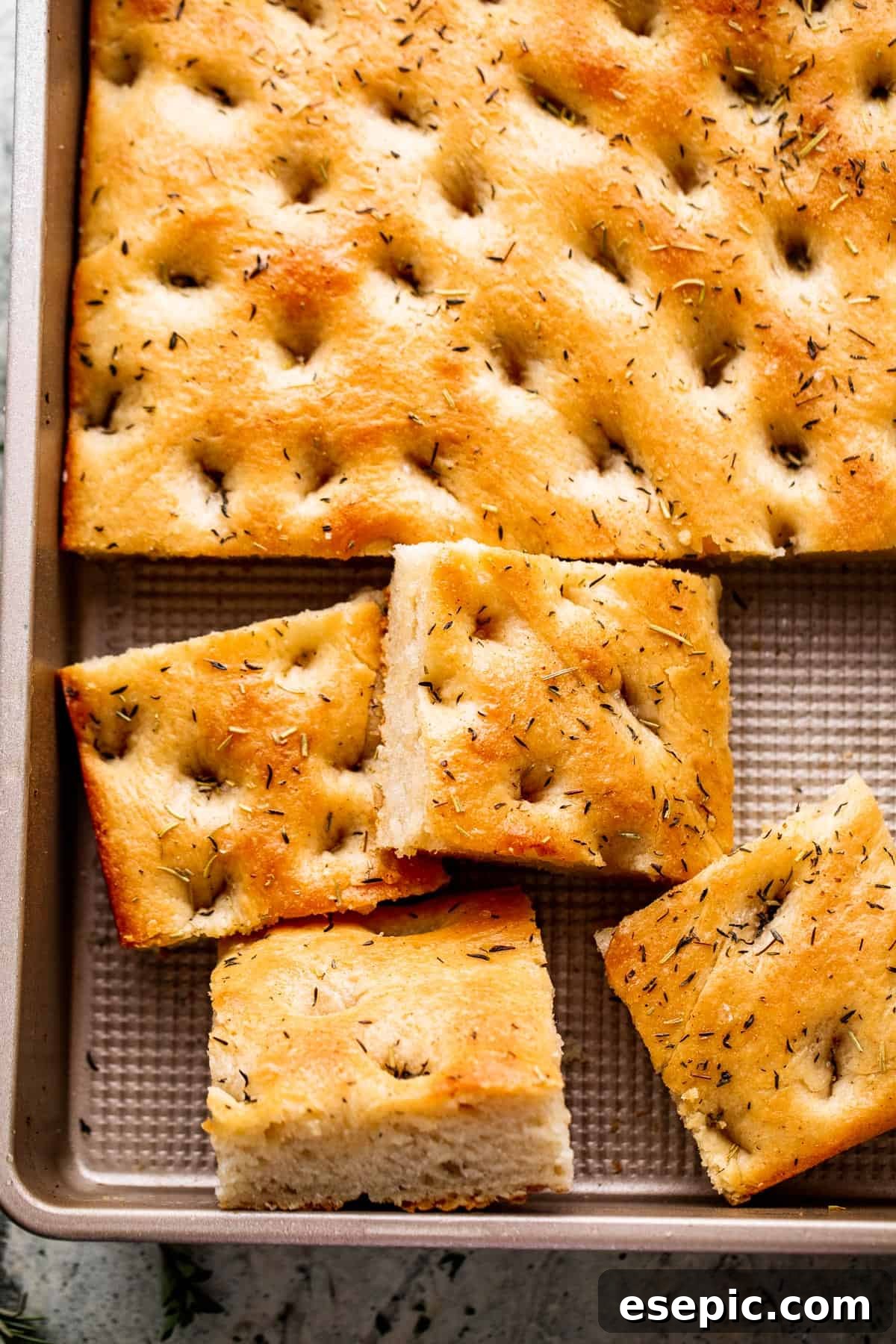
- Cool and Serve: Once baked, remove the focaccia from the oven. For the best crust, immediately transfer the hot focaccia from the baking pan to a wire cooling rack. Let it cool for 10 to 15 minutes before slicing into squares or rectangles. Serve warm, optionally with a small bowl of high-quality olive oil for dipping. Enjoy the fruits of your labor!
Elevate Your Focaccia: Expert Tips and Creative Variations
This recipe provides a fantastic foundation for classic focaccia, but it’s also wonderfully adaptable. Feel free to experiment with toppings and flavors to truly make it your own. While it’s best to stick to the specified dough ingredient quantities for consistent texture, the possibilities for customization lie in what you adorn it with. Here are some inspiring ideas to ignite your culinary creativity:
- Olive Focaccia: For a briny, Mediterranean twist, incorporate sliced black or green olives. You can gently fold them into the dough before shaping it, or sprinkle them liberally over the top along with the other seasonings just before baking. Kalamata olives are particularly delicious.
- Caramelized Onion Focaccia: This variation adds a layer of sweet, savory depth. While your dough is undergoing its second rise, slowly cook thinly sliced onions in a skillet with a little butter or olive oil over low heat. Allow them to caramelize until they turn a rich golden-brown and become wonderfully soft. Scatter these caramelized onions over the dough alongside the garlic and herbs before baking.
- Cheese Focaccia: For a truly decadent experience, introduce cheese. About 5-7 minutes before your focaccia is fully baked, take it out of the oven and sprinkle your favorite shredded cheese over the top. Mozzarella, Parmesan, provolone, or even a blend of Italian cheeses work beautifully. Return it to the oven to finish baking until the cheese is melted and bubbly.
- Cherry Tomato and Basil Focaccia: A burst of fresh, summery flavors. Halve small cherry tomatoes and gently press them into the dimples of the dough before baking. After the focaccia comes out of the oven, scatter fresh basil leaves over the warm bread. The heat will release their aroma, and the flavors will meld perfectly.
- Sun-Dried Tomato and Feta Focaccia: For a tangy, savory option, chop sun-dried tomatoes (oil-packed work best) and crumble some feta cheese. Distribute these over the dough before the final bake.
- Rosemary and Sea Salt Classic: Sometimes, simplicity is best. If you prefer a more traditional flavor, simply use fresh rosemary sprigs (or finely chopped leaves) and a generous sprinkle of flaky sea salt (like Maldon) as your only toppings. The quality of the olive oil will truly shine here.
- Spice it Up: Don’t be afraid to add a pinch of red pepper flakes for a subtle kick, or a dusting of dried oregano along with your fresh herbs for an extra layer of Italian flavor.
Perfect Pairings: What to Serve with Focaccia
Focaccia’s incredible versatility means it pairs beautifully with an array of dishes. While it’s a natural fit for other Italian culinary delights, its hearty yet light nature also makes it an excellent companion for your favorite soups, fresh salads, or as a gourmet artisan-style sandwich bread. Here are some delightful ideas to inspire your next meal:
- Hearty Pasta Dishes: The ultimate Italian pairing! The rich flavors of focaccia perfectly complement saucy pasta. Imagine dipping a piece into the robust sauce of a classic lasagna or a creamy fettuccine Alfredo. For a truly indulgent experience, serve it alongside The Best Cheese Manicotti, a cheesy, saucy masterpiece perfect for any special occasion.
- Comforting Creamy Soups: There’s something undeniably satisfying about a warm bowl of creamy soup paired with a slice of homemade bread. The soft, olive oil-infused focaccia is perfect for soaking up every last drop. Try it with a vibrant Easy Cream of Asparagus Soup, a velvety Roasted Tomato Basil Soup, or even a classic broccoli cheddar.
- Fresh and Robust Salads: Focaccia adds a wonderful textural contrast and satisfying element to crisp salads. A robust steak salad, featuring tender sliced steak, sweet grape tomatoes, tangy feta cheese, and a light vinaigrette, finds its perfect partner in a warm, golden slice of focaccia. It’s a deliciously balanced meal.
- Antipasto Platter: Serve slices of focaccia with an assortment of cured meats, cheeses, marinated vegetables, and olives for an authentic Italian appetizer spread.
- As a Sandwich Base: Slice focaccia horizontally and fill it with your favorite sandwich ingredients – grilled chicken, fresh mozzarella, pesto, roasted vegetables, or deli meats – for a truly elevated sandwich experience.
Planning Ahead: Make-Ahead Focaccia Dough
For those who love to plan, focaccia dough can be prepared in advance, making it an excellent choice for entertaining or busy weeknights. After the initial kneading step (step 3 in the instructions), instead of letting the dough rise at room temperature, simply coat it in olive oil, place it in a large bowl, and cover it tightly with plastic wrap. Transfer the bowl to the refrigerator and let it undergo a slow, cold rise overnight, or for up to 24 hours. This slow fermentation can even enhance the flavor of the dough.
The next day, remove the bowl of dough from the refrigerator and let it sit at room temperature for about 30 minutes to an hour to take the chill off. Then, proceed with punching it down, shaping it into your baking pan, and allowing it to complete its second rise as per the recipe instructions. This method allows you to enjoy freshly baked focaccia with minimal effort on the day you plan to serve it.
Storing Leftover Focaccia for Freshness
Proper storage is key to keeping your leftover focaccia fresh and delicious. Once cooled, wrap any remaining focaccia tightly in plastic wrap to prevent it from drying out, or place it in airtight zip-top bags, pressing out as much air as possible before sealing. Stored this way, focaccia will remain fresh at room temperature for 1 to 2 days. For extended freshness, you can refrigerate it for 2 to 3 days. When ready to enjoy, you can serve leftover focaccia at room temperature, or gently reheat it in the oven or toaster oven at 350°F (175°C) for a few minutes until warmed through and slightly crisp.
Freezing Focaccia for Future Enjoyment
Absolutely! Focaccia freezes remarkably well, making it perfect for batch baking or saving portions for later. To freeze, ensure the focaccia has completely cooled. Wrap individual slices or larger sections tightly in plastic wrap, then place them in a freezer-safe bag or an airtight container. Label with the date and freeze for up to one month. When you’re ready to enjoy it, thaw the focaccia at room temperature for several hours or overnight in the refrigerator. For best results, reheat it in a preheated oven at 350°F (175°C) for 10-15 minutes, or until warmed through and slightly crispy, before serving.
Garlic Herb Focaccia
Traditional Italian focaccia bread, made with fragrant olive oil, fresh garlic, and aromatic herbs, baked to golden-brown perfection.
Author: Katerina | Easy Weeknight Recipes
Prep Time: 1 hour 45 minutes
Cook Time: 20-25 minutes
Total Time: 2 hours 5-10 minutes
Servings: 12
Ingredients
- 2 ¼ teaspoons active dry yeast (1 packet)
- 1 ½ cups warm water
- 1 tablespoon sugar
- 4 cups all-purpose flour
- 1 tablespoon kosher salt, plus more for sprinkling
- ¾ cup olive oil, plus more for greasing and drizzling
- 2 cloves garlic, finely minced
- 1 to 2 sprigs fresh rosemary, stems removed and leaves chopped
- 1 to 2 sprigs fresh thyme, stems removed and leaves chopped
Instructions
- Whisk together the yeast, warm water, and sugar in the bowl of a stand mixer fitted with the whisk attachment. Allow this mixture to sit for 5 minutes, allowing the yeast to “bloom” and become frothy.
- Switch to the dough hook attachment. Add the flour, 1 tablespoon of kosher salt, and ¾ cup of olive oil to the bowl. Mix on low speed for 2 to 3 minutes, or until the dough is fully combined and begins to pull away from the sides of the bowl. If it’s too sticky, add 2 to 3 tablespoons of additional flour, one at a time, until the desired consistency is reached.
- Remove the dough from the mixer and turn it out onto a lightly floured surface. Knead by hand for an additional 4 to 5 minutes, adding more flour only if needed to prevent sticking. The dough is ready when it feels smooth and elastic; an indentation made by a finger poke should slightly bounce back.
- Grease a large bowl generously with olive oil. Place the dough into the bowl, rolling it around to coat it in the oil. Cover the bowl with a damp towel and allow it to rise in a warm environment for 1 to 2 hours, or until it has doubled in size.
- Generously grease a 9×13 inch baking pan with sides at least 2 inches tall. Gently punch down the risen dough to release excess air. Transfer the dough to the baking pan and, using your fingers, flatten and stretch it out evenly to fit the shape of the pan.
- Cover the dough in the pan with a damp towel and let it rise for a second time, for another 30 to 45 minutes.
- While the dough is completing its second rise, preheat your oven to 400°F (200°C).
- Once the dough has risen, use your fingers to poke deep holes all over the focaccia surface, pressing firmly down to the bottom of the pan.
- Evenly sprinkle the top of the bread with additional kosher salt, the minced garlic, chopped rosemary, and thyme. Then, drizzle 1 to 2 tablespoons of olive oil over the entire surface.
- Bake for 20 to 25 minutes, or until the top of the bread is beautifully golden-brown but not overly dark.
- Remove the focaccia from the oven. For a crispy crust, immediately transfer the bread out of the pan and onto a wire rack. Let it cool for 10 to 15 minutes before cutting.
- Serve warm. Offer additional olive oil for dipping, if desired.
Nutrition (Estimated per serving, based on 12 servings)
Calories: 283 kcal | Carbohydrates: 34g | Protein: 5g | Fat: 14g | Saturated Fat: 2g | Polyunsaturated Fat: 2g | Monounsaturated Fat: 10g | Sodium: 585mg | Potassium: 72mg | Fiber: 2g | Sugar: 1g | Vitamin A: 19 IU | Vitamin C: 1mg | Calcium: 11mg | Iron: 2mg
Nutritional information is an estimate and provided as courtesy. Values may vary according to the ingredients and tools used. Please use your preferred nutritional calculator for more detailed info.
Discover More Homemade Bread Recipes
If you’ve enjoyed the rewarding process of baking this focaccia, you’ll love exploring other homemade bread creations. There’s a world of comforting and delicious breads waiting to be discovered in your kitchen, each offering its own unique charm and flavor. Expand your baking repertoire with these fantastic recipes:
- No-Knead Dutch Oven Bread: Achieve a bakery-quality crust and airy interior with minimal effort. This rustic bread is perfect for those who want impressive results without the intensive kneading.
- Spinach and Feta No-Yeast Bread: A quick and savory option for when you crave fresh bread but are short on time or yeast. It’s packed with flavor and comes together in a flash.
- Easy Homemade Flatbread Recipe: Versatile and delicious, this flatbread is perfect for wraps, dipping, or serving alongside your favorite curries and stews. It’s incredibly simple and satisfying to make from scratch.