
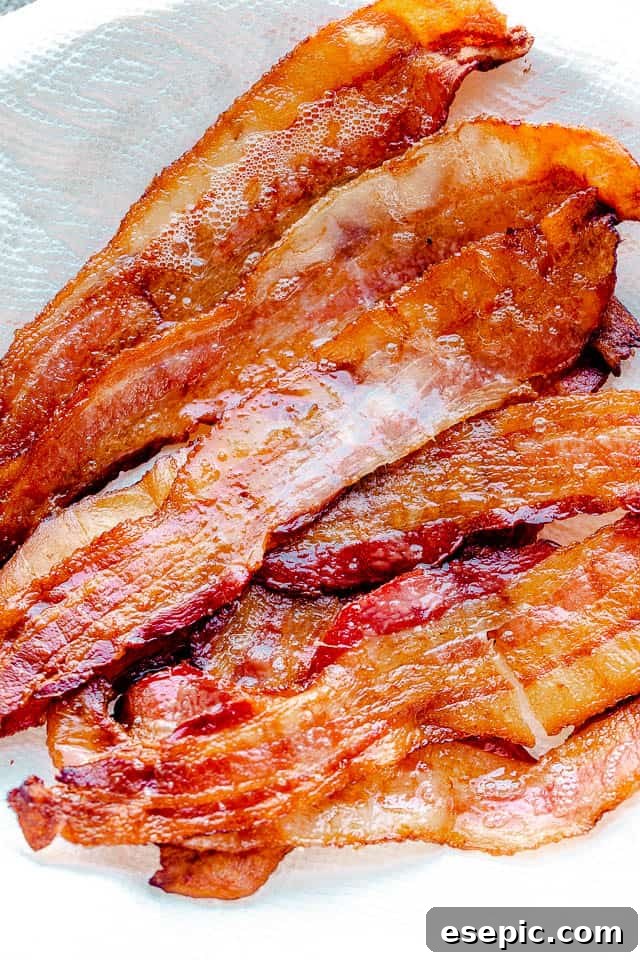
Tired of the relentless splatter and inconsistent results that come with pan-frying bacon? Imagine perfectly crispy, evenly cooked bacon every single time, with minimal effort and cleanup. This isn’t a dream – it’s the reality of oven baked bacon. This method is truly a game-changer, transforming the way you prepare this beloved breakfast staple, side dish, or savory addition to any meal. Say goodbye to grease burns and unevenly cooked strips; welcome to the effortless world of perfectly crispy bacon, baked right in your oven!
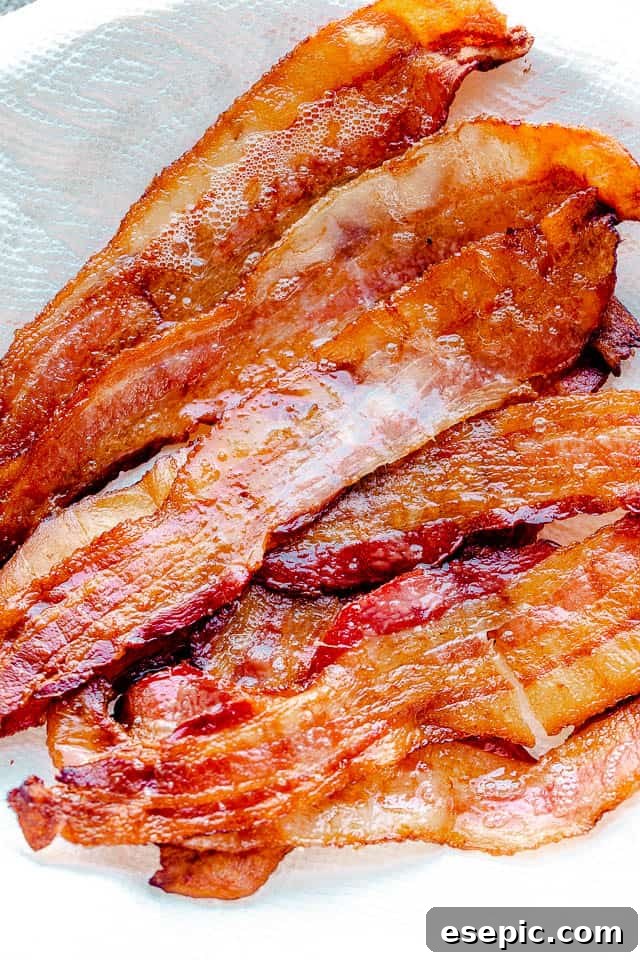
Bacon, the undisputed king of savory delights, elevates nearly every dish it touches. Whether you’re enhancing a hearty breakfast casserole, adding crunch to roasted potatoes, garnishing a warm crack chicken soup, or even experimenting with it in desserts, bacon’s versatility knows no bounds. But let’s be honest: the traditional stovetop method often comes with its fair share of challenges. Standing over a hot pan, constantly flipping strips, and dodging aggressive grease splatters is hardly anyone’s idea of a relaxing start to the day. That’s precisely why this simple, hassle-free technique for cooking perfect oven-baked bacon has become a kitchen essential. It’s the cleanest, most consistent way to achieve that irresistible crispiness without the usual fuss.
Why Oven-Baked Bacon is the Best Way to Cook Bacon
Once you experience the ease and superior results of baking bacon, you’ll wonder why you ever cooked it any other way. This method offers a multitude of benefits that make it the ultimate choice for busy mornings or when preparing for a crowd.
- Effortlessly Easy & Convenient: Forget constant supervision and flipping. All you need is your favorite bacon, an oven, and a baking sheet. Simply arrange the bacon, slide it into the preheated oven, and let the magic happen. This hands-off approach frees you to prepare other elements of your meal or simply relax while your perfect bacon cooks.
- Consistently Perfect Results: The oven provides a stable, even heat environment, ensuring every slice of bacon cooks uniformly from end to end. No more burnt edges and undercooked middles! You’ll achieve that ideal level of crispness and doneness, every single time, without the guesswork often associated with pan-frying.
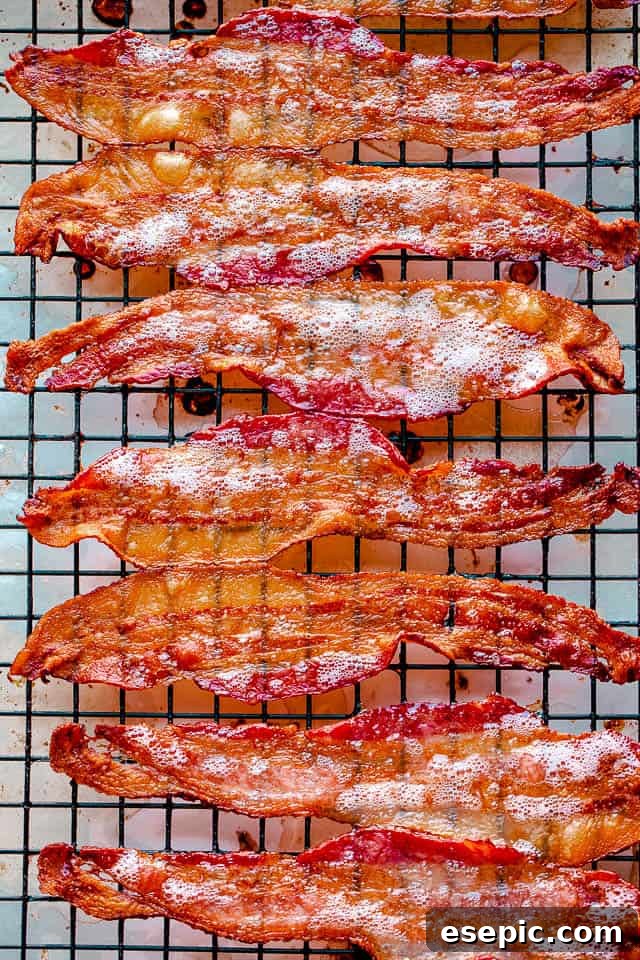
- Significantly Less Greasy: When bacon cooks on a flat surface, it often reabsorbs much of its rendered fat. Baking bacon on a wire rack allows the excess fat to drip away into the pan below, resulting in crispier, less greasy slices. This not only enhances the texture but also makes for a lighter, more enjoyable bite.
- Incredibly Versatile & Adaptable: This method works beautifully with any type of bacon you prefer, whether it’s standard-cut, thick-cut, smoked, unsmoked, or even flavored varieties. You can easily adjust the cooking time to match your desired crispiness, from slightly chewy to shatteringly crisp, ensuring your bacon is always cooked precisely to your liking.
- Minimal Mess & Easy Cleanup: The days of grease splattered countertops and stovetops are over. Baking contains the mess within the oven. By lining your baking sheet with aluminum foil or parchment paper, cleanup becomes incredibly simple. Once the fat cools and solidifies, you can just roll up the foil and discard it, leaving you with a virtually clean pan.
Essential Ingredients and Equipment
One of the many beauties of this recipe is its simplicity. You won’t need a pantry full of exotic ingredients or specialized gadgets. Just a few basic kitchen items will set you up for success.
Ingredients:
- Bacon: The star of the show! Choose your favorite variety. Regular-cut, thick-cut, uncured, smoked, maple-flavored – whatever your preference, the oven method handles it with ease. A standard 12-ounce package is usually a good starting point.
Equipment:
- Rimmed Baking Sheet: A sturdy sheet pan with raised edges is crucial to contain the rendered bacon fat.
- Aluminum Foil or Parchment Paper: Essential for easy cleanup. Foil is generally preferred for its durability and ability to mold to the pan, creating a better “fat trap.” Parchment paper also works well, especially if you prefer to avoid direct contact with aluminum.
- Oven-Safe Wire Rack: This is key for achieving perfectly crispy bacon. Placing the bacon on a rack allows air to circulate around each strip and lets the fat drip down, preventing the bacon from frying in its own grease.
- Tongs: For safely transferring hot bacon from the oven to a cooling rack or plate.
- Paper Towels: To blot any residual grease and ensure maximum crispness after baking.
Step-by-Step Guide: Baking Bacon to Perfection
Achieving consistently crispy oven-baked bacon is incredibly straightforward. Follow these simple steps for mouthwatering results every time.
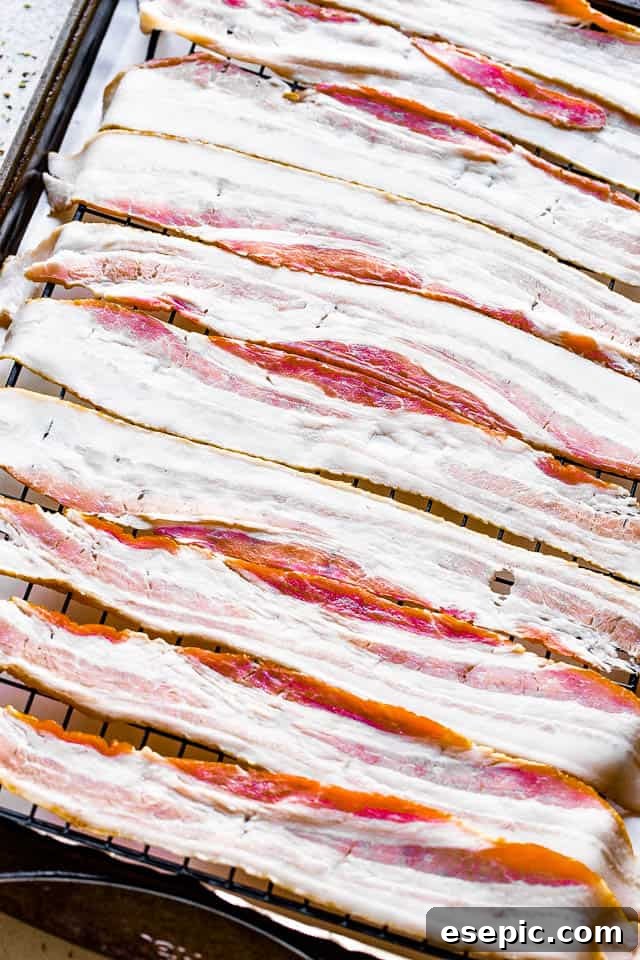
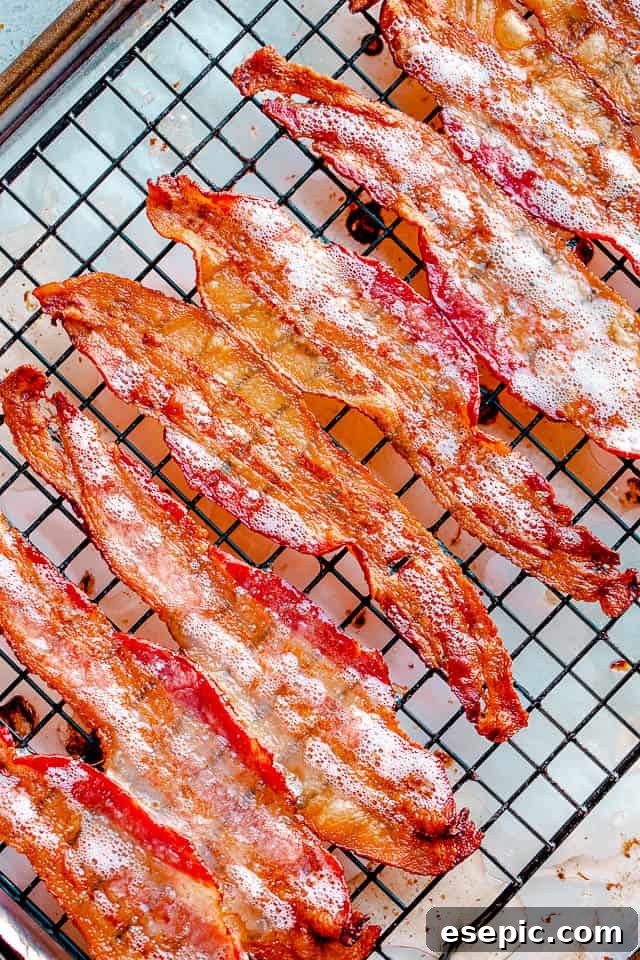
- Preheat Your Oven to 400°F (200°C): This high temperature is crucial for achieving crispiness quickly and efficiently. For optimal results and more even cooking, allow your oven to fully preheat and then let it sit at 400°F for an additional 10 minutes. This ensures the oven’s internal temperature is stable, reducing temperature fluctuations when you open the door.
- Prepare the Baking Sheet for Easy Cleanup: Line a large, rimmed baking sheet with heavy-duty aluminum foil, ensuring it extends up the sides to catch all the rendered grease. Place an oven-safe wire rack directly over the foil-lined baking sheet. This setup allows the bacon to lift off the surface, promoting air circulation and allowing fat to drip away, which is essential for crispiness.
- Arrange the Bacon in a Single Layer: Lay the bacon strips flat on the wire rack in a single layer. It’s perfectly fine if the edges of the slices touch slightly, as bacon shrinks significantly as it cooks. However, avoid completely overlapping the bacon, as this will prevent even cooking and crisping. For best results, give each strip a little breathing room.
- Bake Until Crisped to Perfection: Place the prepared baking sheet in the preheated oven. Bake until the bacon reaches your desired level of crispiness. This typically ranges from 15 to 22 minutes, depending on the thickness of your bacon and your preference. Regular-cut bacon usually cooks faster, while thick-cut varieties require a few extra minutes. Keep a close eye on it, especially towards the end, as bacon can go from perfectly crispy to burnt very quickly. Once you learn how your specific oven cooks bacon, you’ll be able to reproduce perfect results consistently.
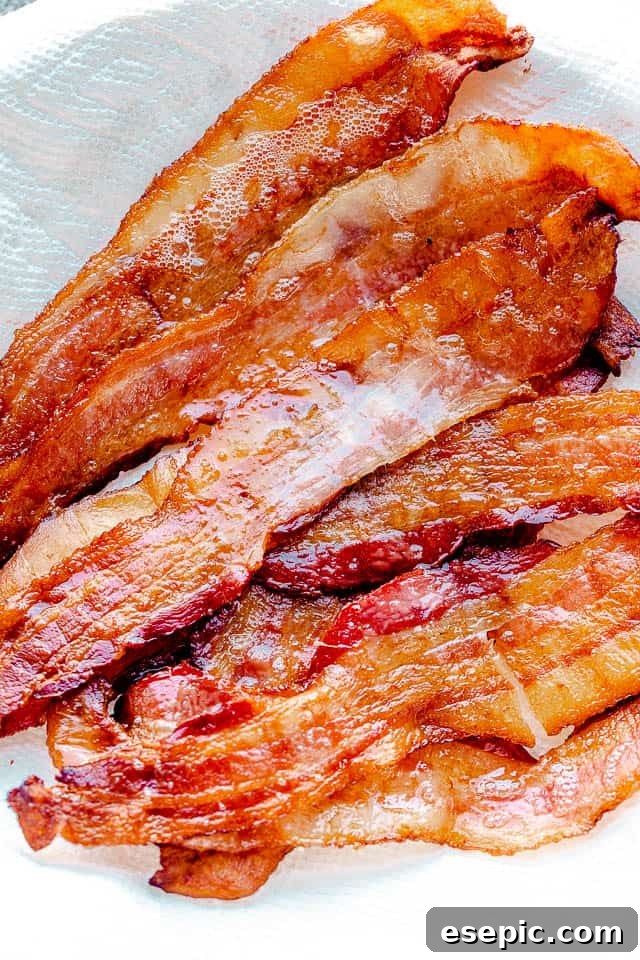
- Drain and Cool for Maximum Crispness: Carefully remove the baking sheet from the oven. Using tongs, transfer the hot, crispy bacon from the wire rack to a plate lined with several layers of paper towels. The paper towels will absorb any remaining surface grease, ensuring your bacon is as crisp as possible. For even more crispiness, you can lightly blot the tops of the bacon strips with additional paper towels. Allow the bacon to cool for a few minutes; it will continue to crisp up as it cools.
Optimal Baking Times for Different Bacon Thicknesses
The cooking time for oven-baked bacon is primarily determined by its thickness and your desired level of crispness. As a general guide, I bake regular-cut bacon at 400˚F (200°C) for approximately 15-18 minutes. For thicker-cut bacon, which benefits from a slightly longer cooking period to render fat properly and achieve crispiness, I aim for closer to 20-25 minutes. It’s always best to start checking your bacon around the 15-minute mark, regardless of thickness, and then continue baking in 2-3 minute increments until it reaches your preferred golden-brown hue and texture. Remember, every oven can vary slightly, so consider these times as a flexible starting point.
Expert Tips for the Best Oven-Baked Bacon
Mastering oven-baked bacon is simple, but a few insider tips can elevate your results from great to truly exceptional.
- Why 400˚F is the Ideal Temperature: Through extensive testing, 400˚F (200°C) consistently delivers the quickest cooking time while ensuring optimal crispiness. This temperature allows the bacon fat to render efficiently without scorching the meat. For an even more consistent cook, ensure your oven is fully preheated and has held at 400°F for at least 10 minutes before adding the bacon. This prevents significant temperature drops when the oven door is opened and helps maintain a stable cooking environment.
- Cooking the Right Amount: You can cook as much bacon as you can comfortably fit in a single layer on your wire rack without excessive overlapping. For a standard half-sheet baking pan, this typically means 10-12 slices. Don’t be afraid to use multiple pans if you’re feeding a crowd! The beauty of oven baking is that you can have several trays cooking simultaneously, making meal prep or entertaining incredibly efficient.
- No Flipping Required! (But a Rotation Helps): Unlike stovetop frying, there’s no need to flip oven-baked bacon. The circulating heat within the oven cooks the bacon evenly from both sides. However, for truly uniform browning and crisping, I highly recommend rotating the baking sheet 180 degrees halfway through the cooking time. This compensates for any hot spots in your oven and ensures every slice is perfectly cooked.
- Effortless Draining for Crispier Results: One of the biggest advantages of this method is how effectively the fat drains away. With the bacon elevated on a wire rack, most of the rendered grease drips into the foil-lined pan below. This means far less grease on the bacon itself. Once cooked, simply transfer the crispy strips to a plate lined with paper towels to absorb any final residual oil. For ultimate crispiness, a gentle blot on top works wonders.
- Unbelievably Easy Cleanup: The dread of post-bacon cleanup is a thing of the past! Once you’ve removed the cooked bacon, allow the baking sheet to sit until the rendered fat has completely hardened (this can be sped up by placing it in the refrigerator for a short time). Once solidified, simply roll up the foil, trapping all the hardened fat, and toss it in the garbage. No messy grease to pour down the drain or scrape from your pan – just quick, clean disposal.
- Don’t Overcrowd the Pan: While it’s tempting to cram as much bacon as possible onto a single sheet, overcrowding can lead to steamed, rather than crispy, bacon. Ensure there’s adequate space for heat and air to circulate around each strip for optimal results.
- Cooling is Key for Maximum Crispness: Bacon continues to crisp up as it cools. Don’t expect it to be rock-hard straight out of the oven. Transferring it to a paper towel-lined plate or a clean wire rack immediately after baking allows it to cool and firm up beautifully.
- Seasoning Options: While classic bacon is perfect on its own, feel free to experiment with a sprinkle of black pepper, a touch of brown sugar for candied bacon, or a dash of cayenne for a spicy kick before baking.
Versatile Serving Suggestions for Crispy Bacon
Crispy oven-baked bacon is a culinary chameleon, elevating an endless array of dishes. There’s truly no wrong way to enjoy it!
- The Ultimate Breakfast or Brunch: Go classic by pairing your bacon with perfectly cooked eggs (scrambled, fried, or poached), crispy hash browns or roasted potatoes, and a slice of buttered toast. For a more indulgent morning spread, serve it alongside fluffy waffles, golden French toast sticks, or a savory frittata.
- Elevate Lunchtime Favorites: Bacon makes an incredible addition to sandwiches, salads, and wraps. Crumble it over a fresh green salad, add it to a classic BLT, or incorporate it into a club sandwich for extra flavor and crunch.
- Dinner Time Delights: Don’t limit bacon to breakfast! Use your perfectly cooked strips to enhance a variety of dinner recipes. Some fantastic ideas include rich chicken bacon ranch pasta, creamy bacon mac and cheese, or a vibrant chicken bacon avocado salad. It also makes a wonderful topping for burgers, baked potatoes, or even sprinkled over pizzas.
- Creative Appetizers and Garnishes: Chop crispy bacon into bits to use as a garnish for soups, stews, or deviled eggs. Wrap it around dates or shrimp for an easy appetizer, or create bacon “jam” for a sweet and savory spread.
No matter how you choose to serve it, the consistent crispiness and rich flavor of oven-baked bacon will always be a winning addition to your table!
Storing and Reheating Your Bacon
Cooked oven-baked bacon is excellent for meal prep! You can easily cook a large batch and store it for later use, making quick breakfasts or meal additions a breeze.
- Storage: Once the bacon has fully cooled, transfer it to an airtight container or a resealable plastic bag. Store in the refrigerator for up to 4-5 days. You can also freeze cooked bacon for up to 1 month. Layer it between sheets of parchment paper in an airtight container to prevent sticking.
- Reheating:
- Oven: For best results, reheat in the oven. Place the bacon on a wire rack over a baking sheet and warm at 350°F (175°C) for about 5-8 minutes, or until heated through and re-crisped.
- Air Fryer: A fantastic option for quick reheating! Place bacon in a single layer in the air fryer basket and cook at 350°F (175°C) for 3-5 minutes, shaking the basket halfway through, until crispy.
- Microwave: While quick, the microwave often makes bacon less crispy. Heat on a paper towel-lined plate for 10-20 second intervals until warm. This method is best if crispiness isn’t your top priority.
Common Questions and Troubleshooting
Even with a foolproof method, a few questions can arise. Here are answers to some common queries about oven-baked bacon:
- Why isn’t my bacon crispy?
Ensure your oven is fully preheated to 400°F and that you’re using a wire rack to allow fat to drip and air to circulate. If the bacon is too crowded or cooked at too low a temperature, it will steam rather than crisp. Also, make sure to pat dry any excess moisture from the bacon before baking.
- My bacon burned too quickly! What happened?
Bacon can cook quickly, especially thinner cuts. Check your oven temperature with an oven thermometer to ensure accuracy. Start checking the bacon a few minutes earlier than suggested, particularly if you have a powerful oven, and adjust cooking time accordingly for future batches.
- Can I use parchment paper instead of foil?
Yes, parchment paper works well for lining the baking sheet. It helps with cleanup just like foil. Some prefer parchment as it’s less likely to stick to the pan or react with salty foods. Just ensure it’s rated for high oven temperatures.
- Do I need to put water in the bottom of the pan?
No, definitely not for crispy bacon. Adding water will steam the bacon, preventing it from crisping up. The wire rack and foil are designed to manage the rendered fat without needing water.
- What can I do with the leftover bacon grease?
Bacon grease is a flavorful fat that can be saved and used for cooking! Once cooled and solidified in the foil, you can carefully pour it into a heat-proof jar (like a glass canning jar) and store it in the refrigerator. Use it to fry eggs, sauté vegetables, or add depth to gravies and dressings.
Explore More Bacon Delights
Bacon’s magic extends far beyond breakfast. If you’ve loved the simplicity and flavor of this oven-baked method, you’ll definitely want to try these other fantastic bacon-infused recipes:
- Grilled Bacon Wrapped Shrimp
- Spinach Bacon Stuffed Chicken Breasts
- Gnocchi and Bacon Casserole
- Eggs Benedict Casserole
- Quiche Lorraine
The Ultimate Method for Perfect Bacon
Gone are the days of grease-splattered kitchens and unevenly cooked bacon. With the simple, hands-off method of oven baking, you can achieve consistently crispy, perfectly cooked bacon with minimal effort and cleanup. Whether you’re whipping up a quick breakfast, preparing a big family brunch, or adding a savory crunch to your favorite dinner dishes, this technique guarantees delicious results every time. Embrace the ease, savor the crispness, and enjoy the unparalleled flavor that only perfectly oven-baked bacon can deliver. It’s truly the best way to cook bacon, making your culinary life simpler and more delicious!
Oven Baked Bacon
Katerina | Easy Weeknight Recipes
5 minutes
15 minutes
20 minutes
4
Ingredients
- 6-12 slices bacon
Instructions
-
1. Preheat. Preheat oven to 400°F (200°C). Allow the oven to hold at 400°F for 10 minutes to ensure stable temperature.
-
2. Prepare the baking sheets. Line a rimmed baking sheet with aluminum foil or parchment paper, extending up the sides. For crispier bacon, place an oven-safe wire rack on top of the lined baking sheet.
-
3. Arrange. Arrange the bacon slices over the wire rack in a single layer, ensuring they do not overlap completely to allow for even cooking.
-
4. Bake. Bake until the bacon is crisped to your liking. This typically takes about 15-18 minutes for regular-cut bacon and 20-25 minutes for thick-cut bacon. Keep a close eye on it, especially towards the end.
-
5. Drain and Serve. Carefully remove the baking sheet from the oven. Using tongs, transfer the cooked bacon to a plate lined with paper towels to drain any excess grease. Serve immediately and enjoy your perfectly crispy bacon!
Equipment
-
Baking sheet
-
Parchment paper
-
Oven-safe wire rack
-
Tongs
Nutritional info is an estimate and provided as courtesy. Values may vary according to the ingredients and tools used. Please use your preferred nutritional calculator for more detailed info.
Did you make a recipe? Leave a rating