
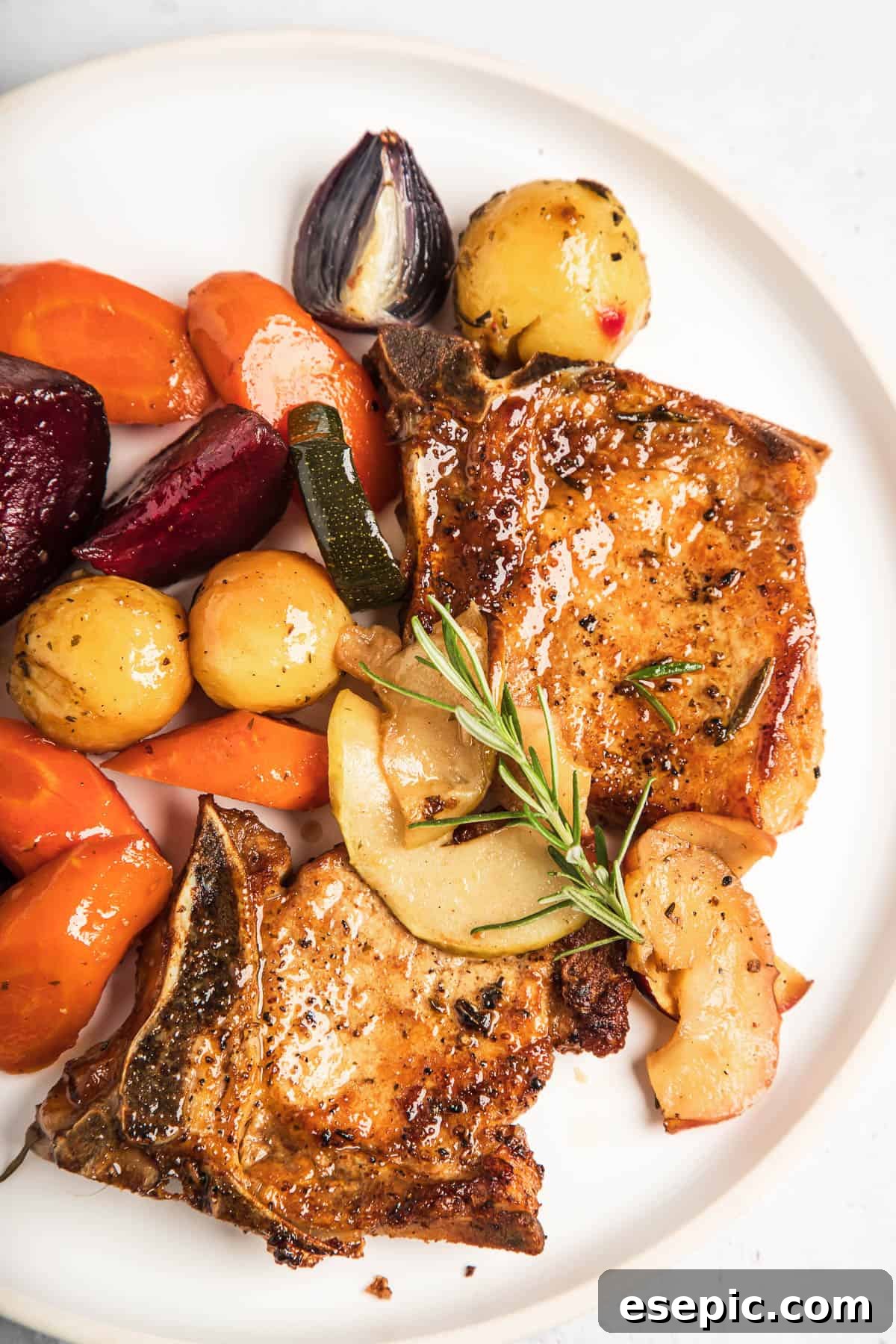
As autumn leaves begin to paint the landscape in hues of gold and crimson, our kitchens beckon for dishes that embody the cozy spirit of the season. This easy recipe for Baked Pork Chops with Apples and Vegetables is more than just a meal; it’s a celebration of fall flavors, perfect for a heartwarming weeknight dinner or a special gathering. Featuring tender, thick-cut pork chops seared to perfection and then gently simmered in rich apple juice, this dish marries a vibrant collection of crisp apples, aromatic garlic, and hearty winter vegetables into one harmonious, oven-baked delight. It’s a wholesome, flavorful, and incredibly simple one-pan meal that will quickly become a cherished autumn tradition in your home.
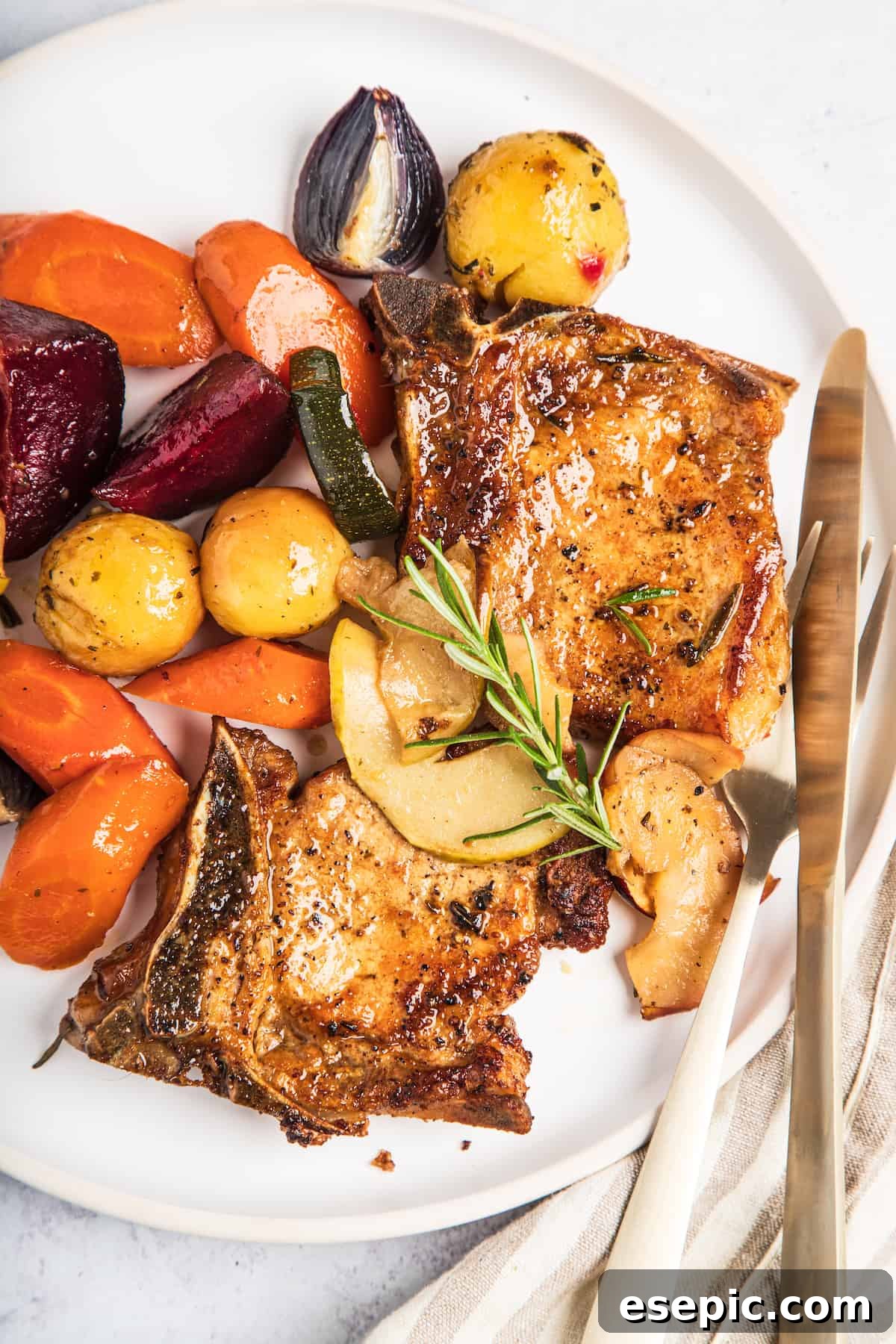
Embrace Fall with This Easy Baked Pork Chop Dinner
When the crisp air of fall arrives, so does the irresistible urge for comfort food, and nothing says autumn quite like the classic pairing of pork and apples. While serving pork chops with a side of applesauce is a time-honored tradition, this recipe elevates that simple combination into a truly memorable, all-in-one baked dinner. Imagine succulent bone-in pork chops, imbued with the fragrant notes of fresh garlic and rosemary, braised gently in the sweet and tangy embrace of apple juice or apple cider. This isn’t just a side dish; it’s a complete culinary experience, where fresh apple slices and a colorful medley of seasonal vegetables cook alongside the pork, soaking up all the delicious pan juices.
What makes this baked pork chop recipe truly exceptional is its simplicity and the depth of flavor it achieves with minimal effort. It transitions seamlessly from stovetop searing to oven baking, ensuring maximum juiciness and a beautifully caramelized finish. This approach means less hands-on time for you and a more flavorful result, as all the ingredients meld together in one pan. Even novice cooks will find this recipe approachable, making it an ideal choice for busy weeknights when you crave something special without the fuss. It’s a dish that warms you from the inside out, perfectly capturing the essence of the harvest season.

Essential Ingredients for Your Fall Feast
The beauty of this baked pork chops with apples and vegetables recipe lies in its use of simple, wholesome ingredients that come together to create a complex and satisfying meal. Many of these items are likely already in your pantry or easily found at your local market. Feel empowered to make substitutions based on what’s freshest, most seasonal, or what your family enjoys most!
- Pork Chops: For the ultimate juicy and flavorful result, I highly recommend using thick-cut, bone-in pork chops. The bone helps to insulate the meat, preventing it from drying out and imparting extra flavor to the dish. Look for chops that are at least 1-inch thick.
- Oil and Butter: A combination of vegetable oil (or olive oil) and butter is used for searing. The oil allows for a higher smoke point, while the butter adds a rich, nutty flavor that helps caramelize the pork and vegetables.
- Apple Juice or Apple Cider: This is the liquid base for our savory-sweet sauce. Opt for pure apple juice or fresh, unfiltered apple cider for the best flavor. Ensure you are using apple cider, not apple cider vinegar, which is much more acidic and used for different purposes.
- Apples: You’ll need two medium apples, cored and sliced. The apples will soften and caramelize during baking, contributing a delightful sweetness and tartness to the dish. Refer to our guide below for the best baking apples.
- Garlic: Fresh garlic cloves, minced or thinly sliced, are crucial for a robust aromatic foundation. While garlic powder can work in a pinch, fresh garlic truly enhances the overall flavor profile.
- Honey: A touch of honey adds a subtle, natural sweetness to the pan sauce, complementing the apples and pork. If you prefer, pure maple syrup is an excellent alternative that also brings a distinct fall flavor.
- Onions: Any variety of onion will work beautifully here, cut into substantial wedges. Red onions are a personal favorite for their vibrant color and slightly milder, sweeter flavor when cooked, but yellow or white onions are also fantastic.
- Carrots: Washed, peeled, and roughly chopped carrots add a pop of color, sweetness, and earthy goodness. They soften perfectly during the roasting process.
- Beet Roots and Baby Potatoes: For convenience and even cooking, it’s essential that these harder root vegetables are pre-cooked or at least par-cooked before being added to the pan. Otherwise, they may remain too firm by the time the pork chops are perfectly done. You can boil or steam them until just tender. Quarter the baby potatoes for optimal size.
- Fresh Rosemary: The piney, fragrant notes of fresh rosemary pair exceptionally well with pork and apples, infusing the entire dish with an incredible aroma. If fresh isn’t available, use a smaller amount of dried rosemary, crushed between your fingers to release its oils.
- Salt and Pepper: Essential seasonings to enhance all the natural flavors. Be generous with your seasoning on the pork chops for a truly delicious crust.
Selecting the Best Apples for Baking with Pork
Choosing the right apple can make a significant difference in the texture and flavor of your finished dish. While most apples will work, firm apples tend to hold their shape better during baking, preventing them from becoming mushy. Additionally, a slightly tart apple variety will offer a pleasant counterpoint to the richness of the pork and the sweetness of the pan sauce, ensuring a balanced flavor profile. Here are some of the best apple varieties to consider for this recipe, each bringing its unique qualities:
- Granny Smith: Known for its vibrant green skin and distinctly tart flavor, Granny Smith apples maintain their structure exceptionally well when cooked. Their acidity beautifully cuts through the richness of the pork.
- Lady Alice: A relatively new variety, Lady Alice apples are crisp, sweet-tart, and hold up well in baking, offering a lovely texture and balanced flavor.
- Braeburn: These apples are wonderfully firm with a sweet-tart flavor that intensifies when baked. They keep their shape and contribute a nice depth to the dish.
- McIntosh: A softer apple with a distinctive tangy-sweet flavor, McIntosh apples tend to break down a bit more, creating a softer, almost sauce-like apple component, which some prefer.
- Jonathan: Offering a good balance of sweet and tart, Jonathan apples become wonderfully tender and flavorful when baked, making them a fantastic choice for this recipe.
- Honeycrisp: As their name suggests, Honeycrisp apples are incredibly crisp and sweet. While they are on the sweeter side, their firmness ensures they don’t turn to mush during cooking, and their sweetness pairs beautifully with savory pork.
- Pink Lady: These apples have a firm texture and a delightful sweet-tart flavor that holds up well to baking, providing a bright and juicy component to the meal.
Experiment with different combinations of apples to find your favorite balance of texture and flavor!
Mastering Baked Pork Chops with Apples and Vegetables
This recipe thoughtfully combines stovetop searing with oven roasting, a technique that locks in flavor and moisture while ensuring a beautiful finish. For convenience, consider using an ovenproof skillet like a cast iron pan or a sturdy stainless steel skillet with an oven-safe handle. If you don’t have one, no worries—you can simply transfer the seared pork chops and other ingredients to a roasting pan before baking. Here’s how to create this delectable fall dish:
- Preheat the Oven and Prepare for Searing: Begin by preheating your oven to 450°F (230°C). This high temperature ensures a quick and efficient roast once the pork is seared. While the oven warms, place a large, heavy-bottomed skillet (preferably oven-safe) over medium-high heat. Add the vegetable oil and butter, allowing the butter to melt and swirl with the oil until shimmering. This blend provides excellent browning and flavor.
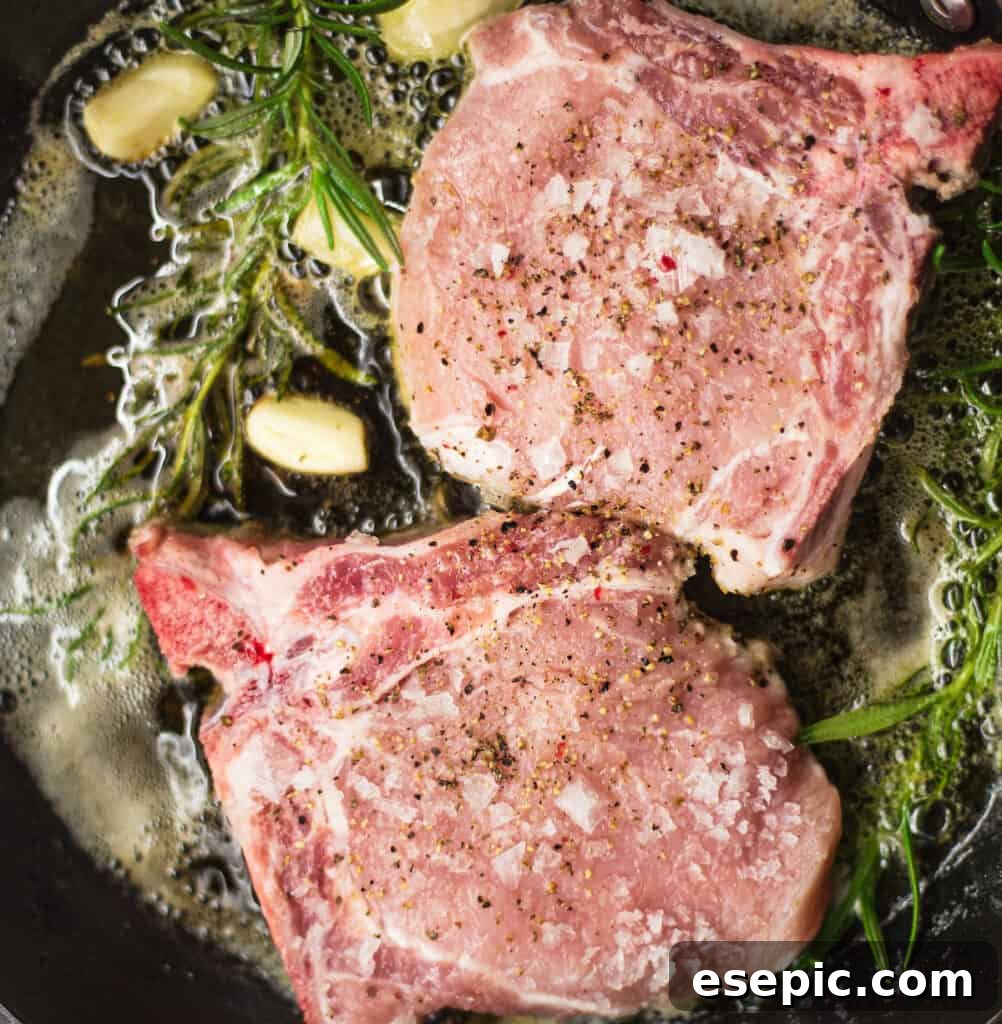
- Sear the Pork Chops to Golden Perfection: Generously season your thick-cut pork chops on all sides with salt and freshly ground black pepper. Once the skillet is hot and the fats are glistening, carefully place the pork chops into the pan. Add the whole garlic cloves and sprigs of fresh rosemary directly into the skillet. Sear each side of the pork chops for 2-3 minutes, or until a beautiful golden-brown crust forms. This crucial step develops deep, rich flavors and helps seal in the juices.
- Build the Flavorful Pan Sauce: Once the pork chops are beautifully browned on both sides, carefully pour in the apple juice or cider, along with the honey. The liquid will immediately begin to deglaze the pan, lifting all those delicious browned bits from the bottom of the skillet – this is where much of your flavor comes from! Bring the liquid to a gentle simmer, stirring to combine.
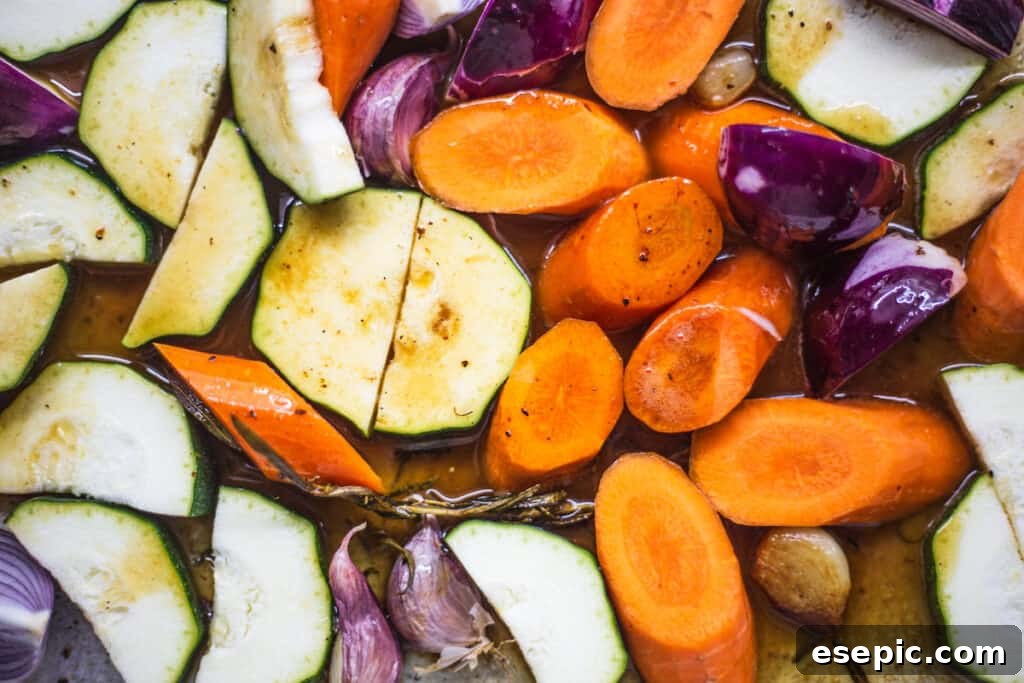
- Combine with Vegetables and Apples for Roasting: If you are using a separate roasting pan, transfer the seared pork chops and the simmering pan juices to it at this stage. Add your prepared winter vegetables (carrots, onions, pre-cooked beetroots, and baby potatoes) and sliced apples around the pork chops in the pan. Gently toss the vegetables and apples to ensure they are well-coated in the flavorful pan juices. This ensures even cooking and infusion of flavor.
- Roast to Doneness: Place the uncovered roasting pan (or oven-safe skillet) into your preheated oven. Roast for 20 – 25 minutes. The exact cooking time will depend on the thickness of your pork chops and your oven. The pork chops are done when they reach an internal temperature of 145°F (63°C) when measured with an instant-read thermometer, ensuring you don’t touch the bone. The vegetables should be tender and slightly caramelized.
- Rest and Serve: Once cooked, remove the pan from the oven. Allow the pork chops to rest for about 5 minutes before slicing or serving. This allows the juices to redistribute throughout the meat, resulting in incredibly tender and moist chops. Drizzle any remaining pan juices over the pork and vegetables. Serve hot and enjoy the symphony of fall flavors!
Should You Cover Pork Chops When Baking?
The decision to cover pork chops during baking depends largely on the cooking method and desired outcome. If you are baking pork chops from raw in the oven from start to finish, covering them initially can be beneficial. This technique traps steam, creating a moist environment that helps prevent the meat from drying out, especially for thinner chops. Often, they are then uncovered for the last part of the baking process to allow for browning and crisping.
However, for this specific recipe, the pork chops are first seared on the stovetop. This initial searing step already achieves a beautiful golden crust and locks in moisture. By the time the pork chops transfer to the oven, they are partially cooked and have a developed surface. At this point, it’s best to leave them uncovered during roasting. This allows for continued browning of the pork, helps to caramelize the apples and vegetables, and allows the delicious pan juices to reduce slightly, intensifying their flavor. Covering them after searing would prevent this desirable browning and might result in a less appealing texture on the surface of the meat and veggies.
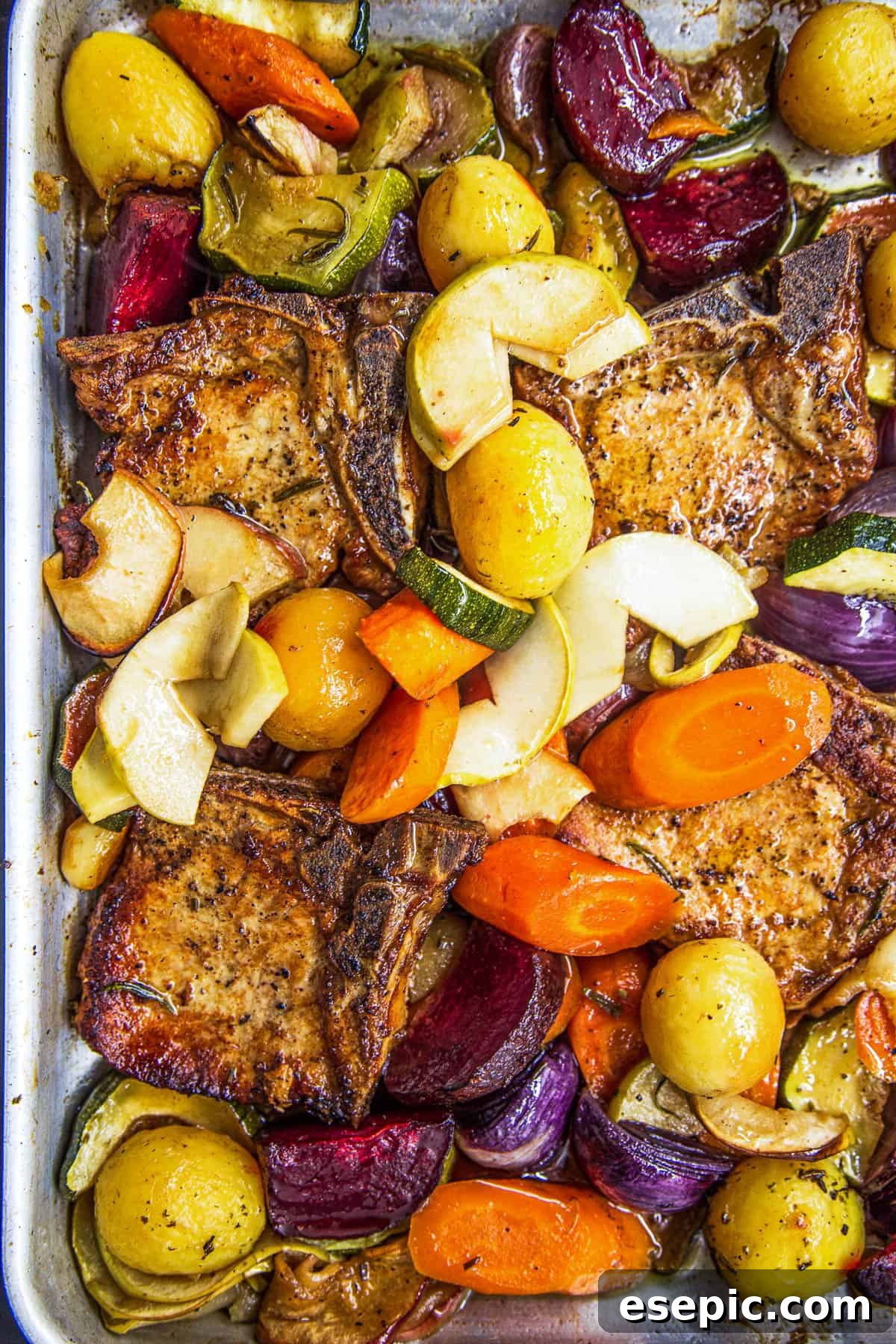
Tips for Ensuring Perfectly Cooked Pork Chops
Making delicious baked pork chops with apples and vegetables is straightforward, but a few expert tips can elevate your meal from good to extraordinary. Here are my best recommendations to help you achieve success in your kitchen with this delightful autumn recipe:
- Opt for Thicker Chops for Ultimate Juiciness: While half-inch pork chops are readily available and cook quickly, they are far more prone to drying out. For truly juicy and tender results, I strongly recommend using bone-in pork chops that are at least 1-inch thick, or even thicker if you can find them. The extra thickness allows for a more forgiving cooking window and better moisture retention, especially when roasted in the oven. If you must use thinner chops, reduce the searing and roasting times accordingly and monitor them closely.
- Always Test for Doneness with a Thermometer: The key to perfectly cooked pork that is both safe and tender is reaching the correct internal temperature. Visual cues can be misleading, so an instant-read meat thermometer is your best friend here. Insert the thermometer into the thickest part of the pork chop, ensuring it doesn’t touch the bone. Pork is safely cooked and at its most tender when it registers 145°F (63°C). Remember that the temperature will continue to rise slightly after removing it from the oven (carryover cooking), so taking it out at 145°F is ideal for preventing overcooking.
- The Importance of Resting Your Meat: This simple step is often overlooked but is absolutely crucial for juicy and flavorful pork chops. After removing the pork from the oven, allow it to rest, uncovered or loosely tented with foil, for at least 5 to 10 minutes. This resting period allows the muscle fibers to relax and the internal juices, which have been pushed to the center during cooking, to redistribute throughout the entire chop. Skipping this step will result in juices running out onto your plate and a drier piece of meat.
- Uniform Vegetable Chops for Even Cooking: To ensure all your vegetables cook through evenly and become tender at the same time as the pork, make sure to chop them into roughly uniform sizes. For denser vegetables like carrots and potatoes (especially if not pre-cooked), cut them into smaller pieces or consider par-boiling them briefly before adding them to the pan.
- Don’t Crowd the Pan: When searing the pork chops and later adding the vegetables, ensure you don’t overcrowd your skillet or roasting pan. If the pan is too full, the ingredients will steam instead of sear and roast, preventing that desirable golden-brown caramelization. If necessary, cook the pork in batches or use two separate roasting pans for the vegetables.
- Leverage the Pan Juices: The apple juice and honey, combined with the rendered fat and pork drippings, create a wonderfully flavorful pan sauce. As the dish roasts, these juices will reduce and concentrate. Before serving, spoon these rich, sweet-savory juices over the pork and vegetables to add an extra layer of moisture and taste.
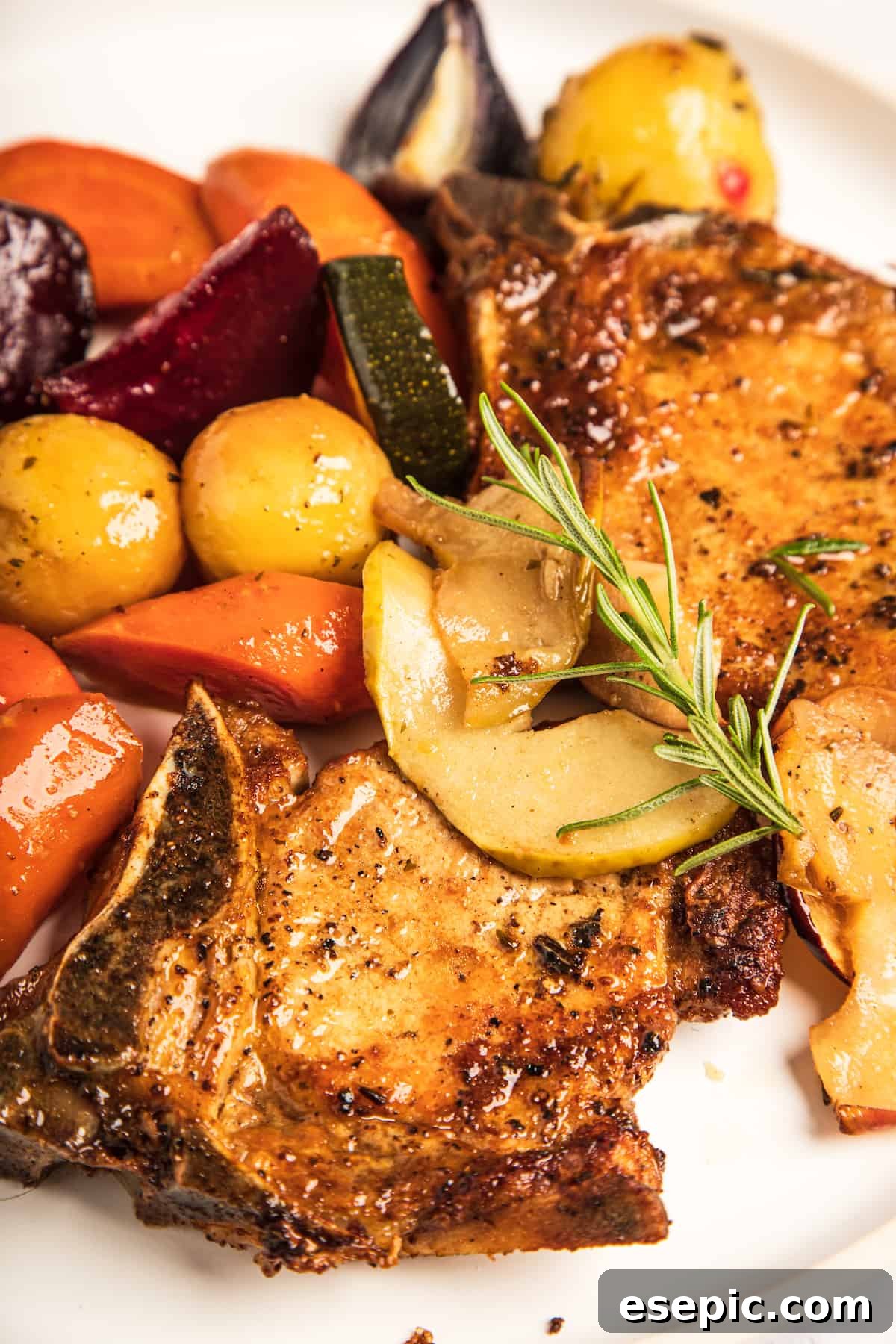
Delightful Serving Suggestions
This baked pork chops with apples and vegetables recipe truly stands alone as a complete, well-balanced meal, boasting protein, carbohydrates, and vibrant produce all in one pan. However, if you’re looking to expand your dinner spread or simply crave a little something extra to complement the rich flavors, these easy additions are perfect companions to your savory pork chops:
- Crusty Bread or Garlic Knots: A loaf of warm, crusty bread or a batch of these incredibly soft and flavorful Garlic Knots is perfect for soaking up every last drop of the delicious apple-infused pan sauce. The tender, buttery dough seasoned with plenty of herbs and fresh garlic is an irresistible pairing.
- Fluffy Rice or Quinoa: A simple side of steamed white rice, brown rice, or a healthy quinoa pilaf provides a neutral base that beautifully absorbs the savory juices from the pan, making each bite even more satisfying.
- Simple Green Salad: To add a refreshing contrast to the hearty main course, a light green salad with a bright vinaigrette would be an excellent choice. Its crispness and acidity will cleanse the palate between bites of rich pork and sweet apples.
- Caprese Stuffed Avocados: For a fresh, colorful, and healthy appetizer or a unique “salad” option, try these Caprese Stuffed Avocados. Bursting with fresh mozzarella, ripe tomatoes, and basil, they offer a delightful textural and flavor counterpoint.
- Parmesan Panko Asparagus Fries: If you’re looking to add another vegetable side with a satisfying crunch, these crispy Parmesan Panko Asparagus Fries are a fantastic choice. They’re super easy to make and provide an extra serving of greens in a fun, irresistible format.
- Creamy Mashed Potatoes or Sweet Potato Puree: For ultimate comfort, a velvety smooth bed of mashed potatoes or a naturally sweet and earthy sweet potato puree would perfectly complement the tender pork and robust vegetables.
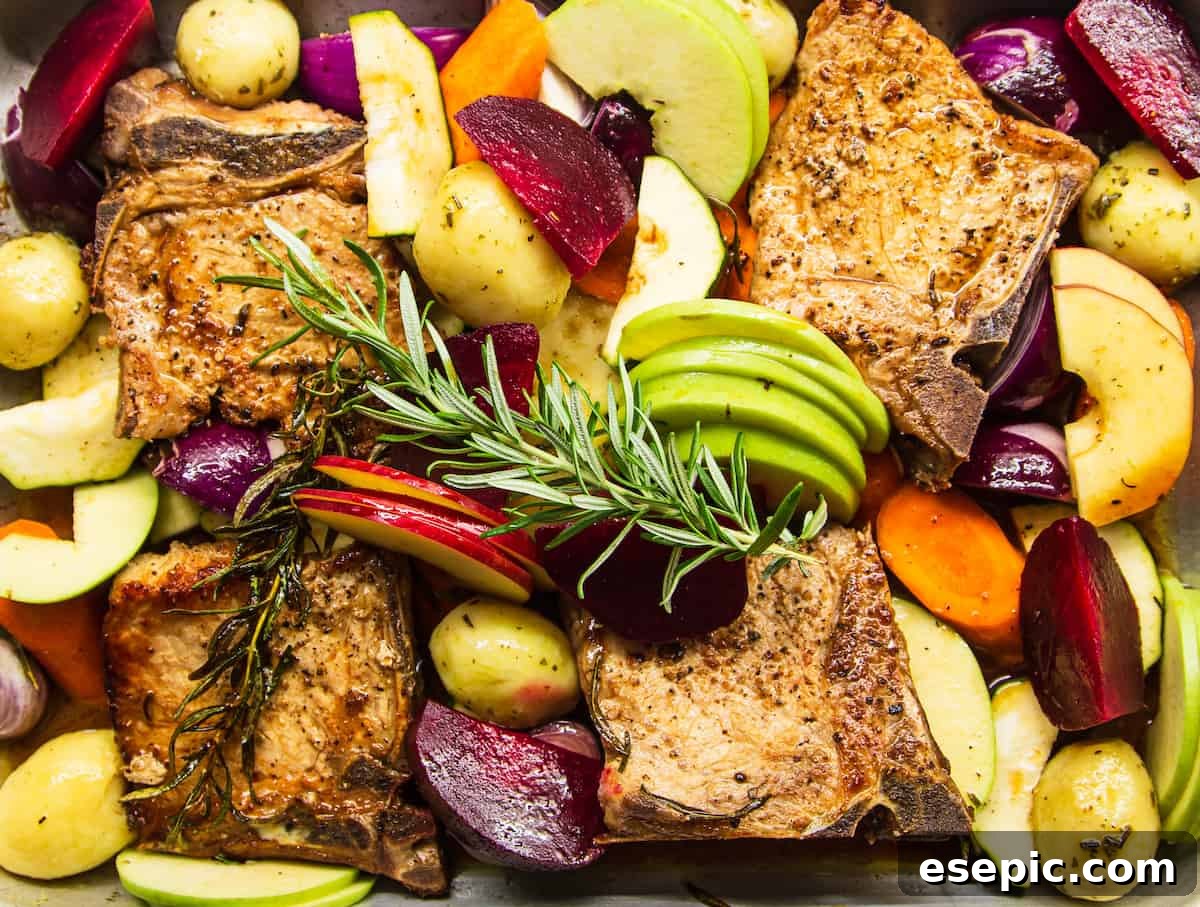
Storing and Reheating Your Leftovers
This baked pork chops with apples and vegetables recipe makes fantastic leftovers, allowing you to enjoy the delicious flavors for days to come. Proper storage and reheating are key to maintaining the quality and taste of your meal:
- Refrigeration: To store leftovers, allow the dish to cool completely before transferring it to an airtight container. Make sure to include all the pork chops, apples, vegetables, and any remaining pan juices. Store in the refrigerator for 3 to 4 days. The juices will help keep the pork moist.
- Reheating: For best results, gently reheat the leftovers. Place the pork chops, apples, and vegetables (with their juices) in a covered skillet over low to medium heat on the stovetop. Alternatively, you can reheat them in a baking dish covered with foil in an oven preheated to 300°F (150°C) until warmed through. Be careful not to overcook, as this can dry out the pork chops. The goal is to warm them gently until they reach a safe internal temperature again.
- Freezing: If you plan to freeze portions of this meal, it’s best to remove any vegetables and apples before doing so. Cooked apples and many vegetables, especially potatoes and beets, tend to become mushy and lose their desirable texture after being frozen and thawed. Freeze only the pork chops with any remaining pan juices in airtight, freezer-safe containers or heavy-duty freezer bags for up to 2 months. Thaw the frozen pork chops in the refrigerator overnight before reheating using the methods described above. You can then prepare fresh apples and vegetables to serve alongside the reheated pork for a complete meal.
Baked Pork Chops with Apples and Vegetables
By Katerina | Easy Weeknight Recipes
Thick-cut pork chops are seared and cooked in apple juice, with a colorful collection of apples, garlic, and winter veggies, creating a delicious one-pan autumn meal.
Prep Time: 20 minutes |
Cook Time: 30 minutes |
Total Time: 50 minutes |
Servings: 4
Ingredients
- 4 bone-in pork chops (preferably 1-inch thick or more)
- 3 tablespoons vegetable oil (or olive oil)
- ½ cup apple juice, or pure apple cider (ensure it’s not apple cider vinegar)
- 4 tablespoons butter
- 2 apples, cored and sliced (see varieties above for best results)
- 3 garlic cloves, minced or thinly sliced
- 1 tablespoon honey (or pure maple syrup)
- 2 red onions, each cut into 4 to 6 wedges
- 2 carrots, peeled and cut into ½-inch pieces
- 2 beet roots, pre-cooked and thinly sliced
- 1 cup baby potatoes, pre-cooked and quartered
- Fresh rosemary sprigs
- Salt and freshly ground black pepper, to taste
Instructions
- Preheat your oven to 450°F (230°C).
- Heat a large, oven-safe skillet (like cast iron) over medium-high heat. Add the vegetable oil and butter, allowing the butter to melt and shimmer.
- Pat the pork chops dry and rub them generously on all sides with salt and pepper.
- Once the skillet is hot, carefully place the seasoned pork chops into the pan. Add the fresh garlic and rosemary sprigs around the chops. Sear the pork chops for 2 to 3 minutes on each side, until a rich golden-brown crust forms.
- Pour the apple juice (or cider) and honey into the skillet. Bring the liquid to a gentle simmer, allowing it to deglaze the pan and incorporate all the flavorful browned bits.
- If not using an oven-safe skillet, transfer the pork chops and pan juices to a roasting pan. Add the chopped carrots, onion wedges, pre-cooked beet roots, and quartered baby potatoes around the pork chops. Toss the vegetables and sliced apples gently to coat them in the pan juices.
- Roast the uncovered dish in the preheated oven for 20 to 25 minutes, or until the pork chops reach an internal temperature of 145°F (63°C) when measured with an instant-read thermometer (avoid touching the bone). The vegetables should be tender and slightly caramelized.
- Remove the pan from the oven and allow the pork chops to rest for 5-10 minutes before serving. Drizzle with the reduced pan juices.
- Serve hot and enjoy!
Notes
- Feel free to customize the vegetables. Broccoli florets, Brussels sprouts, parsnips, or zucchini could also be wonderful additions.
- As the dish roasts, the pan juices will naturally reduce and intensify in flavor. Be sure to spoon these concentrated juices over the pork and vegetables before serving for an extra burst of taste and moisture.
Nutrition
Nutritional information is an estimate and provided as a courtesy. Values may vary according to the exact ingredients, cooking methods, and tools used. Please consult your preferred nutritional calculator for more detailed and accurate information.
- Calories: 550 kcal
- Carbohydrates: 40g
- Protein: 38g
- Fat: 27g
- Saturated Fat: 12g
- Polyunsaturated Fat: 3g
- Monounsaturated Fat: 9g
- Trans Fat: 1g
- Cholesterol: 147mg
- Sodium: 253mg
- Potassium: 1194mg
- Fiber: 6g
- Sugar: 24g
- Vitamin A: 5520IU
- Vitamin C: 20mg
- Calcium: 82mg
- Iron: 2mg
Explore More Delicious Pork Chop Recipes
If you’ve enjoyed the versatility and flavor of pork chops in this recipe, you’ll be delighted to discover many other ways to prepare this popular protein. Here are a few more fantastic pork chop recipes to inspire your next meal:
- Instant Pot Pork Chops: For those busy days when time is of the essence, learn how to create perfectly tender and flavorful pork chops in your pressure cooker.
- Pesto Stuffed Pork Chops: Elevate your dinner with elegant pork chops generously stuffed with aromatic pesto, making for an impressive yet easy dish.
- Lemon Garlic Baked Pork Chops with Squash and Potatoes: A bright and zesty alternative, this recipe combines the classic flavors of lemon and garlic with hearty squash and potatoes for another delicious one-pan meal.