
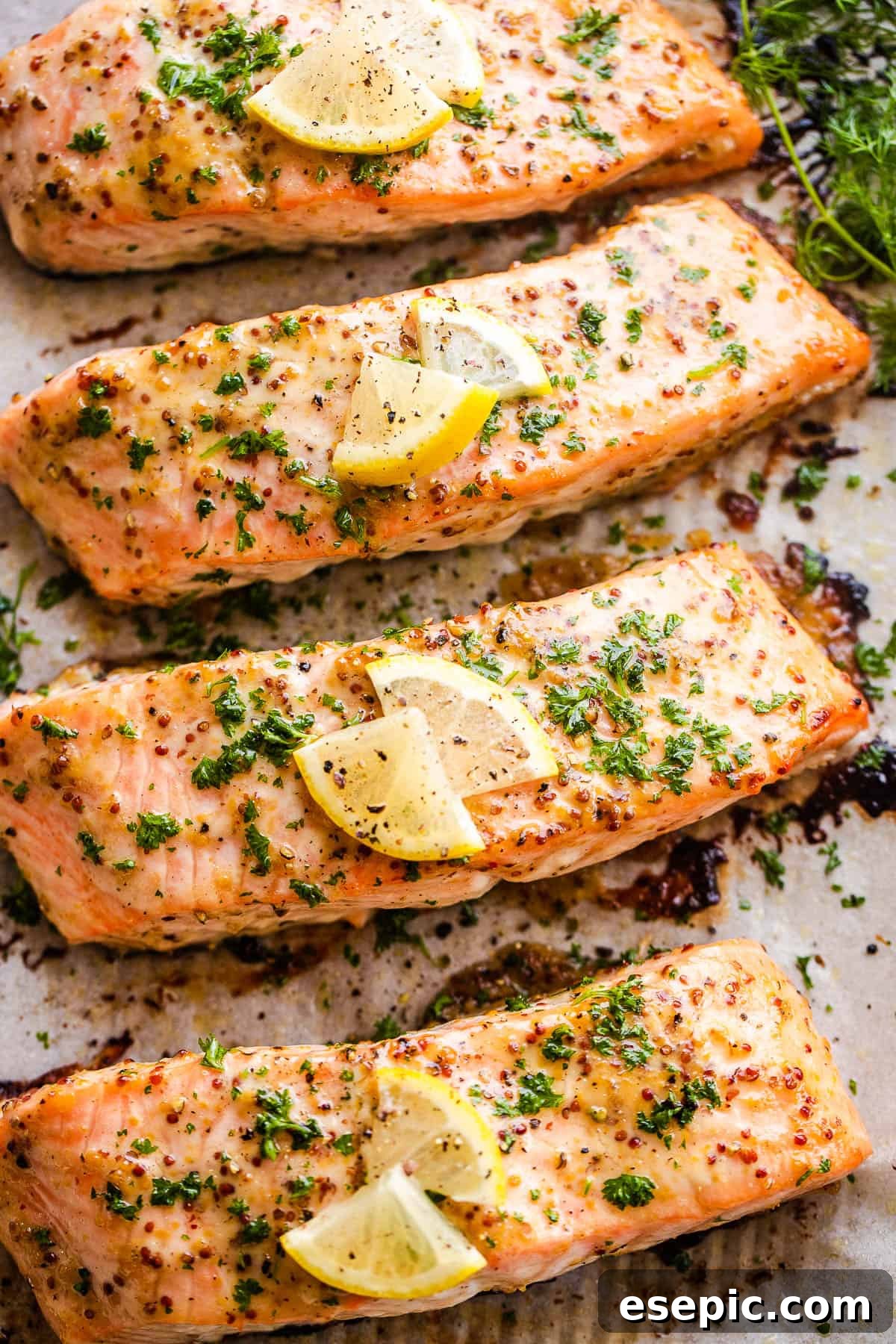
Prepare to fall in love with one of the most irresistible and effortless recipes you’ll ever encounter: our baked Maple Mustard Salmon Fillets. This dish masterfully blends the robust, savory depth of stone-ground Dijon mustard with the natural sweetness of pure maple syrup, creating an exquisite glaze that caramelizes beautifully atop perfectly cooked salmon. Each sizzling fillet is lightly seasoned with salt and freshly cracked pepper, ensuring every bite is a symphony of balanced flavors.
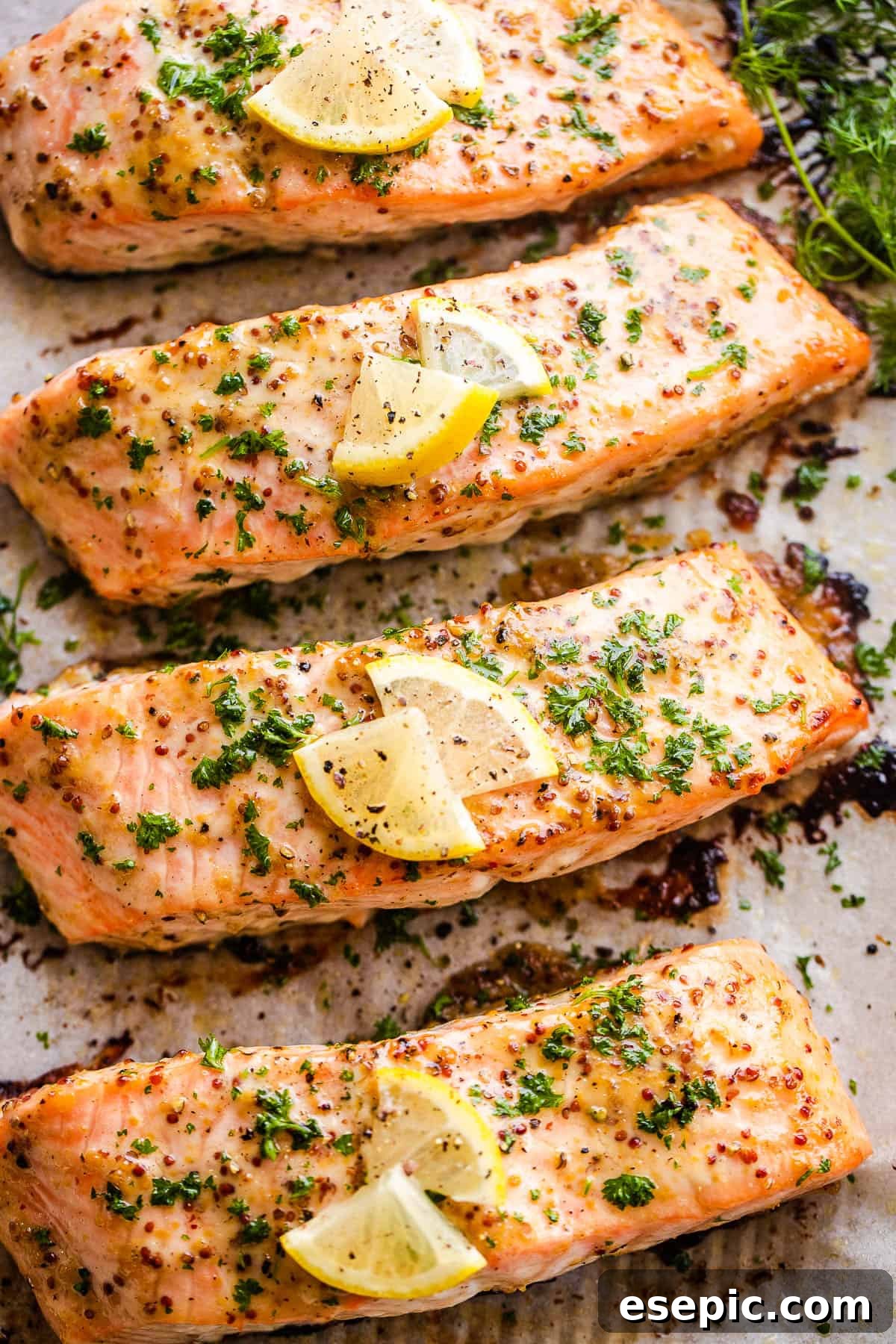
Effortless Elegance: Easy Maple Mustard Glazed Salmon
This salmon recipe transcends ordinary weeknight meals, transforming simple ingredients into a dish that feels gourmet yet requires minimal effort. Its super simple nature makes it incredibly flexible, allowing you to adapt it to your pantry and preferences. What sets this recipe apart is the secret ingredient that guarantees the most tender, juicy, and creamy salmon you’ve ever tasted: mayonnaise. Yes, a touch of mayo in the glaze locks in moisture, ensuring your salmon remains wonderfully succulent, rather than drying out in the oven.
For those who cherish involving their children in the culinary process, this recipe offers a perfect opportunity. My own kids enthusiastically participate when I prepare my teriyaki salmon recipe, and this maple mustard version is equally engaging. Little hands can help season the fillets with pinches of salt, whisk together the delightful sauce, and carefully brush it onto the fish. It’s a fantastic way to ignite their passion for cooking and can even encourage selective eaters to explore the delicious world of fish.
The flavor profile of this dish is versatile enough to be enjoyed year-round. However, I find its freshness particularly appealing as springtime blossoms. Simultaneously, the robust, comforting aromas of Dijon mustard and maple syrup waft through the kitchen, creating an inviting and cozy atmosphere throughout your home. It’s a truly harmonious blend that satisfies the palate in any season.
When selecting salmon, I consistently prioritize wild-caught varieties. Wild-caught seafood is generally celebrated for its superior nutritional value, boasting higher levels of beneficial omega-3 fatty acids and often a more distinct, natural flavor profile. However, feel free to use your preferred brand or type of salmon. Whether you opt for Atlantic, Sockeye, or Coho, and whether you choose to keep the skin on or remove it, this recipe will yield fantastic results. The skin, when left on, can even contribute to a crisper texture and further retain moisture during baking.
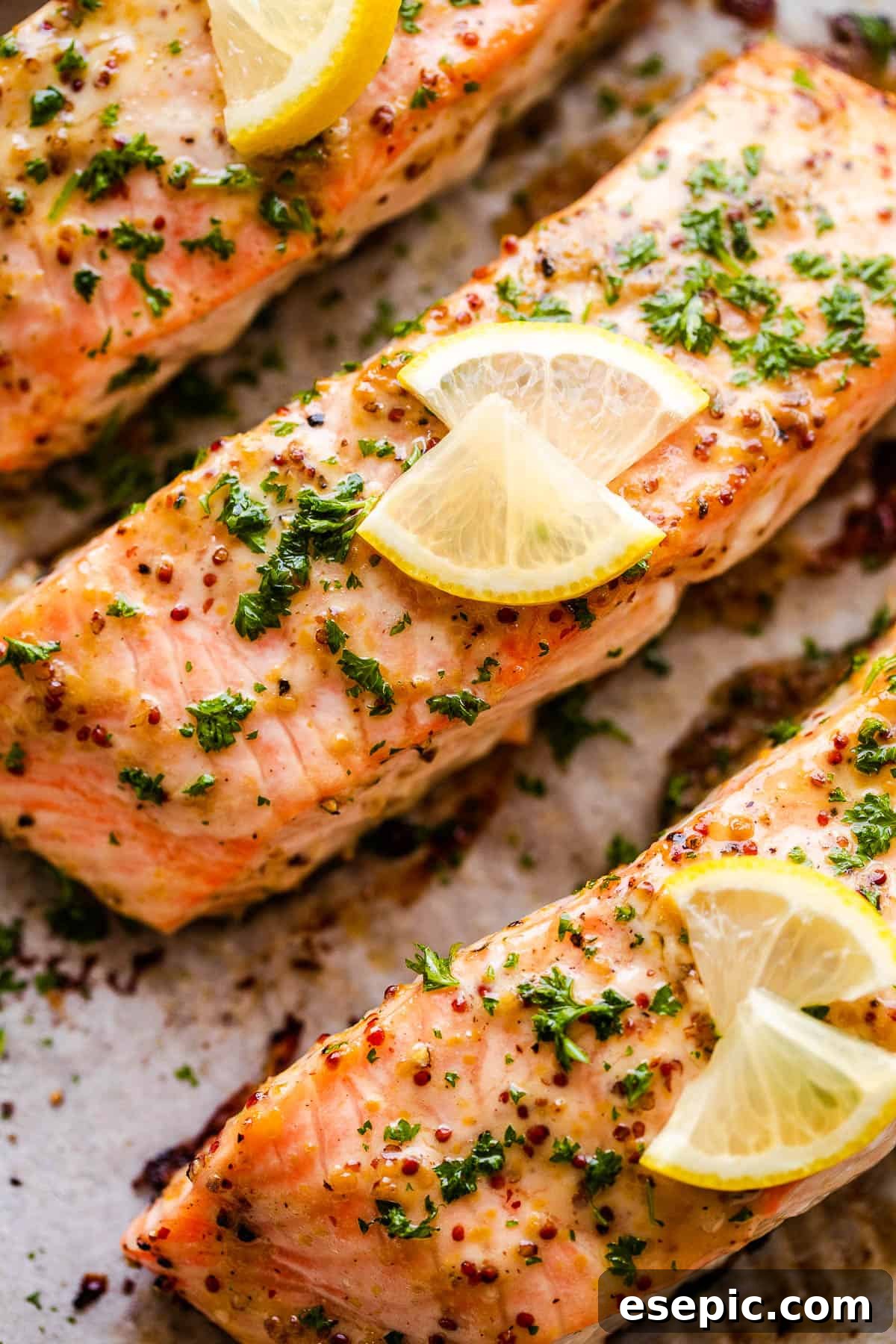
The Power of Salmon: Benefits and Selection
Salmon is not just delicious; it’s a nutritional powerhouse. Rich in Omega-3 fatty acids, it supports heart health, brain function, and reduces inflammation. It’s also an excellent source of high-quality protein, essential vitamins like B12 and D, and minerals such as selenium and potassium. Incorporating salmon into your diet regularly is a fantastic way to boost overall well-being.
Choosing the right salmon can significantly impact your dish. While wild-caught salmon, like Alaskan Sockeye or Coho, often boasts a richer flavor and firmer texture due to its natural diet and active lifestyle, farm-raised salmon can also be a good option, providing a milder taste and often a more buttery texture. Regardless of your choice, look for fillets that are vibrant in color, firm to the touch, and have a fresh, mild scent. For optimal cooking, select fillets of similar size and thickness to ensure even baking. Typically, 4 to 6-ounce fillets work well for individual servings, cooking through uniformly within the suggested timeframe.
Essential Recipe Ingredients
My family adores honey mustard, so it’s no surprise that this maple mustard salmon has become an instant hit. You’ll be amazed by how few ingredients are required to achieve such a powerful burst of flavor. Each component plays a crucial role in creating this delectable dish.
- Salmon Fillets: The star of our show. Aim for four fillets, each weighing approximately 4 to 6 ounces, ensuring they are roughly the same size for consistent cooking. You can choose skin-on or skin-off based on your preference; skin-on can provide a nice crispy texture.
- Salt & Black Pepper: Simple yet vital seasonings. A good pinch of salt enhances the natural flavors of the salmon, while freshly cracked black pepper adds a gentle aromatic bite. Season to your personal taste.
- Dijon Mustard: The backbone of our tangy glaze. You’ll need about 2 tablespoons of stone-ground Dijon mustard. Its distinct sharp and slightly spicy notes are perfectly balanced by the maple syrup. If you prefer a milder taste or have another mustard on hand, feel free to substitute, though Dijon offers the best flavor profile for this recipe.
- Mayonnaise: The secret to ultimate tenderness. A tablespoon or two of your favorite mayonnaise adds incredible creaminess and moisture to the glaze, ensuring the salmon remains incredibly juicy throughout the baking process. It also helps bind the sauce, preventing it from running off the fillets.
- Maple Syrup: The sweet counterpoint. Use pure maple syrup for its authentic, rich, and complex sweetness. Avoid imitation syrups, as they lack the depth of flavor. For a delightful variation, you can substitute honey if you prefer a classic honey-mustard sauce over maple-mustard.
- Chopped Fresh Parsley: For a vibrant finish. A sprinkle of freshly chopped parsley not only adds a pop of color but also a fresh, herbaceous note that brightens the entire dish, making it visually appealing and even more appetizing.
Crafting Culinary Magic: How to Make Maple Mustard Salmon Fillets
This salmon recipe is remarkably easy to assemble, making it my go-to choice for busy weeknights. It’s a quick dish that doesn’t demand any specialized equipment or advanced culinary techniques to achieve perfection. Here’s how to create this delightful meal:
- Prepare Oven & Baking Sheet: Begin by preheating your oven to 400˚F (200˚C). To ensure effortless cleanup and prevent any sticking, line a sturdy baking sheet with either parchment paper or aluminum foil.
- Prep Salmon Fillets: Gently place the salmon fillets onto the prepared baking sheet. Season each fillet generously and evenly with salt and freshly cracked black pepper. A good rule of thumb is about ¼ teaspoon of salt per fillet, along with a crack or two of pepper.
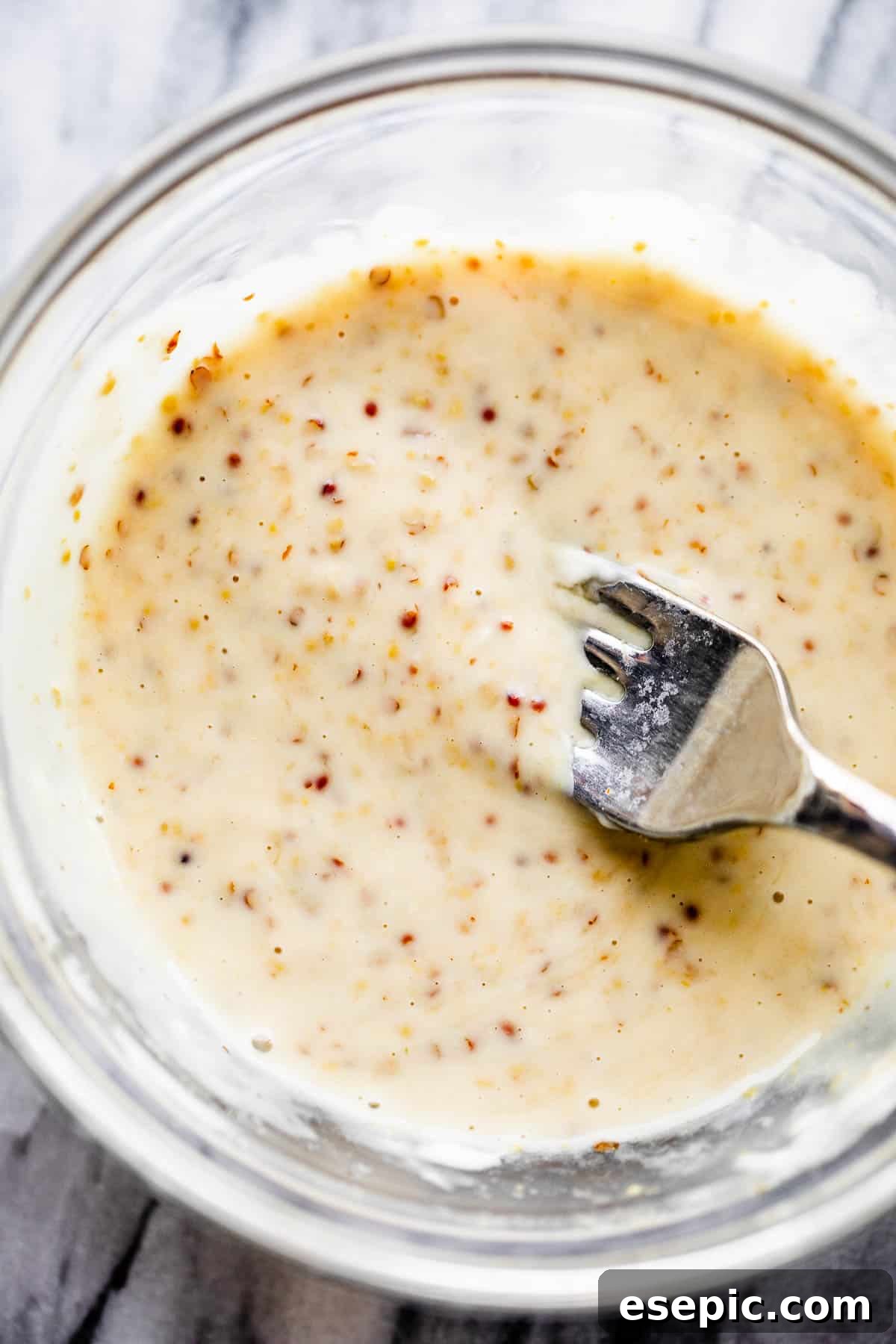
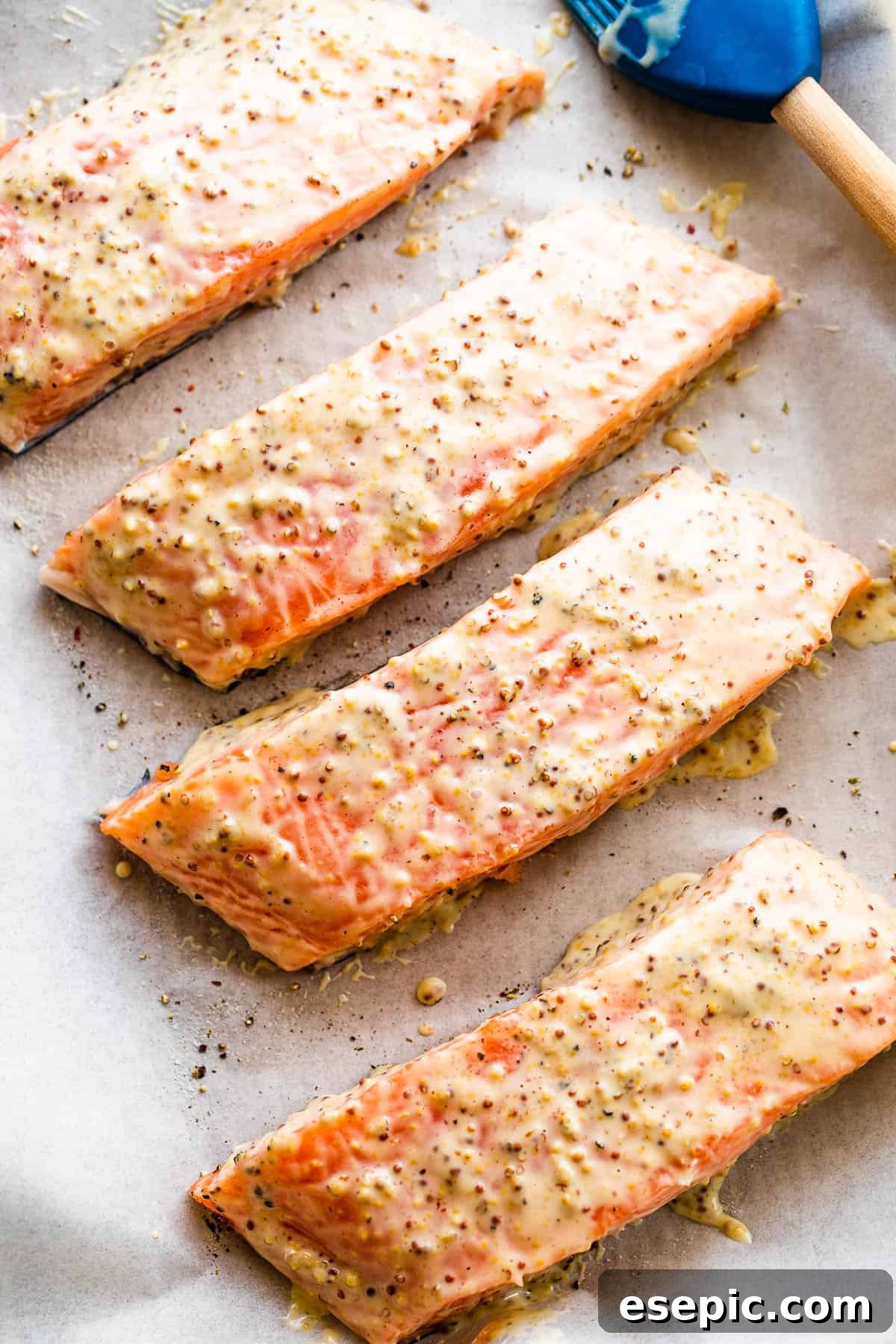
- Craft the Maple Mustard Glaze: In a medium mixing bowl, combine the stone-ground Dijon mustard, mayonnaise, and pure maple syrup. Whisk these ingredients together thoroughly until you achieve a smooth, well-emulsified sauce. This is the magical glaze that will transform your salmon!
- Brush on the Flavor: Using a pastry brush, evenly coat the top and sides of each salmon fillet with the prepared maple mustard mixture. Ensure a good, thick layer, as this glaze will caramelize and create a delicious crust.
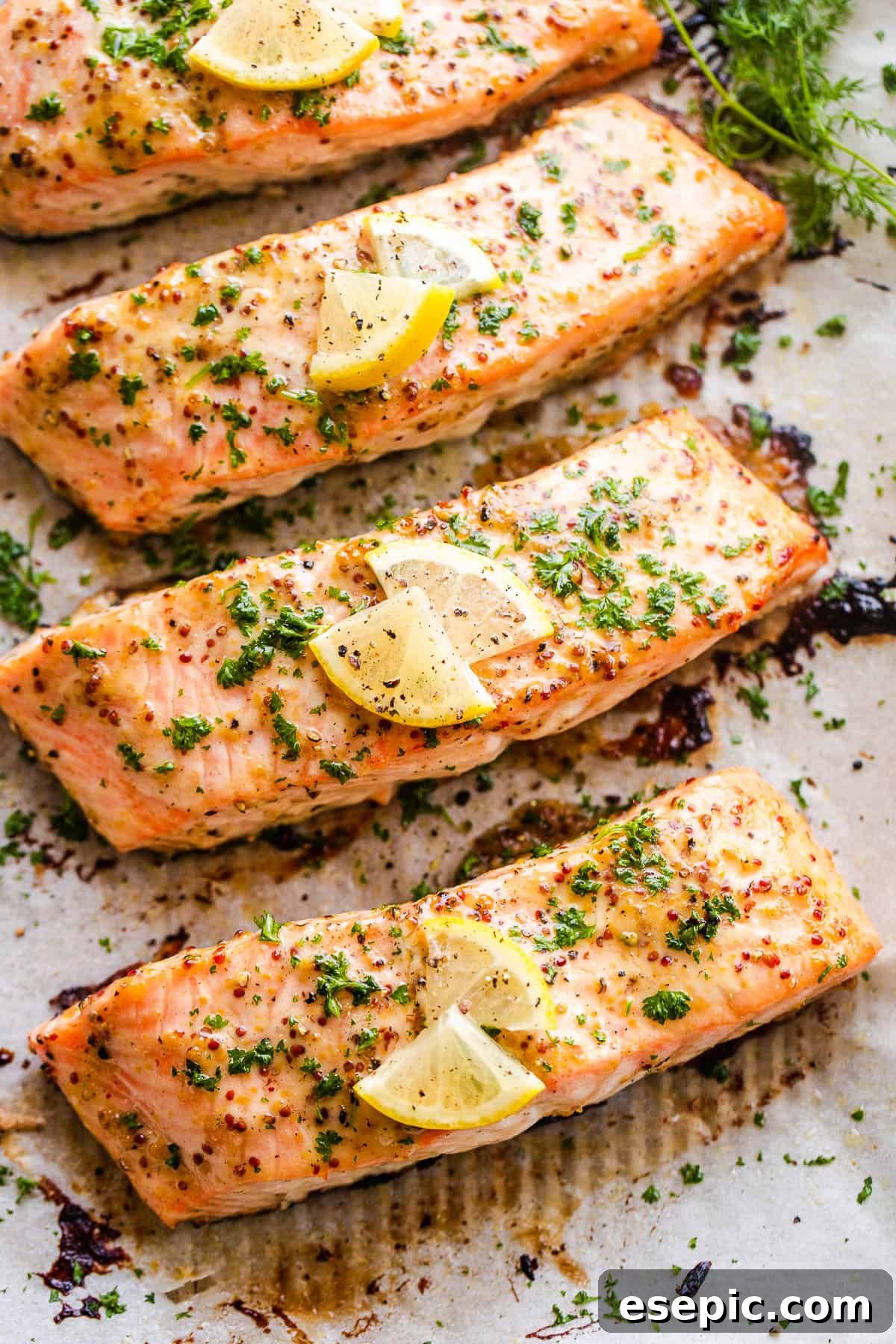
- Bake to Perfection: Transfer the baking sheet to the preheated oven and bake for 13 to 16 minutes. The exact cooking time will vary depending on the thickness and size of your fillets. Salmon is perfectly cooked when it easily flakes with a fork, or when its internal temperature, checked with a reliable instant-read thermometer, registers 140˚F (60˚C).
- Serve and Savor: Once cooked, carefully remove the salmon from the oven. Garnish with a sprinkle of fresh chopped parsley for an extra touch of color and freshness, and serve immediately. Enjoy this incredibly flavorful and tender dish!
Pro Tips for Perfectly Cooked Salmon Every Time
Have you attempted to cook salmon in the past only to achieve less-than-stellar results? If so, you are certainly not alone. Many home cooks struggle with achieving that ideal balance of flaky tenderness and rich flavor. But don’t let past experiences deter you! With these helpful tips, you’ll transform your salmon from merely “meh” to absolutely marvelous – trust me, these make all the difference!
- Bring the Salmon to Room Temperature: A common mistake is taking cold fillets directly from the refrigerator and placing them into a hot oven. This drastic temperature change can lead to uneven cooking, where the outside cooks too quickly while the inside remains undercooked or dries out trying to catch up. Instead, remove your salmon fillets from the fridge about fifteen to twenty minutes before you plan to cook them. Allowing them to sit at room temperature ensures a more gradual and even cooking process, resulting in far more tender and delicious fish.
- Dry the Fillets Thoroughly: Moisture is the enemy of crispiness and flavor absorption. Before you season and apply the glaze to your salmon, it’s crucial to pat the fillets thoroughly dry with paper towels. This step isn’t just for a better sear (if you were pan-frying); for baking, drying the surface helps the seasonings adhere better, prevents the fish from steaming in its own moisture, and helps keep the fillets from sticking to your baking sheet. A dry surface also allows the glaze to form a beautiful, flavorful crust.
- Utilize an Instant-Read Thermometer: The absolute best way to ensure your salmon is perfectly cooked without overcooking it is to use an instant-read meat thermometer. Guessing can often lead to dry, rubbery salmon. Insert the thermometer into the thickest part of the fillet. Salmon is considered perfectly done when its internal temperature reaches 140˚F (60˚C). Remember that the fish will continue to cook slightly (carryover cooking) for a few minutes after it’s removed from the oven, so pulling it out just as it reaches this temperature will result in exquisite tenderness.
Elevate Your Meal: Serving Suggestions
If you’re wondering what delectable sides to pair with this intensely flavorful maple mustard salmon, you’ve come to the right place! This versatile entrée lends itself beautifully to a variety of accompaniments, allowing you to tailor your meal to any occasion or craving. Here are some of my favorite suggestions:
- Refreshing Cucumber Salad: The classic pairing of salmon and cucumber is timeless for a reason. I highly recommend serving it alongside my easy cucumber salad with a sour cream dressing. The cool, crisp cucumber and tangy dressing provide a perfect counterpoint to the rich, sweet, and savory salmon, offering a refreshing textural and flavor contrast.
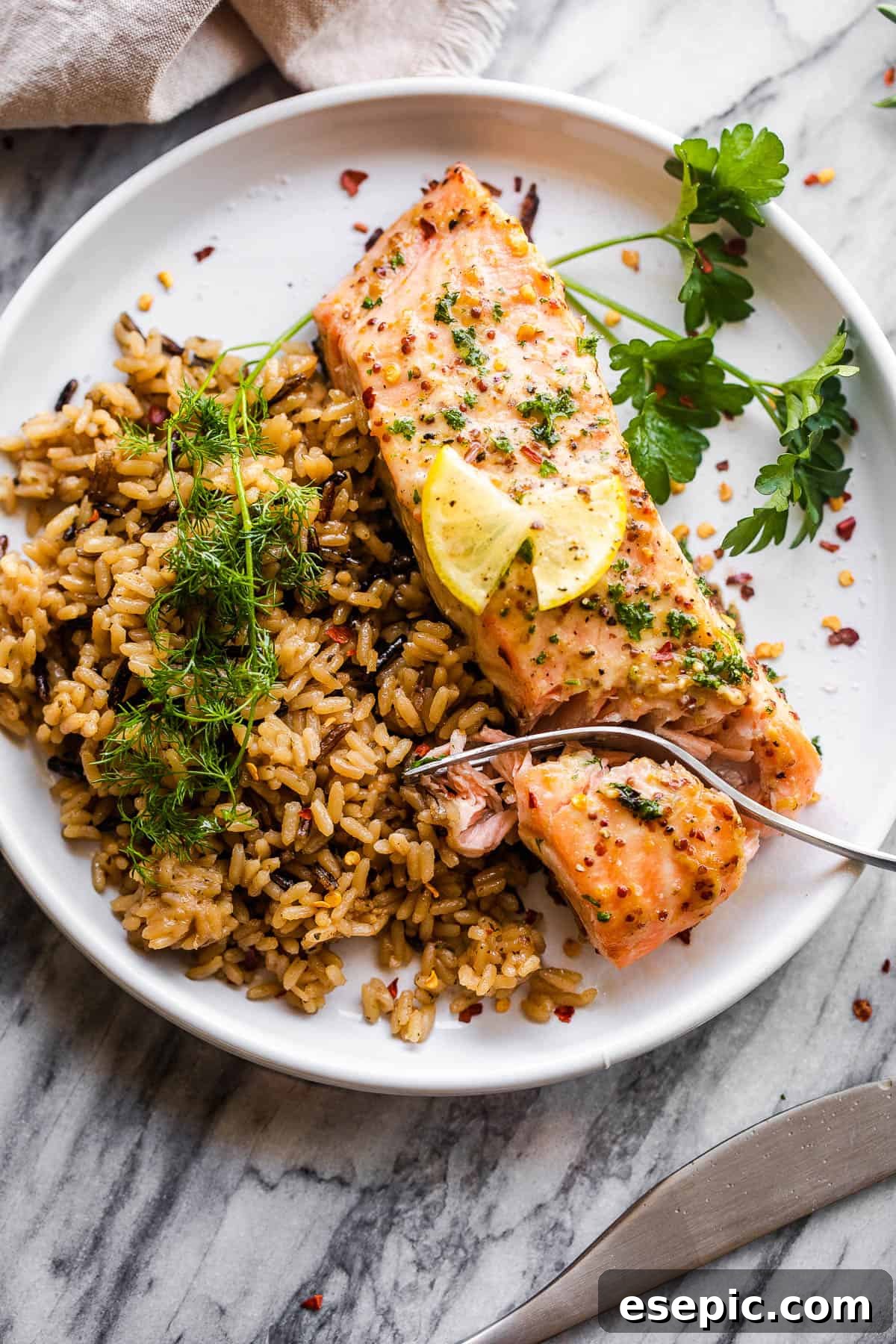
- Versatile Rice Options: Rice is always a simple, wholesome, and satisfying choice. For a dish with a bit more flair, try my garlic butter Parmesan rice – its savory notes and creamy texture beautifully complement the salmon. Alternatively, stick with plain brown or white rice for something more traditional, allowing the salmon’s flavors to truly shine. Quinoa or couscous are also excellent whole-grain alternatives.
- Exotic Flavor Pairing: Feeling adventurous and eager to explore bold flavor combinations? Serve this maple mustard salmon alongside pad see ew. The sweet and savory Thai noodle dish, with its distinctive smoky char, creates an unexpectedly harmonious and exciting culinary experience when paired with the glazed salmon.
- Healthy Green Sides: Increase the vegetable content on your plate with my roasted sugar snap peas. These are an incredibly easy, healthy, and universally loved veggie option. Their natural sweetness and satisfying crunch complement the salmon without overpowering it. Other fantastic roasted vegetable options include asparagus, broccoli, or Brussels sprouts.
- Creamy Potato Dishes: For a more comforting meal, consider pairing with mashed potatoes or a simple roasted potato medley. The creamy texture of mashed potatoes provides a delightful base for the flaky salmon and its rich glaze.
No matter which sides you choose, this maple mustard salmon promises a delightful and satisfying dining experience. Bon appétit!
How to Store and Reheat Salmon Leftovers
Proper storage and reheating are key to enjoying your delicious salmon leftovers without compromising flavor or texture. Salmon can be delicate, so a little care goes a long way:
- Refrigerate Leftovers: To maintain freshness and prevent bacterial growth, promptly refrigerate any leftover salmon. Wrap the fillets tightly in plastic wrap, place them in food storage bags, or transfer them to airtight containers. Stored correctly, cooked salmon will remain fresh in the refrigerator for up to 3 days.
- Gentle Reheating for Best Results: Reheating salmon requires a gentle approach to prevent it from drying out. Preheat your oven to a moderate 300˚F (150˚C). Place the salmon in an ovenproof dish, adding a splash of water or broth to the bottom of the dish and covering it loosely with foil to create a steaming effect. Bake for approximately 12 to 15 minutes, or until the salmon is just heated through. Avoid microwaving, as it can quickly make salmon rubbery and dry.
Can I Freeze Cooked Salmon?
Yes, you can absolutely freeze cooked salmon, but it’s important to set expectations regarding its texture. While the flavor remains largely intact, the texture of salmon can become slightly softer or flakier once thawed compared to when it was freshly cooked. This subtle change makes frozen and thawed salmon ideal for repurposing in dishes where a perfect flaky fillet isn’t the primary goal.
- Freezing Instructions: To freeze, ensure your salmon is completely cooled. Wrap individual portions in two layers of plastic wrap, or use one layer of plastic wrap followed by a layer of aluminum foil. This double-layer protection helps prevent freezer burn. Label the packages with the date, and freeze for up to 3 months for optimal quality.
- Thawing and Repurposing: When you’re ready to use your frozen salmon, thaw it overnight in the refrigerator. Once thawed, you might find it’s perfect for flaking into salmon salads, adding to sandwiches, stirring into a creamy pasta dish, or incorporating into a savory quiche or frittata. These applications embrace the slightly altered texture and allow the delicious maple mustard flavor to shine in a new context.
Discover More Delightful Seafood Recipes
If you’ve enjoyed this simple yet spectacular maple mustard salmon, you’ll be thrilled to explore more quick and easy seafood dishes that bring vibrant flavors to your table without the fuss. Whether you’re a seasoned seafood lover or just beginning your culinary journey with fish, these recipes are sure to become new favorites:
- Old Bay Roasted Salmon: A classic American seasoning blend, Old Bay, transforms simple roasted salmon into a zesty and aromatic treat. This recipe is incredibly straightforward and highlights the natural goodness of salmon with a delightful spice kick.
- Crab Rangoon Wontons: Craving something crispy, creamy, and utterly addictive? These homemade crab rangoon wontons are a fantastic appetizer or snack. Filled with a rich cream cheese and crab mixture, they’re surprisingly easy to make and universally loved.
- Creamy Tomato Sauce Tilapia: For a lighter white fish option, this tilapia recipe featuring a luscious creamy tomato sauce is a winner. It’s a quick, flavorful meal that feels indulgent yet is perfect for any weeknight.
- Shrimp Nachos: Elevate your nacho game with these incredibly delicious shrimp nachos. Piled high with seasoned shrimp, melty cheese, and all your favorite toppings, they make for a fun, satisfying, and easy-to-share meal or appetizer.
Each of these recipes promises ease of preparation and a burst of flavor, proving that delicious seafood can be a staple in your weeknight meal rotation. Enjoy exploring new tastes!
Print Recipe
★★★★★
Maple Mustard Salmon Fillets
Katerina | Easy Weeknight Recipes
10 minutes
15 minutes
30 minutes
4
Ingredients
- 4 (4 to 6 ounces, each) salmon fillets, skin ON or OFF
- 1 teaspoon salt, divided
- ½ teaspoon cracked black pepper, divided
- 2 tablespoons stone ground Dijon mustard
- 2 tablespoons mayonnaise
- 1 tablespoon maple syrup
- chopped fresh parsley, for garnish
Instructions
- Preheat oven to 400˚F (200˚C).
- Line a baking sheet with parchment paper or foil.
- Place the salmon fillets on the baking sheet and season with salt and pepper, using ¼ teaspoon of salt for each fillet and a crack or two of black pepper. Set aside.
- In a mixing bowl whisk together the mustard, mayonnaise, and maple syrup.
- Brush the mustard mixture evenly over the salmon fillets.
- Bake for 13 to 16 minutes, or until cooked through. Cooking time depends on the size and thickness of the fillets. Salmon is cooked through when the fish flakes easily, and when the internal temperature registers at 140˚F (60˚C). Use an instant read thermometer to check for doneness.
- Remove from oven.
- Garnish with parsley and serve immediately.
Nutrition
Calories:
228kcal
|
Carbohydrates:
4g
|
Protein:
23g
|
Fat:
13g
|
Saturated Fat:
2g
|
Trans Fat:
1g
|
Cholesterol:
65mg
|
Sodium:
761mg
|
Potassium:
582mg
|
Fiber:
1g
|
Sugar:
3g
|
Vitamin A:
57IU
|
Vitamin C:
1mg
|
Calcium:
25mg
|
Iron:
1mg
Nutritional info is an estimate and provided as courtesy. Values may vary according to the ingredients and tools used. Please use your preferred nutritional calculator for more detailed info.
❤
Did you make a recipe? Leave a rating!