

Mastering the art of cooking a succulent Prime Rib is simpler than you might imagine, especially when armed with the right techniques and a few key flavors. This holiday season, delight your guests with a show-stopping main course that’s both incredibly juicy and packed with robust flavor. Our recipe combines the aromatic essence of fresh rosemary, the savory depth of Worcestershire sauce, and a subtle warmth from chili flakes, all brought to perfection with an effortless reverse-sear roasting method. Prepare to create a memorable meal that will earn you rave reviews!
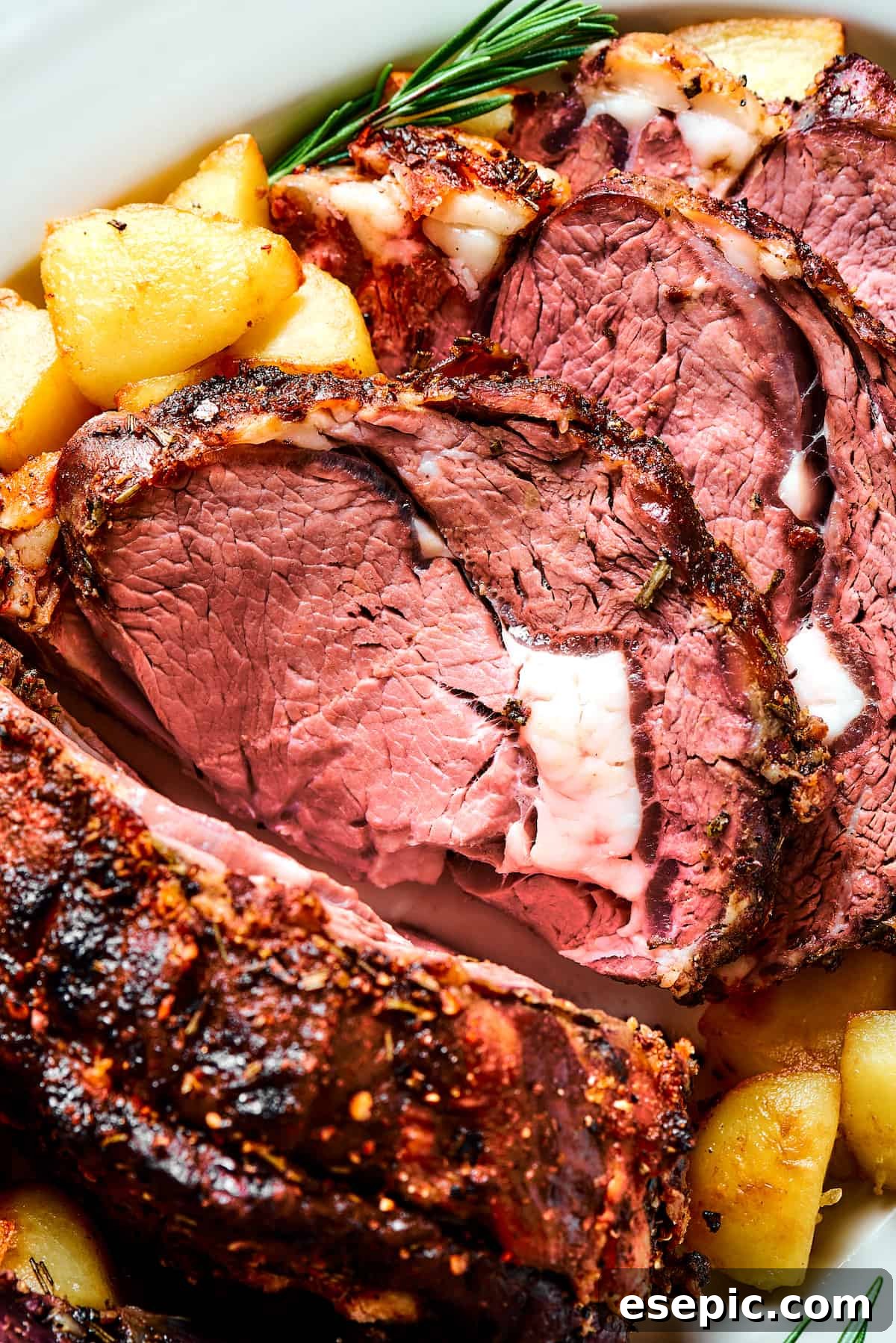
Craft an Unforgettable Holiday Dinner: The Perfect Prime Rib
The holiday season often brings with it the delightful challenge of creating a meal that feels both extraordinary and stress-free. We all yearn for festive gatherings filled with joy and relaxation, yet the desire to present an “extra-special” and “extra-flavorful” feast is undeniable. While it might seem daunting to reconcile “easy and fun” with “gorgeous and impressive,” this Prime Rib Roast recipe proves you can absolutely have it all. Imagine the gasps of delight as you present a magnificent, perfectly cooked prime rib – a true centerpiece that embodies the spirit of celebration.
Prime rib, inherently tender, exquisitely marbled, and bursting with natural beefy flavor, is a cut that naturally impresses. Its grandeur makes it the ultimate choice for holiday dinners, transforming any occasion into a luxurious event. The secret to unlocking its full potential lies in a straightforward roasting technique that ensures every slice is incredibly juicy and tender. Best of all, this impressive result doesn’t require advanced culinary skills, making it accessible for even novice home cooks to achieve perfection.
What Makes Prime Rib So Exceptional?
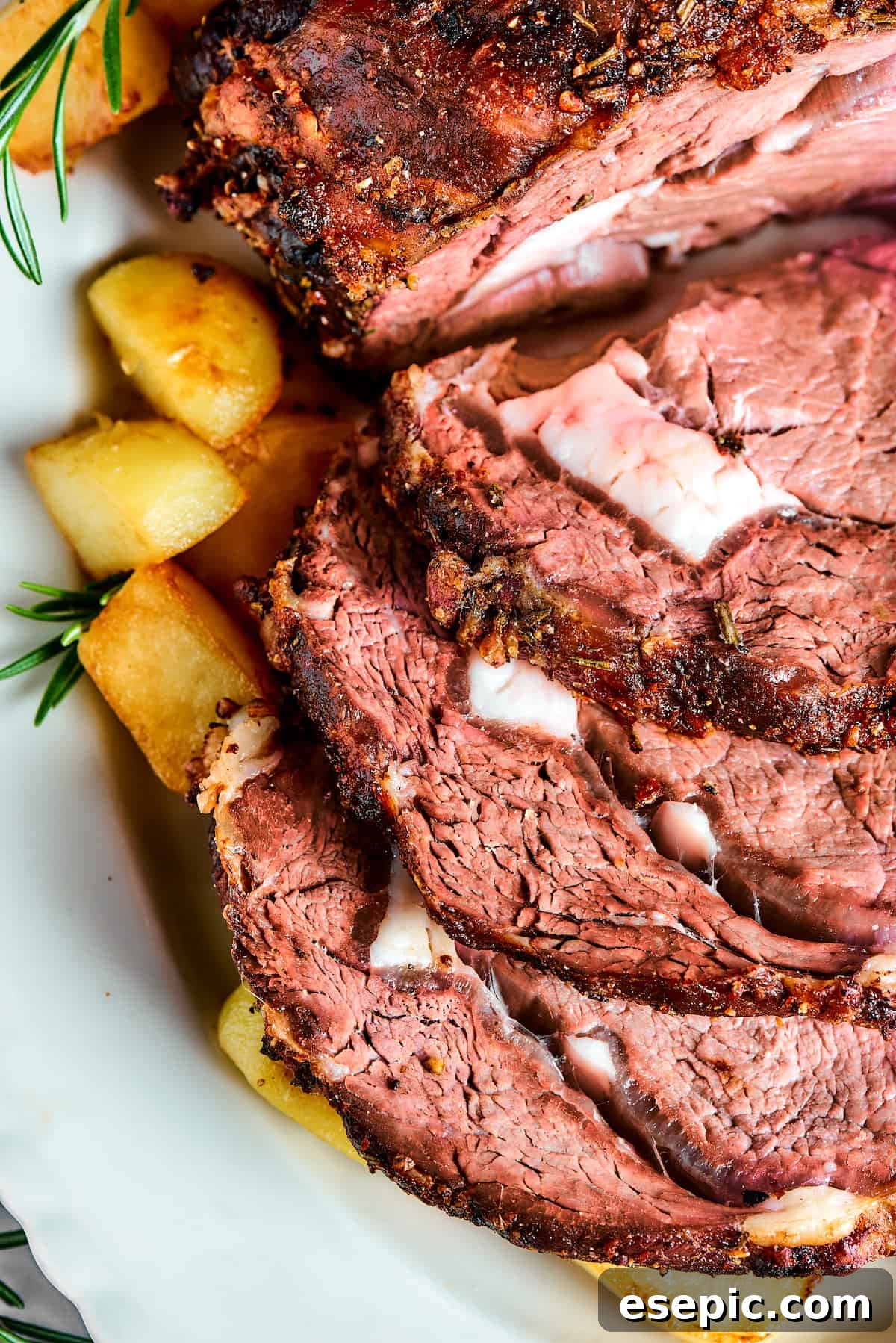
Prime rib, often referred to as a standing rib roast, holds a special place in the culinary world for good reason. At its core, it is a magnificent bone-in roast comprised of what we know and love as individual ribeye steaks. This makes it a highly prized cut, celebrated for its unparalleled tenderness, rich juiciness, and profound beef flavor. While some might champion the tenderloin, many connoisseurs consider prime rib the absolute pinnacle of beef cuts.
The magic of prime rib lies in its generous marbling – fine streaks of fat woven throughout the muscle. As the roast cooks, this marbling melts, basting the meat from within and imparting incredible moisture and flavor. The bone acts as a natural insulator, contributing to even cooking and enhancing the beef’s savory profile. If you’re a fan of a perfectly grilled ribeye or any premium steakhouse cut, you are guaranteed to fall in love with a well-prepared prime rib roast. It’s more than just a piece of meat; it’s a culinary experience, offering a sublime texture and depth of flavor that few other cuts can match.
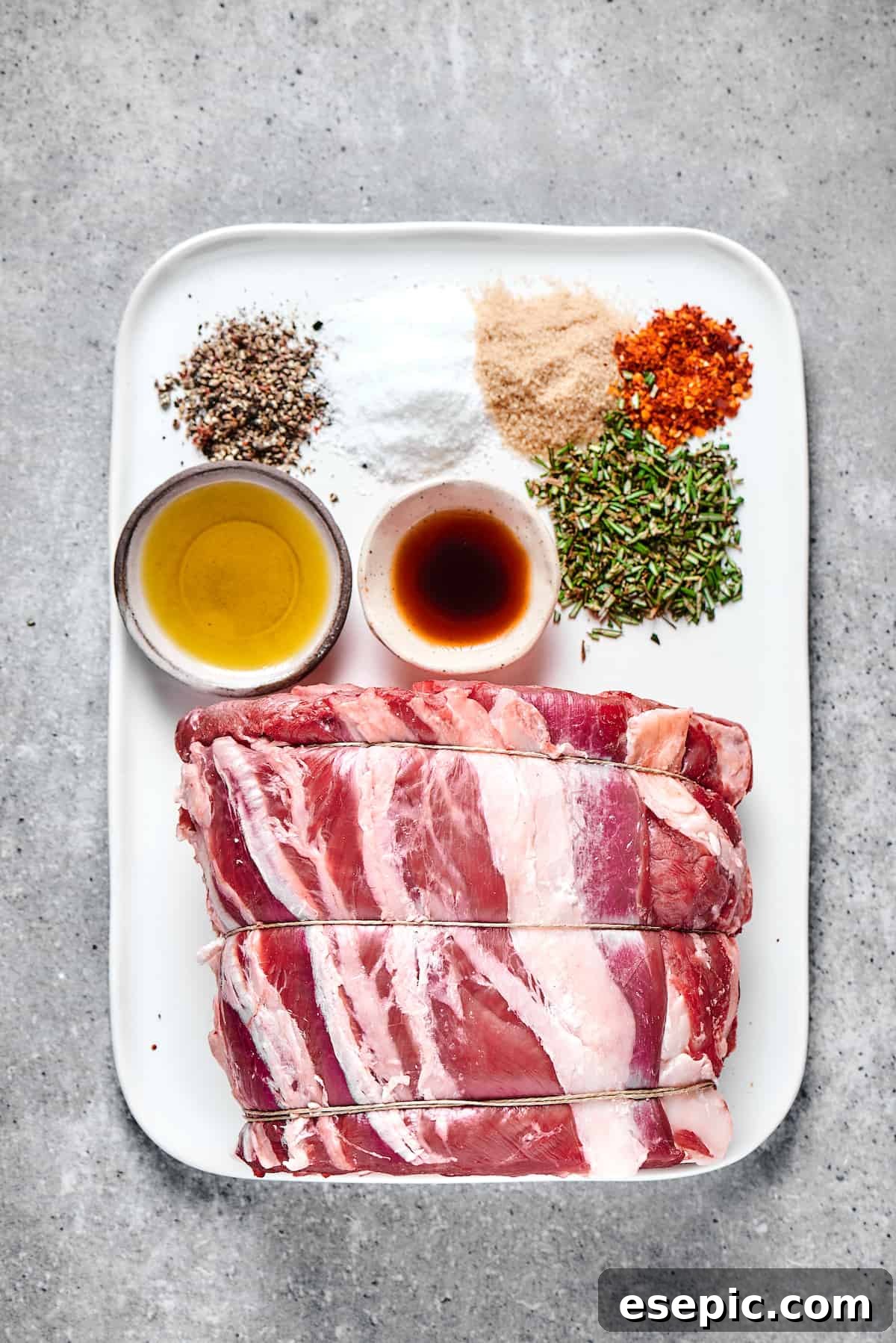
Essential Ingredients for Your Perfect Prime Rib
While a prime rib roast can be simply seasoned with just salt, why settle for good when you can achieve extraordinary? With just a few additional, readily available ingredients, you can transform your roast into a beautiful, show-stopping masterpiece adorned with a flavorful, herbaceous crust. Each ingredient plays a crucial role in enhancing the natural richness of the beef, contributing to a harmonious and unforgettable taste.
- Rib Roast: When shopping, look for labels such as “prime rib,” “standing rib roast,” or “rib roast.” For this recipe, we recommend a classic bone-in roast, ideally weighing between 4 to 5 pounds, which typically contains 3 to 4 ribs. The bone adds significant flavor and helps regulate heat during cooking.
- Olive Oil: A good quality extra virgin olive oil works wonderfully, but a lighter olive oil is also perfectly suitable. It helps the seasonings adhere to the meat and contributes to a beautiful crust.
- Worcestershire Sauce: This distinctly savory and tangy sauce is a powerhouse of flavor that complements the robust taste of beef perfectly. It adds an umami depth that is simply irreplaceable.
- Salt and Pepper: These fundamental seasonings are critical. We prefer sea salt for its texture and pure flavor, and freshly ground black pepper for its aromatic bite. Don’t be shy; a good amount of salt is key for seasoning a large roast.
- Sugar: Just a touch of sugar in the rub might seem unusual, but it plays a vital role. It aids in caramelization during the searing process, helping to develop that gorgeous, deep brown crust on the outside of the roast.
- Chili Flakes: Also known as crushed red pepper, these flakes add a subtle, warming kick that elevates the overall flavor profile without overpowering the beef. If you prefer no heat, you can easily omit this ingredient.
- Fresh Rosemary: The fragrant, piney notes of fresh rosemary are a classic pairing with beef. Strip the leaves from about four sprigs and chop them finely to distribute their aromatic essence evenly across the roast.
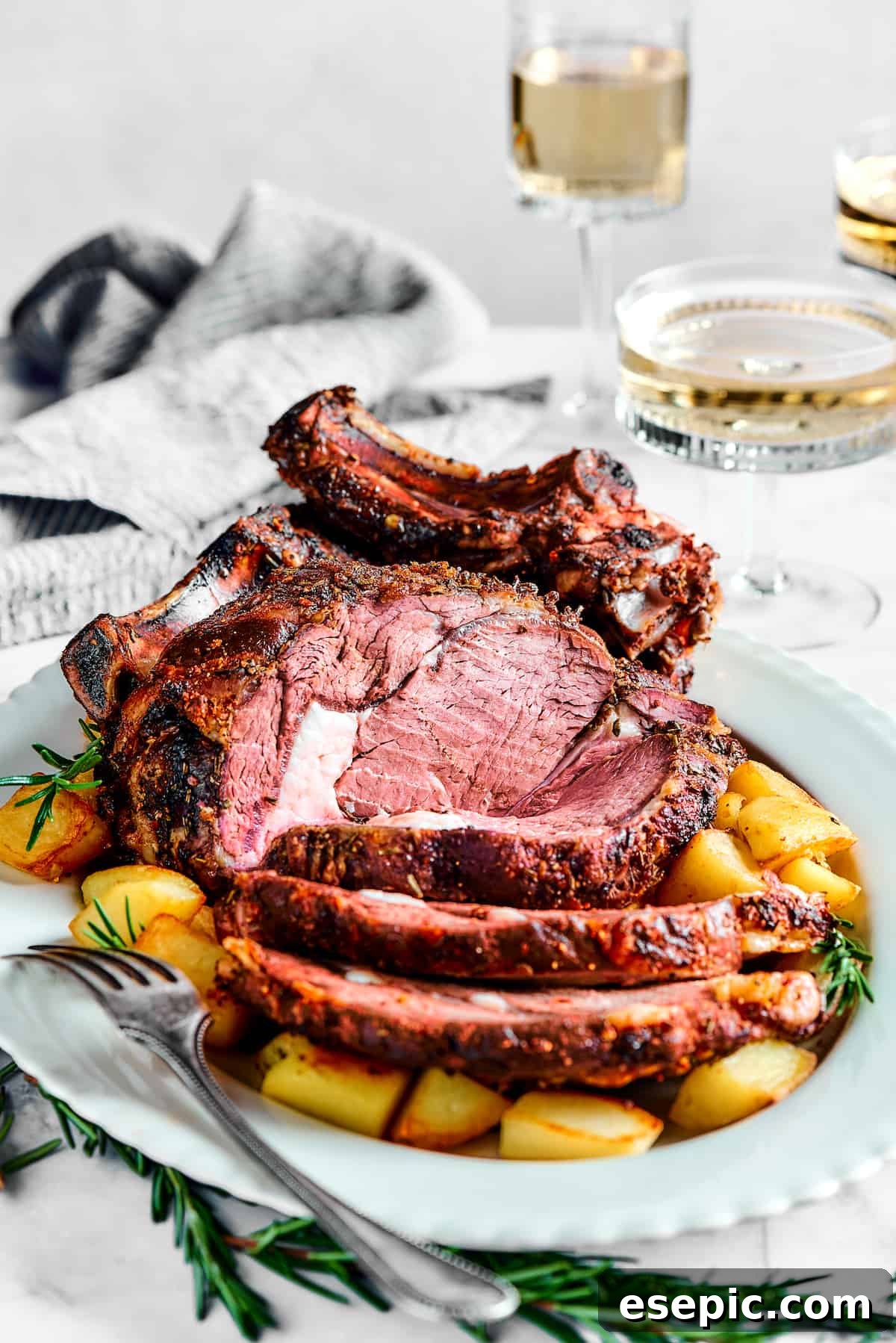
Mastering the Perfect Prime Rib with Reverse Sear
This recipe employs the highly effective reverse-sear method, a technique revered for producing incredibly tender and uniformly cooked meat with a beautifully crisp crust. The process involves cooking the roast slowly at a low temperature first, allowing it to reach an even internal doneness, and then finishing it with a short blast of high heat to develop that irresistible golden-brown exterior. Crucially, ample resting time is built into this method, so be sure to follow the resting periods for maximum juiciness.
- Prepare for Cooking: For the most consistent and tender results, it’s essential to start with a room-temperature roast. Approximately two hours before you intend to begin cooking, remove the prime rib from the refrigerator and place it on your kitchen counter. This crucial step allows the meat to warm up gently and ensures more even cooking. Give yourself plenty of time for this initial preparation.
- Season the Roast: Once the two hours are up, thoroughly pat the entire surface of the prime rib dry with paper towels. A dry surface is key to achieving a crispy crust. Preheat your oven to 250°F (120°C). Now, generously apply the seasonings: first, drizzle the olive oil and Worcestershire sauce over the roast, ensuring good coverage. Then, sprinkle the sea salt, freshly ground black pepper, a touch of sugar, chili flakes (if using), and the finely chopped fresh rosemary evenly over all sides of the roast. Gently massage the seasoning mix into the meat to form a cohesive, flavorful crust.
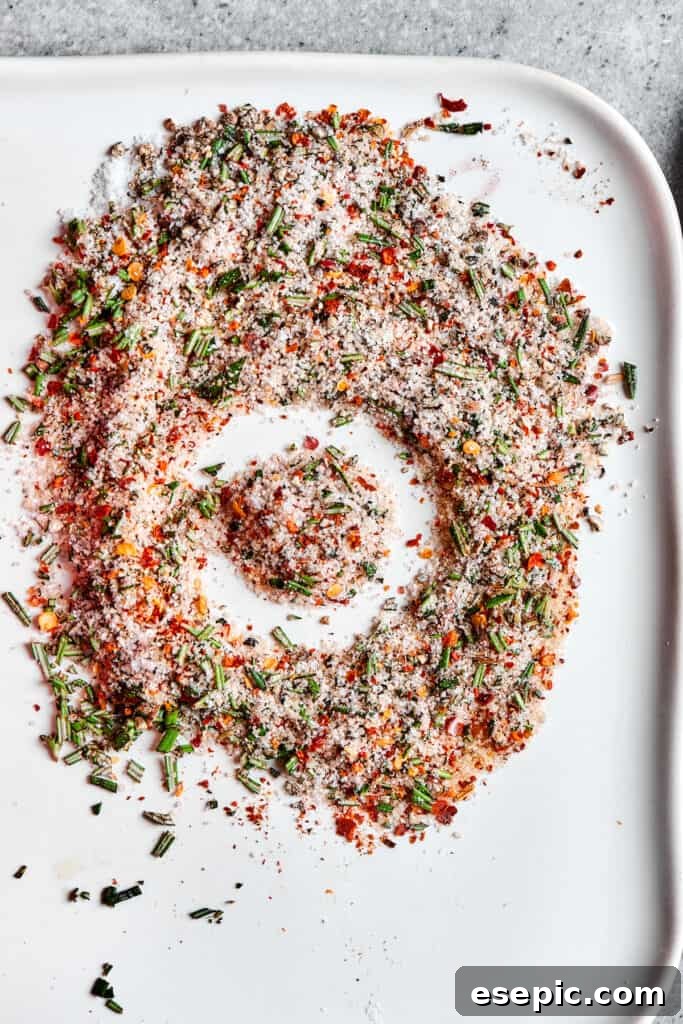
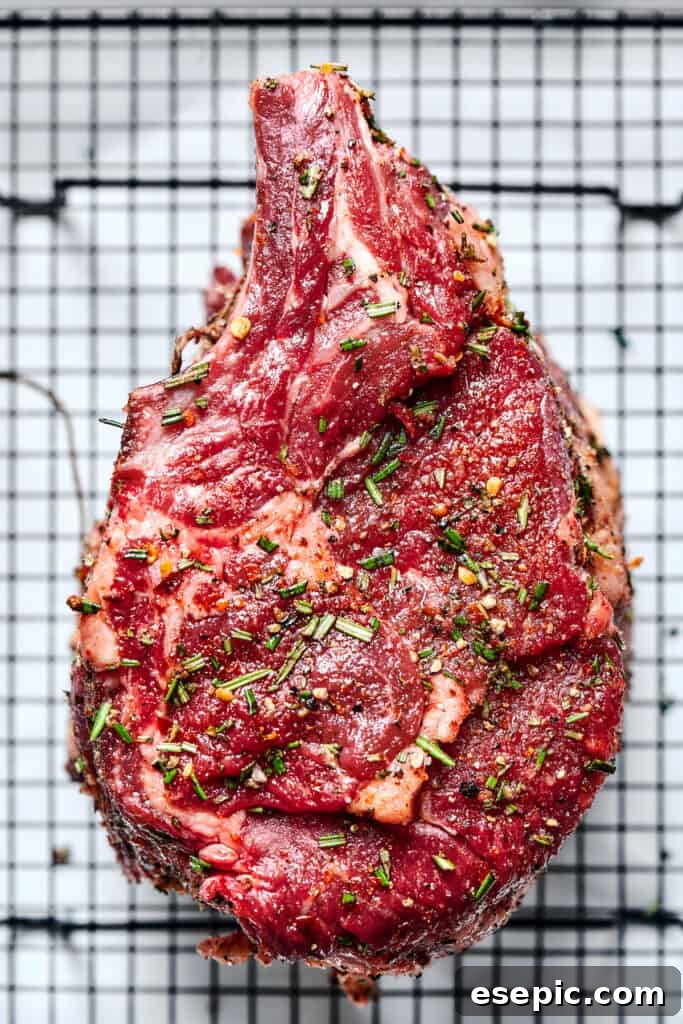
- Slow Roast at 250°F (120°C): Place the seasoned prime rib onto a wire rack set within a sturdy roasting pan. This setup allows for even air circulation around the roast. Transfer the pan to your preheated 250°F (120°C) oven. Roast for approximately two and a half hours, or until a reliable meat thermometer inserted into the thickest part of the meat (avoiding the bone) registers an internal temperature of 125°F (52°C). This low-and-slow cooking phase is crucial for achieving uniform doneness throughout.
- First Rest Period: Once the desired internal temperature is reached, carefully remove the roasting pan from the oven. Tent the roast loosely with aluminum foil to trap heat and moisture. Allow the prime rib to rest at room temperature for a minimum of 30 minutes. This resting period is vital; it allows the juices within the meat to redistribute, preventing them from escaping when you proceed to the next cooking stage.
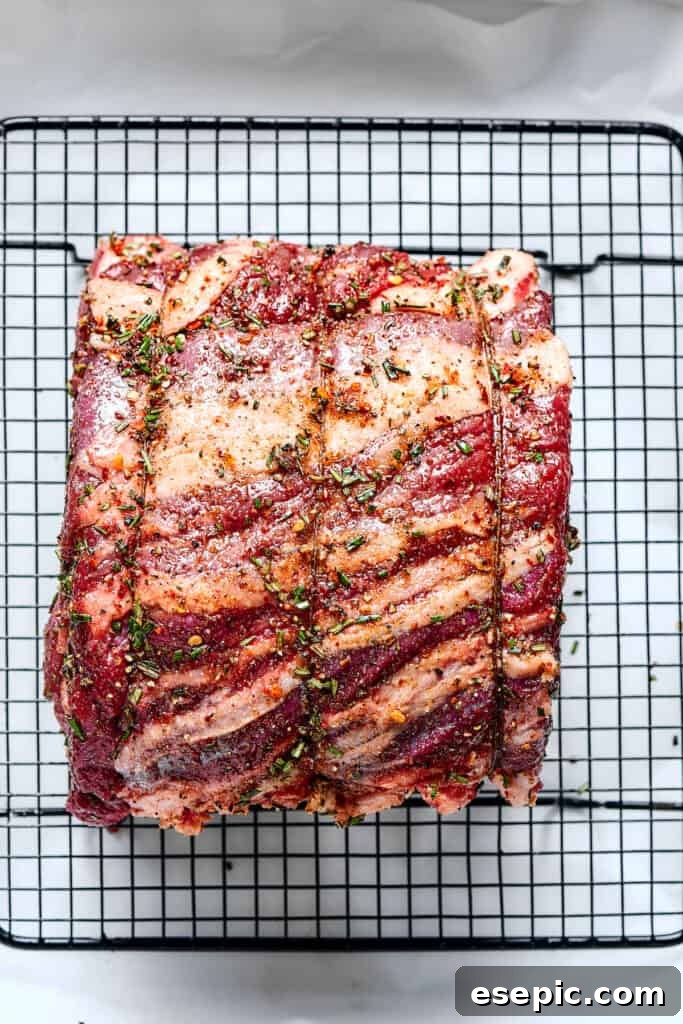
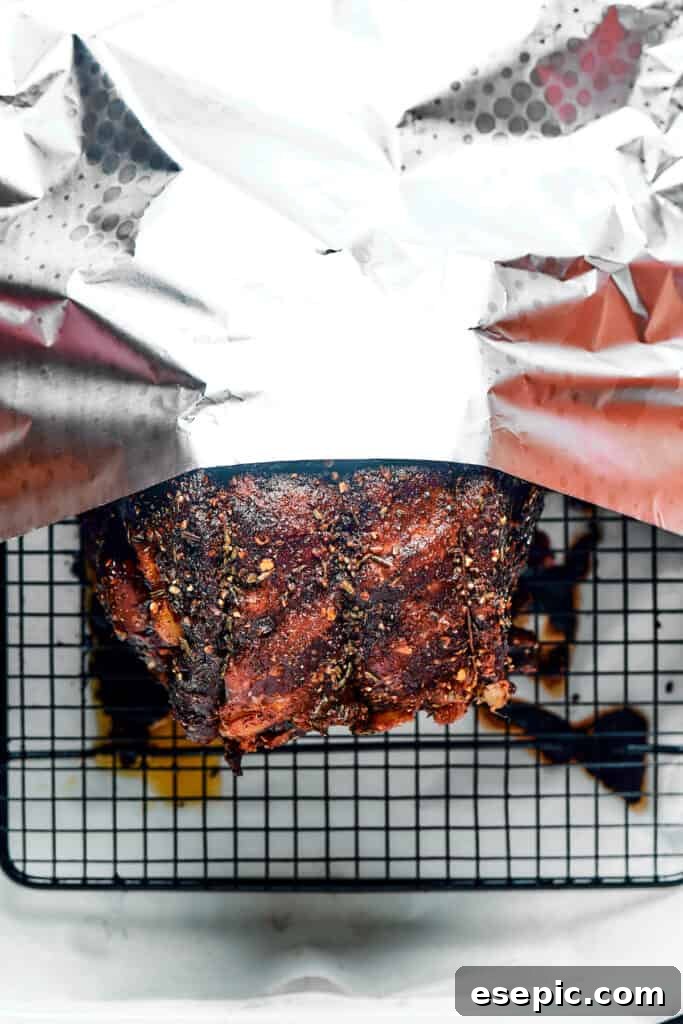
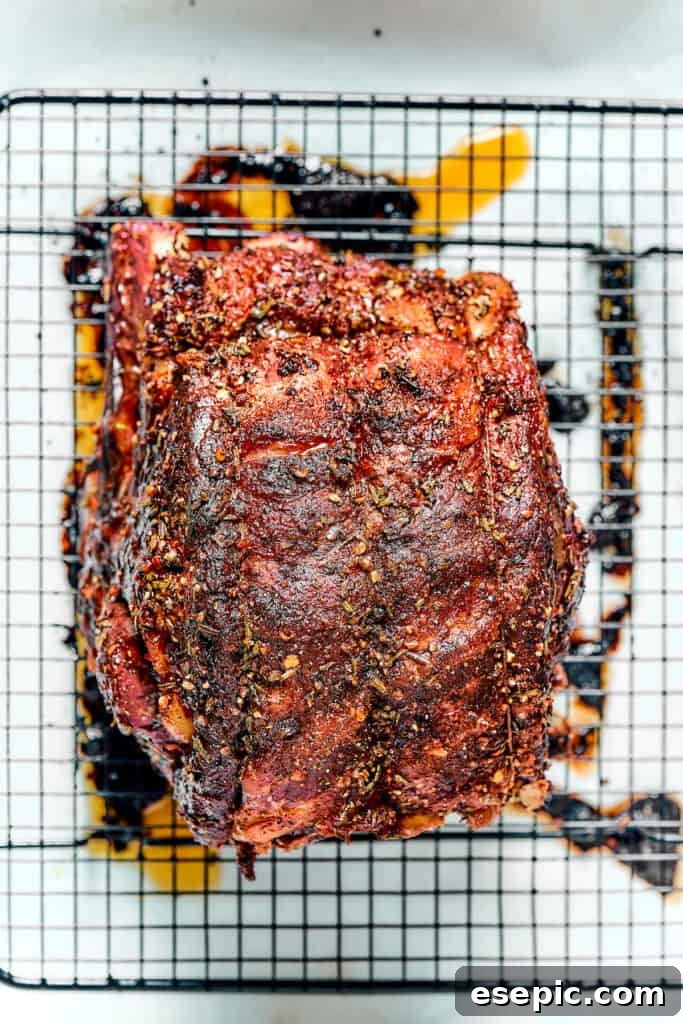
- High Heat Sear at 500°F (260°C): Approximately one hour before you plan to serve, remove the foil from the prime rib. Increase your oven temperature to a scorching 500°F (260°C). Once the oven is fully preheated, return the uncovered rib roast to the hot oven. This high-heat searing phase is quick but transformative, creating a deep brown, incredibly crisp, and flavorful crust on the outside of the meat. This process typically takes only 5 to 10 minutes, so watch it closely to avoid burning.
- Final Rest Before Carving: Once the crust is perfectly formed, take the prime rib out of the oven for the final time. Place it on a clean cutting board and allow it to rest, uncovered, for a full hour before you begin carving and serving. This second, longer rest is just as important as the first, ensuring that the internal temperature stabilizes and the juices are fully reabsorbed, guaranteeing the most tender and succulent slices possible.
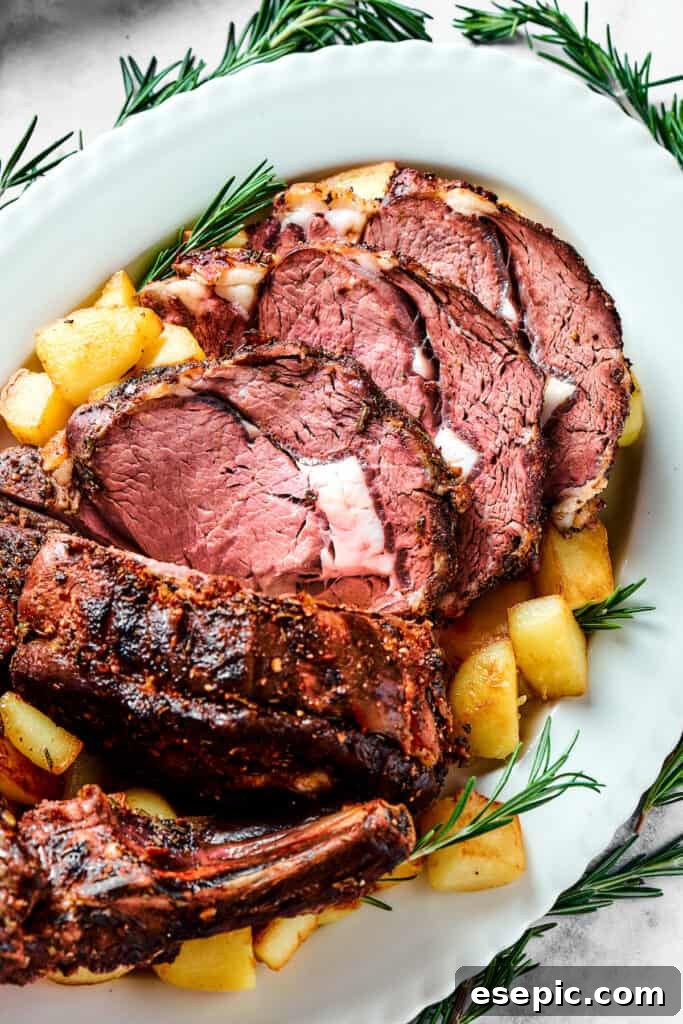
Achieving the Ideal Doneness for Prime Rib
Given the juicy and rich nature of prime rib, with its perfect balance of meat and marbling, the goal is typically to cook it to a medium-rare or medium doneness. This ensures optimal tenderness and flavor. My personal preference leans towards a glorious medium-rare, showcasing a vibrant pink center, but a solid medium is also an excellent choice, offering a slightly firmer texture while retaining much of its moisture.
While you can certainly cook prime rib to a medium-well, a word of caution: this magnificent roast can easily dry out if overcooked. The beauty of prime rib truly shines when its internal temperature allows the fat to render and the muscle fibers to remain supple. Sticking to medium-rare or medium will yield the most luxurious and delicious results, making your holiday feast truly memorable.
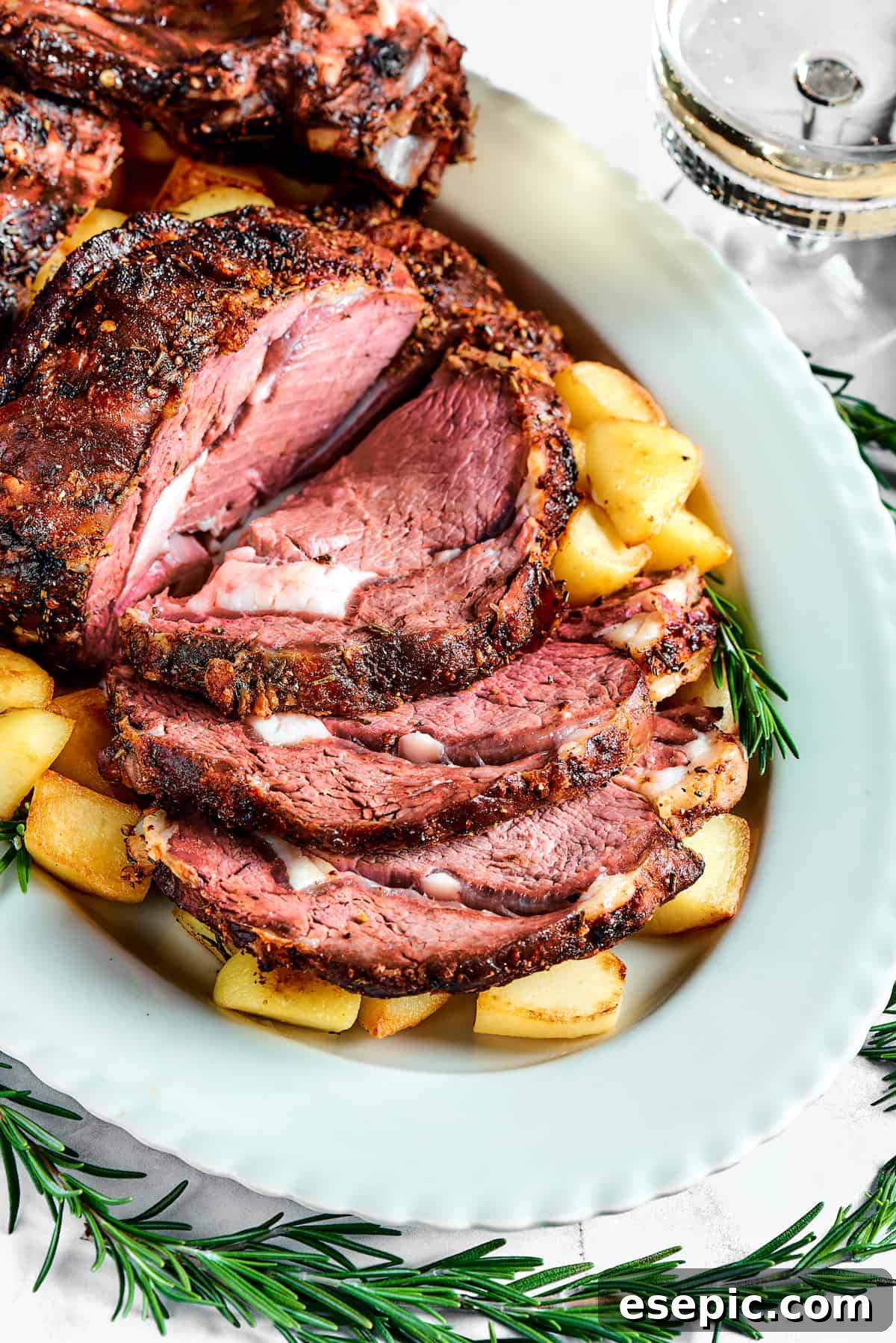
Expert Tips for a Flawless Prime Rib Roast
The success of a truly exceptional prime rib often hinges on one critical factor: cooking the meat to perfection without letting it become overdone. This balance ensures maximum juiciness and tenderness. Here are my top tips to help you achieve that perfectly cooked prime rib roast, impressing everyone at your table.
- Invest in a Quality Meat Thermometer: A reliable meat thermometer isn’t just a handy gadget; it’s absolutely essential when preparing a significant main course like prime rib. Without it, you’re left to guess the internal doneness, risking a dry, overcooked roast or, worse, undercooked meat. Avoid the temptation to cut into the roast to check, as this allows precious juices to escape. Instead, insert a good instant-read meat thermometer into the thickest part of the meat, away from the bone, for accurate readings.
- Understand Carryover Cooking: This is a crucial concept. Remove your prime rib from the oven when its internal temperature is about 3 to 5 degrees Fahrenheit (1.5 to 2.5 degrees Celsius) *below* your desired final doneness. As the roast rests on the counter, its internal temperature will continue to rise due to residual heat, bringing it up to those last few degrees for perfect doneness. This is why the resting periods are so vital.
- Target Temperatures for Doneness:
- 125°F – 130°F (52°C – 54°C): Medium-Rare. This is the sweet spot for many, delivering a beautiful rosy pink center and exceptional tenderness. Remove from oven at 120-125°F for carryover cooking.
- 135°F – 140°F (57°C – 60°C): Medium. Still delightfully pink and juicy, but with a slightly firmer texture than medium-rare. Remove from oven at 130-135°F.
- 145°F (63°C) and Beyond: Medium-Well to Well-Done. While technically achievable, pushing beyond 140-145°F enters “dangerous territory” for prime rib. The meat will lose much of its pink color and can quickly become dry and less flavorful. It’s best to aim for medium-rare or medium to truly appreciate this cut.
- Pat Dry for a Superior Crust: Before applying any seasoning, ensure the entire surface of the prime rib is as dry as possible using paper towels. Moisture on the surface inhibits the Maillard reaction (the browning process), which is responsible for creating that irresistible, crispy crust.
- Tie the Roast (Optional but Recommended): If your butcher hasn’t already, tying the roast with butcher’s twine at even intervals helps the roast maintain a uniform shape, ensuring even cooking. This is especially useful for roasts with loose rib bones.
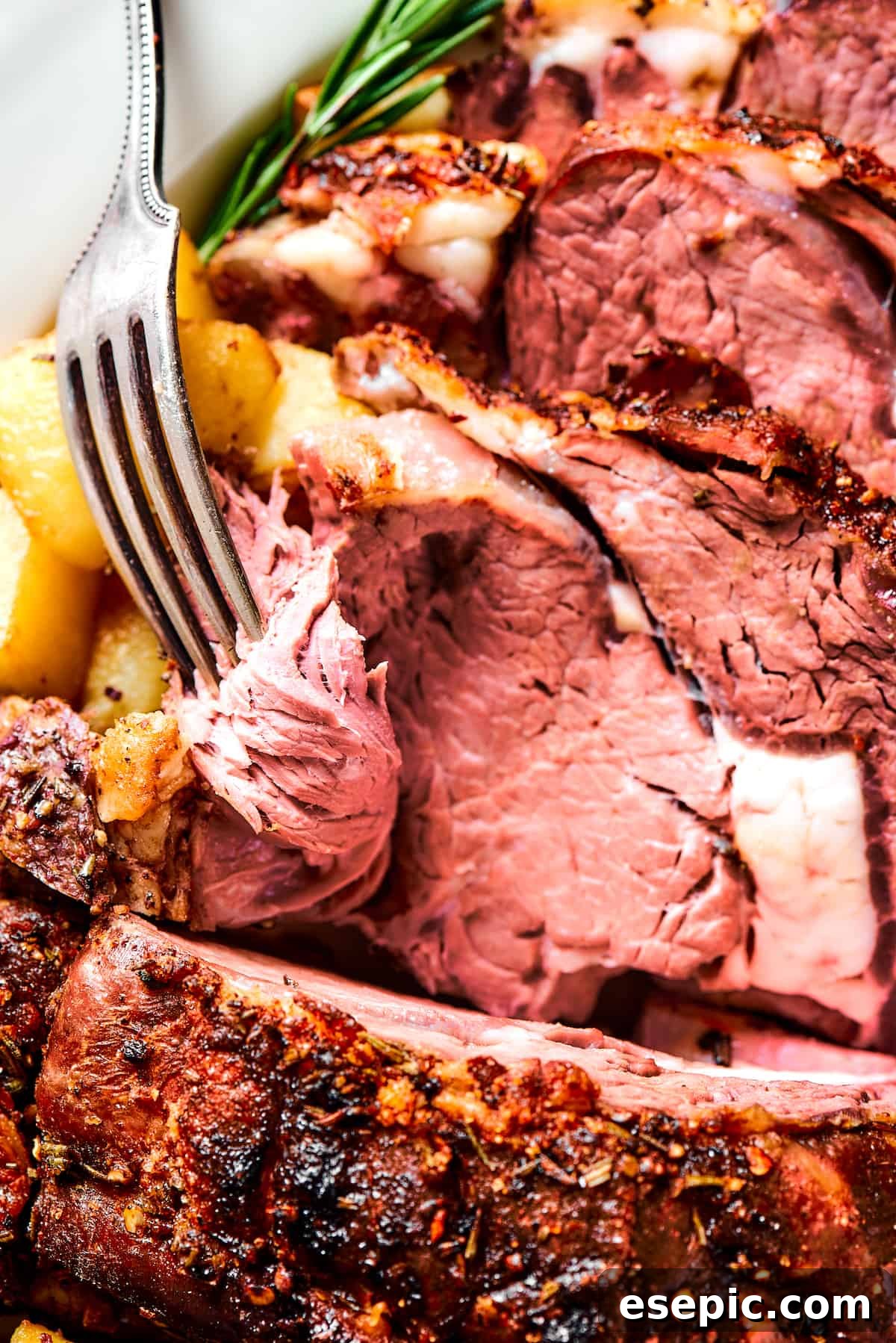
Delicious Side Dishes to Complement Your Prime Rib
When it comes to pairing side dishes with prime rib, you truly can’t go wrong. Its rich, savory flavor harmonizes beautifully with a wide array of accompaniments. Whether you prefer classic comfort or fresh vegetables, almost anything complements this magnificent roast. These hearty, holiday-worthy ideas are just the beginning of the delicious possibilities, designed to elevate your festive meal even further!
- Creamy Macaroni and Cheese: A timeless favorite, macaroni and cheese isn’t just for casual weeknights; when done right, it transforms into a luxurious, velvety, and cheesy masterpiece worthy of any holiday table. A rich, baked macaroni and cheese offers a comforting contrast to the robust beef.
- Crispy Roasted Brussels Sprouts: If you had told me as a child that I would grow up to adore Brussels sprouts, I would have thought you were mistaken! But these charming “mini cabbages” have evolved considerably. Unlike their often-bitter steamed counterparts, roasted Brussels sprouts are truly irresistible. Crispy and caramelized on the outside, meltingly tender on the inside, they offer a delightful sweetness and slight bitterness that perfectly cuts through the richness of the prime rib.
- Fluffy Homemade Crescent Rolls: Better make a double batch, because nothing disappears faster at a dinner table than a basket of freshly made, warm crescent rolls! Their soft, buttery texture and delicate flavor are ideal for soaking up any delicious pan juices or simply enjoying on their own. If you are lucky enough to have any leftovers, they make a simply indulgent breakfast the next morning, perhaps with a dollop of jam.
- Garlic Mashed Potatoes: A classic for a reason. Creamy, buttery mashed potatoes infused with garlic are the quintessential accompaniment to prime rib. They provide a smooth, comforting base that contrasts beautifully with the tender beef.
- Asparagus with Lemon Butter: For a touch of freshness and vibrant color, steamed or roasted asparagus tossed in a light lemon butter sauce offers a wonderful counterpoint to the richness of the main course.
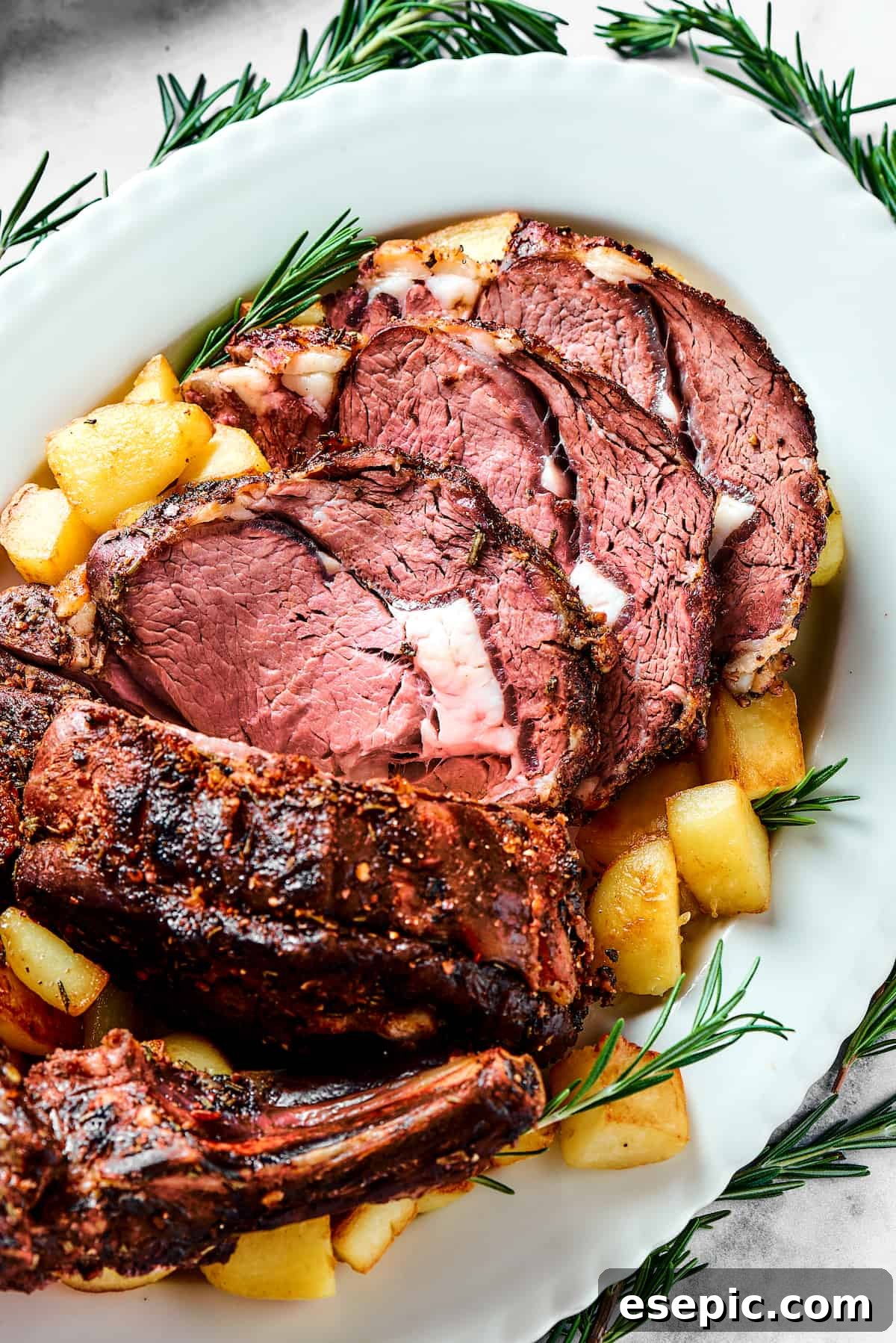
Storing and Reheating Your Prime Rib Leftovers
Properly storing and reheating prime rib leftovers means you can savor that delicious holiday flavor for days to come. The key is to protect the meat from drying out and maintain its tender texture.
- Storing Leftovers: The most important rule for storing prime rib, especially if you plan to freeze it, is to wrap it very tightly. Once the meat has cooled completely to room temperature (this is important to prevent condensation and bacterial growth), wrap individual slices or larger sections in plastic wrap. For added protection, place the plastic-wrapped meat into an airtight container or a heavy-duty freezer bag. Stored this way, prime rib leftovers will remain fresh in the refrigerator for up to 3 to 5 days.
- Reheating Instructions: The goal when reheating prime rib is to warm it through gently without continuing to cook it, which can lead to dryness.
- Preheat your oven to a low 250°F (120°C).
- Place the prime rib slices or roast sections in a baking dish.
- Add a splash of water or beef broth to the bottom of the dish; this creates a steamy environment that helps keep the meat moist.
- Cover the baking dish tightly with aluminum foil.
- Bake until the meat is just heated through. The exact time will depend on the thickness of the slices, your oven’s calibration, and the material of your baking dish, but typically ranges from 10 to 20 minutes for slices, or longer for larger pieces. Use a meat thermometer to check for an internal temperature of about 100-110°F (38-43°C) for warm, juicy meat without further cooking.
Can You Freeze Leftover Prime Rib? Absolutely!
Yes, you can absolutely freeze leftover prime rib, allowing you to enjoy this delicious meal long after your holiday feast. Proper freezing techniques are essential to prevent freezer burn and preserve the meat’s quality.
- Freezing for Best Quality:
- First, ensure the meat has completely cooled.
- Wrap individual slices or small portions of prime rib tightly in plastic wrap. This first layer is crucial for preventing air exposure.
- Add a second layer of protection: either wrap the plastic-wrapped portions in heavy-duty aluminum foil or place them inside a freezer-safe bag, pressing out as much air as possible before sealing.
- Label the packages clearly with the date.
- Store in the freezer for up to three months. While the meat may technically last longer, its quality (texture and flavor) can start to degrade past this point.
- Thawing Frozen Prime Rib: For optimal results, thaw frozen prime rib slowly. Transfer the frozen meat from the freezer to your refrigerator and allow it to thaw overnight, or for at least 12-24 hours, depending on the size of the portion. Once thawed, reheat according to the instructions above.
Prime Rib Recipe
Making the perfect Prime Rib is easy! A zesty combination of rosemary, Worcestershire sauce, and chili flakes enhances the flavor of this holiday classic, while an easy reverse-sear roasting technique keeps things juicy and tender.
Recipe Details
- Author: Katerina | Easy Weeknight Recipes
- Prep Time: 2 hours 10 minutes
- Cook Time: 2 hours 40 minutes
- Resting Time: 2 hours 30 minutes
- Total Time: 5 hours
- Servings: 8
Ingredients
- 4 to 5 pounds bone-in standing rib roast, about 3 to 4 ribs
- 2 tablespoons olive oil
- 1 tablespoon Worcestershire sauce
- 1½ tablespoons sea salt
- 1 teaspoon fresh ground black pepper
- ½ tablespoon sugar
- ½ teaspoon red chili flakes (optional)
- 4 sprigs fresh rosemary, leaves only, finely chopped
Instructions
- Take the prime rib out of the fridge 2 hours before cooking to bring it to room temperature.
- Preheat the oven to 250°F (120°C).
- Pat the roast dry with paper towels.
- Rub olive oil and Worcestershire sauce over the roast, then season generously with salt, ground black pepper, sugar, chili flakes (if using), and chopped rosemary leaves, ensuring all sides are covered.
- Place the prime rib roast in a roasting pan fitted with a wire rack.
- Roast at 250°F (120°C) for 2 hours and 30 minutes, or until the internal temperature reaches 125°F (52°C) in the thickest part of the meat. Use an Instant Read Meat Thermometer to check for doneness.
- Remove the prime rib from the oven, cover loosely with foil, and let it rest for 30 minutes.
- Meanwhile, increase the oven temperature to 500°F (260°C).
- Uncover the prime rib and put it back in the hot oven.
- Roast until browned and crisp on the outside, about 5 to 10 minutes. Watch carefully to prevent burning.
- Remove from the oven and let it rest for a full 1 hour before cutting and serving. This resting period is crucial for juicy results.
Equipment
- Roasting Pan
- Aluminum Foil
- Instant Read Meat Thermometer
- Carving Set
Notes
- Meat Thermometer: An accurate meat thermometer is vital for cooking prime rib to perfection. It eliminates guesswork and prevents over or undercooking.
- Doneness: Remove the prime rib from the oven when it is about 3 to 5 degrees Fahrenheit (1.5 to 2.5 degrees Celsius) below your target temperature, as it will continue to cook while resting (carryover cooking).
- Prime Rib Temperatures: Aim for 125˚F to 130˚F (52˚C – 54˚C) for a perfect medium-rare, which yields a rosy pink interior. You can cook it a bit more, up to 140˚F (60˚C) for a medium doneness. We advise against going beyond 145˚F (63˚C) as the meat can become dry.
Nutrition (Estimate per serving)
- Calories: 713kcal
- Carbohydrates: 1g
- Protein: 31g
- Fat: 64g
- Saturated Fat: 26g
- Polyunsaturated Fat: 3g
- Monounsaturated Fat: 29g
- Cholesterol: 137mg
- Sodium: 1439mg
- Potassium: 524mg
- Fiber: 0.1g
- Sugar: 1g
- Vitamin A: 42IU
- Vitamin C: 0.3mg
- Calcium: 22mg
- Iron: 3mg
Nutritional information is an estimate and provided as a courtesy. Values may vary according to the ingredients and tools used. Please use your preferred nutritional calculator for more detailed information.
More Inspiring Holiday Dinner Ideas
If you’re planning a grand holiday feast or simply seeking more impressive main courses, consider these other delectable options that are sure to impress your guests and make any celebration truly special.
- Christmas Ham with Brown Sugar Glaze: A sweet and savory classic that’s always a crowd-pleaser, perfect for a festive spread.
- Perfect Roast Turkey with Stuffing: The quintessential holiday bird, cooked to juicy perfection with aromatic stuffing.
- Classic Rack of Lamb: An elegant and flavorful option that brings a touch of sophistication to your dinner table.