

Ever wondered how to create a culinary masterpiece that’s both simple and incredibly satisfying? Look no further than the humble yet versatile frittata! This mouthwatering recipe for the best Spinach, Bacon, and Potato Frittata will guide you through every step, proving just how easy it is to whip up a truly delicious meal. Prepare to welcome your new go-to for breakfast, brunch, or even a delightful dinner.

The Ultimate Easy Frittata: A Symphony of Savory Flavors!
For many home cooks, frittatas are a true culinary love language. There’s something inherently comforting and utterly delicious about a wholesome, “crustless quiche” crafted with fluffy eggs, creamy milk, and an array of delectable mix-ins. If you’re new to the world of frittatas, get ready for a delightful revelation – this recipe for a Spinach, Bacon, and Potato Frittata is designed to be a game-changer!
The combination of spinach, crispy bacon, and tender potatoes in a frittata is, without a doubt, one of my all-time favorite flavor profiles. The smoky, salty notes of the bacon perfectly complement the earthy freshness of the spinach and the satisfying texture of the potatoes. All these incredible ingredients are harmoniously blended into a rich, creamy, scrambled-egg base, creating a dish that’s bursting with farmhouse-style goodness. It’s a hearty yet surprisingly light meal that transitions effortlessly from a robust breakfast to a elegant brunch or a simple, satisfying dinner. If this symphony of flavors has captured your imagination, then it’s time to grab your trusty cast-iron skillet, and let’s dive into making this exceptional frittata!

Frittata vs. Omelet: Understanding the Key Differences
It’s a common question: “Is a frittata just another name for an omelet?” While both dishes share eggs as their primary ingredient, they possess distinct characteristics that set them apart. Understanding these differences is key to appreciating the unique charm of a frittata.
The most significant distinction lies in their cooking methods. Omelets are typically cooked entirely on the stovetop, often requiring a quick flip or fold to encase their fillings. Frittatas, on the other hand, begin their journey on the stovetop but finish baking in the oven. This two-stage cooking process eliminates the need for flipping, resulting in a beautifully puffed, golden-brown top and a uniformly cooked interior. The oven finish also allows a frittata to achieve a denser, more cohesive texture compared to the delicate, folded structure of an omelet. While some modern, “cheater” frittata recipes might suggest flipping the dish for those without ovenproof skillets, the traditional method involves no flipping at all, yielding a more rustic and robust creation.
Another fundamental difference is how the “fillings” are incorporated. Omelets are designed to wrap gracefully around their chosen ingredients, keeping them neatly tucked inside. Frittatas, however, have their extra ingredients – whether it’s vegetables, meats, or cheeses – mixed directly into the egg base. This allows for a more even distribution of flavors and textures throughout the dish. This integrated approach makes frittatas incredibly versatile and an excellent way to utilize leftovers, from cooked pasta and roasted vegetables to diced meats, transforming humble scraps into a hearty, easy-to-make meal. Originating from Italy, frittatas embrace a more rustic, free-form style, making them perfect for feeding a family or a crowd, while omelets, typically French in origin, are often regarded as a more individual and refined serving.
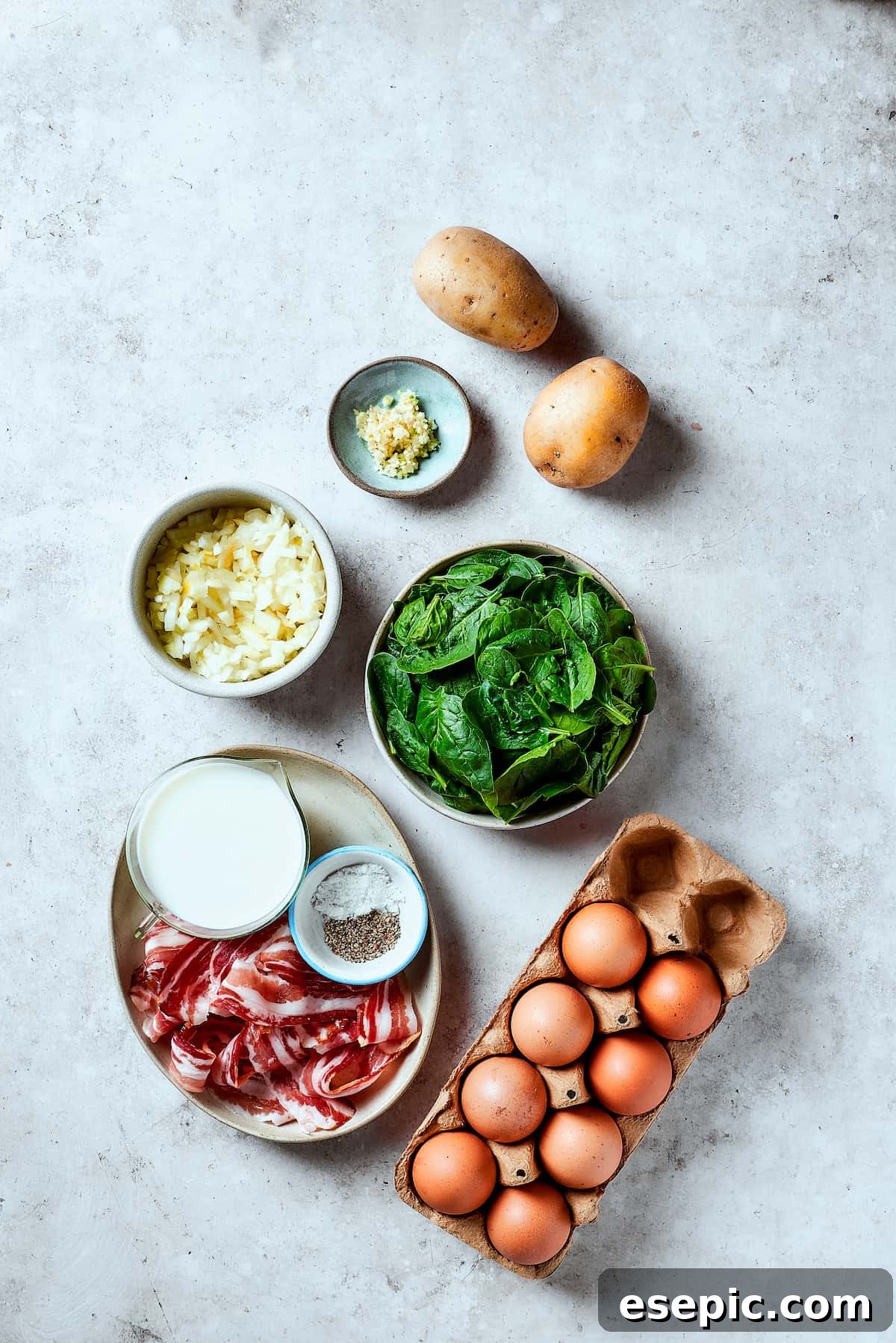
Essential Ingredients for Your Perfect Frittata
Crafting this delightful frittata requires only a few basic kitchen staples, making it a convenient and budget-friendly meal. The beauty of this recipe lies in its simplicity, relying on fresh, high-quality ingredients to deliver maximum flavor. Here’s a detailed look at what you’ll need to create this savory sensation:
- Potatoes: You’ll need a couple of medium-sized potatoes, peeled and diced into small, uniform pieces. Russet, red, yellow, or white potatoes all work beautifully, lending a satisfying heft and comforting texture to the frittata. Pre-cooking them ensures they become perfectly tender within the egg mixture.
- Bacon: Choose your favorite type of bacon – whether it’s thick-cut, thin-cut, applewood smoked, or another variety. The bacon not only provides a delicious smoky, salty flavor and crispy texture but its rendered fat will also be used to sauté the other vegetables, infusing the entire dish with an incredible depth of flavor.
- Eggs: Eight large, whole eggs form the rich, custardy base of our frittata. If you’re using medium-sized eggs, consider adding an extra one or two to ensure the right volume and consistency for a perfectly set frittata. Eggs are the protein powerhouse of this dish, binding all the components together.
- Milk: Full-fat milk is recommended for its richness, contributing to a soft and tender frittata. For an even more luxurious, velvety texture, you can opt for half-and-half, creme fraiche, or a touch of sour cream. The dairy helps to create that signature creamy consistency and prevents the eggs from becoming rubbery.
- Salt and Pepper: Essential seasonings to enhance all the natural flavors. Freshly ground black pepper always makes a difference!
- Onion: One small onion, chopped, will add a foundational layer of savory sweetness to the frittata. Any color onion works fine, though yellow or white onions are common choices for their balanced flavor.
- Garlic: Fresh, minced garlic is key for an aromatic kick. If you’re not a fan of mincing, using a garlic press is a quick and easy alternative to get that fragrant flavor into your dish.
- Spinach: Fresh spinach, roughly chopped, brings vibrant color, a touch of earthiness, and essential nutrients. It wilts down beautifully into the egg mixture, adding moisture and a tender texture.
- Cheese: Grated Parmesan cheese adds a salty, umami depth and a delightful cheesy crust to the top of the frittata as it bakes. You can also experiment with other cheeses like cheddar, Gruyere, or Monterey Jack for different flavor profiles.
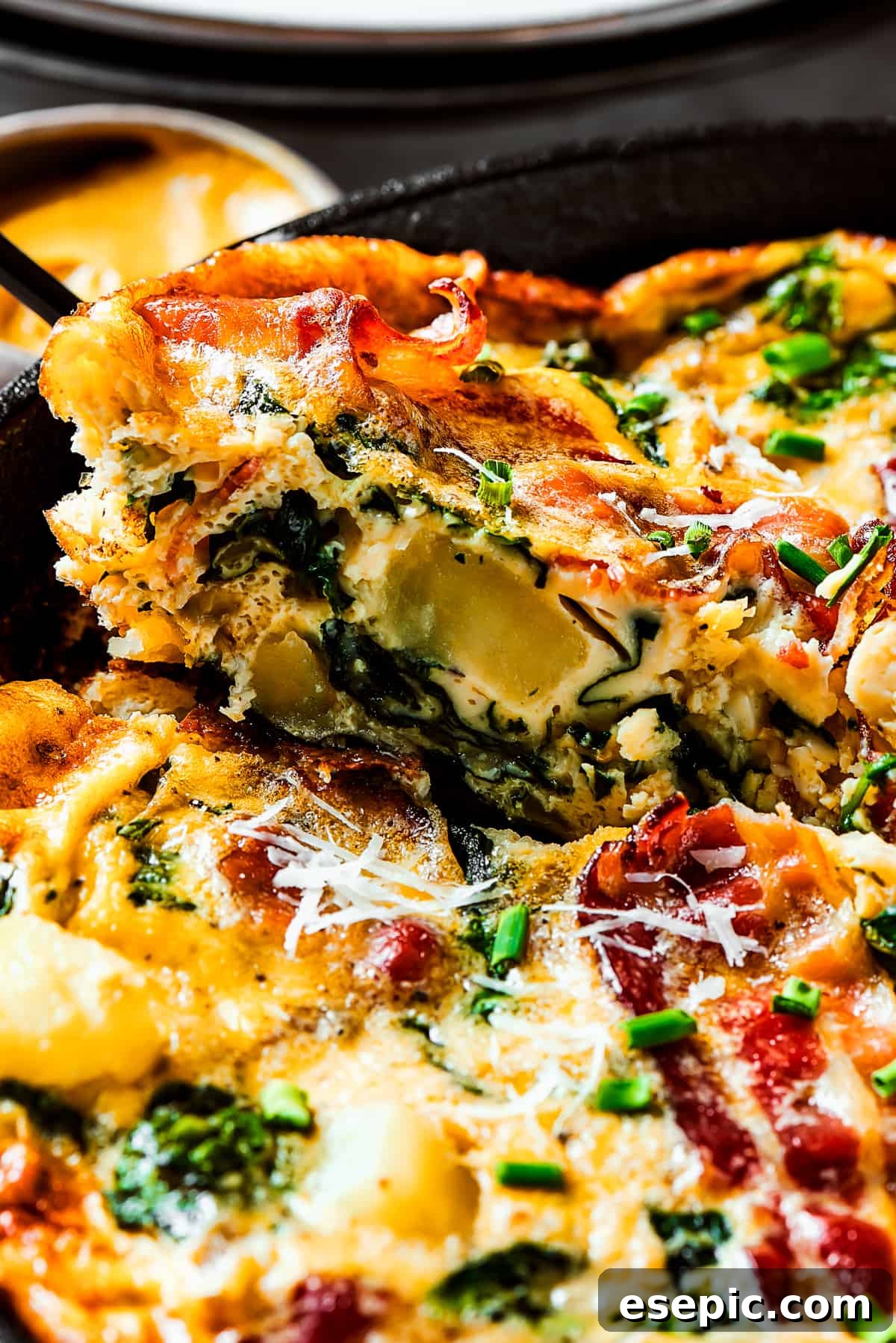
Step-by-Step Guide: Crafting Your Delicious Frittata
Now that we’ve gathered our stellar ingredients, let’s walk through the simple yet effective steps to bring this amazing Spinach, Potato, and Bacon Frittata to life. Remember, precise preparation ensures the best outcome, especially with the potatoes!
- Prepare and Pre-Cook the Potatoes: Begin by preheating your oven to 350°F (175°C). While the oven comes to temperature, place your diced potatoes in a medium pot and cover them with water. Add a generous pinch of salt to the water. Bring the pot to a rolling boil and cook the potatoes for 7 to 10 minutes, or until they are just barely tender when pierced with a fork. This crucial step ensures the potatoes are fully cooked within the relatively short frittata baking time. Drain the potatoes thoroughly and set them aside.
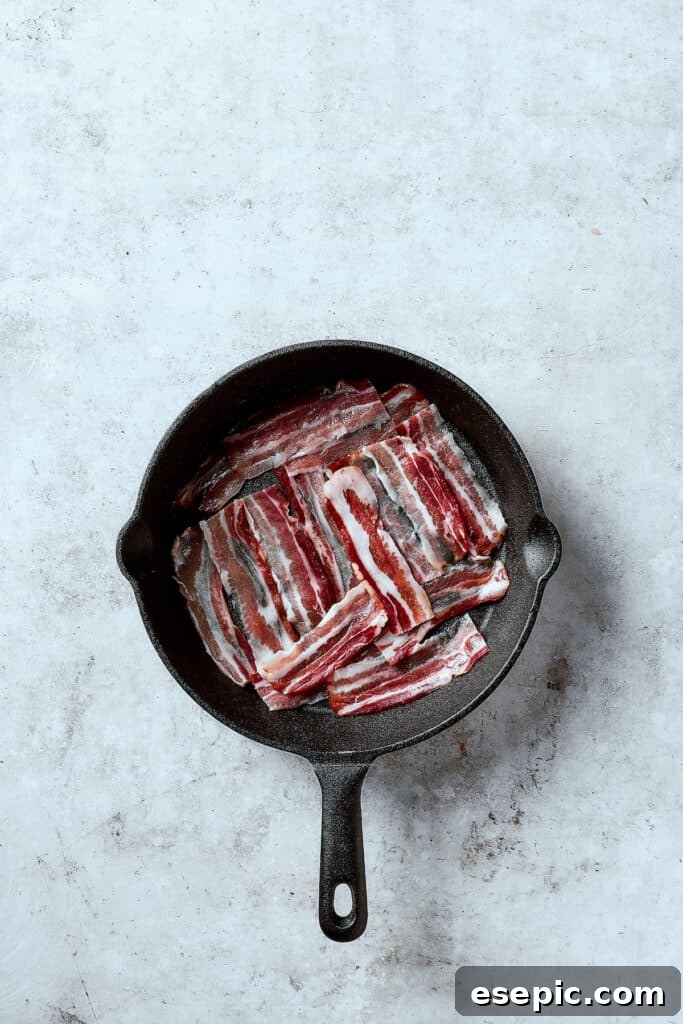
- Crisp the Bacon: Next, place your ovenproof skillet (a well-seasoned cast-iron skillet is ideal, but an ovenproof stainless steel pan without nonstick coating or plastic handles works too) over medium heat. Add your bacon slices and cook them until they reach your desired level of crispness – golden and crunchy is often preferred for frittatas. Remove the cooked bacon from the skillet and transfer it to a plate lined with paper towels to drain excess fat. Critically, leave the rendered bacon grease in the skillet; this flavorful fat will be the foundation for sautéing your other vegetables.
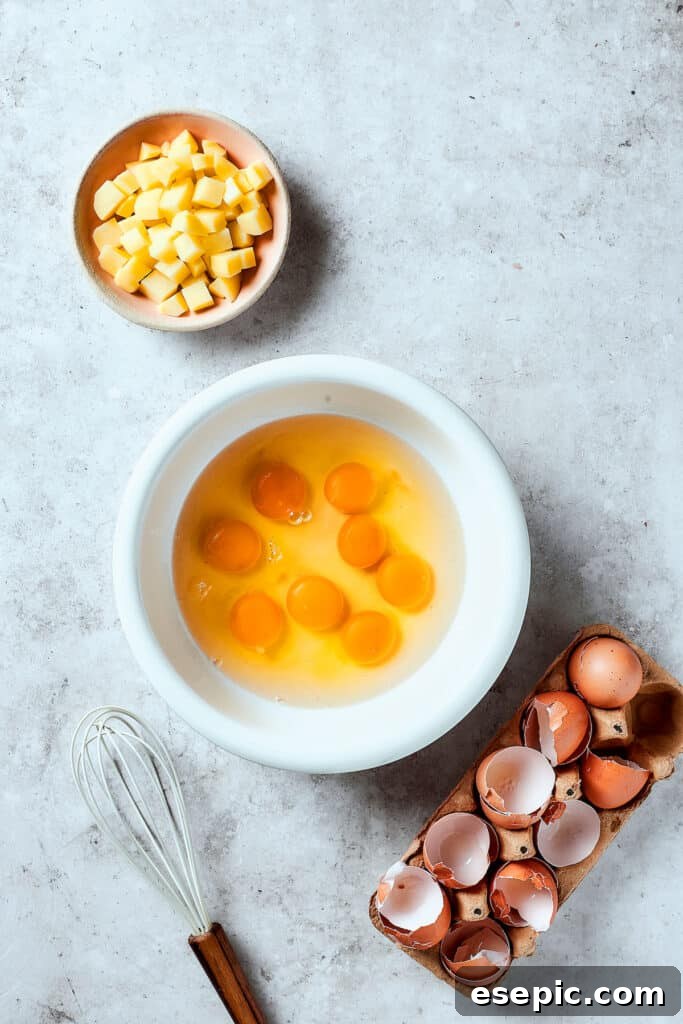
- Whisk the Egg Mixture: In a large mixing bowl, combine the eight large eggs, milk, a teaspoon and a half of salt, and half a teaspoon of fresh ground black pepper. Whisk vigorously until the mixture is well combined and slightly frothy. This aeration helps create a lighter, fluffier frittata. Set this flavorful egg mixture aside for a moment.
- Sauté the Aromatics and Spinach: Return to the skillet with the reserved bacon grease. Heat it over medium heat. Add the finely chopped onion and sauté for 2 to 3 minutes, or until the onion pieces become slightly translucent and softened. Next, add the minced garlic and cook for an additional minute, stirring constantly, until it becomes wonderfully fragrant – be careful not to let it burn. Finally, add the freshly chopped spinach to the skillet. Cook, stirring occasionally, until the spinach leaves are fully wilted and have reduced significantly in volume.
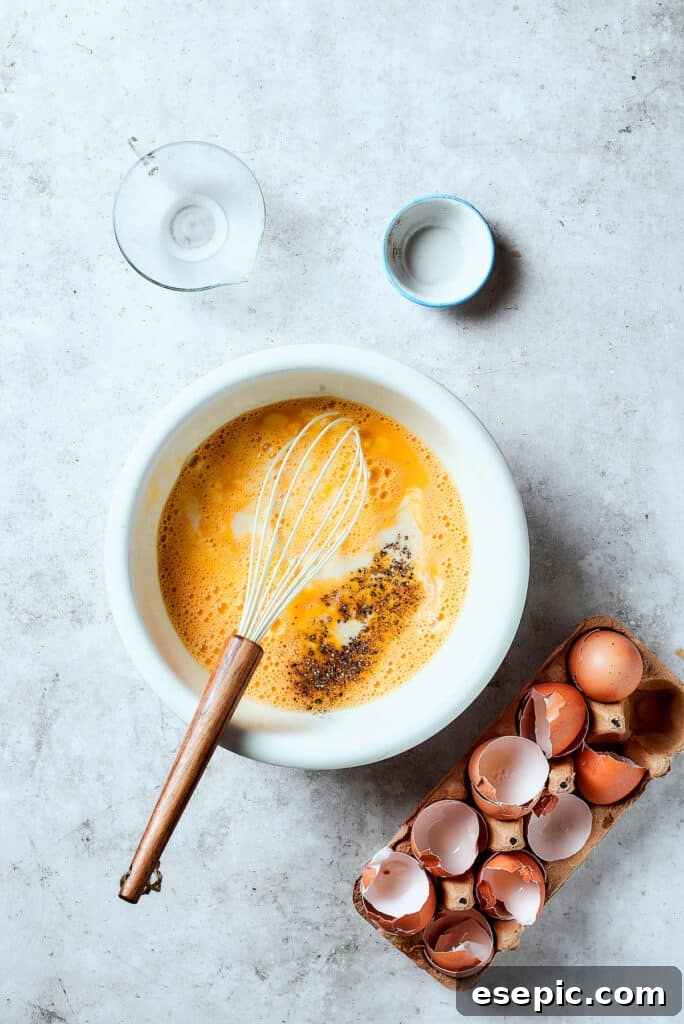
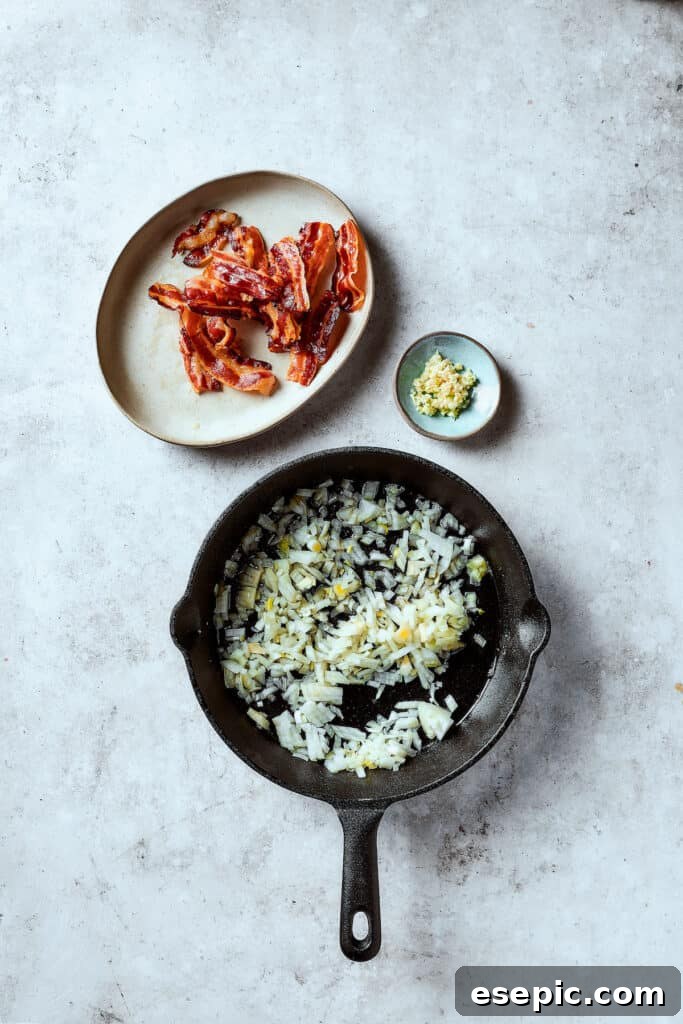
- Combine and Pour: Evenly arrange the pre-cooked potatoes and the crumbled crispy bacon pieces over the sautéed onion, garlic, and wilted spinach in the skillet. Ensure everything is spread relatively evenly. Then, carefully pour the whisked egg mixture over all the ingredients in the pan. Gently swirl the pan a few times to ensure the egg mixture fully coats and nestles around all the delicious fillings, creating an even distribution.
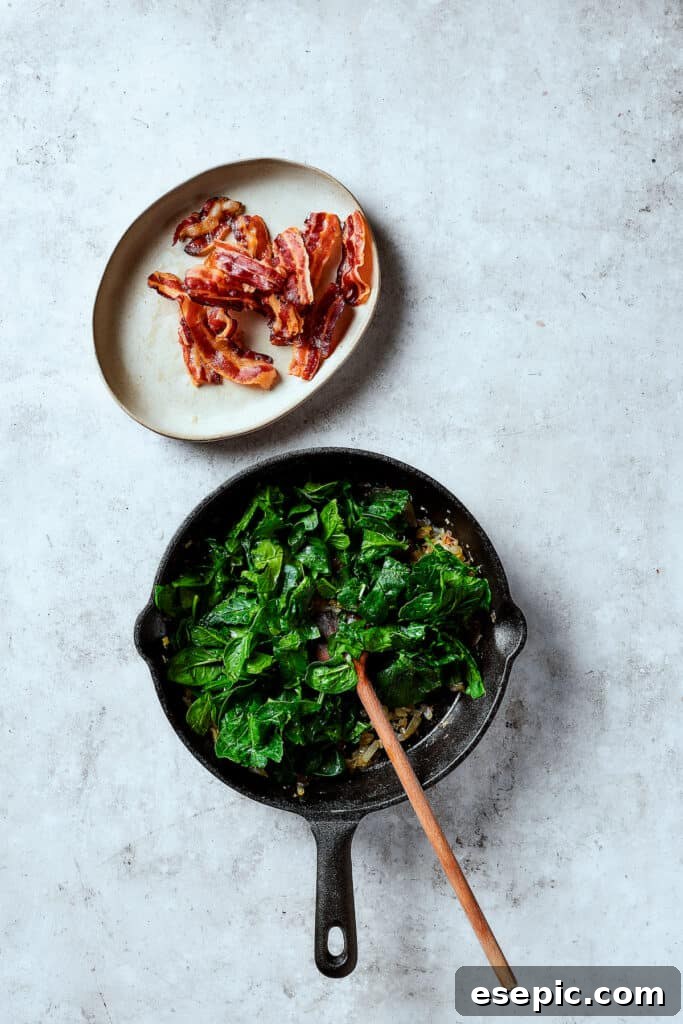
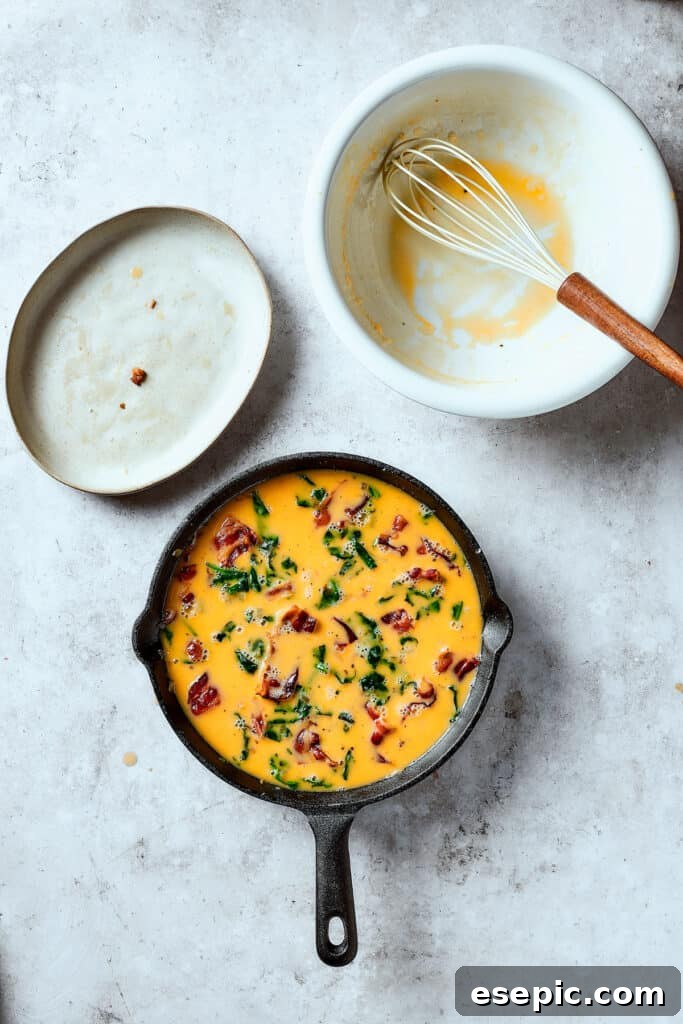
- Stovetop to Oven Perfection: Allow the frittata to cook undisturbed on the stovetop over medium heat for approximately 4 minutes. During this time, you’ll notice the edges beginning to set and firm up. Once the frittata is almost entirely set around the perimeter but still slightly jiggly in the center, carefully transfer the skillet to your preheated oven. Bake for another 5 to 7 minutes, or until the eggs are completely set and the top is lightly golden and puffed. The internal temperature should reach 160°F (71°C).
- Rest and Serve: Once baked to perfection, carefully remove the skillet from the oven. Immediately sprinkle the grated Parmesan cheese evenly over the hot frittata – the residual heat will help it melt beautifully. Let the frittata cool in the skillet for at least 5-10 minutes before slicing and serving. This resting period allows the eggs to fully set and makes for cleaner slices. Enjoy your homemade, savory masterpiece!

Helpful Hints for Frittata Success and Variations
You now have the recipe for an incredibly easy and flavorful frittata. The spinach, potato, and bacon combination is a classic for a reason, offering a perfect balance of textures and tastes. But to ensure your frittata is truly exceptional every time, consider these helpful tips and creative variations.
- Measure Dairy Carefully: The ratio of dairy to eggs is paramount for achieving a soft, luxurious, and perfectly set frittata. Too much dairy can result in a mushy or soupy texture, while too little can lead to a dry, rubbery, or spongy consistency. Stick to the specified amounts for the ideal outcome.
- Embrace Bacon Grease: One of the secrets to this frittata’s incredible flavor is utilizing the rendered bacon grease to sauté the onions, garlic, and spinach. This not only reduces waste but also infuses the vegetables with a deep, savory aroma that butter or oil simply can’t replicate. It’s a flavor booster you won’t want to skip!
- Customize the Veggies: While spinach and potato are fantastic, frittatas are incredibly forgiving when it comes to vegetables. Feel free to experiment with what you have on hand or what’s in season. Sautéed bell peppers, zucchini, mushrooms, asparagus, or cherry tomatoes are excellent choices. Remember, softer or pre-cooked vegetables work best. Avoid using hard, raw root vegetables like carrots or sweet potatoes unless they are fully cooked and tender beforehand, as they won’t soften sufficiently during the frittata’s relatively short baking time.
- Experiment with Proteins: Bacon adds wonderful flavor, but it’s easy to swap or add other proteins. Consider fully-cooked sausage (Italian, breakfast, or chicken sausage), ground beef or turkey, diced leftover chicken, ham, or even smoked salmon for a different twist. For a vegetarian option, simply omit the bacon and use olive oil or butter to sauté your vegetables, perhaps adding a boost of protein with chickpeas or black beans.
- Don’t Overcrowd the Pan: Ensure your skillet isn’t overly packed with ingredients. Overcrowding can lead to steaming rather than sautéing, preventing your vegetables from developing their full flavor and potentially resulting in a soggy frittata.
- Perfect Temperature Control: When cooking on the stovetop, maintain a steady medium heat. Too high, and the bottom of your frittata might brown too quickly or burn before the eggs begin to set. Too low, and it will take a long time to cook, potentially drying out the edges.
- The Art of Cooling: Resist the urge to slice into your frittata immediately after removing it from the oven. Allowing it to cool for 5-10 minutes enables the eggs to fully set, making for cleaner, more beautiful slices and a better overall texture.
- Add Toppings or Dips: Elevate your frittata experience with a variety of toppings or dipping sauces. A dollop of fresh creme fraiche or sour cream adds a tangy coolness, while a spoonful of marinara sauce, pesto, or your favorite salsa can introduce a delightful hit of freshness and acidity that beautifully contrasts the richness of the eggs and bacon.
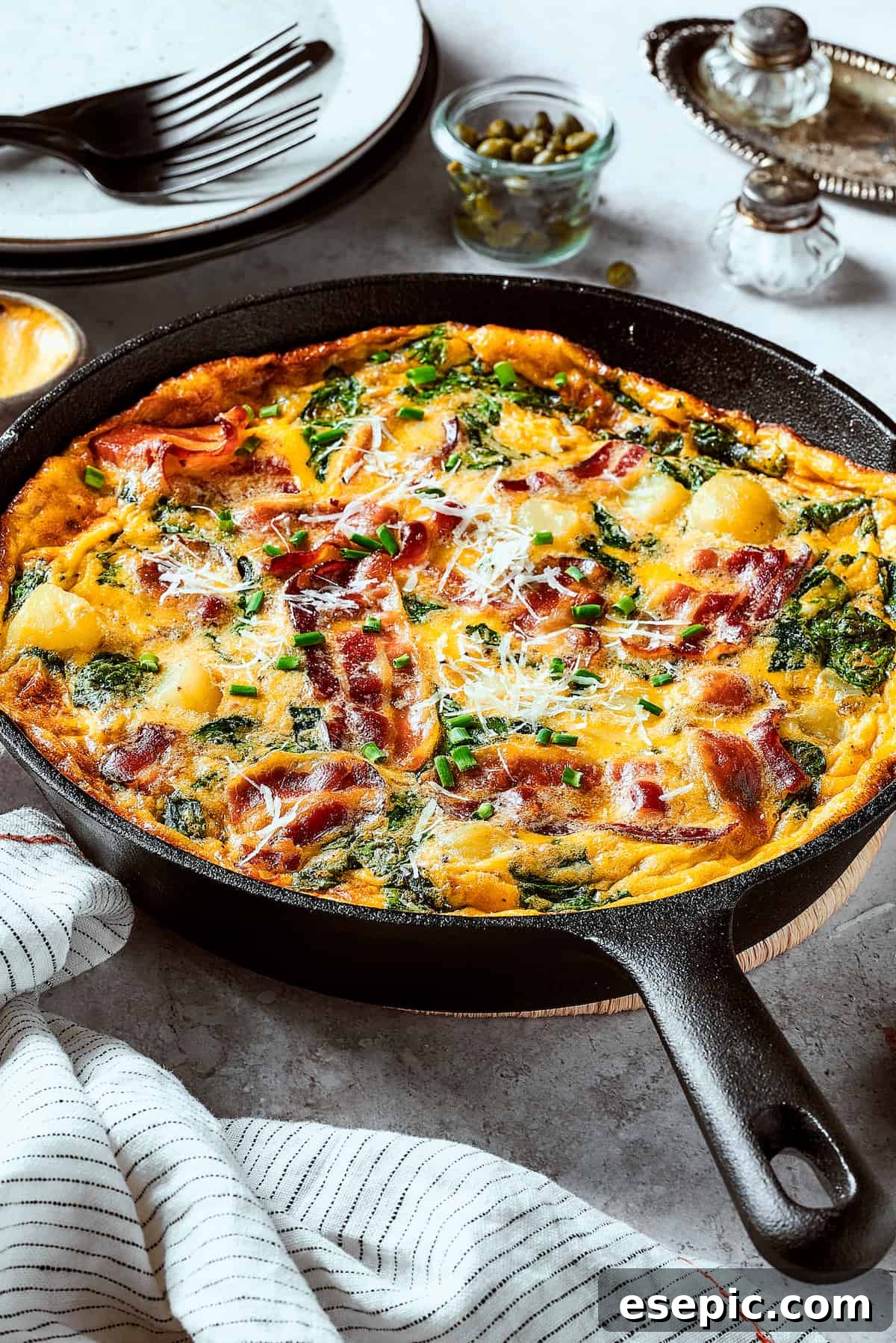
Delightful Serving Suggestions for Your Frittata
The beauty of a frittata lies in its incredible versatility. With its combination of eggs, vegetables, and protein, it truly can stand alone as a complete one-pan meal, offering both sustenance and rich flavor. However, a frittata also pairs wonderfully with a variety of side dishes, transforming a simple meal into a delightful spread. Don’t hesitate to round out your table with some of these family favorites – you’ll be glad you did!
- Refreshing Cucumber Salad: Nothing complements a warm, savory frittata quite like the cool, crisp freshness of a Cucumber Salad with Sour Cream Dressing. Its light, tangy profile provides a wonderful contrast to the rich, cheesy flavors of the frittata, cleansing the palate and adding a vibrant crunch to your meal.
- Sweet and Tangy Fruit Salad: For a different, yet equally delightful, pairing, consider the gentle sweetness and juicy burst of my Easy Fruit Salad with Honey Lime Dressing. The natural sugars and bright acidity of the fruit offer a beautiful counterpoint to the smoky bacon and savory eggs, creating a balanced and refreshing culinary experience. It’s perfect for brunch or a lighter dinner.
- Irresistible Garlic Knots: Craving something warm, bready, and comforting? These soft, golden-brown Garlic Knots, made incredibly easy with store-bought pizza dough and infused with fragrant Italian seasoning, are utterly irresistible. They’re perfect for soaking up any delicious juices and add a satisfying heartiness to your meal. You might just want to prepare a double batch!
- Simple Green Salad: A crisp green salad with a light vinaigrette is always a classic and healthy accompaniment. It adds freshness and a hint of acidity without overpowering the frittata.
- Artisan Bread or Toast: Serve slices of your frittata with some crusty artisan bread, warm buttered toast, or even a side of roasted garlic bread to complete a comforting meal.
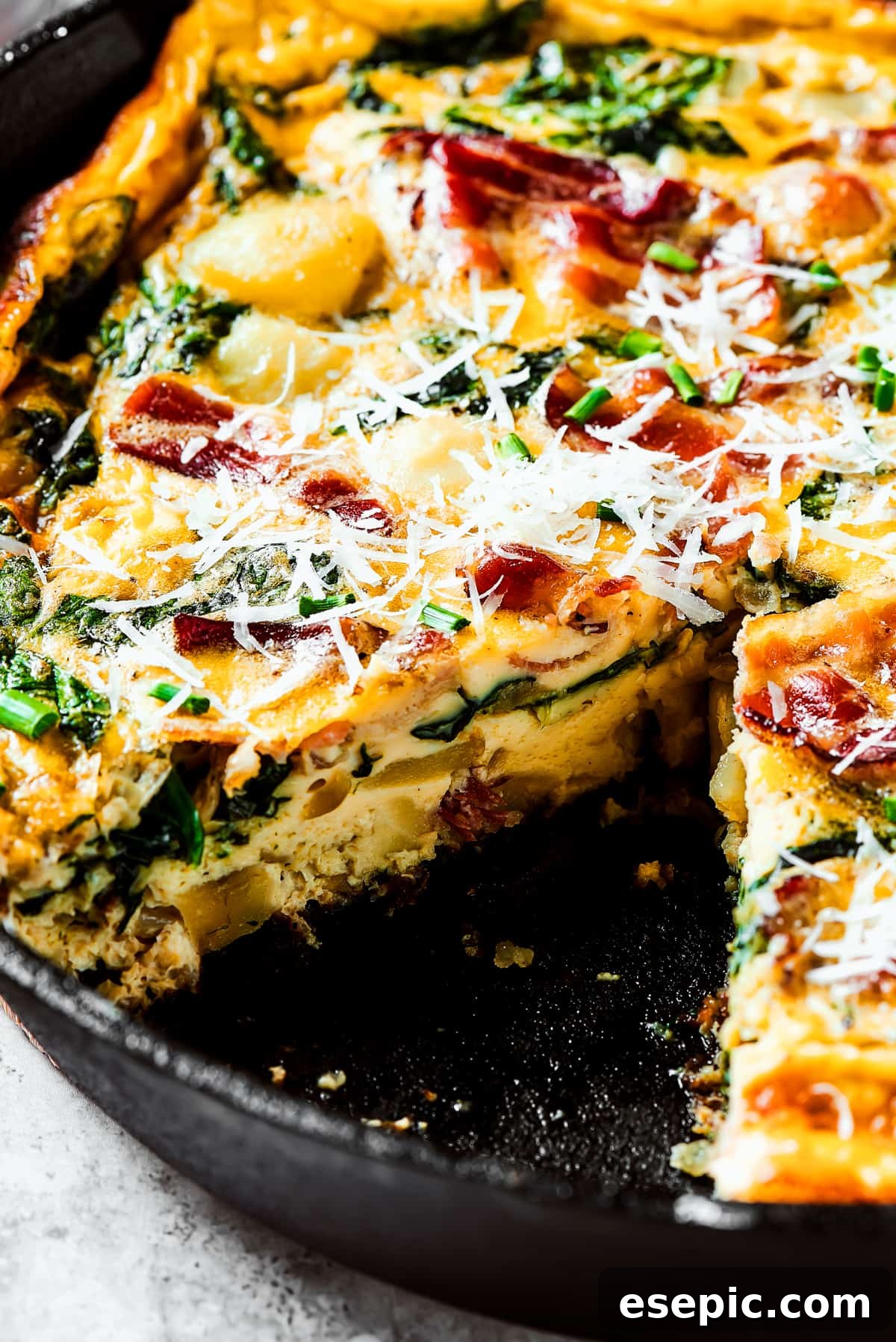
Storing and Reheating Your Frittata Leftovers
One of the many benefits of a frittata is how well it holds up as leftovers, making it an excellent candidate for meal prep. Whether you enjoy it cold or warmed, you can extend the pleasure of this dish for several days.
- Refrigeration: Leftover frittata can be stored in your refrigerator for up to four days. For best results, allow it to cool completely before transferring it to an airtight container or covering the skillet tightly with plastic wrap. You can enjoy frittata cold straight from the fridge – it makes a fantastic quick breakfast or lunch!
- Reheating in the Oven: If you prefer your frittata warm, the oven is the best method for reheating. Place individual slices or the entire frittata on a baking sheet and reheat in a preheated oven at 350°F (175°C) for about 10-15 minutes, or until it is warmed through to your liking. This method helps maintain its texture and prevents it from becoming soggy.
- Microwave Reheating: For a quicker option, individual slices can be reheated in the microwave. Place a slice on a microwave-safe plate and heat on medium power for 30-60 seconds, or until warm. Be mindful not to overheat, as this can make the eggs rubbery.
- Freezing Frittata: While frittata *can* be frozen, it’s important to manage expectations regarding its texture. Eggs, particularly when combined with dairy, tend to release moisture upon thawing, which can result in a slightly wetter or more crumbly consistency than when freshly made. For this reason, I generally recommend enjoying this recipe fresh or refrigerated.
- Tips for Freezing (If Necessary): If you do decide to freeze leftovers, ensure they are thoroughly cooled. Wrap individual slices tightly in plastic wrap, then again in aluminum foil, or place them in freezer-safe bags. Label with the date and consume within 1-2 months for the best quality. To reheat from frozen, thaw in the refrigerator overnight, then reheat in the oven as described above.
Spinach, Bacon, and Potato Frittata
Spinach, Bacon, and Potato Frittata is a healthy, farmhouse-style dinner that’s easy to make, and loaded with rich flavor. Perfect easy meal!
Cook Time: 20 minutes
Total Time: 35 minutes
Servings: 4
Ingredients
- 2 medium potatoes, peeled and diced
- 10 slices bacon
- 8 whole large eggs
- 1 cup milk (full-fat recommended)
- 1½ teaspoon salt
- ½ teaspoon fresh ground black pepper
- 1 small yellow onion, finely chopped
- 2 cloves garlic, minced
- 2 cups fresh baby spinach, chopped
- ⅓ cup grated parmesan cheese
Instructions
- Preheat the oven to 350°F (175°C).
- Cook the potatoes in boiling water with a pinch of salt for 7 to 10 minutes or until just barely tender. Drain and set them aside.
- Cook the bacon in an ovenproof skillet (e.g., cast iron) over medium-low heat until it is crispy. Remove the bacon from the pan, and drain it on paper towels. Set aside the crispy bacon and save the rendered grease in the skillet.
- In a large bowl, whisk together the eggs, milk, salt, and black pepper until well combined. Set the mixture aside.
- In the same skillet with the bacon fat, heat over medium heat and add the diced onion. Sauté for 2 to 3 minutes or until it is slightly translucent. Add minced garlic and cook for 1 minute or until it becomes fragrant.
- Add the freshly chopped spinach to the skillet with the onions and garlic, and cook for a minute until the leaves are fully wilted.
- Evenly arrange the cooked potatoes and crumbled crispy bacon pieces in the skillet over the sautéed vegetables.
- Pour the whisked egg mixture over the potato and bacon mixture. Gently swirl the pan to ensure all ingredients are coated. Cook on the stovetop over medium heat for 4 minutes or until the edges are almost set.
- Transfer the skillet to the preheated oven and bake for 5 to 7 minutes or until the eggs are completely set and the top is lightly golden.
- Remove from the oven, sprinkle with Parmesan cheese over the top, and let it cool for a few minutes before slicing and serving. Enjoy!
Equipment
- Cast Iron Skillet
- Measuring Cups and Spoons
- Mixing Bowls
- Whisks
Notes
- Veggies: This recipe is highly adaptable. Feel free to use other cooked vegetables like sautéed peppers, mushrooms, or zucchini. Ensure any root vegetables are fully cooked before adding them to the frittata.
- Protein Swap: Substitute bacon with other cooked proteins such as sausage, diced ham, or shredded chicken.
- Enhance with Toppings: Serve with a dollop of creme fraiche or sour cream, or a side of marinara, pesto, or salsa for added freshness and flavor.
Nutrition
Calories: 526kcal | Carbohydrates: 28g | Protein: 25g | Fat: 35g | Saturated Fat: 13g | Polyunsaturated Fat: 5g | Monounsaturated Fat: 14g | Trans Fat: 0.1g | Cholesterol: 378mg | Sodium: 1550mg | Potassium: 919mg | Fiber: 3g | Sugar: 5g | Vitamin A: 2077IU | Vitamin C: 28mg | Calcium: 239mg | Iron: 3mg
Nutritional info is an estimate and provided as courtesy. Values may vary according to the ingredients and tools used. Please use your preferred nutritional calculator for more detailed info.
More Delicious and Easy Egg Dishes to Try
If you’ve fallen in love with the simplicity and versatility of frittatas, you’re in for a treat! Eggs are a fantastic, protein-packed ingredient that forms the basis of countless quick, easy, and satisfying meals. Here are a few more of my favorite egg-centric recipes that are perfect for any time of day, offering a range of flavors and styles to explore:
- Classic Egg Salad with Pickles: A timeless comfort food, this egg salad is elevated with the bright, tangy crunch of pickles. It’s perfect for sandwiches, wraps, or simply enjoyed with crackers for a quick lunch or snack. Simple to make and endlessly satisfying.
- Eggs Benedict Casserole: Indulge in the luxurious flavors of Eggs Benedict in an easy-to-make casserole format. This dish combines English muffins, ham, eggs, and a creamy hollandaise-inspired sauce, making it an ideal choice for feeding a crowd at brunch or for a special breakfast.
- Easy Quiche Lorraine with Bacon: If you appreciate a savory egg custard with a flaky crust, this simplified Quiche Lorraine is a must-try. Packed with smoky bacon and rich cheese, it’s an elegant yet approachable dish that’s perfect for brunch, lunch, or a light dinner.
- Hearty Breakfast Burritos: A customizable favorite, breakfast burritos are fantastic for using up leftovers. Scramble eggs with your choice of cheese, beans, salsa, and any cooked veggies or meats, then wrap them tightly in tortillas for a portable and satisfying meal.
- Shakshuka (Poached Eggs in Spicy Tomato Sauce): For an exotic and flavorful twist, try this Middle Eastern and North African dish. Eggs are gently poached in a simmering, richly spiced tomato and bell pepper sauce, often served with crusty bread for dipping. It’s vibrant, healthy, and incredibly comforting.